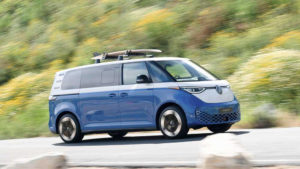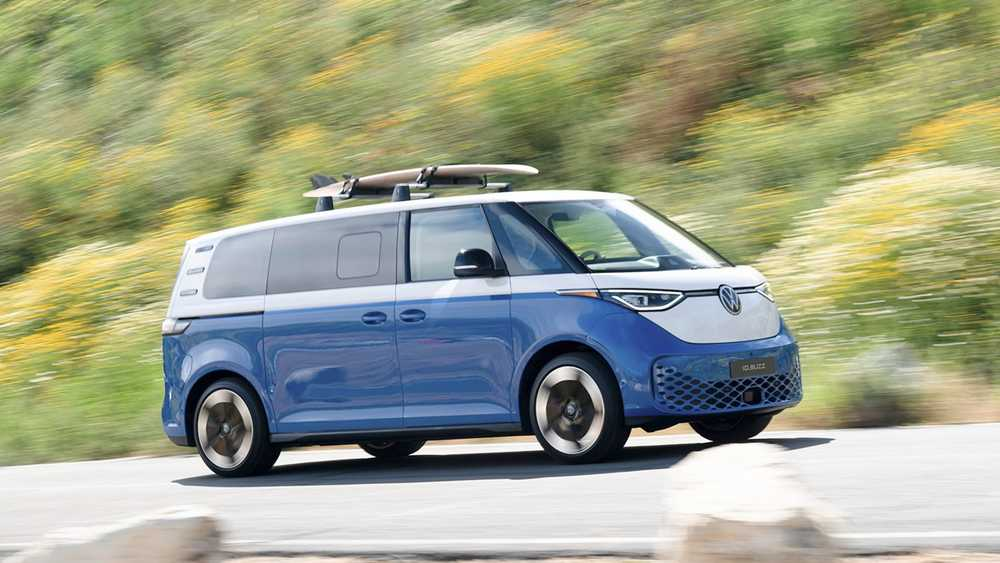
Volkswagen is developing a second-generation ID. Buzz, even as the electric minivan remains on hiatus in the United States for the 2026 and 2027 model years because of weak demand. Volkswagen Passenger Cars CEO Thomas Schäfer confirmed that work on the next model is underway, with a new vehicle architecture expected to help address the high costs that have limited the current model’s sales potential.
Volkswagen Confirms a Second-Generation ID. Buzz
The Volkswagen ID. Buzz has struggled to attract buyers in the United States. Demand was low enough that Volkswagen initially planned to skip the 2026 model year in the U.S. market before extending the decision to 2027.
Despite the sales challenges, Volkswagen is not abandoning the electric minivan. Schäfer confirmed that development of a second-generation model is underway, telling Auto Express, “They’re working on it.”
The current ID. Buzz has drawn praise for its driving experience, but its pricing has made it difficult to compete as a high-volume vehicle. Volkswagen’s plans for the next generation center on a different platform intended to reduce costs and improve the vehicle’s capabilities.
New Architecture Could Lower Costs and Improve Range
The second-generation ID. Buzz is expected to move to Volkswagen’s Scalable Systems Platform architecture. The platform is more affordable than the architecture the company currently uses for its electric vehicles.
Volkswagen plans to use the new architecture for nine vehicles by 2027. Those models will include an entry-level electric vehicle for Europe with a starting price of about €20,000, equivalent to $22,390 at current exchange rates.
The new platform could also allow the next ID. Buzz to use battery packs that provide greater driving range and faster charging. Those changes would address two important aspects of the electric minivan’s package while helping Volkswagen tackle its cost concerns.
Schäfer described the current model’s underlying cost structure as a problem, saying the ID. Buzz “is on the wrong cost base.” That makes it difficult for Volkswagen to sell the vehicle in large volumes.
The Current ID. Buzz Is More Expensive Than Other Minivans
The entry-level Volkswagen ID. Buzz available in the United States is the Pro S, which starts at $59,995 before a $1,550 destination fee. That makes it more expensive than the other minivans cited in the comparison.
The 2026 Toyota Sienna Platinum AWD 7-Passenger Hybrid, the range-topping version of Toyota’s minivan, starts at $57,810 before its $1,595 destination fee. Its listed starting price is below that of the ID. Buzz Pro S.
Volkswagen’s next-generation platform could give the company an opportunity to address the pricing challenge that has contributed to the current model’s limited sales potential.
Will the Next Volkswagen ID. Buzz Keep Its Retro Design?
The second-generation ID. Buzz may not retain the current model’s retro-modern styling inspired by the classic Volkswagen Transporter, also known as the Microbus.
Andreas Mindt, head of Volkswagen Group Design, commented on his general approach to vehicle styling, although the available information does not establish what design direction the next ID. Buzz will ultimately take.
Mercedes-Benz VLE-Class Could Become a Rival
Depending on when the second-generation ID. Buzz arrives, it could face competition from another high-end electric minivan. Mercedes-Benz is preparing to launch the VLE-Class in the United States in 2027.
The base Mercedes-Benz VLE 300 will feature front-wheel drive, a 272-horsepower powertrain and a 115-kilowatt-hour battery pack. European testing estimates a range of 435 miles, although the U.S. Environmental Protection Agency’s evaluation generally produces a lower driving-range figure.
Mercedes-Benz also plans to offer the VLE 400 4Matic, which produces 409 horsepower and uses the same battery as the base model. Pricing details for the VLE-Class have not yet been announced.
Volkswagen Is Continuing Development Despite the U.S. Hiatus
Volkswagen’s decision to keep the ID. Buzz out of the U.S. market for the 2026 and 2027 model years reflects the challenges facing the current electric minivan. However, the confirmation from Schäfer indicates that the company intends to continue developing the nameplate.
The next-generation ID. Buzz is expected to use Volkswagen’s more affordable Scalable Systems Platform, potentially enabling improved range and faster charging. Its final styling, pricing and arrival timing remain unconfirmed in the available information.