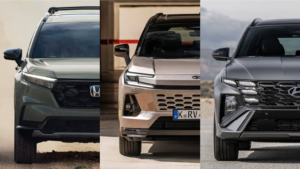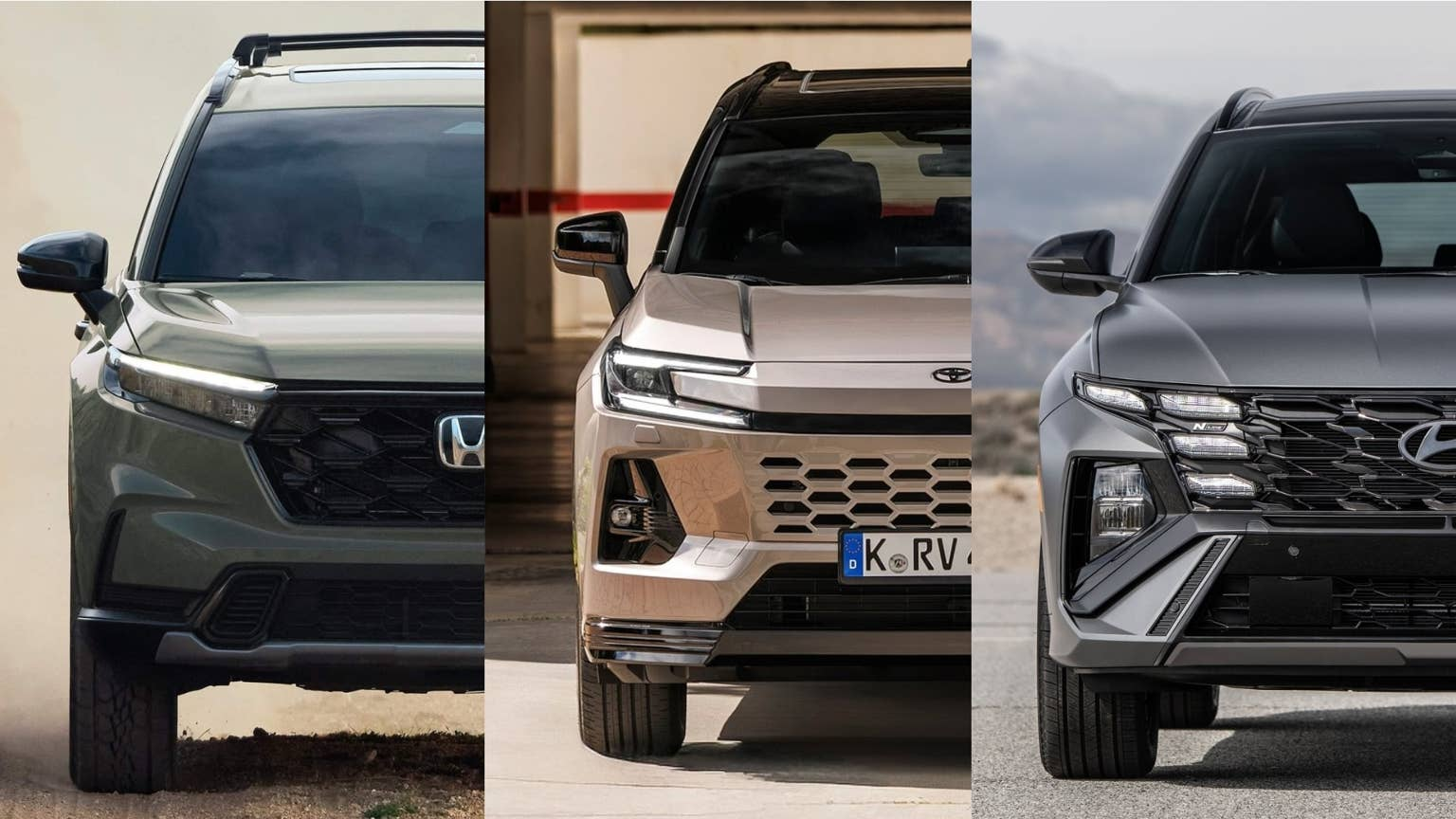
The Hyundai Tucson is coming off its strongest quarter on record as Hyundai announces a completely redesigned 2027 model. Tucson sales reached 64,075 in the third quarter of 2026, up 23% from a year earlier, according to Hyundai’s latest sales report. The increase outpaced the Honda CR-V’s 16.6% growth to a quarterly record of 110,730 vehicles, while Toyota’s RAV4 continued to lose ground in year-to-date sales.
Across the three automakers, Honda posted the strongest brand-level growth, with third-quarter sales rising 9.3% to 358,388 vehicles. Hyundai sales increased 3% to a record 246,896, while Toyota edged up just 0.5% to 540,167, according to the companies’ reports.
Hyundai Tucson Sales Jump 32% in September as Toyota RAV4 Declines
September sales highlight the contrasting performances of the three compact SUVs. The Hyundai Tucson recorded the largest year-over-year increase, rising 32% to 23,164 vehicles. The Honda CR-V followed with a 21.9% gain to 34,788, while the Toyota RAV4 fell 6.6% to 34,192.
| Model | September 2026 Sales | Year-Over-Year Change |
|---|---|---|
| Honda CR-V | 34,788 | +21.9% |
| Toyota RAV4 | 34,192 | -6.6% |
| Hyundai Tucson | 23,164 | +32% |
The CR-V outsold the RAV4 by 596 vehicles in September, but the Tucson delivered the strongest growth among the three models. For the full third quarter, CR-V sales increased 16.6% to 110,730, while Tucson sales climbed 23% to 64,075.
Toyota reports RAV4 sales monthly and year to date rather than by quarter, making September the common comparison point for all three models.
Toyota RAV4 Sales Fall 29.2% Through September
The year-to-date figures show a wider gap in performance between the Tucson and RAV4. Toyota RAV4 sales through September declined 29.2% to 253,664, while Hyundai Tucson sales rose 10% to 181,687.
Toyota’s September report breaks down the RAV4’s 2026 sales into 200,209 hybrids, 32,228 plug-in hybrids and approximately 21,200 vehicles with neither type of electrified powertrain. Toyota’s release does not explain the reason for the model’s sales decline.
Hyundai also recorded gains across its sedan lineup. Elantra sales rose 18% to 48,764, while Sonata sales increased 34% to 17,273.
Hyundai’s hybrid sales climbed 35% during the third quarter, but its electric vehicles struggled. The Ioniq 5 fell 53% to 10,382, and Hyundai sold 107 Ioniq 6 vehicles during the three-month period.
Honda Records the Strongest Growth Among Toyota, Honda and Hyundai
Honda delivered the strongest third-quarter performance among the three brands, adding roughly 30,000 sales compared with the same quarter last year. Hyundai gained 7,827 vehicles, while Toyota added fewer than 3,000.
| Brand | Q3 2026 Sales | Q3 Change | Jan.-Sept. 2026 Sales | Year-to-Date Change |
|---|---|---|---|---|
| Toyota | 540,167 | +0.5% | 1,613,846 | +1.2% |
| Honda | 358,388 | +9.3% | 1,045,593 | +4.7% |
| Hyundai | 246,896 | +3% | 697,464 | +3% |
The figures exclude Lexus from Toyota’s totals, Acura from Honda’s totals and Genesis from Hyundai’s totals.
Honda’s gains came from both passenger cars and light trucks. Car sales increased 20.9%, while light-truck sales rose 4.3%. Honda also sold more than 106,000 hybrid vehicles during the quarter, setting a record for the brand.
Lance Woelfer, vice president of auto sales at American Honda, credited the results to what he described as “a winning formula focused on affordability, record sales of hybrid models and a commitment to offer our customers a balanced lineup of passenger cars and light trucks.”
Electrified Vehicles Account for 60% of Toyota Brand Sales
Toyota sold 325,227 electrified vehicles during the third quarter, an increase of 29.2%. Those vehicles accounted for approximately six out of every 10 Toyota brand sales during the period.
With Toyota’s overall third-quarter sales remaining nearly flat, the figures indicate that sales of gasoline-only vehicles declined by about a quarter. Toyota’s release does not identify which models accounted for that decline.
In September, Toyota brand sales increased 7.9% to 171,469 vehicles.
2026 Hyundai Tucson vs. Honda CR-V vs. Toyota RAV4: Prices and Powertrains
For shoppers comparing the three compact SUVs, the outgoing 2026 Hyundai Tucson starts at $29,700. Hyundai’s sales announcement does not include pricing for the redesigned 2027 Tucson.
| 2026 Model | Base Trim | Powertrain | Drivetrain | Starting Price |
|---|---|---|---|---|
| Hyundai Tucson | SE | 187-hp 2.5-liter gas, 8-speed automatic | FWD (AWD available) | $29,700 |
| Honda CR-V | LX | 190-hp turbocharged gas | FWD (AWD available) | $30,920 |
| Toyota RAV4 | LE | 226-hp hybrid, 47/40 mpg city/highway | FWD (AWD available) | $31,900 |
All prices are before destination charges. The starting prices are not directly comparable because the Toyota RAV4 LE comes with a hybrid powertrain, while the base Hyundai Tucson SE and Honda CR-V LX are gasoline-powered models.
What Buyers Should Know Before Shopping
Hyundai Tucson: The 2026 model starts at $29,700. Hyundai has not provided pricing for the redesigned 2027 version in its sales release.
Honda CR-V: Honda reports 16 to 17 days of supply for key models, meaning shoppers may have more difficulty finding a particular trim or color at some dealerships.
Toyota RAV4: Toyota says its incentives are among the lowest of full-line automakers, so buyers should not count on large factory discounts.
Honda Leads Overall, While Hyundai Tucson Posts the Biggest September Gain
Honda delivered the strongest overall third-quarter sales performance among the three brands, adding more vehicles than either Hyundai or Toyota. Within the compact SUV segment, the Hyundai Tucson stood out with a 32% September sales increase as the Honda CR-V also gained ground.
The Toyota RAV4 was the only one of the three SUVs to post a September decline, and its sales remained down 29.2% through the first nine months of 2026. Meanwhile, Hyundai’s record third-quarter Tucson sales come as the automaker prepares to introduce the completely redesigned 2027 model.