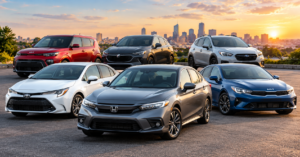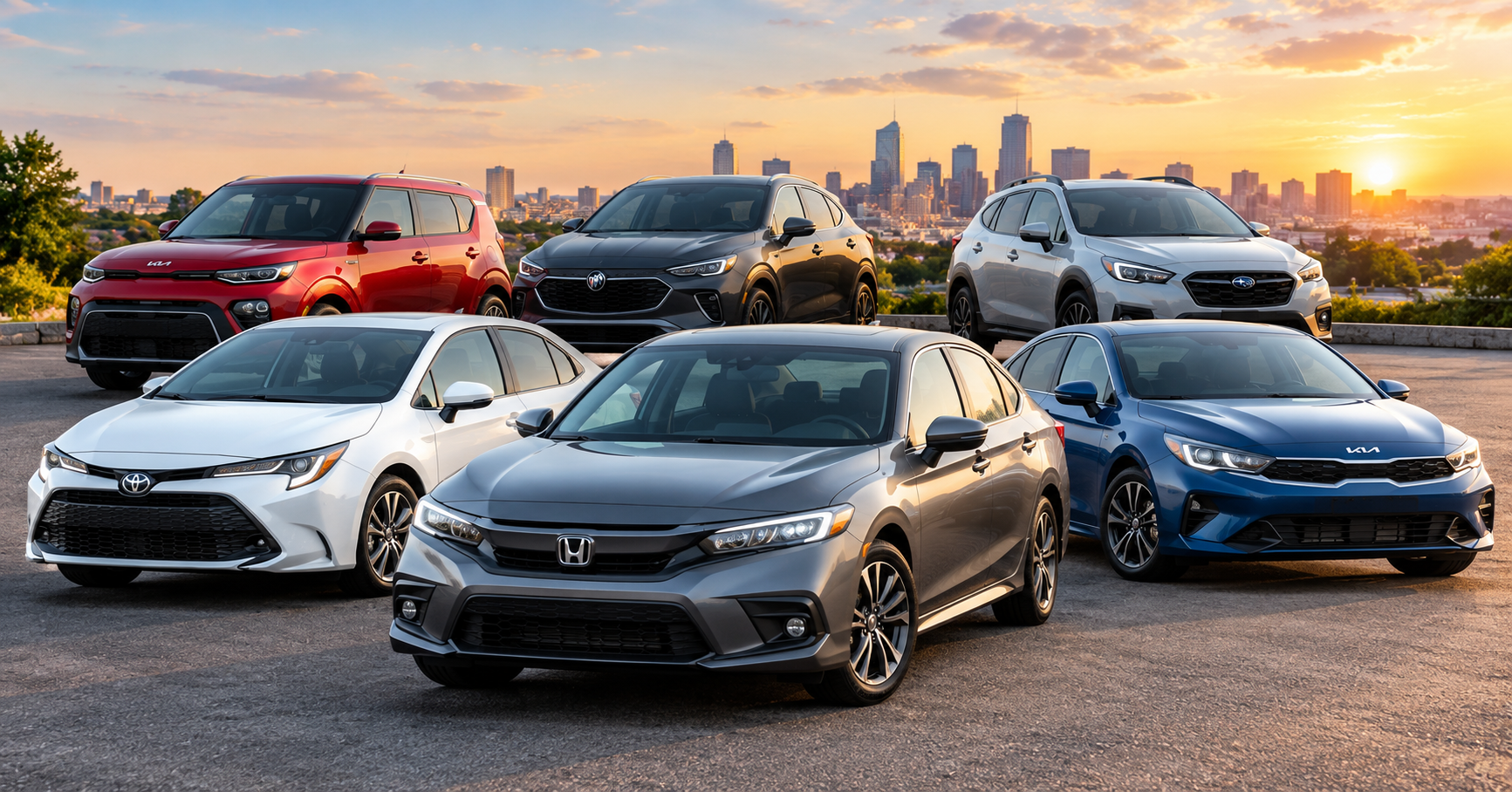
Buying your first car should feel like a milestone, not the beginning of years of financial stress. Yet between rising vehicle prices, expensive insurance, high interest rates, and unfamiliar dealership fees, choosing the right vehicle can be surprisingly difficult. The good news is that the best cars for first time buyers 2026 include several affordable compact sedans, practical hatchbacks, and small crossovers that offer modern safety features, impressive fuel economy, and manageable ownership costs.
However, the best first car isn’t necessarily the cheapest vehicle on the dealership lot. It’s the one that fits your budget, protects you on the road, costs a reasonable amount to insure, and remains practical as your needs change.
This guide explores 10 smart choices for 2026, explains what makes each vehicle suitable for a first-time buyer, and outlines how to compare financing, insurance, safety, and long-term ownership expenses before signing a contract.
What Makes a Car a Smart First Purchase in 2026?
First-time buyers often concentrate on the sticker price or monthly payment. Those numbers matter, but they don’t tell the whole story. A car that costs less upfront could become more expensive if it consumes more fuel, requires frequent repairs, or carries unusually high insurance premiums.
The strongest first-car candidates balance affordability, safety, reliability, efficiency, and everyday convenience.
Affordable Purchase Price
A lower starting price can reduce the amount you need to borrow, the interest you pay, and the risk of owing more than the car is worth. The 2026 Kia K4, with a reported starting price of approximately $22,290, is among the most affordable new compact cars in the supplied research. The redesigned 2026 Nissan Sentra starts at approximately $22,600.
Remember that advertised prices generally apply to specific base trims and may exclude destination charges, taxes, registration, dealer-installed equipment, and optional packages. Always compare the final out-the-door price rather than relying exclusively on the manufacturer’s advertised figure.
Strong Safety Performance
Safety deserves particular attention when choosing a first vehicle. Modern driver-assistance technology can help drivers respond to potential hazards, while good visibility, predictable handling, and effective braking make everyday driving easier.
Look for automatic emergency braking, forward collision warning, lane-departure assistance, blind-spot monitoring, and rear cross-traffic alert when available. These features vary by model year and trim, so confirm exactly what a particular vehicle includes.
Several affordable vehicles have earned strong safety recognition for 2026. However, ratings and awards can depend on the vehicle’s body style, headlights, optional equipment, and production specifications. Verify the rating for the exact model you intend to purchase.
Reasonable Fuel and Maintenance Costs
Fuel-efficient cars are especially appealing to students, commuters, and anyone driving long distances to work. Hybrid vehicles can reduce fuel expenses substantially for drivers who cover many miles, although the initial purchase price and local fuel prices influence the actual savings.
Maintenance is equally important. Research routine service intervals, tire prices, warranty coverage, and the availability of qualified repair shops. A car with a strong reliability reputation can provide peace of mind, but no model is completely free of unexpected expenses.
Insurance That Fits Your Budget
Insurance can change the financial equation dramatically. Younger drivers and people with limited driving histories may face particularly high premiums, even when buying an inexpensive vehicle.
Before purchasing, request insurance quotes for the exact model, trim, and model year. Compare coverage limits, deductibles, and available discounts. Two cars with similar purchase prices can have noticeably different insurance costs.
The 10 Best Cars for First Time Buyers in 2026
These selections emphasize affordability, safety, everyday usability, fuel economy, and value. Prices and equipment can change by market, trim, and dealer, so treat the figures as starting points rather than guaranteed transaction prices.
1. Honda Civic: Best Overall First Car
Best for: Buyers who want an excellent all-around compact car.
The Honda Civic is one of the strongest choices for drivers purchasing their first vehicle because it combines everyday practicality with a comfortable cabin, composed handling, and a reputation for dependable ownership.
It is easy to imagine the Civic working for several types of buyers. A college graduate could use it for a daily commute, a young professional could drive it on weekend trips, and a small household could rely on it for shopping and routine errands.
The Civic offers a useful balance between comfort and driving enjoyment. Its compact dimensions make parking and navigating busy urban streets relatively straightforward, while its passenger space and cargo capacity make it more versatile than its exterior size might suggest.
The 2026 Honda Civic is also a strong candidate for shoppers who want a vehicle that feels refined without moving into luxury-car territory. Available powertrains and equipment vary by trim, allowing buyers to compare conventional gasoline models with more efficiency-focused options where offered.
Why first-time buyers should consider it:
- A practical balance of comfort, efficiency, and handling.
- Modern driver-assistance and connectivity features, depending on trim.
- A versatile cabin for commuting, errands, and weekend travel.
- A strong reputation that makes it worth including in any compact-car comparison.
What to watch: Higher trims and hybrid versions can cost considerably more than entry-level models. Compare the additional equipment with your actual needs instead of assuming the most expensive Civic is automatically the best value.
Verdict: The Civic is the best starting point for shoppers who want one car to handle nearly every everyday driving situation without unnecessary complexity.
2. Kia K4: Best Affordable New Compact Car
Best for: Budget-conscious buyers who want a modern car at a competitive price.
The 2026 Kia K4 stands out because it offers a relatively accessible entry point into new-car ownership. With a reported starting price of approximately $22,290, it is an attractive option for buyers who want a new vehicle without moving into a more expensive sedan category.
Buying new has several advantages for first-time owners. The car starts with no previous owner’s maintenance history to investigate, manufacturer warranty coverage may help limit certain repair expenses, and modern safety and infotainment equipment can make daily driving more convenient.
The K4 is particularly relevant for shoppers who want contemporary styling and a modern interior. Its compact dimensions suit urban commuting, suburban errands, and routine highway travel.
Why first-time buyers should consider it:
- A competitive starting price in the compact-car segment.
- Modern styling and available technology features.
- A practical size for daily commuting and parking.
- Safety features that can make everyday driving more reassuring.
What to watch: Compare warranty terms, service availability, insurance costs, and the price difference between trims. A heavily optioned K4 may cost enough to bring other compelling compact sedans into consideration.
Verdict: The Kia K4 is one of the smartest choices for first-time buyers who prioritize an affordable new-car purchase and contemporary features.
3. Nissan Sentra: Best Value-Focused Sedan
Best for: Buyers looking for an affordable, comfortable commuter.
The 2026 Nissan Sentra is another appealing choice for first-time drivers who want a conventional compact sedan. Its reported starting price of approximately $22,600 places it near the Kia K4, making a direct comparison between the two especially useful.
The Sentra’s appeal lies in its straightforward mission: provide practical transportation for commuting, shopping, and everyday travel. A compact sedan can be easier to park than a larger crossover, and its enclosed trunk keeps groceries, luggage, and other belongings separate from the passenger compartment.
The supplied research lists a combined fuel-economy rating of approximately 33 mpg for the 2026 Sentra. Actual fuel economy varies according to driving conditions, traffic, temperature, vehicle configuration, and maintenance.
Why first-time buyers should consider it:
- A relatively low entry price for a new vehicle.
- Fuel economy suited to everyday commuting.
- A compact footprint that works well in cities and suburbs.
- Modern safety and convenience features, depending on trim.
What to watch: Because the model has been redesigned for 2026, review information about the updated version rather than assuming previous generations behave identically. Check how the seats, visibility, and controls feel during your test drive.
Verdict: The Sentra deserves a place on the shortlist for buyers who want a reasonably priced sedan with practical everyday features.
4. Toyota Corolla: Best Practical Everyday Car
Best for: Drivers who value simplicity, efficiency, and long-term ownership.
The Toyota Corolla has long been a familiar name in the compact-car market. For first-time buyers, its appeal comes from its practical dimensions, approachable driving character, and broad availability.
A Corolla is well suited to daily commuting, college parking lots, apartment living, and routine errands. It offers the essential benefits many first-time owners need without requiring them to pay for a large vehicle or a high-performance powertrain.
Depending on the version, buyers can also consider hybrid technology. A hybrid Corolla may be especially attractive for people who spend a lot of time in stop-and-go traffic or have long daily commutes. However, the best choice depends on the price premium, annual mileage, fuel prices, and how long the owner plans to keep the car.
Why first-time buyers should consider it:
- A practical size for commuting and urban driving.
- Conventional controls and an approachable driving experience.
- Hybrid availability for buyers focused on fuel savings.
- A widely recognized model with a long history in the compact segment.
What to watch: Compare rear-seat space, cargo capacity, visibility, and equipment with the Civic, K4, and Sentra. The lowest purchase price does not necessarily produce the lowest overall cost, so request insurance quotes and compare financing offers.
Verdict: The Corolla is a sensible option for first-time buyers who want practical transportation rather than a vehicle built around flashy extras.
5. Mazda3: Best for Drivers Who Enjoy the Road
Best for: Buyers who want a more engaging drive and an upscale cabin feel.
Not every first-time buyer wants the most basic transportation available. Some want a car that feels refined, responds confidently on winding roads, and offers an interior that feels more premium than its price might suggest.
The Mazda3 is worth considering for those drivers. Its appeal centers on an engaging driving experience, thoughtfully designed cabin, and styling that stands apart from more conservative compact sedans.
The Mazda3 is available in sedan and hatchback forms, depending on the market and configuration. That gives shoppers a choice between a traditional trunk and a more flexible cargo area.
Why first-time buyers should consider it:
- A more engaging driving experience than many economy-focused competitors.
- An interior with an upscale design emphasis.
- Sedan and hatchback practicality, depending on configuration.
- Safety and driver-assistance features that vary by trim.
What to watch: A higher purchase price can mean larger monthly payments and potentially different insurance costs. Test the rear seats and cargo area if you frequently carry passengers or bulky items.
Verdict: The Mazda3 is a compelling choice for first-time buyers who want an affordable daily driver that still feels rewarding to drive.
6. Hyundai Elantra: Best for Features and Efficiency
Best for: Buyers who want a modern compact sedan with useful technology.
The Hyundai Elantra is another strong contender in the affordable compact category. It combines distinctive exterior styling with a spacious-feeling cabin and a feature set that can make daily commuting more comfortable.
For first-time owners, technology is most valuable when it solves everyday problems. A clear backup camera, straightforward smartphone integration, useful driver-assistance features, and easy-to-operate climate controls can make a bigger difference than a long list of advanced features that rarely get used.
The Elantra also offers an important financial consideration: buyers can compare conventional and hybrid versions where available. The hybrid may reduce fuel expenses for high-mileage drivers, while a lower-priced conventional model may be more economical for someone who drives relatively few miles each year.
Why first-time buyers should consider it:
- A modern design and technology-focused cabin.
- Hybrid availability for shoppers prioritizing fuel economy.
- A practical sedan layout for commuting and daily errands.
- Driver-assistance features available across the lineup, depending on trim.
What to watch: Review warranty terms and exclusions, compare dealer service availability, and obtain an insurance quote before committing. Make sure the vehicle’s infotainment controls are intuitive during your test drive.
Verdict: The Elantra is a smart alternative for buyers who want an efficient, modern sedan without moving into a more expensive class.
7. Toyota Prius: Best for Fuel Savings
Best for: Drivers with long commutes who want to reduce fuel spending.
The Toyota Prius is especially attractive to first-time buyers who expect to drive frequently. Its hybrid powertrain combines a gasoline engine with electric assistance, helping reduce fuel consumption compared with many conventional vehicles.
The supplied research cites approximately 57 mpg combined for the Prius. Actual fuel economy varies by trim, drivetrain, driving conditions, temperature, speed, and maintenance. Verify the official rating for the specific configuration you plan to purchase.
Fuel savings can add up over time. Consider a driver who travels 12,000 miles per year. At 30 mpg, that driver uses approximately 400 gallons of fuel annually. At 57 mpg, the same distance requires about 211 gallons. The difference is roughly 189 gallons per year.
At an illustrative gasoline price of $3.50 per gallon, that represents approximately $662 in annual fuel savings. This is an example, not a guarantee. Real savings depend on actual fuel economy and local prices, and a Prius may have a different purchase price from the conventional car used for comparison.
The Prius also offers a hatchback layout, giving owners flexibility when carrying groceries, luggage, or other everyday items.
Why first-time buyers should consider it:
- Excellent reported fuel economy.
- Hybrid operation that can reduce fuel spending.
- A hatchback body style with flexible cargo space.
- Strong appeal for high-mileage commuters.
What to watch: Compare the Prius’ purchase price with a conventional compact car and calculate the likely fuel savings over the period you expect to own it. Drivers with low annual mileage may need longer to recover any upfront price difference.
Verdict: For first-time buyers who spend many hours commuting, the Prius is one of the most compelling options for controlling fuel expenses.
8. Subaru Impreza: Best for All-Weather Practicality
Best for: Drivers who want hatchback flexibility and standard all-wheel drive.
The Subaru Impreza offers a different approach to first-car ownership. Instead of focusing exclusively on the lowest possible purchase price or maximum fuel economy, it appeals to drivers who value a practical hatchback layout and all-wheel-drive capability.
All-wheel drive can help a vehicle get moving on slippery surfaces when the tires have sufficient grip, making it appealing to people who regularly encounter rain, snow, or poorly maintained roads. It does not eliminate the risks associated with ice or guarantee shorter stopping distances. Good tires, appropriate speed, and careful driving remain essential.
The Impreza’s hatchback configuration is useful for buyers who transport sports equipment, groceries, luggage, or other bulky items. The flexible rear cargo area may be more convenient than the trunk of a conventional sedan.
Why first-time buyers should consider it:
- Standard all-wheel drive for added traction in challenging conditions.
- A practical hatchback body style.
- Useful cargo flexibility for active lifestyles.
- A compact footprint suited to everyday driving.
What to watch: All-wheel drive can add weight and mechanical complexity compared with some front-wheel-drive competitors. Compare fuel economy, tire replacement costs, and insurance premiums before deciding whether the extra capability is worth paying for.
Verdict: The Impreza makes the most sense for first-time buyers whose climate or regular travel routes make all-wheel drive particularly useful.
9. Kia Soul: Best for Visibility and Everyday Flexibility
Best for: Buyers who prefer a small vehicle with a tall seating position and useful cargo space.
The Kia Soul’s distinctive boxy shape gives it a different personality from conventional compact sedans. Its upright design can provide a more open cabin feel and a useful view of the road, depending on the driver’s seating position and the vehicle’s blind spots.
For a new driver, visibility and confidence behind the wheel matter. A car that feels easy to judge when parking, has controls that are simple to understand, and offers a comfortable driving position can make everyday trips less stressful.
The Soul’s cargo area also makes it worth considering for people who regularly carry shopping bags, backpacks, hobby equipment, or small pieces of furniture. Its compact dimensions can be helpful for city streets and crowded parking lots.
Why first-time buyers should consider it:
- A distinctive shape and upright seating position.
- Practical cargo flexibility for everyday errands.
- A compact footprint for urban driving.
- An alternative to traditional sedans for buyers who prefer crossover-like styling.
What to watch: Confirm new-model availability, current pricing, warranty details, and safety ratings for the exact model year in your market before purchasing.
Verdict: The Soul is worth considering for buyers who prioritize a flexible cabin and an upright driving position over traditional sedan styling.
10. Buick Envista: Best Budget-Oriented Crossover Alternative
Best for: Buyers who prefer crossover styling and a slightly higher seating position.
Some first-time buyers want a small SUV-style vehicle rather than a sedan. The Buick Envista provides a crossover-inspired alternative for shoppers who like a more elevated appearance and a flexible everyday layout without immediately stepping into a large SUV.
For a buyer who regularly carries passengers, shopping, or recreational equipment, a crossover may feel more convenient than a compact sedan. The higher seating position can also be appealing, although the actual view out of the vehicle depends on seat adjustment, window design, and individual height.
Price remains the key question. Compare the Envista’s current starting price and out-the-door cost with similarly priced compact cars before deciding that its crossover styling justifies the difference.
Why first-time buyers should consider it:
- Crossover styling for shoppers who prefer an SUV-like appearance.
- A practical layout for everyday errands.
- An alternative to conventional compact sedans.
- Potential appeal for buyers who value seating position and cargo flexibility.
What to watch: Don’t assume a crossover is automatically safer or more practical than a sedan. Compare crash-test ratings, visibility, cargo dimensions, fuel economy, tire costs, and insurance quotes before choosing.
Verdict: The Envista is a useful alternative for first-time buyers who want crossover styling but still need to keep the purchase price under control.
Quick Comparison: Which First Car Fits Your Needs?
Use this overview to narrow your shortlist before scheduling test drives. Each vehicle has different strengths, so the right choice depends on your priorities.
| Vehicle | Best For | Main Advantage | Main Consideration |
|---|---|---|---|
| Honda Civic | Most first-time buyers | Well-rounded performance and practicality | Higher trims can raise the price |
| Kia K4 | Budget-focused new-car shoppers | Competitive starting price | Compare trim prices and service access |
| Nissan Sentra | Commuters | Affordable sedan and reported 33 mpg combined | Review the redesigned model carefully |
| Toyota Corolla | Everyday practicality | Compact dimensions and hybrid availability | Compare equipment and cabin space |
| Mazda3 | Driving enjoyment | Engaging handling and refined interior | Higher starting price |
| Hyundai Elantra | Technology and efficiency | Modern features and hybrid availability | Verify trim-specific equipment |
| Toyota Prius | High-mileage commuters | Excellent reported fuel economy | Calculate the hybrid’s purchase-price difference |
| Subaru Impreza | All-weather driving | Standard all-wheel drive | Compare fuel and tire costs |
| Kia Soul | Practicality and visibility | Boxy shape and flexible cargo area | Confirm current availability and ratings |
| Buick Envista | Crossover-style driving | SUV-inspired design | Verify pricing and ownership costs |
How Much Should a First-Time Buyer Spend on a Car?
The right budget depends on your income, savings, housing costs, debt, insurance quote, and driving needs. There is no single purchase price that is affordable for every first-time buyer.
The financial context in 2026 makes careful planning particularly important. The supplied research reports an average new-car monthly payment of $770 in the first quarter of 2026, alongside an average new-car loan term of 69.5 months.
Those figures describe market averages, not what a first-time buyer should spend. A payment that is typical for other drivers may still be too expensive for someone with an entry-level salary or significant student-loan payments.
Budget for the Entire Ownership Cost
AAA estimates that the average annual cost to own and operate a new vehicle is $12,863, or approximately $1,072 per month. This broad estimate illustrates why a monthly loan payment alone can be misleading. Individual expenses vary by vehicle, mileage, location, insurance profile, financing terms, and maintenance needs.
Before setting a purchase budget, account for:
- Loan payment: Principal and interest paid each month.
- Insurance: Premiums for the coverage you need or your lender requires.
- Fuel or charging: Costs based on your annual mileage and energy prices.
- Maintenance: Oil changes, filters, inspections, and other scheduled services.
- Repairs: A reserve for unexpected mechanical or electrical problems.
- Tires: Replacement costs that can vary significantly by vehicle.
- Registration and taxes: Fees that depend on your state and local jurisdiction.
- Parking and tolls: Especially important for urban commuters.
For example, a buyer choosing between a $22,000 sedan and a $27,000 crossover should compare more than the difference in monthly payments. The crossover may have different insurance premiums, fuel consumption, tire prices, and resale prospects. Getting those numbers before purchase makes the comparison more meaningful.
Why a Longer Loan Can Cost More
Stretching a loan over more months can reduce the required monthly payment, but it often increases total interest costs. It can also leave a buyer owing more than the vehicle is worth if depreciation outpaces loan repayment.
For a first-time buyer, a manageable payment on a reasonably priced car is generally a safer starting point than financing a more expensive vehicle over an extended term simply to make the monthly number look attractive.
New, Used, or Certified Pre-Owned: Which Is Best?
The best first car does not have to be brand-new. A new car can provide warranty coverage and current safety technology, while a carefully inspected used car may allow a buyer to spend less upfront.
Buying New
A new vehicle offers a known starting point for maintenance and generally includes manufacturer warranty coverage. It may also include newer driver-assistance technology that is unavailable on older models.
The trade-offs include a higher purchase price, depreciation, taxes, and potentially higher insurance premiums. For a first-time buyer who can comfortably afford the full ownership cost, a new Kia K4, Nissan Sentra, or base Honda Civic may be a reasonable option.
Buying Used
A used car can reduce the initial cost and may have already absorbed some of its steepest depreciation. However, buyers must evaluate the vehicle’s service records, accident history, title status, tires, brakes, and mechanical condition.
Arrange an independent pre-purchase inspection whenever possible. A vehicle history report is useful, but it cannot guarantee that a car has never suffered damage or mechanical problems.
Choosing Certified Pre-Owned
Certified pre-owned vehicles typically undergo a manufacturer- or dealer-defined inspection process and may include additional warranty coverage. They often cost more than comparable non-certified used cars, so check precisely what certification covers and whether the premium is justified.
What About Leasing?
Leasing may provide a newer vehicle with a lower monthly payment than financing the same car, but it usually comes with mileage limits, wear-and-tear conditions, and end-of-lease fees. You also generally do not build ownership equity in the vehicle.
For buyers who want long-term flexibility and the ability to keep a car after the loan is paid off, purchasing an affordable vehicle may be a better fit. Compare the total cost over the period you expect to drive it rather than choosing based only on the monthly payment.
First-Time Car Financing: How to Avoid Expensive Mistakes
Financing can be intimidating when you have little or no previous credit history. The best strategy is to prepare before visiting a dealership and compare offers using the same loan amount and term.
1. Check Your Credit Profile
Review your credit reports and understand your credit score before applying. Correcting errors and reducing outstanding debt may improve your borrowing position, although results and approval decisions vary by lender.
The supplied research cites estimated new-car interest rates of approximately 4.88% for borrowers with excellent credit scores of 781–850 and rates as high as 15.85% for borrowers in the deep-subprime range of 300–500. Treat these as reported examples rather than guaranteed offers. Actual rates depend on the lender, borrower, vehicle, loan term, and market conditions.
2. Get Preapproved Before Shopping
Request financing offers from a bank, credit union, or reputable online lender before negotiating with a dealership. Preapproval can help establish a realistic budget and gives you an independent rate to compare with the dealer’s offer.
Compare the annual percentage rate (APR), loan term, fees, required down payment, and total amount repaid. A lower monthly payment does not necessarily mean a better deal if the loan runs for much longer.
3. Save a Down Payment
A larger down payment reduces the amount borrowed and may lower the monthly payment and total interest. It can also help reduce the risk of negative equity, although it does not eliminate that risk.
Do not drain your emergency savings simply to reach an arbitrary down-payment target. Keeping money available for insurance deductibles, routine maintenance, and unexpected expenses is important when you own your first car.
4. Negotiate the Total Price
Dealership negotiations can become confusing when the discussion shifts between the vehicle price, trade-in value, monthly payment, financing, and add-ons.
Ask for an itemized out-the-door price that includes the vehicle, destination charge, taxes, registration, dealer fees, and optional products. Negotiate the vehicle price separately from financing and any trade-in.
Question unfamiliar charges and avoid paying for dealer add-ons you do not want. Read the contract carefully, and do not assume an optional product is mandatory simply because it appears on a dealership worksheet.
5. Avoid Buying More Car Than You Need
It is easy to be persuaded by a more powerful engine, a premium sound system, a larger screen, or a higher trim. But first-time buyers often benefit more from a dependable, affordable vehicle with strong safety equipment than from extras that increase the purchase price.
Start with the features you genuinely need. If a base or midlevel model meets those requirements, spending thousands more may not improve your ownership experience enough to justify the added expense.
How to Choose Between a Sedan, Hatchback, and Small SUV
Body style influences price, fuel consumption, visibility, cargo space, and everyday convenience. Think about your actual routine instead of selecting a vehicle based solely on popularity.
Compact Sedans
Cars such as the Honda Civic, Kia K4, Nissan Sentra, Toyota Corolla, and Hyundai Elantra are practical for drivers who mainly commute, travel on highways, and carry one or two passengers. Their conventional shape and relatively compact dimensions make them easy to integrate into everyday driving.
Hatchbacks
The Toyota Prius, Mazda3 hatchback, and Subaru Impreza provide cargo flexibility that can be useful for groceries, luggage, sports equipment, and occasional bulky purchases. A hatchback can be an excellent compromise for buyers who want more usable cargo space without moving to a larger SUV.
Small Crossovers
The Buick Envista and Kia Soul appeal to shoppers who prefer a crossover-inspired design or a more upright seating position. They may suit people who frequently load equipment or want a different cabin layout, but their actual advantages depend on dimensions and configuration.
Do not assume a larger vehicle is automatically safer. Compare independent crash-test results, standard safety equipment, visibility, braking performance, and tire quality across the models you are considering.
Test-Drive Checklist for First-Time Buyers
A short test drive can reveal whether a vehicle fits your body, driving habits, and comfort preferences. Test at least two or three competing models so you can make a meaningful comparison.
- Check the seating position. Adjust the seat and steering wheel so you can reach the pedals comfortably and maintain a clear view of the road.
- Evaluate visibility. Check the windshield, side windows, rear window, mirrors, and blind spots before driving.
- Try parking. If possible, practice reversing and parking in a space similar to the ones you use regularly.
- Test the brakes. Notice whether braking feels predictable and smooth in normal traffic conditions.
- Listen for unusual noises. In a used car, pay attention to rattles, vibrations, squeaks, and changes in engine or transmission behavior.
- Explore the controls. Make sure you can operate climate controls, lights, wipers, and essential infotainment functions without unnecessary distraction.
- Check passenger space. Sit in the rear seat if you expect to carry friends or family regularly.
- Inspect cargo capacity. Confirm that the trunk or hatchback area fits your usual luggage and equipment.
- Test highway behavior where safe and practical. Evaluate acceleration, cabin noise, steering, and ride comfort.
- Compare insurance and financing. Get written quotes and financing terms before making your final decision.
For a used car, add a review of service records, a vehicle history report, and an independent mechanical inspection. Never rely on a seller’s description alone to establish the vehicle’s condition.
Final Verdict: Which First Car Should You Buy in 2026?
The best cars for first time buyers 2026 offer more than an attractive starting price. They provide a practical combination of safety, predictable ownership costs, usable technology, fuel efficiency, and everyday comfort.
For most shoppers, the Honda Civic is the strongest all-around recommendation because it balances practicality, driving comfort, and broad everyday appeal. The Kia K4 and Nissan Sentra are excellent alternatives for buyers focused on keeping the initial purchase price manageable.
The Toyota Corolla remains a sensible option for conventional compact-car shoppers, while the Hyundai Elantra is worth considering for its modern features and hybrid availability. Drivers who want a more engaging experience may prefer the Mazda3, and commuters who prioritize fuel savings should investigate the Toyota Prius.
The Subaru Impreza is particularly appealing for buyers who value standard all-wheel drive, while the Kia Soul and Buick Envista provide alternatives for shoppers drawn to hatchback practicality or crossover styling. Confirm current availability, pricing, and safety ratings before making a final decision.
Before deciding, follow three rules:
- Set a realistic total budget. Include insurance, fuel, maintenance, taxes, and repairs—not just the monthly payment.
- Compare safety and ownership costs. Verify ratings and equipment for the exact model and trim.
- Get financing and insurance quotes first. Independent quotes can prevent an affordable-looking car from becoming an expensive commitment.
Your first car should support your life rather than stretch your finances. Choose a vehicle that meets your everyday needs, leaves room in your budget for unexpected expenses, and gives you confidence every time you get behind the wheel.
Frequently Asked Questions
What Is the Best First Car in 2026?
The Honda Civic is a leading all-around choice because it combines practicality, comfort, fuel efficiency, and a strong reputation. The Kia K4 and Nissan Sentra are compelling alternatives for buyers who prioritize a lower starting price. The best choice depends on your budget, insurance quote, driving needs, and preferred features.
What Is the Cheapest New Car for a First-Time Buyer in 2026?
The 2026 Kia K4 is listed in the supplied research with a starting price of approximately $22,290, making it one of the most affordable compact-car choices. The 2026 Nissan Sentra is listed at approximately $22,600. Verify current manufacturer pricing and dealer charges because final costs vary by location, trim, and incentives.
Is a New or Used Car Better for a First-Time Buyer?
A new car offers warranty coverage and current safety technology, while a used car can reduce the initial purchase price. A certified pre-owned vehicle may offer a middle ground. Compare the total cost of ownership, inspect used vehicles carefully, and choose the option that fits your finances.
What Is the Safest Affordable First Car?
Several compact cars, including the Kia K4, Mazda3, Nissan Sentra, and Toyota Prius, have received strong safety recognition for 2026. The Honda Civic hatchback and Hyundai Elantra are also worth considering. Check current crash-test results for the exact model year, body style, and equipment before purchasing.
How Much Should I Spend on My First Car?
Choose a price that leaves enough money for housing, food, savings, debt payments, insurance, fuel, maintenance, and unexpected expenses. Do not use the average new-car payment as a personal spending target. Calculate your total monthly transportation cost before deciding how much to borrow.
How Much Money Should I Put Down on My First Car?
A larger down payment can reduce your loan balance, monthly payment, and total interest. Some buyers aim for 10% to 20% when practical, but the appropriate amount depends on their finances. Keep an emergency fund rather than using every available dollar for the down payment.
Can I Finance a Car With No Credit History?
Yes, it may be possible, although approval and interest rates depend on the lender and your financial circumstances. A credit union, first-time-buyer program, proof of income, down payment, or qualified co-signer may help. Compare offers and understand the total repayment amount before signing.
Are Hybrid Cars Worth It for First-Time Buyers?
Hybrids can be worthwhile for drivers who cover substantial annual mileage and want to reduce fuel spending. The Toyota Prius is a particularly relevant option. Calculate potential savings using your expected mileage and local fuel prices, then compare them with the hybrid’s purchase price and any financing differences.
Should a First-Time Buyer Choose a Sedan or an SUV?
A compact sedan is often a practical choice for commuting, parking, and controlling purchase costs. A small crossover may be more suitable if you want a higher seating position or a different cargo layout. Compare safety, insurance, fuel economy, cargo space, and total cost instead of assuming one body style is always better.
Is Leasing a Good Idea for a First-Time Car Buyer?
Leasing can offer a lower monthly payment on some vehicles, but it usually includes mileage limits, wear-and-tear requirements, and possible end-of-lease fees. It also generally does not build ownership equity. Compare the full lease cost with the cost of financing a car you can keep after paying it off.
What Should I Check Before Signing a Car-Buying Contract?
Review the final out-the-door price, APR, loan term, total amount financed, monthly payment, taxes, registration, dealer fees, and optional add-ons. Confirm that every charge is understood and agreed upon. If buying used, review the title and vehicle history and arrange an independent inspection whenever possible.