Subaru is exploring a new way to make its signature boxer engine run more smoothly, with a patent describing a hollow camshaft containing a smaller, weighted shaft that changes how it operates at different engine speeds. The design aims to reduce vibration, limit the need for bulky counterweights and potentially make the engine quieter without sacrificing the characteristics that have defined Subaru’s flat-four powerplants.
The patent addresses a specific engineering challenge: while boxer engines benefit from a low center of gravity and a distinctive sound, their internal components can still generate unwanted vibration. Subaru’s proposed solution uses a locking mechanism that allows the engine to manage those forces differently at low and high revolutions.
How Subaru’s New Boxer Engine Technology Works
The proposed system centers on a hollow camshaft with a weighted shaft positioned inside it. Because camshaft lobes are asymmetrical by design, the rotating shaft carries an inherent imbalance that can contribute to engine vibration.
At lower engine speeds, a pin locks the inner weighted shaft to the hollow camshaft. The weight is positioned opposite the imbalance, allowing the opposing forces to cancel each other out.
When engine speeds increase, the pin releases, allowing the two shafts to rotate independently. According to the patent’s description, this arrangement reduces moving mass and raises the assembly’s natural frequency beyond the engine’s operating range, helping prevent unwanted resonance.
The lighter arrangement could also reduce the load on the engine’s timing chain or belt. The intended result is a smoother, quieter-running engine with less reliance on conventional counterweights.
Why Subaru’s Boxer Engine Still Has Vibration Challenges
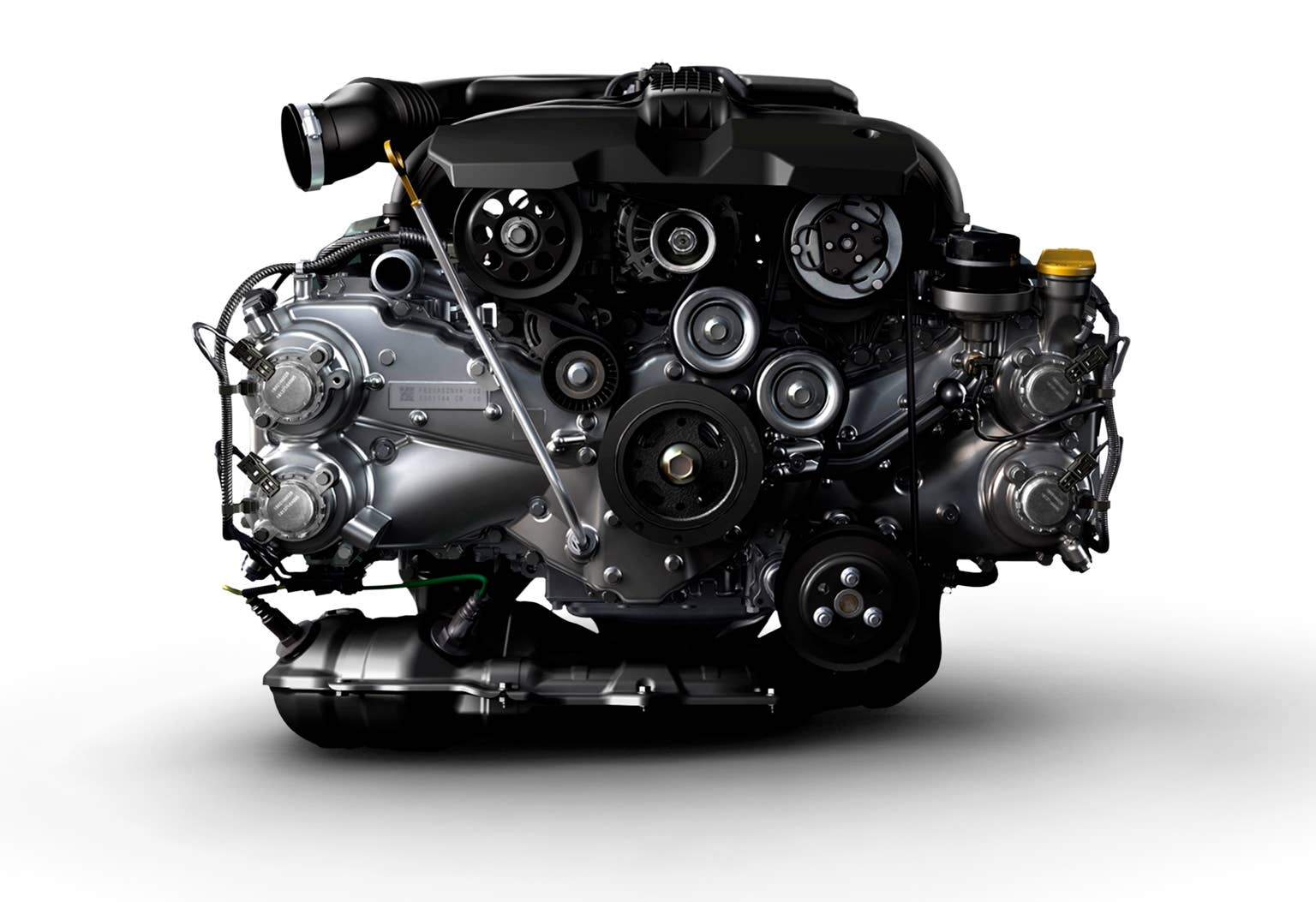
Subaru’s boxer engine is known for its horizontally opposed pistons, which move outward from either side of the crankshaft. This layout helps keep the engine’s center of gravity low and gives it a distinctive character that enthusiasts value.
However, four-cylinder boxer engines cannot completely eliminate their own rocking motion. Their wide configuration can also complicate packaging, while rotating internal components continue to produce vibration of their own.
Boxer engines already cancel much of their vibration through their design and do not require a balance shaft. Subaru’s patent therefore appears aimed at refining an established engine layout rather than fundamentally changing how it works.
Subaru Patent Does Not Confirm a Production Engine
The technology remains at the patent stage, and no specific vehicle has been confirmed to use the design. Eight Subaru engineers are named in the filing, which describes a four-cylinder boxer engine while leaving room for other engine configurations.
Subaru has also been exploring other technologies this year, including turbine range extenders and a mystery electric vehicle with performance-related hints. However, the new camshaft patent does not establish a production timeline or confirm that the mechanism will appear in a future model.
The drawings provide a look at how Subaru could address one of the remaining sources of vibration in its boxer engines, but they do not establish whether the system will reach production.
What the Patent Could Mean for Future Subaru Engines
If developed for production, the proposed mechanism could help Subaru improve engine refinement while retaining the low center of gravity and distinctive character associated with its boxer layout. Reducing vibration and timing-system loads are among the potential benefits described by the design.
For now, the patent represents an engineering concept rather than a confirmed product announcement. Its central goal is to preserve the boxer engine’s familiar characteristics while reducing the unwanted shaking generated by its rotating components.