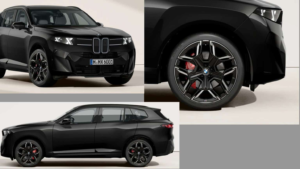
The future of the BMW manual transmission is becoming increasingly uncertain as fewer suppliers produce manual gearboxes, electrification adds technical challenges, and advanced driver-assistance systems become more complex. Despite strong demand in the United States, BMW M faces growing obstacles to keeping three pedals in its performance cars, raising the possibility of a simulated manual system inspired by Ferrari.
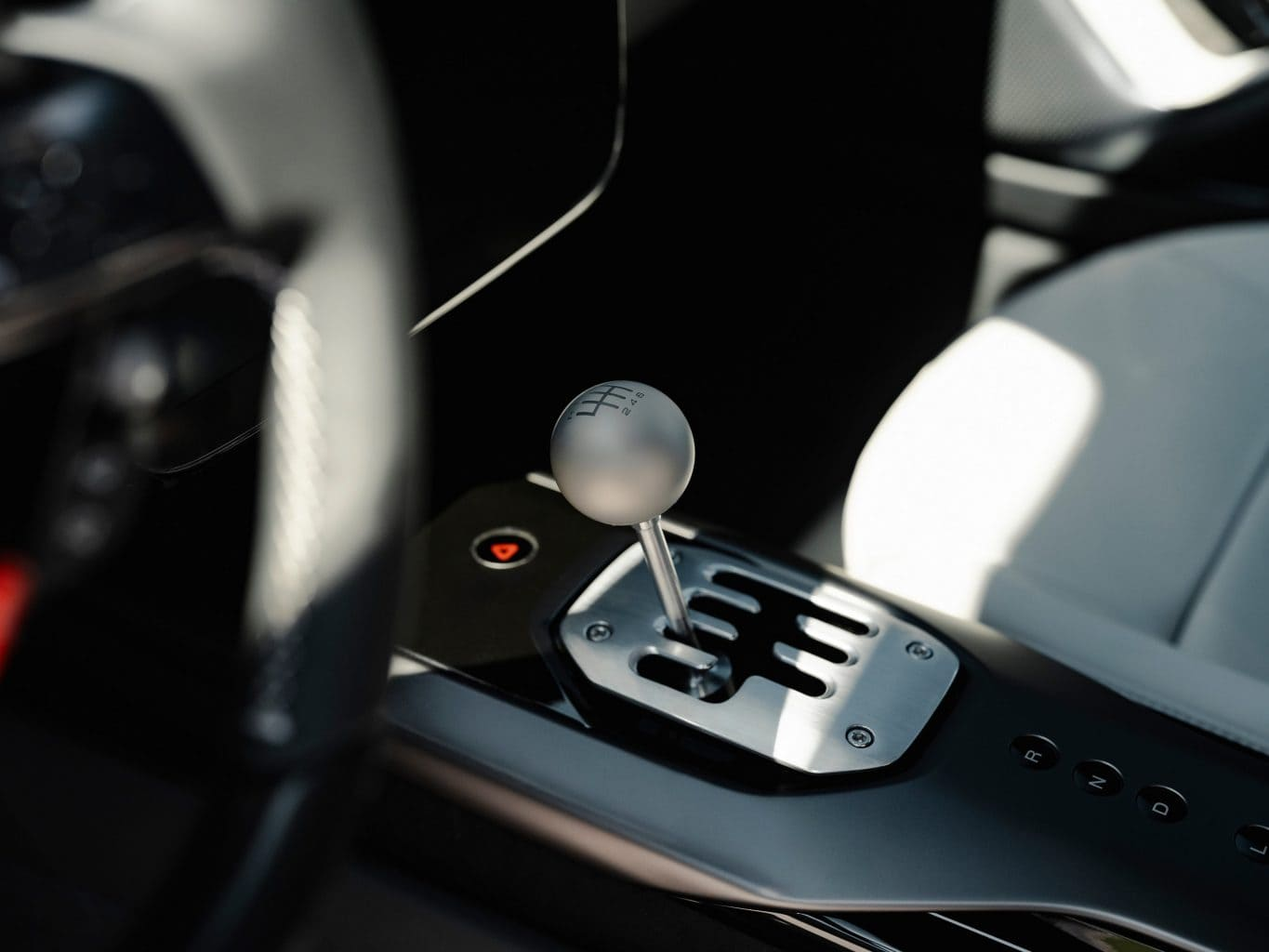
Ferrari has already demonstrated how electronic controls can recreate the experience of a traditional stick shift. Its limited-production 12Cilindri Manuale combines a gated shifter and clutch pedal with an eight-speed dual-clutch transmission, offering a more engaging driving experience without using a conventional manual gearbox. A similar approach could eventually give BMW enthusiasts another way to enjoy changing gears if traditional transmissions become impractical.
Why BMW Is Struggling to Keep the Manual Transmission
BMW M CEO Frank van Meel recently indicated that preserving the traditional six-speed manual is becoming increasingly difficult. Speaking in an exclusive interview at the BMW M Festival in Shanghai, he described the challenge as “really difficult,” pointing to several technical and financial factors contributing to the gradual decline of manual transmissions.
One major obstacle is the shrinking number of suppliers willing to develop and manufacture manual gearboxes. With fewer suppliers available, the investment becomes increasingly difficult to justify for a relatively small number of vehicles.
BMW’s increasingly powerful engines create another challenge. The company’s existing six-speed manual transmission has limitations when handling the torque produced by modern M cars, potentially making it unsuitable for future performance models without significant changes.
How Electrification Complicates BMW Manual Gearboxes
Electrification is adding another layer of complexity. Van Meel specifically identified 48-volt mild-hybrid technology as an obstacle, explaining that BMW’s current setup does not support the system with a manual transmission.
This limitation could become particularly important as future performance cars adopt mild-hybrid assistance to meet increasingly stringent emissions regulations. The next-generation BMW M3, identified by the G84 designation, is expected to use an evolution of the twin-turbocharged 3.0-liter inline-six engine with 48-volt technology.
Advanced driver-assistance systems present additional difficulties. As BMW integrates more technology into its vehicles, making these systems work alongside a traditional manual gearbox becomes increasingly complicated. Many driver-assistance features are designed primarily around automatic transmissions, creating further engineering challenges as vehicle systems become more sophisticated.
Together, these factors suggest that BMW’s manual transmission dilemma extends beyond customer demand. Supplier availability, engineering limitations, electrification requirements and development costs are making it harder to justify keeping a traditional stick shift in the lineup.
BMW Manual Demand Remains Strong in the United States
Despite these challenges, enthusiasts have not abandoned manual transmissions. Roughly half of the BMW M2 models sold in the United States still come with a stick shift, demonstrating that demand remains significant in the American market.
BMW M continues to serve drivers who prioritize engagement and the experience of changing gears over outright performance. However, strong demand for a manual option on a limited number of models does not necessarily justify developing an entirely new transmission for future vehicles.
As the G80-generation BMW M3 approaches the end of its run, the number of manual-equipped models continues to shrink. With the Z4 M40i out of the picture, the M2, M3 and M4 remain the final holdouts. The coupes are expected to continue offering manual transmissions for the rest of the decade.
BMW has repeatedly pledged to preserve the manual for as long as possible. However, the company faces a difficult balance between meeting enthusiast expectations and justifying the cost of developing and maintaining a transmission for a shrinking segment of the market.
Could BMW Copy Ferrari With a Simulated Manual?
Ferrari’s approach offers one possible alternative. The 12Cilindri Manuale uses electronic controls to recreate the experience of a traditional manual transmission, even though its gated shifter and clutch pedal are not mechanically connected to the gearbox.
Instead, sensors and software translate the driver’s movements into electronic commands. Ferrari has also engineered realistic resistance and feedback into the shifter and clutch pedal, allowing drivers to stall the car or make mistakes during a launch, just as they could with a conventional manual.
In manual mode, the system uses the dual-clutch transmission’s first six gears, reserving the top two ratios for automatic driving. The arrangement provides a more tactile driving experience while retaining the convenience of an automatic transmission. It is also considerably less expensive than developing a genuine manual gearbox.
A similar system could give BMW drivers selectable virtual gears, a convincing shift pattern, a physical shifter and potentially a clutch pedal that changes how the car responds to driver inputs.
The purpose would not be to convince drivers that they were operating a conventional gearbox. Instead, BMW could offer a driving mode designed to prioritize engagement rather than acceleration times. Drivers seeking maximum performance could leave the system disabled, while those who enjoy changing gears could select a more interactive experience.
Why a Simulated Manual Would Not Replace the Real Thing
A software-based manual experience would not satisfy every enthusiast. Traditionalists could argue that a simulated gearbox cannot reproduce the mechanical connection and satisfaction of operating a real clutch and shifting physical gears.
For that reason, a simulated system should not become an excuse to discontinue genuine manual transmissions prematurely. As long as customers continue buying manual BMW M cars, the company should keep offering them wherever technical and financial considerations allow.
However, if BMW eventually faces a choice between eliminating the manual entirely and offering a convincing electronic alternative, a simulated system could provide enthusiasts with another way to engage with their cars.
BMW’s Electric M3 Already Features Simulated Gear Shifts
BMW has confirmed that its upcoming electric M3, identified by the ZA0 designation, will feature simulated gear shifts. The planned feature shows that the company is already exploring ways to make an electric performance car feel more like a traditional vehicle with a conventional powertrain.
Whether the lessons learned from that project could eventually be applied to a combustion-powered M car remains an open question. A simulated manual could offer one potential path if traditional gearboxes become too difficult or expensive to maintain in future performance models.
What Comes Next for the BMW Manual Transmission?
BMW M still has time to determine how it will approach the future of manual transmissions, but the challenges are unlikely to disappear. Stricter emissions regulations, electrification, increasing engine torque and a shrinking pool of transmission suppliers continue to complicate the case for a traditional six-speed gearbox.
A simulated manual would not satisfy every purist, nor could it reproduce every aspect of a genuine stick shift. Still, Ferrari’s approach and BMW’s plans for simulated gear changes in the electric M3 demonstrate that electronic systems can offer new ways to recreate familiar driving experiences.
For BMW, the immediate priority remains preserving real manual transmissions where feasible. If that eventually becomes impossible, a carefully developed simulated system could offer an alternative for drivers who value the involvement of changing gears as much as the performance of the car itself.