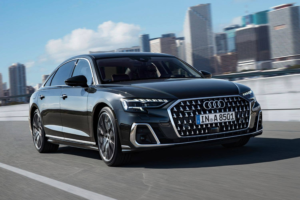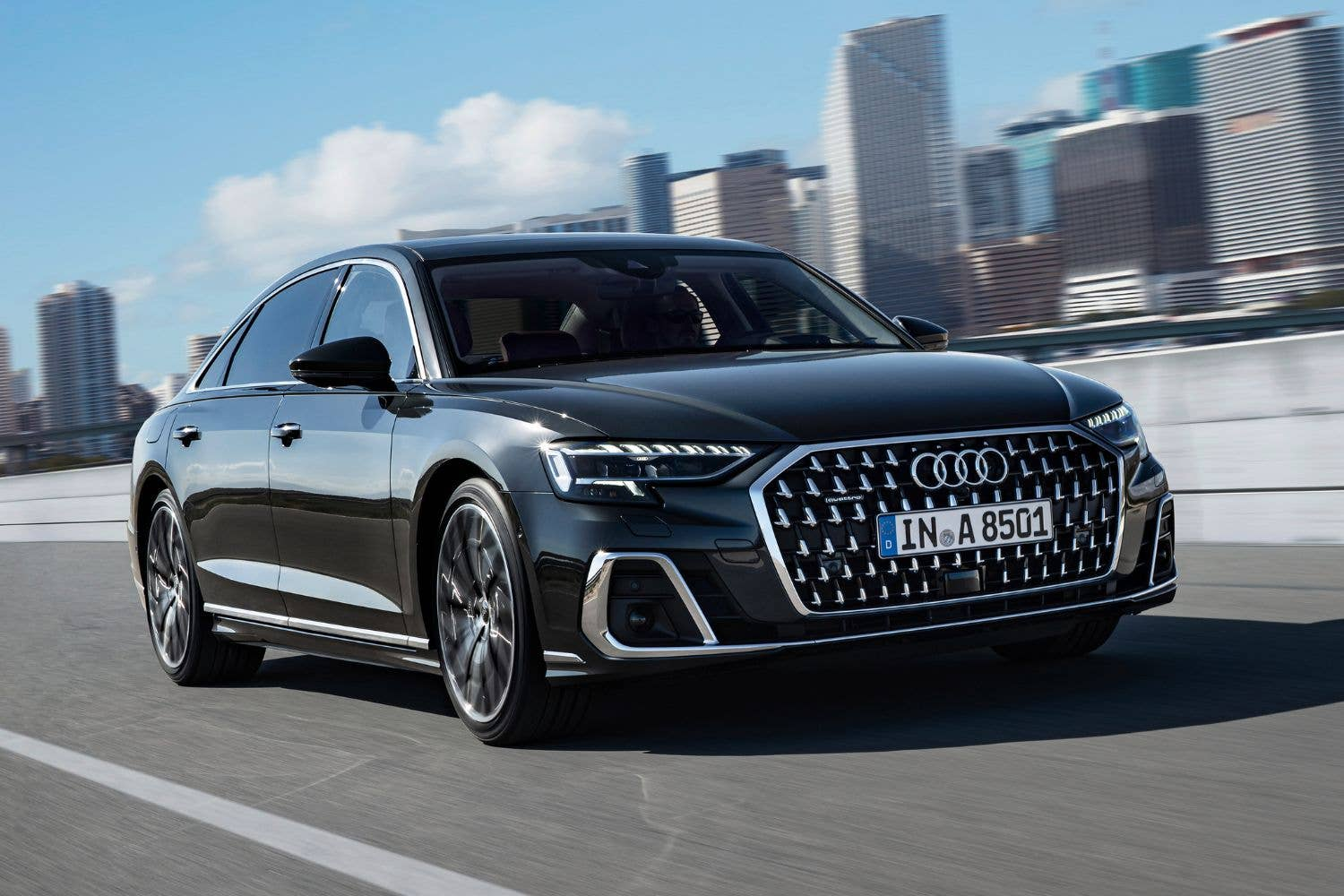
The Audi A8 has reached the end of its 32-year production run, marking a major turning point for the German luxury sedan. The final example of the current generation reportedly rolled off the production line in mid-October, ending continuous manufacturing at Audi’s Neckarsulm facility since 1994. Although the model remains available in the United States, its long-term future is still uncertain, with several possible plans for a revival under consideration.
Audi A8 Production Officially Comes to an End
Questions about the Audi A8’s future emerged last year as sales continued to struggle amid declining demand for full-size luxury sedans. Buyers have increasingly shifted toward large luxury SUVs, leaving traditional flagship sedans with a smaller customer base.
Audi previously acknowledged that it had not fully determined what would come next for its S-Class competitor, particularly because there was no new platform available to support another generation.
In March 2026, Audi stopped accepting orders for the A8 in Germany. Customers were subsequently limited to vehicles already available at dealerships, where inventory was also limited. The sedan continued to be offered in the United States and received several updates for the 2027 model year, but its production future was already approaching its conclusion.
Production of the current-generation A8 has now finished, with the final vehicle leaving the factory in mid-October.
The milestone brings 32 consecutive years of A8 production in Neckarsulm to a close. Audi has since repurposed the manufacturing space previously dedicated to the flagship sedan to increase production of the A5 and A6.
The Audi A8’s Legacy as a Luxury Flagship
Introduced as the successor to the advanced but ultimately unsuccessful Audi V8, the A8 played an important role in demonstrating the company’s engineering capabilities.
Throughout its history, the flagship sedan competed against some of the industry’s most respected luxury vehicles, including the E38 BMW 7 Series, UCF10 Lexus LS and W140 Mercedes-Benz S-Class.
The first-generation A8 established itself among those competitors and maintained its position in the luxury sedan segment for more than three decades.
Could the Audi A8 Return in 2030?
Although the end of current production marks a significant milestone, several reports suggest that the Audi A8 could eventually make a comeback.
One possibility points to a return around 2030, although the revived model would reportedly no longer be manufactured in Neckarsulm. Instead, production could move to Leipzig, where Porsche operates a manufacturing facility.
Under this reported plan, the next-generation A8 would share its platform with the future Porsche Panamera. The arrangement would reflect closer cooperation between Audi and Porsche as both brands work to make greater use of shared vehicle architectures.
The Premium Platform Combustion chassis is expected to serve several future models from the two manufacturers. These reportedly include the gasoline-powered successor to the Porsche Macan, the Audi Q5, a future large three-row Porsche SUV and the Audi Q9.
The potential arrangement would also fit Volkswagen Group’s broader efforts to reduce costs by maximizing manufacturing capacity and sharing platforms across its brands.
Could Huawei Help Develop a New Audi A8?
Another possibility for the A8’s future involves a potential partnership with Huawei. Audi CEO Gernot Döllner is reportedly considering working with the Chinese technology company to develop a new version of the luxury sedan.
Under this proposal, the vehicle could be developed and manufactured in China, where demand for large luxury sedans remains strong.
This approach would represent a different direction from the reported Porsche-based revival, offering another possible route for Audi to preserve its flagship sedan.
Why Full-Size Luxury Sedans Are Becoming Rare
The uncertainty surrounding the Audi A8 reflects a wider challenge facing the full-size luxury sedan market. Once a major part of the premium automotive industry, these vehicles have increasingly become niche offerings, with fewer manufacturers willing to commit resources to the segment.
Lexus has discontinued the LS in several key markets, while Infiniti has been absent from the category for decades. Lincoln has no plans to bring back a large sedan following the commercial failure of the Continental.
Cadillac, meanwhile, offers the Celestiq, but its price of around $400,000 positions it primarily as a technology showcase that happens to be available for purchase.
European Automakers Continue Investing in Flagship Sedans
Despite the challenges, several European luxury brands are continuing to invest in large sedans.
Jaguar recently unveiled the Type 01, a fully electric full-size sedan representing the brand’s biggest strategic redirection since its founding.
Mercedes-Benz has also updated the S-Class, including the addition of a new V8 engine, while BMW has given the 7 Series a major overhaul both inside and out.
These developments demonstrate that some manufacturers remain committed to the flagship sedan category, even as the segment becomes increasingly specialized.
What Comes Next for the Audi A8?
With production now finished after 32 years, the Audi A8’s immediate future remains uncertain. Possible plans include a 2030 comeback through a shared platform with Porsche or a China-based development project involving Huawei.
For now, neither possibility represents an immediate return for Audi’s flagship sedan, leaving the end of its current production run as the closing chapter of a long-standing model in the company’s lineup.