The Democratic Party’s sweeping victories in Tuesday’s midterm elections could reshape the political landscape in Washington and create major consequences for the American automotive industry. With Republicans losing ground in traditional strongholds including Texas, South Carolina, Iowa and Kansas, the incoming Congress could push for significant changes involving tariffs, electric vehicles, fuel economy standards and trade policy.
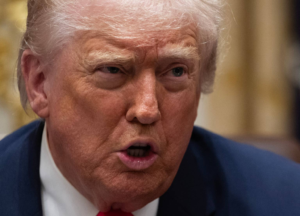
The election results also raise questions about President Donald Trump’s ability to maintain his current policy direction, particularly after threatening to become the “Veto President.” As the 120th Congress prepares to take office, automakers and consumers are watching closely to see whether lawmakers can address rising vehicle prices, inflation and uncertainty surrounding international trade.
The Economy and Rising Vehicle Prices Take Center Stage
Economic concerns have been growing for months, with inflation reaching an annualized rate of 3.7% in September. American consumers continue to feel the pressure when purchasing groceries and filling their gas tanks.
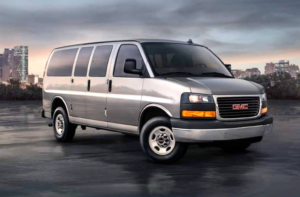
Gasoline prices have increased almost 50% since the beginning of the Iran War. Diesel prices have climbed even higher, adding to inflationary pressure because the fuel powers everything from agricultural and construction equipment to last-mile delivery vans.
Energy costs could remain elevated until the Iran War ends and the Strait of Hormuz reopens. The critical shipping route normally handles 20% of the world’s petroleum supplies.
Affordability has become an especially important challenge for the automotive industry. Average vehicle transaction prices have continued climbing, reaching just over $52,000 in October.
Despite the higher costs, vehicle sales have remained stronger than expected. The market is forecast to reach 16.1 million vehicle sales this year.
However, that figure remains significantly below the record 17.57 million vehicles sold in 2016, as millions of potential buyers struggle to afford new vehicles.
Could Congress Push Trump to Reverse Auto Tariffs?
Rising vehicle prices are being driven by more than energy costs. President Trump’s trade policies have also increased expenses for automakers through tariffs on imported vehicles, automotive components, and foreign-made steel and aluminum used in vehicles assembled in the United States.
A Democratic-controlled Congress could attempt to pressure the president into rolling back some of these tariffs. However, lawmakers may face significant obstacles because changing existing trade policies would require modifying or eliminating current trade legislation.
Trade negotiations involving the United States, Mexico and Canada are another major concern for automakers. The United States-Mexico-Canada Agreement, originally established during Trump’s first term, maintained relatively open trade relationships among the three countries.
As negotiations continue without a clear resolution, automakers are finding it difficult to develop reliable medium- and long-term investment strategies.
Automakers want a stable agreement that provides the certainty needed to plan future investments.
Fuel Economy Standards and Electric Vehicle Policies Could Change
Environmental regulations are another area where the new Congress could challenge the Trump administration’s policies.
Among the president’s executive actions was a controversial rollback of Corporate Average Fuel Economy (CAFE) requirements exceeding 50 mpg that had been established under former President Joe Biden.
New legislation could attempt to restore that target, potentially requiring automakers to develop more fuel-efficient vehicles, including hybrids and electric vehicles.
Reinstating the standards would effectively pressure the automotive industry to produce more efficient vehicles, including hybrids and EVs.
Congress could also attempt to require the administration to collect billions of dollars in fines that automakers technically owe for failing to meet CAFE requirements. The White House has chosen not to pursue those payments.
Electric vehicle incentives could also return to the political debate. Lawmakers may seek to restore tax incentives of up to $7,500 for EV buyers, which Congress eliminated last year through the One Big Beautiful Bill Act, signed into law by Trump on July 4, 2025.
The new congressional majority could additionally push to continue federal spending on a nationwide electric vehicle charging network using funds that had already been allocated.
Trump’s Veto Threat Could Limit Congressional Action
Despite the Democrats’ electoral gains, the new Congress will still face constitutional limits on its ability to change federal policy. Any legislation approved by lawmakers could encounter opposition from the president.
After acknowledging the scale of the Democratic victory Tuesday night, Trump posted an image on Truth Social showing a red MAGA hat featuring a single word: “VETO.”
The message reinforced concerns that the president could use his veto power to block legislation supported by the incoming Democratic majority.
The new Congress could accomplish very little unless lawmakers persuade the president to reduce his reliance on executive power.
Although Congress can override a presidential veto with support from two-thirds of members in both chambers, Republicans previously failed to secure the necessary supermajority after Trump vetoed two bills during his second term.
Bipartisan Cooperation Could Shape Automotive Legislation
Despite the political divisions, some opportunities for cooperation between Democrats and Republicans could emerge, particularly on issues involving China.
Previous bipartisan cooperation on China could provide a foundation for future automotive legislation, including the proposed Connected Vehicle Security Act.
Connected Vehicle Security Act Could Block Chinese Automakers
The proposed legislation would establish restrictions similar to an executive action introduced under former President Joe Biden, which prohibited the sale of vehicles using Chinese connected-car hardware and software.
However, the legislation goes further by also seeking to prevent Chinese automakers from manufacturing and selling vehicles in the United States.
The measure was introduced by Michigan Democratic Sen. Elissa Slotkin and Ohio Republican Sen. Bernie Moreno, a former car dealer, and has attracted substantial bipartisan support.
Major automakers, including General Motors, Ford and Toyota, have an interest in limiting the expansion of Chinese competitors such as BYD, Geely and Chery.
Chery has reportedly been exploring the possibility of purchasing an existing U.S. manufacturing facility to establish a presence in the American market.
Ford CEO Jim Farley has described the possibility of Chinese automakers entering the U.S. market as “an existential threat.”
However, the legislation’s future remains uncertain. Despite support from both parties, the proposal could receive limited attention from the incoming Congress.
One challenge is that while established automakers want to restrict Chinese competitors, consumer surveys indicate strong interest in affordable vehicles from brands such as Geely, Chery and BYD. Their lower-cost offerings could help address rising vehicle prices.
State Governments Could Deliver the Biggest Changes
While significant federal legislation could face resistance, the effects of the election may be more visible at the state level.
Democrats are expected to face difficulties passing major legislation through Congress and securing Trump’s approval.
More substantial changes could emerge from state governments, where Democrats performed strongly in several elections, including in Texas, one of the country’s largest automotive markets.
Potential state-level legislation could address several important automotive issues, including electric vehicle mandates, infrastructure development, franchised dealership requirements and right-to-repair regulations.
What the Midterm Results Mean for the Automotive Industry
The Democratic victories could create new opportunities to address challenges facing automakers and American car buyers, particularly rising vehicle prices, trade uncertainty and the future of electric vehicle policies.
However, Trump’s threatened vetoes could limit what the incoming Congress accomplishes at the federal level. Whether lawmakers can overcome those political divisions through bipartisan cooperation may determine how much the election results ultimately change the automotive industry.