BMW Group’s electric vehicle sales are growing at different rates across its major markets, with Europe leading the company’s transition to electric mobility while the United States continues to lag behind. Third-quarter 2026 figures show that fully electric vehicles accounted for 34.7% of BMW Group sales in Europe, compared with just 4.7% in the US.
Globally, battery-electric vehicles (BEVs) represented 20% of BMW Group’s total sales between July and September. When plug-in hybrids (PHEVs) are included, electrified vehicles accounted for 27.4% of worldwide sales, meaning more than one in four vehicles sold by BMW and MINI had an electrified powertrain.
Europe Leads BMW’s Electric Vehicle Sales
Europe remains BMW Group’s strongest region for electric vehicle adoption. Fully electric models accounted for 34.7% of the company’s regional sales in the third quarter of 2026.
Including plug-in hybrids, the combined share of electrified vehicles reached 46.9%, bringing Europe close to the point where nearly half of BMW Group vehicles sold in the region are electrified.
The figures highlight Europe’s importance to BMW’s electrification strategy, supported by stringent emissions regulations, government incentives in certain markets, and an increasingly diverse range of electric models.
BMW’s Electric Vehicle Sales in the US Remain Low
The United States recorded a considerably lower electrification rate during the third quarter. Fully electric vehicles accounted for just 4.7% of BMW Group sales, while the combined share of electric vehicles and plug-in hybrids reached 11.4%.
The absence of the iX1 and iX2 from the American market also limits the company’s available electric vehicle lineup. BMW has decided not to offer either model in the United States.
Charging infrastructure, consumer preferences, the availability of more affordable vehicles, and the country’s political climate all influence demand for electric vehicles. BMW therefore has considerable room to expand its presence as it introduces next-generation electric models.
China and Other Markets Show Different EV Trends
China recorded a 6.5% share for fully electric vehicles in the third quarter, increasing to just 6.6% when plug-in hybrids are included.
The small difference indicates that plug-in hybrids contribute very little to BMW Group’s electrified sales mix in China, which is both the world’s largest automotive market and the company’s largest individual market.
Other markets, grouped under Asia-Pacific, Eastern Europe, the Middle East, and Africa, performed better. Fully electric vehicles represented 18% of sales across these regions, while the combined share of electric vehicles and plug-in hybrids reached 23.3%.
Although these figures remain below Europe’s electrification rate, they are considerably higher than the results recorded in China and the United States.
BMW Electrified Vehicle Sales Reach 26.1% in 2026
BMW Group’s year-to-date figures provide another indication of the growing role of electrified powertrains across its global lineup.
Fully electric vehicles accounted for 18.4% of combined BMW and MINI sales so far this year. Plug-in hybrids contributed another 7.7 percentage points, bringing the total share of electrified vehicles to 26.1%.
That means more than one in four BMW and MINI vehicles sold in 2026 has an electrified powertrain and a charging port.
Neue Klasse Models Expected to Expand BMW’s EV Lineup
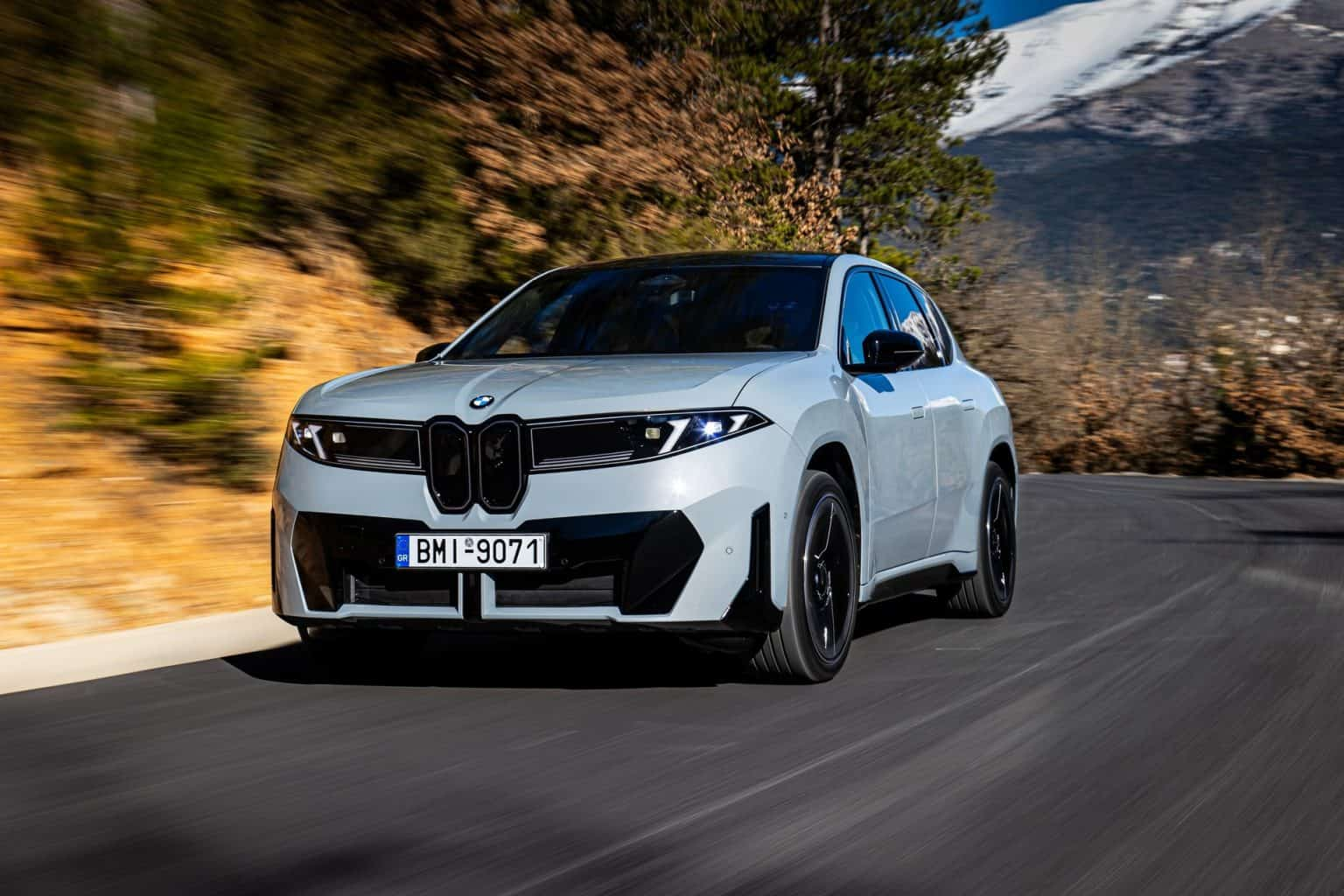
BMW’s Neue Klasse program is expected to support its next phase of electric vehicle expansion. The i3 is scheduled to reach the market this month, followed by the next-generation iX1 in 2027 and the i1 in 2028.
An iX7 is also approaching, although its high price is expected to prevent it from becoming a high-volume model.
Despite expanding its electric lineup, BMW is not abandoning conventional combustion engines or plug-in hybrids anytime soon. Instead, the company’s Power of Choice strategy allows customers to select different powertrains according to their needs and the conditions in their local markets.
BMW Takes a Different Approach to Global Electrification
The third-quarter results demonstrate how differently electric vehicle adoption is progressing across BMW Group’s major markets. Europe is approaching a 50% share for electrified vehicles, while the United States remains much more dependent on conventional powertrains.
Rather than expecting every region to transition at the same speed, BMW is continuing to adapt its vehicle offerings to local market conditions while investing in electric mobility.
The latest figures show that electrified vehicles are becoming an increasingly important part of BMW and MINI sales, although the company still faces a significant challenge in expanding adoption, particularly in the United States.