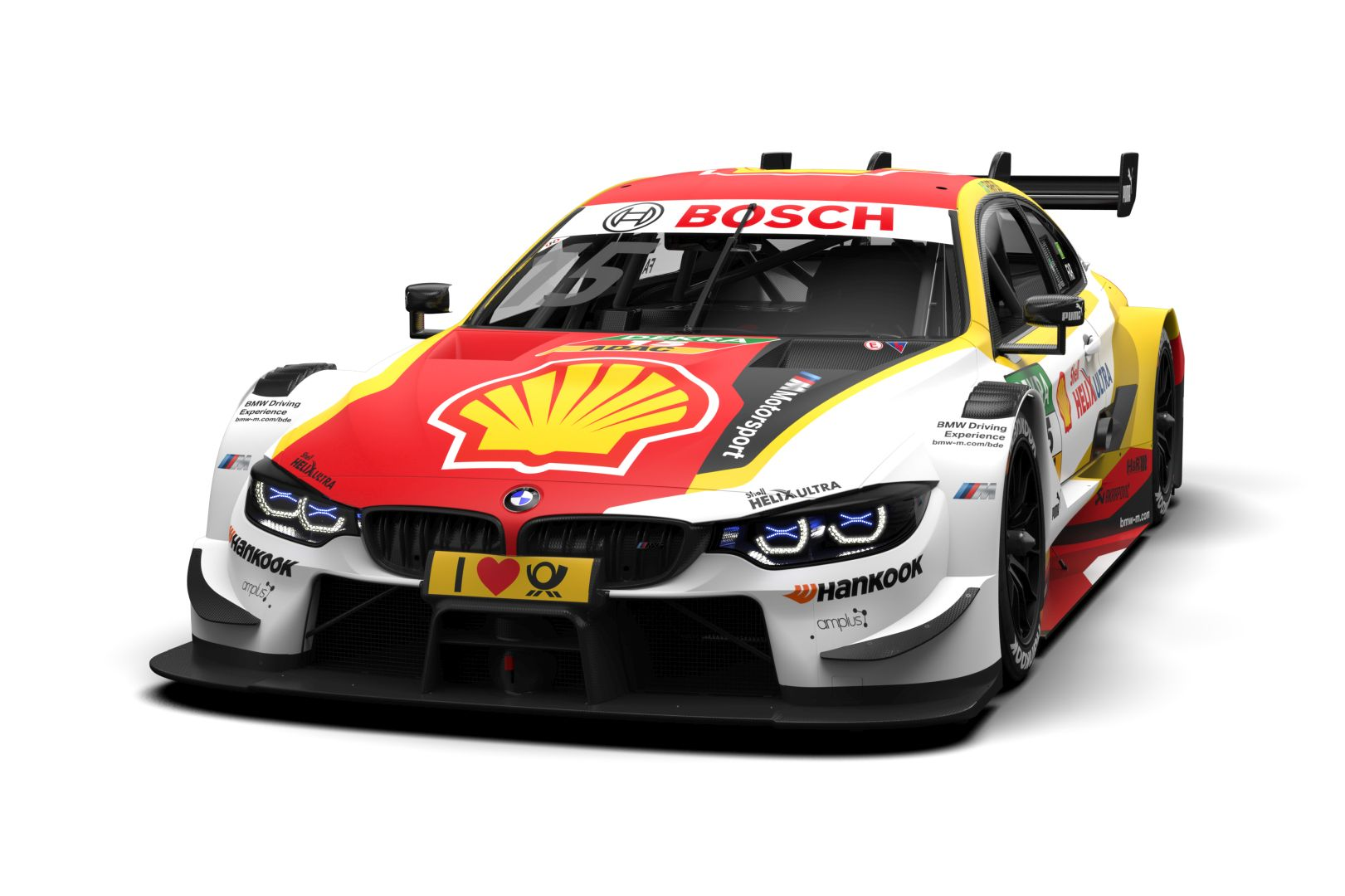
BMW has opened the doors to its secret M Garage once again, showcasing one of its most successful racing cars: the BMW M4 DTM (F82). Built specifically for the Deutsche Tourenwagen Masters, the purpose-built race car competed between 2014 and 2018, capturing the drivers’ championship in both 2014 and 2016.
In the latest video, Dominik Nadler, Head of Track Operations at BMW M Motorsport, explains the engineering details that made the M4 DTM such a distinctive competitor. Although its exterior resembles the first-generation production M4, the similarities largely end beneath the bodywork, where BMW developed an entirely different machine focused on track performance.
A Bespoke V8 Engine Produces Up to 500 Horsepower
At the heart of the BMW M4 DTM is the P66 V8 engine, a bespoke powerplant developed specifically for motorsport in 2012. In its current restricted configuration, the engine produces approximately 480 to 500 horsepower, with its output depending heavily on the amount of air available to it.
The engine compartment also features distinctive gold-colored heat shielding. This material helps keep intake temperatures down, allowing the engine to deliver maximum power.
Advanced Engineering Keeps the M4 DTM Extremely Low
One of the car’s most important engineering characteristics is its low-slung mechanical layout. BMW positioned the engine’s cylinder heads extremely close to the floor, while the suspension uses a double A-arm, pushrod/pullrod arrangement to keep its components as low as possible.
The dampers are mounted horizontally instead of vertically, freeing up additional space and helping lower the car’s center of gravity.
The exhaust system also follows an unconventional design. Its manifolds point upward rather than using the traditional routing found in road cars before directing exhaust gases toward the sides of the vehicle.
Additional gold-colored insulation protects the carbon-fiber doors from extreme exhaust temperatures. The doors are exceptionally lightweight and can be removed simply by lifting them out.
Rear-Mounted Gearbox Creates a Rigid Structure
The rear section features another important engineering decision: a transaxle configuration that places the engine at the front and the gearbox at the rear.
These two major components form an extremely rigid structure, with the suspension mounted directly to both. Working alongside the stiff monocoque, this arrangement creates a highly rigid assembly extending from the engine through the gearbox and ultimately to the tires.
No Traction Control or ABS for Drivers
The BMW M4 DTM does not rely on electronic driving aids such as traction control or anti-lock braking systems (ABS). Instead, drivers must manage the car themselves, without these electronic safety nets.
Every steering adjustment and millimeter of pedal movement has a direct effect on the vehicle’s behavior. This setup gives drivers an unusually direct connection with the machine, bringing back the feel of earlier generations of racing cars.
BMW also equipped the M4 DTM with a drag reduction system (DRS). On straights, where drivers require less downforce, the system reduces aerodynamic drag and helps increase top speed by approximately 10 to 15 km/h (6 to 9 mph), depending on the settings permitted by the racing series.
A Racing-Focused Cockpit With Essential Driver Information
Inside, the M4 DTM features a cockpit designed entirely around the needs of its driver. A specially molded foam seat fits closely around the driver’s body, while a digital display provides essential information, including speed, selected gear, oil pressure and temperature.
The display offers several selectable pages, although the volume of information presented could be overwhelming for someone unfamiliar with racing cars.
BMW Turned the M4 DTM Into a Two-Seat Taxi Car
Despite its original single-purpose racing design, this particular BMW M4 DTM has undergone another transformation. Following its championship competition career, the car was rebuilt as a two-seat taxi vehicle, adding a passenger seat alongside the driver.
The conversion gives visitors a rare opportunity to experience a racing machine originally engineered for one objective: achieving the highest possible speed around a racetrack.