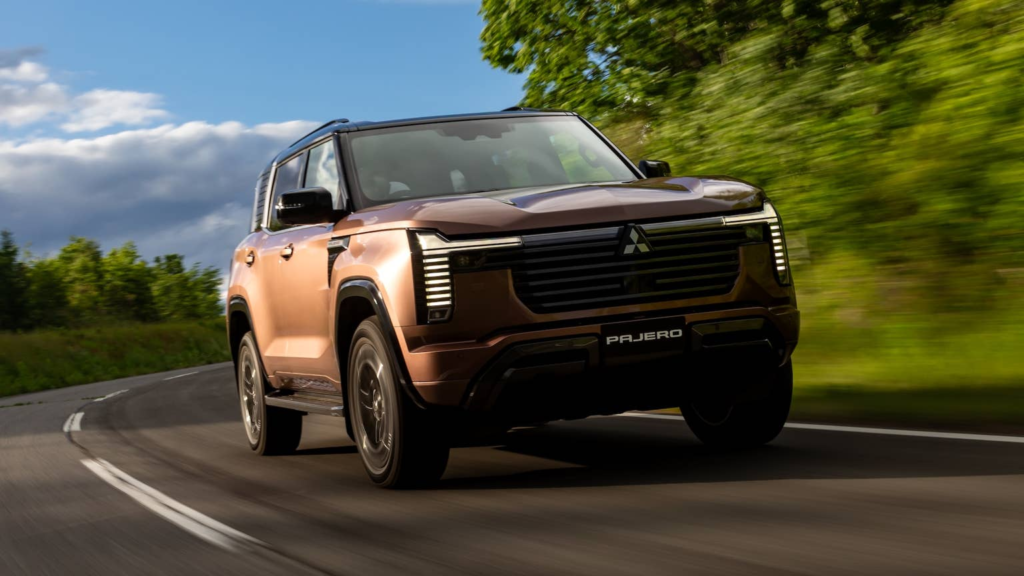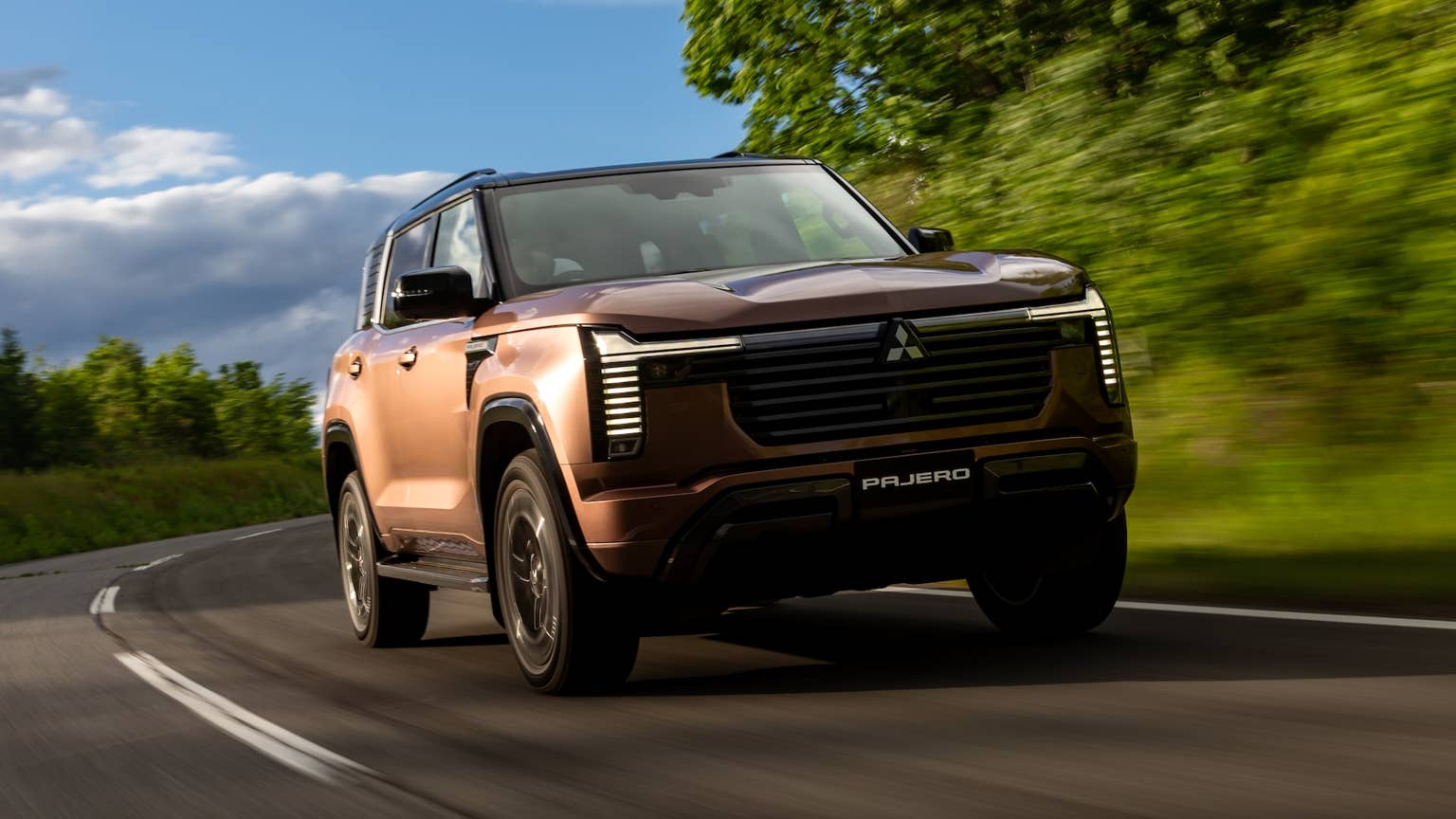
The returning Mitsubishi Pajero features an interesting engineering detail that could make a difference in its driving performance: a near-even 52:48 front-to-rear weight distribution. The figure is particularly notable for an SUV measuring nearly five meters long and built on a rugged ladder-frame platform.
The development is especially relevant for American buyers, as Mitsubishi has been hinting at bringing back the Montero nameplate in the United States.
New Mitsubishi Pajero Dimensions and Engine
The new Mitsubishi Pajero measures 193.7 inches long, 75.8 inches wide, and 75.2 inches tall, with a 113-inch wheelbase. It also offers 9.1 inches of ground clearance.
Under the hood, the SUV features a 2.4-liter four-cylinder diesel engine paired with an eight-speed automatic transmission and a transfer case.
Despite having most of its heavy components positioned toward the front, the Pajero achieves a 52:48 weight distribution. While it does not reach the 50:50 balance associated with sports cars, the relatively even split could help improve its on-road behavior.
Why the Pajero’s 52:48 Weight Distribution Matters
Weight distribution describes how a vehicle’s total weight is divided between its front and rear axles. When most of the weight sits over the front axle, the front tires handle steering and a significant portion of the braking workload.
The Pajero’s 52:48 configuration distributes that load more evenly. This allows the tires to work together more effectively when cornering, potentially reducing understeer and making direction changes feel more predictable.
Although this setup will not turn a seven-seat, ladder-frame SUV into a sports car, it gives the vehicle a better foundation for balanced handling.
Suspension and S-AWC Support Stability
The weight distribution works alongside the Pajero’s double-wishbone independent front suspension and a new five-link rigid rear axle. Both systems were developed with plenty of suspension travel and the ability to follow road surfaces in mind.
The SUV also features Super-All Wheel Control (S-AWC), which connects driving, turning, and braking. Combined with Super Select 4WD-II, the system helps maintain traction and stability by managing forces at each wheel.
Mitsubishi Wants the Pajero to Offer More Than Off-Road Capability
The new Pajero’s development goes beyond installing a capable four-wheel-drive system. Its ladder-frame chassis has also been revised, with more high-tensile steel and structural adjustments designed to increase stiffness in key areas.
The goal is to improve handling without compromising ride comfort. The 52:48 weight distribution is an important part of this approach, helping support the SUV’s performance on different surfaces.
The new Pajero combines its near-even weight distribution with an updated chassis, revised suspension, S-AWC, and Super Select 4WD-II. While these features will not transform the large SUV into a sports car, they establish a foundation for balancing off-road capability with everyday driving comfort.