
The luxury electric SUV market is no longer emerging—it’s fiercely competitive. And if you’re shopping in 2026, the debate around
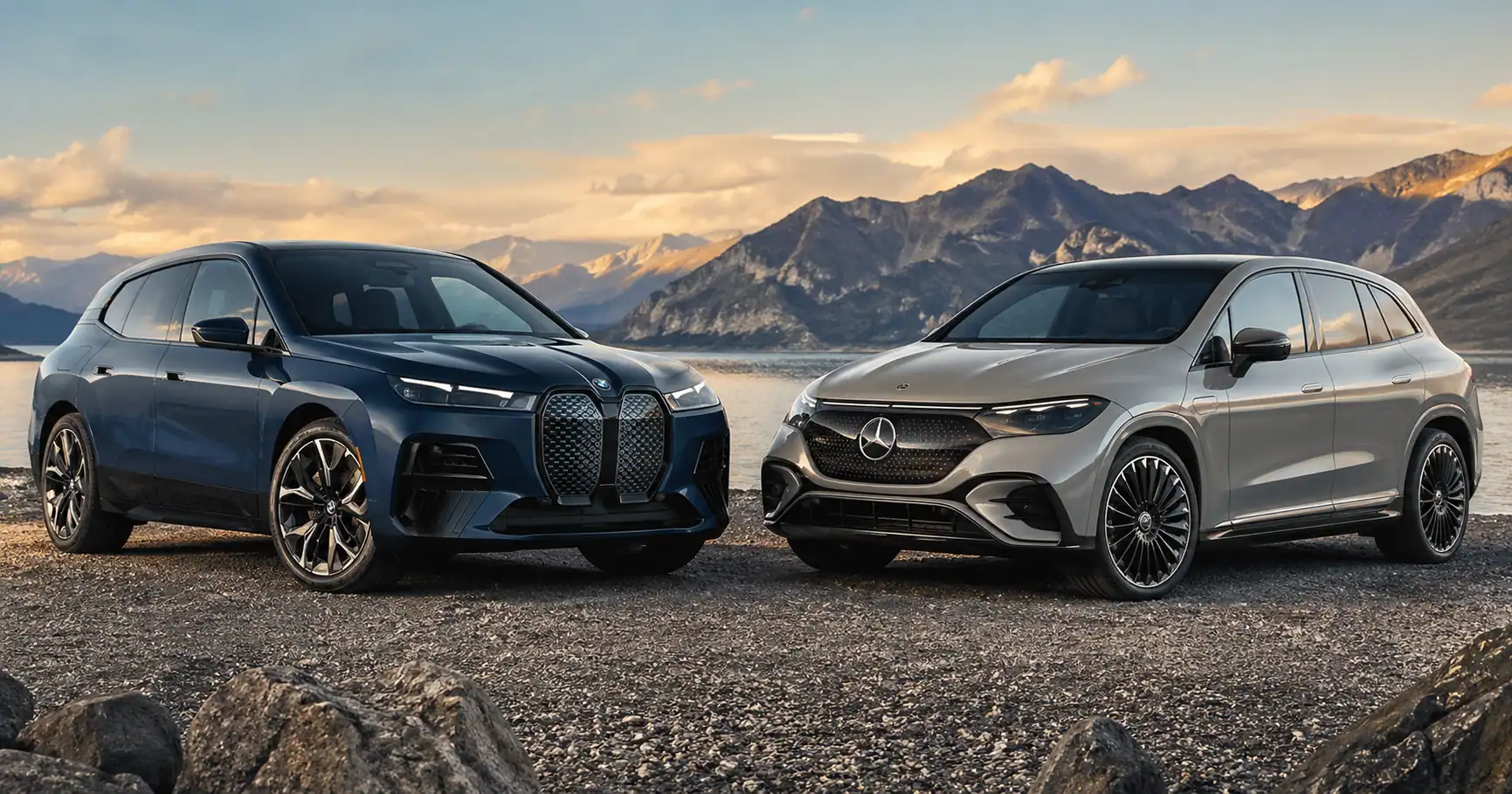
BMW iX vs Mercedes EQE SUV is one of the most important decisions you’ll face. Both vehicles represent the future of their brands, blending cutting-edge technology with premium comfort—but they take very different approaches to performance, design, and value.
In this in-depth comparison, we break down everything you need to know about the BMW iX and the Mercedes-Benz EQE SUV to help you decide which one deserves a spot in your driveway.
Quick Overview: BMW iX vs Mercedes EQE SUV
- BMW iX: Tech-forward, powerful, and standard AWD across all trims.
- Mercedes EQE SUV: More affordable entry point, smoother handling, and advanced safety features.
At first glance, both SUVs offer over 300 miles of range and premium interiors—but the real differences appear when you look deeper.
Performance and Driving Experience
Power and Acceleration
The BMW iX clearly leads in raw performance. Even the base xDrive45 model produces around 402 horsepower, while higher trims push well beyond 500 hp.
By comparison, the EQE 320+ starts at approximately 315 horsepower, which is sufficient for daily driving but less thrilling.
- BMW iX: Strong acceleration, standard AWD, sportier feel
- EQE SUV: Balanced power, smoother ride, optional AWD
Handling and Ride Quality
This is where Mercedes flips the script. The EQE SUV is widely praised for its agility and maneuverability, especially with optional rear-wheel steering. It feels lighter and easier to handle in urban environments.
The iX, on the other hand, prioritizes comfort. Its ride is quieter and more insulated, making it ideal for long-distance cruising.
Range and Charging
Range anxiety is less of a concern in 2026, but it still matters.
- BMW iX: Up to ~312 miles of range
- EQE SUV: Competitive range, varies by configuration
A notable advantage for the EQE SUV is the inclusion of a standard NACS (Tesla-style) charging adapter, expanding access to charging networks.
If you prioritize maximum range consistency, the iX has a slight edge—but the EQE offers more charging flexibility.
Interior and Technology
Cabin Design
BMW takes a futuristic approach. The iX features a minimalist interior with a curved display, sustainable materials, and a panoramic glass roof that enhances openness.
Mercedes leans into luxury and immersion. The optional Hyperscreen transforms the dashboard into a wall of digital displays, creating a more dramatic experience.
Comfort and Space
- BMW iX: More cargo space (up to 77.9 cu. ft.), airy feel
- EQE SUV: Slightly more compact, but still premium
If you’re planning road trips or family use, the iX offers better practicality.
Safety and Driver Assistance
Mercedes takes a more aggressive approach to safety innovation in 2026.
- Standard front-seat center airbag
- Height-adjustable shoulder belts
- Advanced driver assistance systems
BMW still offers strong safety tech, including hands-free highway driving, but lacks some of the newer physical safety features found in the EQE SUV.
Pricing and Value
- BMW iX: Starts around $76,000
- EQE SUV: Starts around $66,000
That ~$10,000 price difference is significant. The EQE SUV delivers strong value for buyers entering the luxury EV segment, while the iX justifies its higher price with performance and standard AWD.
Pros and Cons
BMW iX
- ✔ Powerful performance across all trims
- ✔ Standard all-wheel drive
- ✔ Spacious and futuristic interior
- ✖ Higher starting price
- ✖ Fewer unique safety hardware features
Mercedes EQE SUV
- ✔ Lower entry price
- ✔ Superior handling and maneuverability
- ✔ Advanced safety features
- ✖ Lower base horsepower
- ✖ AWD costs extra
Which One Should You Buy?
Choosing between the BMW iX vs Mercedes EQE SUV ultimately comes down to your priorities.
Choose the BMW iX if you want:
- Maximum performance
- Standard AWD capability
- More cargo space and comfort
Choose the Mercedes EQE SUV if you want:
- Better value for money
- Smoother handling in city driving
- Cutting-edge safety features
In simple terms, the iX feels like a high-tech powerhouse, while the EQE SUV is a refined, balanced luxury cruiser.
Frequently Asked Questions (FAQ)
Which is better: BMW iX vs Mercedes EQE SUV?
Neither is universally “better.” The BMW iX excels in power and interior space, while the EQE SUV stands out for value, handling, and safety.
Which SUV has better range?
Both offer over 300 miles of range, but the BMW iX has a slight edge in consistency depending on trim and configuration.
Is the Mercedes EQE SUV worth the lower price?
Yes. It offers excellent value, especially for buyers who don’t need maximum performance and prefer a smoother driving experience.
Does the BMW iX support hands-free driving?
Yes, the BMW iX offers advanced hands-free driving features for highway use, making long trips more convenient.
Which is better for families?
The BMW iX is generally better for families due to its larger cargo space and roomier interior.
As electric luxury SUVs continue to evolve, the BMW iX vs Mercedes EQE SUV comparison highlights a broader shift in the market: buyers now have real choices. Whether you prioritize performance or practicality, there’s no wrong answer—only the one that fits your lifestyle best.