
The Chevrolet Silverado 4500HD discontinuation is one of the biggest commercial truck stories of 2026. After years of trying to compete in the medium-duty market, General Motors is officially ending production of the Silverado 4500HD, 5500HD, and 6500HD chassis-cab lineup.
For fleet buyers, contractors, and vocational truck operators, the news signals more than the end of a single truck. It reflects shifting priorities inside GM, changing demand in the heavy-duty commercial market, and the growing pressure to focus resources on EVs and higher-volume pickups.
Production of the Silverado MD lineup is scheduled to end on September 30, 2026, at International’s Springfield, Ohio assembly plant. GM has also confirmed it will not renew its manufacturing partnership with International Trucks, effectively ending the Chevrolet-branded medium-duty platform.
So why is GM walking away from the segment? The answer involves sales numbers, manufacturing economics, competition from Ford, and the future direction of the Silverado brand.
What Is the Chevrolet Silverado 4500HD?
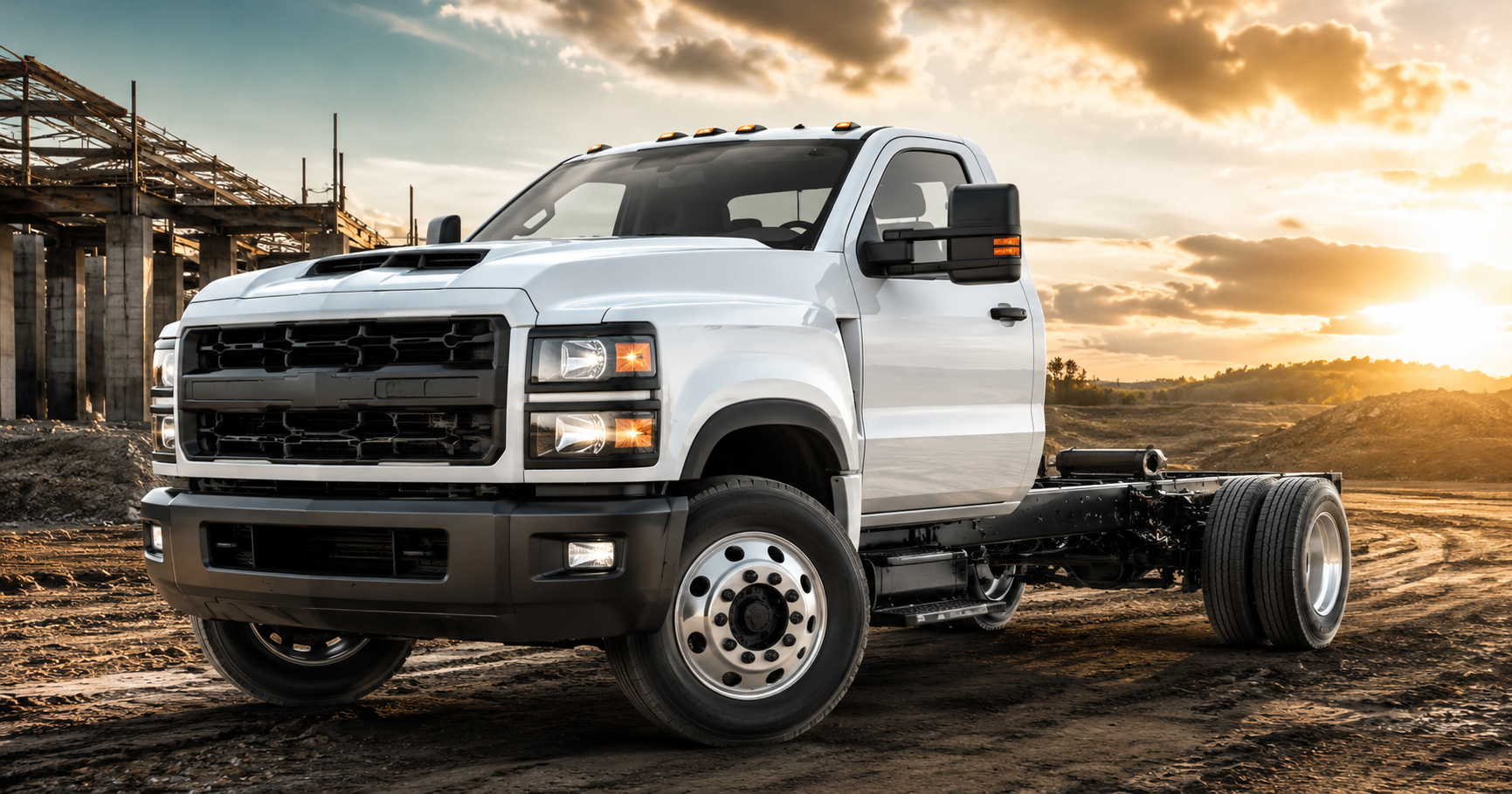
The Chevrolet Silverado 4500HD is part of GM’s medium-duty commercial truck lineup, positioned above the Silverado 3500HD pickup. Unlike traditional consumer pickups, the 4500HD was designed primarily for commercial and vocational applications such as:
- Flatbed trucks
- Utility service bodies
- Tow trucks
- Dump trucks
- Box trucks
- Municipal fleet vehicles
The truck used a 6.6-liter Duramax V8 turbo-diesel engine paired with an Allison transmission and was engineered for demanding workloads rather than personal transportation.
Depending on configuration, towing capacity reached roughly 23,000 pounds, making the Silverado 4500HD attractive for commercial hauling and specialized upfits.
Pricing for the chassis cab started near $59,585 before customization, but many completed vocational builds easily exceeded six figures once equipment and bodywork were added.
Why Is the Chevrolet Silverado 4500HD Being Discontinued?
The Chevrolet Silverado 4500HD discontinuation comes down to several major business realities. While the truck offered solid capability, analysts say the numbers simply did not support a next-generation program.
1. Low Sales Volume Hurt the Business Case
One of the biggest reasons behind the discontinuation is weak sales volume.
GM sold just 8,341 Silverado MD trucks during 2025. In the first quarter of 2026, sales dropped to only 1,273 units — a decline of roughly 37.4% compared with the same period a year earlier.
Those numbers are extremely small compared with mainstream Silverado pickup sales. Developing and certifying a new medium-duty platform requires enormous engineering investment, and low-volume vehicles struggle to justify those costs.
Industry analysts described the decision as a straightforward financial calculation. Even with the Silverado name attached, the truck never reached the scale needed for long-term profitability.
2. Ford Dominates the Medium-Duty Truck Segment
Competition also played a major role in the Chevrolet Silverado 4500HD discontinuation.
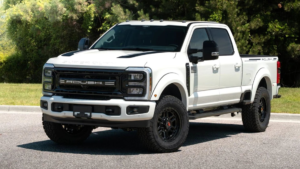
Ford’s F-650 and F-750 trucks have long dominated the medium-duty vocational segment. Fleet operators, municipalities, and commercial upfitters often stick with established platforms because reliability, service networks, and fleet standardization matter more than brand experimentation.
Ford reportedly sold 2,331 F-650 and F-750 models during the first quarter of 2026 alone, significantly outperforming GM in the same category.
That gap highlights how difficult it became for Chevrolet to gain meaningful market share in the commercial medium-duty business.
3. The International Trucks Joint Venture Is Ending
The Silverado MD lineup existed because of a joint venture signed between GM and International Trucks (formerly Navistar) in 2015.
Under the agreement, International handled much of the development and manufacturing work while GM marketed the trucks as Chevrolet-branded products.
However, GM has now chosen not to renew the partnership agreement.
Without that manufacturing relationship, continuing the Silverado 4500HD would require GM to:
- Develop an entirely new platform
- Create new production infrastructure
- Expand specialized commercial manufacturing
- Support a niche upfitting ecosystem independently
For a low-volume vehicle, that investment likely made little financial sense.
4. GM Is Focusing on EVs and Core Silverado Models
Another major factor behind the Chevrolet Silverado 4500HD discontinuation is GM’s changing corporate strategy.
Over the last several years, the company has invested heavily in:
- Silverado EV development
- Ultium battery technology
- ZR2 off-road models
- Trail Boss variants
- Mainstream Silverado HD pickups
These products generate significantly larger sales volumes and profit margins than specialized medium-duty commercial trucks.
In many ways, the Silverado 4500HD became a casualty of prioritization. GM appears to believe its future growth opportunities are stronger in electric vehicles and consumer-focused truck segments.
5. Commercial Buyers Tend to Stay Loyal to Established Brands
Unlike retail pickup customers, vocational truck buyers are often extremely conservative when choosing equipment.
A construction company or municipality may keep the same fleet platform for decades because changing brands can affect:
- Parts inventories
- Technician training
- Service contracts
- Fleet uptime
- Upfitter compatibility
That loyalty made it difficult for Chevrolet to gain traction against entrenched competitors like Ford and International.
What Happens After Production Ends?
Production of the Silverado 4500HD, 5500HD, and 6500HD is scheduled to stop on September 30, 2026.
The trucks are currently assembled at International’s Springfield, Ohio plant, which has reportedly been sold to Canadian defense contractor Roshel.
Once production ends, GM’s commercial truck focus will shift toward:
- Silverado 1500
- Silverado 2500HD
- Silverado 3500HD
- Silverado EV
As of mid-2026, GM has not announced a replacement for the medium-duty Silverado lineup.
Will GM Replace the Silverado 4500HD?
Right now, there is no confirmed successor.
Industry observers believe GM is unlikely to launch a direct replacement unless market conditions dramatically change.
Creating a new medium-duty platform would require:
- Large engineering investment
- Dedicated manufacturing capacity
- A stronger dealer commercial network
- Higher long-term sales projections
Without those elements, a future Silverado 4500HD revival appears unlikely in the near term.
Chevrolet Silverado 4500HD Pros and Cons
Strengths
- Strong 6.6L Duramax diesel performance
- Excellent towing and vocational capability
- Chevrolet fleet integration advantages
- Access to GM dealer support and service
- Modern safety and connectivity technology
Weaknesses
- Low production volume
- Limited market penetration
- Heavy competition from Ford
- Dependence on International partnership
- High upfitting and operational costs
How the Discontinuation Affects Fleet Buyers
For existing owners, the Chevrolet Silverado 4500HD discontinuation does not immediately create problems.
GM dealers are still expected to provide:
- Parts support
- Warranty coverage
- Service access
- Maintenance programs
However, long-term resale values and future parts availability may eventually become concerns as the platform ages and production stops completely.
Fleet buyers searching for new medium-duty trucks will likely shift toward alternatives from Ford, International, Freightliner, and other established vocational manufacturers.
Why the Silverado Name Could Not Save the 4500HD
The Silverado brand remains one of the strongest truck nameplates in America, but branding alone was not enough to overcome the economics of the medium-duty segment.
Commercial trucking operates differently from the retail pickup market. Buyers prioritize uptime, reliability history, service infrastructure, and long-term operating costs over styling or consumer popularity.
Ultimately, the Chevrolet Silverado 4500HD discontinuation shows that even a respected truck brand can struggle in a specialized market with low volume and intense competition.
Final Thoughts
The Chevrolet Silverado 4500HD discontinuation marks the end of GM’s modern experiment in medium-duty vocational trucks.
While the truck offered strong diesel capability, commercial flexibility, and Chevrolet branding, weak sales and difficult market conditions made continuation difficult to justify.
GM’s decision reflects a broader industry shift toward electrification, profitability, and strategic focus on high-volume vehicle categories.
For contractors and fleets that relied on the Silverado 4500HD, the truck will likely remain respected for its durability and utility. But by late 2026, the Chevrolet-branded medium-duty chapter will officially close.
FAQ: Chevrolet Silverado 4500HD Discontinuation
Why is Chevrolet discontinuing the Silverado 4500HD?
GM is ending the Silverado 4500HD primarily because of low sales volume, high development costs, and the expiration of its manufacturing partnership with International Trucks.
When will Silverado 4500HD production end?
Production is scheduled to end on September 30, 2026.
Will there be a replacement for the Silverado 4500HD?
As of 2026, GM has not announced a direct replacement or successor model.
Is the 6.6L Duramax diesel being discontinued?
No. The Duramax engine continues in other GM heavy-duty truck models, including the Silverado HD pickup lineup.
What trucks compete with the Silverado 4500HD?
Key competitors include the Ford F-650/F-750, International CV Series, Freightliner medium-duty trucks, and other vocational commercial chassis platforms.