
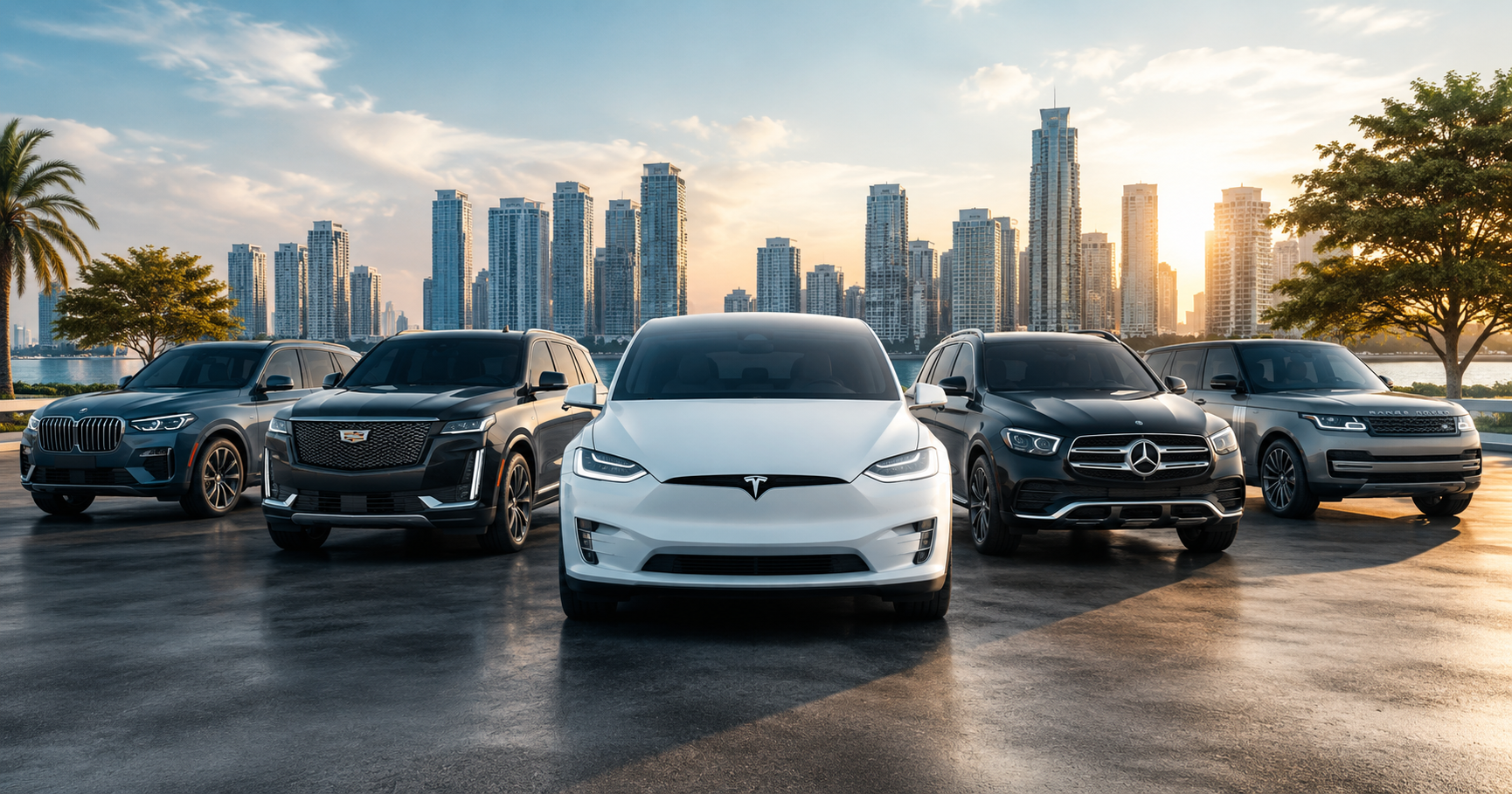
Luxury SUVs have never offered buyers more choices than they do in 2026. For years, Tesla defined what a premium electric SUV could be, combining blistering acceleration, cutting-edge software, and industry-leading charging convenience into one package. Today, however, the market has evolved dramatically.
Premium automakers have responded with sophisticated electric SUVs featuring refined interiors, impressive driving dynamics, and premium craftsmanship that rival—or in some areas surpass—Tesla’s offerings. Buyers considering a six-figure SUV now face a far more difficult decision than they would have just a few years ago.
This Tesla vs Traditional Luxury SUVs guide examines everything that matters before making a purchase, including performance, driving experience, technology, comfort, ownership costs, charging, reliability, resale value, and long-term practicality.
Whether you’re considering a Tesla Model X, Cadillac Escalade IQ, Mercedes EQS SUV, BMW X7, Rivian R1S, Lucid Gravity, or another premium SUV, this guide will help you determine which vehicle best fits your lifestyle and expectations.
Electric SUVs: The Ultimate Guide to the Best Electric SUV Models in 2026
Why the Luxury SUV Market Has Changed in 2026
The luxury SUV segment has become one of the fastest-moving categories in the automotive industry. Manufacturers recognize that affluent buyers increasingly want vehicles that combine premium comfort with advanced technology and lower operating costs.
Several years ago, Tesla largely competed against gasoline-powered luxury SUVs. In 2026, the competition looks entirely different.
Today’s shoppers can choose from:
- Long-range electric SUVs
- Plug-in hybrid luxury SUVs
- Traditional gasoline-powered flagships
- High-performance luxury EVs
- Three-row premium family SUVs
This shift has changed the conversation. Instead of asking whether an electric luxury SUV is practical, buyers now ask which luxury SUV delivers the best overall ownership experience.
Tesla’s Position in the Premium SUV Segment
Tesla remains one of the most recognizable names in electric mobility, and the Model X continues to serve as the company’s flagship SUV.
Rather than introducing an all-new generation for 2026, Tesla refined the existing Model X with several meaningful updates that improve daily usability without fundamentally changing the vehicle.
What’s New for the 2026 Tesla Model X?
The latest refresh focuses on refinement instead of reinvention.
- Quieter cabin insulation
- Improved suspension tuning
- Updated wheel designs
- Dynamic ambient interior lighting
- Front-facing camera
- Slight improvements in driving range
- Enhanced software experience
The all-wheel-drive Model X now delivers an EPA-estimated range of up to 352 miles, while the high-performance Plaid version offers approximately 335 miles depending on wheel configuration.
Tesla also increased pricing during the refresh cycle, making the Model X less of a value-focused purchase than in previous years.
The updates improve refinement but stop short of addressing every area where newer competitors have gained ground.
Traditional Luxury SUVs Have Raised the Bar
Luxury automakers have invested billions of dollars into electrification, resulting in premium SUVs that offer impressive range, elegant interiors, and advanced driver-assistance technologies.
Unlike earlier electric SUVs that often felt like experimental products, today’s competitors are mature luxury vehicles first—and electric vehicles second.
Popular choices now include:
- Cadillac Escalade IQ
- Mercedes-Benz EQS SUV
- BMW X7
- BMW iX
- Rivian R1S
- Lucid Gravity
- Hyundai Ioniq 9
- Volvo EX90
Each offers a unique interpretation of luxury, making buyer priorities more important than ever.
Tesla vs Traditional Luxury SUVs: Performance Comparison
Performance has always been one of Tesla’s strongest advantages.
Electric motors deliver instant torque, allowing Tesla SUVs to accelerate with remarkable speed despite their size.
Where Tesla Excels
- Instant throttle response
- Exceptional 0–60 mph times
- Smooth acceleration
- Minimal drivetrain noise
- Responsive regenerative braking
The Model X Plaid remains one of the quickest production SUVs available, delivering sports-car-like acceleration while comfortably seating an entire family.
How Traditional Luxury SUVs Compare
Gas-powered luxury SUVs offer a different driving personality.
Vehicles equipped with turbocharged V6 or V8 engines provide satisfying acceleration, accompanied by refined engine sounds that many enthusiasts still appreciate.
Plug-in hybrids combine electric torque with long-distance flexibility, while newer luxury EVs like the Lucid Gravity and Rivian R1S have narrowed Tesla’s historical performance advantage.
Winner: Performance
If straight-line acceleration is your top priority, Tesla still deserves serious consideration.
However, buyers looking for a more balanced combination of speed, handling refinement, and driving engagement may find several competitors equally compelling.
Driving Comfort and Ride Quality
Performance matters, but luxury buyers often spend more time evaluating comfort than acceleration.
This is where the comparison becomes more nuanced.
Tesla’s Driving Experience
Tesla prioritizes responsiveness over softness.
The updated suspension for 2026 improves ride quality, reducing harsh impacts over rough pavement while maintaining the agile handling buyers expect.
Cabin noise has also been reduced, making highway travel noticeably quieter than previous Model X versions.
Traditional Luxury Approach
Legacy luxury manufacturers have decades of experience engineering comfortable highway cruisers.
Many premium SUVs emphasize:
- Superior sound insulation
- Adaptive air suspension
- Exceptional seat comfort
- Long-distance fatigue reduction
- Smooth steering feel
Vehicles like the Mercedes EQS SUV and Cadillac Escalade IQ prioritize passenger relaxation over aggressive driving characteristics.
For buyers regularly taking road trips or transporting clients, these qualities can become more important than outright speed.
Interior Design and Luxury Feel
Interior philosophy represents perhaps the biggest distinction between Tesla and traditional luxury brands.
Tesla’s Minimalist Cabin
Tesla embraces simplicity.
The cabin centers around a large touchscreen that controls nearly every vehicle function.
Physical buttons are intentionally minimized, creating a futuristic environment unlike most competitors.
Advantages include:
- Clean dashboard layout
- Fast software updates
- Modern appearance
- Excellent digital integration
Some buyers love this approach because it feels innovative.
Others prefer more tactile controls for everyday driving.
Traditional Luxury Interiors
Luxury brands generally emphasize craftsmanship over minimalism.
Expect to find:
- Real wood trim
- Premium leather upholstery
- Metal switchgear
- Ambient lighting systems
- Massage seats
- Executive rear seating packages
Manufacturers such as Mercedes-Benz, BMW, and Cadillac continue to invest heavily in materials that communicate premium quality the moment passengers step inside.
For buyers who associate luxury with craftsmanship and attention to detail, traditional luxury SUVs often create a stronger first impression.
Technology: Tesla Still Sets the Benchmark
Technology remains one of Tesla’s defining strengths.
Unlike many automakers that rely on multiple suppliers for infotainment and software, Tesla develops much of its ecosystem in-house.
This creates a seamless digital experience that continues improving through over-the-air updates.
Tesla Technology Advantages
- Frequent software improvements
- Large, responsive touchscreen interface
- Integrated navigation with charging optimization
- Advanced smartphone app functionality
- Continuous feature enhancements
- Excellent Supercharger route planning
Traditional luxury brands have made enormous progress in digital technology, but many still divide software development across multiple suppliers, which can create inconsistencies between systems.
That said, premium competitors increasingly offer sophisticated driver displays, augmented reality navigation, advanced voice assistants, and high-end audio systems that rival or exceed Tesla in certain areas.
Technology is no longer a one-sided contest—but Tesla continues to hold an important advantage in software integration and charging intelligence.
Charging, Range, and Everyday Usability
One of the biggest reasons many buyers continue to choose Tesla is the ownership experience beyond the vehicle itself. While range remains important, charging convenience often has a greater impact on day-to-day satisfaction.
Tesla’s Charging Advantage
Tesla continues to benefit from one of the most mature fast-charging ecosystems in North America.
For most owners, the navigation system automatically plans charging stops, estimates battery levels upon arrival, and can even prepare the battery for faster charging before reaching a station.
This seamless integration removes much of the guesswork associated with long-distance EV travel.
The 2026 Model X also delivers competitive driving range:
- Model X AWD: Up to 352 miles (EPA estimated)
- Model X Plaid: Up to 335 miles (EPA estimated)
Traditional Luxury SUVs
The answer depends on the powertrain.
Gasoline Luxury SUVs
- Fast refueling
- No charging concerns
- Excellent for towing long distances
- Large nationwide fuel infrastructure
Luxury Electric SUVs
Electric competitors continue improving rapidly.
Models such as the Lucid Gravity, Cadillac Escalade IQ, BMW iX, Mercedes EQS SUV, and Rivian R1S now offer impressive range figures and increasingly reliable public charging compatibility.
However, Tesla’s integrated charging experience remains among the easiest to use, especially for buyers who frequently travel across multiple states.
Practicality for Families
Luxury SUV buyers often prioritize space just as much as technology.
Whether you’re transporting children, pets, sports equipment, or luggage for extended road trips, interior flexibility matters.
Tesla Model X
The Model X offers:
- Three-row seating availability
- Large front trunk (frunk)
- Generous rear cargo area
- Falcon Wing rear doors
- Flat floor for improved passenger comfort
Tesla also expanded family-focused options by introducing a seven-seat Model Y configuration in the United States, demonstrating continued attention to utility-oriented buyers.
Traditional Luxury SUVs
Many competitors provide advantages including:
- Larger third-row seating
- Higher towing capacity
- Greater cargo flexibility
- Luxury captain’s chairs
- Premium rear-seat entertainment systems
- Better accessibility for elderly passengers
Families that regularly use all three seating rows may find larger luxury SUVs more accommodating than Tesla’s interior layout.
Ownership Costs
Sticker price tells only part of the ownership story.
Long-term operating expenses can significantly influence the overall value of a luxury SUV.
Tesla Ownership Costs
Owners typically benefit from:
- Lower fuel costs when charging at home
- Fewer routine maintenance requirements
- No oil changes
- Reduced brake wear thanks to regenerative braking
- Regular software improvements without dealership visits
However, buyers should also consider:
- Higher insurance premiums in some markets
- Potential battery repair costs outside warranty
- Increasing purchase prices
Traditional Luxury SUVs
Gas-powered models generally require:
- Oil changes
- Transmission service
- Engine maintenance
- Exhaust system repairs
- More frequent scheduled servicing
Luxury EVs reduce many of these expenses but may still involve dealership maintenance schedules depending on the manufacturer.
Reliability and Service Experience
Reliability extends beyond mechanical durability. It also includes how quickly problems are resolved and how easy service appointments are to schedule.
Tesla
Tesla has improved manufacturing quality over the years, but opinions remain mixed regarding service experiences depending on location.
Mobile service capabilities allow technicians to complete many repairs at an owner’s home or workplace, reducing inconvenience for routine issues.
Software updates also solve certain problems remotely without requiring dealership visits.
Traditional Luxury Brands
Established automakers typically offer:
- Large dealer networks
- Loaner vehicles
- Luxury customer lounges
- More service locations nationwide
- Long-established repair infrastructure
For buyers living far from Tesla service centers, dealer availability may become an important deciding factor.
Safety and Driver Assistance
Safety remains one of the strongest selling points across the premium SUV segment.
Tesla continues emphasizing camera-based driver assistance, while traditional luxury manufacturers often combine cameras with radar, ultrasonic sensors, and in some cases LiDAR technology.
Common safety technologies now include:
- Automatic emergency braking
- Adaptive cruise control
- Lane-centering assistance
- Blind-spot monitoring
- Rear cross-traffic alerts
- 360-degree camera systems
Although Tesla’s software-driven approach remains highly sophisticated, several competitors now provide equally advanced safety packages with different sensing strategies.
Tesla vs Traditional Luxury SUVs: Pros and Cons
Tesla Advantages
- Outstanding acceleration
- Industry-leading charging ecosystem
- Excellent software integration
- Regular over-the-air updates
- Minimal maintenance requirements
- Modern digital ownership experience
Tesla Drawbacks
- Higher pricing after the 2026 refresh
- Minimal redesign compared to competitors
- Less traditional luxury ambiance
- Smaller service network than legacy brands
Traditional Luxury SUV Advantages
- Premium cabin craftsmanship
- Superior long-distance comfort
- Broader model selection
- Multiple powertrain choices
- Established dealership support
- Strong brand prestige
Traditional Luxury SUV Drawbacks
- Higher maintenance costs for gasoline models
- Less seamless software integration
- Charging experience often varies by manufacturer
- Some infotainment systems remain more complicated than Tesla’s interface
Which Buyers Should Choose Tesla?
A Tesla luxury SUV is an excellent fit if your priorities include:
- Cutting-edge technology
- Fast acceleration
- Frequent software improvements
- Home charging convenience
- Road-trip charging confidence
- A modern, minimalist cabin
For drivers comfortable embracing an all-electric lifestyle, Tesla continues to offer one of the most complete ownership experiences available.
Who Should Buy a Traditional Luxury SUV?
Traditional luxury SUVs remain compelling for buyers who value refinement above all else.
They are particularly well suited for:
- Executive transportation
- Long-distance highway travel
- Luxury-focused interiors
- Higher towing needs
- Large families
- Buyers who prefer dealership relationships
If craftsmanship, ride isolation, and premium materials outweigh software innovation, traditional luxury brands continue to set the benchmark.
Final Verdict: Tesla vs Traditional Luxury SUVs
The answer depends entirely on what “luxury” means to you.
Tesla still excels in areas that transformed the automotive industry: software, charging convenience, acceleration, and digital innovation. The refreshed 2026 Model X remains one of the most technologically advanced SUVs on the road and continues to deliver an ownership experience few competitors can fully match.
At the same time, traditional luxury SUVs have closed the gap considerably. Manufacturers such as Mercedes-Benz, Cadillac, BMW, Rivian, Lucid, and others now produce premium SUVs with exceptional craftsmanship, quieter cabins, more refined ride quality, and broader model choices.
For technology-first buyers, Tesla remains a compelling choice.
For buyers seeking the ultimate expression of traditional luxury, comfort, and prestige, legacy luxury SUVs continue to offer a level of refinement that many shoppers still prefer.
In 2026, there is no universal winner. The best luxury SUV is the one that aligns with your daily driving habits, charging access, family needs, and personal definition of premium ownership.
Frequently Asked Questions
Is Tesla still the best luxury SUV in 2026?
Tesla remains one of the strongest choices for buyers who prioritize technology, acceleration, software updates, and charging convenience. However, competitors have significantly narrowed the gap in luxury, comfort, and overall refinement.
How does the Tesla Model X compare with gasoline luxury SUVs?
The Model X generally delivers quicker acceleration, lower routine maintenance, and a more software-focused driving experience. Gas-powered luxury SUVs often provide superior cabin craftsmanship, familiar refueling, and larger dealership networks.
Are luxury electric SUVs worth buying?
Yes. Buyers who have convenient home or workplace charging can benefit from lower operating costs, quiet driving, instant torque, and reduced maintenance while enjoying increasingly competitive luxury features.
What is Tesla’s biggest disadvantage in 2026?
The largest challenge facing Tesla is stronger competition. While Tesla still excels in technology and charging, rival luxury SUVs now match or exceed it in interior quality, comfort, and overall refinement.
Which luxury SUV is best for families?
Families should compare seating capacity, cargo space, third-row usability, towing capability, and charging or fueling needs. Tesla offers practical storage solutions, while many traditional luxury SUVs provide roomier cabins and more spacious third-row seating.