
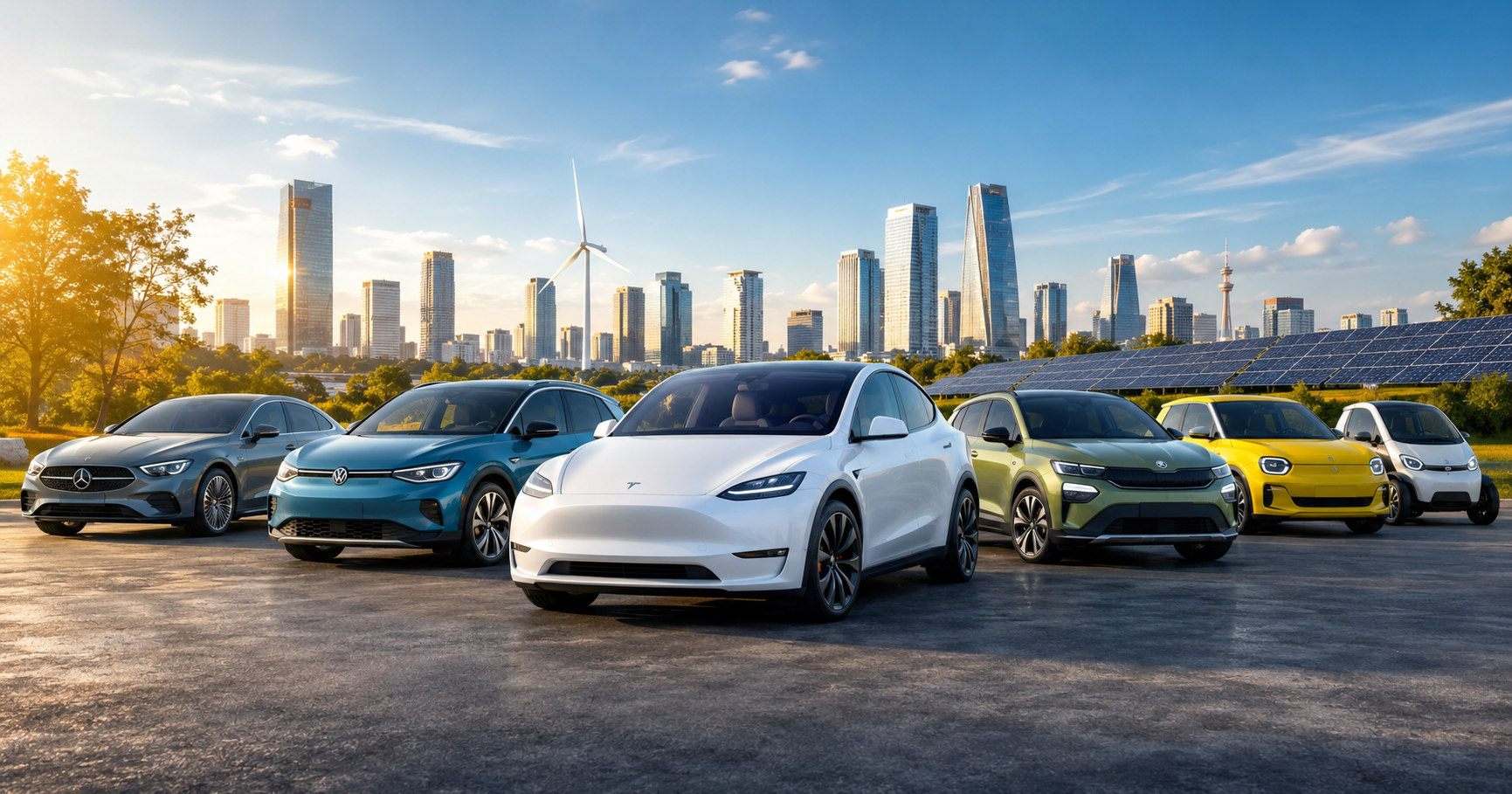
The European electric vehicle market is entering a new phase in 2026. Buyers are no longer choosing between only a few expensive EVs with limited range. Today’s market offers everything from affordable city-friendly electric cars to luxury long-distance cruisers with advanced battery technology and ultra-fast charging.
If you are searching for the Best Electric Cars 2026 Europe drivers should seriously consider, the options have never been broader — or more competitive. Automakers across Europe, China, and the United States are battling for market share with better prices, smarter software, improved efficiency, and longer driving ranges.
But while EV technology keeps improving, buying an electric car in Europe still comes with important questions. Which models offer the best value? Which EVs hold their resale value? Is now the right time to buy, or should consumers wait for 2027 models?
Here is a detailed look at the best electric cars worth buying in Europe right now, based on range, pricing, charging infrastructure, practicality, and overall ownership experience.
The European EV Market in 2026: What Buyers Need to Know
Electric vehicle adoption across Europe continues to accelerate in 2026, although growth varies significantly depending on the country. Germany, the UK, France, and Norway remain among the strongest EV markets thanks to charging infrastructure investments and government support.
Battery-electric vehicles now represent roughly 20% to 25% of new vehicle registrations in many European markets, while plug-in hybrids continue to fill the gap for buyers not fully ready to switch.
Several trends define the 2026 European EV landscape:
- Affordable compact EVs are gaining popularity rapidly
- Charging networks are expanding along major highways
- Chinese automakers are entering Europe aggressively
- Battery efficiency and software systems are improving yearly
- Government incentives are becoming less predictable
For buyers, this means there are finally strong electric vehicle choices in nearly every price category.
Why 2026 Is a Big Year for Electric Cars in Europe
The latest generation of EVs solves many of the problems that early adopters faced just a few years ago.
Better Real-World Range
Modern battery chemistry and thermal management systems are helping EVs deliver more usable range without dramatically increasing battery size.
Many mainstream electric cars now comfortably exceed 350 km to 500 km WLTP range, making long-distance travel more practical than ever.
Faster Charging Speeds
Several 2026 EV models support DC fast charging speeds between 180 kW and 230 kW, reducing charging stops significantly during road trips.
Tesla’s European Supercharger network also continues to expand, while competing charging providers are introducing dynamic pricing and queue-management tools to reduce congestion.
More Affordable Choices
One of the biggest shifts in 2026 is the rise of lower-cost EVs aimed at mainstream buyers.
Vehicles such as the MG4, Renault 5 E-Tech, and Dacia Spring are making electric mobility more accessible for urban drivers and younger buyers.
Best Electric Cars 2026 Europe Buyers Should Consider
1. Tesla Model Y
The Tesla Model Y remains the benchmark for mainstream electric SUVs in Europe. It consistently ranks among the best-selling EVs across the continent for good reason.
Why It Stands Out
- Excellent WLTP range of around 500–530 km
- Industry-leading charging network access
- Strong resale value
- Advanced software and OTA updates
- Spacious interior for families
Potential Downsides
- Interior design may feel too minimalistic for some buyers
- Ride comfort can feel firm on rough roads
- Insurance costs can be higher than competitors
For buyers seeking the best all-around EV experience in Europe, the Model Y remains difficult to beat.
2. MG4 Standard Range
The MG4 has become one of Europe’s biggest EV success stories. It delivers impressive practicality and driving range at a price point many buyers can actually afford.
Key Advantages
- Competitive pricing near €30,000 before incentives
- Around 350 km WLTP range
- Good driving dynamics
- Modern infotainment features
- Excellent value for money
Things to Consider
- Brand perception is still developing in Europe
- Interior materials are less premium than German rivals
- Dealer network remains smaller in some countries
For budget-conscious shoppers, the MG4 may be the strongest value EV available in Europe in 2026.
3. Mercedes-Benz EQS and EQE
Luxury EV buyers looking for refinement and long-distance comfort should pay attention to the Mercedes EQS and EQE.
These vehicles focus less on affordability and more on delivering premium technology, quiet cabins, and exceptional highway cruising ability.
What Makes Them Premium
- Class-leading comfort
- Outstanding efficiency for large luxury cars
- Advanced driver-assistance systems
- Long driving range
- High-end cabin quality
Main Drawbacks
- Very expensive pricing
- High optional equipment costs
- Large dimensions can be difficult in older European cities
These models are ideal for executives, long-distance drivers, and luxury-focused buyers who want premium electric mobility without major compromises.
4. Dacia Spring
The Dacia Spring continues to attract buyers looking for the cheapest entry point into EV ownership.
It is not designed for long-distance travel, but for urban commuting and short daily trips, it remains one of Europe’s most affordable electric cars.
Best Features
- Very low purchase price
- Compact dimensions for city parking
- Low running costs
- Simple and practical design
Limitations
- Limited highway performance
- Shorter driving range
- Basic interior quality
For city dwellers who mainly drive locally, the Dacia Spring still makes financial sense in 2026.
5. Renault 5 E-Tech
The Renault 5 E-Tech combines retro-inspired styling with modern EV engineering, making it one of the most talked-about small electric cars in Europe.
Its balance of affordability, personality, and practicality gives it strong appeal among younger buyers and urban drivers.
6. Skoda Elroq and Volkswagen ID Series
Skoda and Volkswagen continue to dominate the practical family EV segment.
The Skoda Elroq is quickly gaining momentum in Europe thanks to its smart packaging, useful cargo space, and strong value proposition.
Meanwhile, the Volkswagen ID.3, ID.4, and ID. Buzz remain popular among buyers wanting established dealer support and familiar European engineering.
Best EVs by Category in Europe 2026
| Category | Top Pick | Main Strength |
|---|---|---|
| Mainstream SUV | Tesla Model Y | Range, charging, resale value |
| Budget EV | MG4 Standard Range | Excellent value |
| Luxury EV | Mercedes EQS | Comfort and premium technology |
| City EV | Dacia Spring | Low ownership cost |
| Family EV | Skoda Elroq | Practicality and space |
Should You Buy an EV in Europe Now or Wait Until 2027?
This is one of the most common questions buyers ask in 2026.
The reality is that current EVs are already significantly better than models from just three years ago. Charging speeds, efficiency, and software systems have improved rapidly.
Still, waiting until 2027 could bring:
- Improved battery chemistry
- Lower production costs
- More competition from Chinese brands
- Potentially cheaper entry-level EVs
- Expanded charging infrastructure
However, there is also risk in waiting. Several European countries are reducing EV subsidies, which may increase real-world purchase prices.
For most buyers who already have access to charging at home or work, 2026 is a strong time to buy an electric car.
The Biggest Challenges Facing EV Buyers in Europe
Charging Infrastructure Gaps
Major Western European corridors now have much stronger charging coverage, but rural regions and parts of Eastern Europe still lag behind.
Long-distance travel can still become stressful in areas with limited fast-charging availability.
Higher Average Prices
Despite more affordable options entering the market, average BEV prices in Europe still remain above many consumers’ comfort levels.
Many fully electric vehicles continue to cost between €40,000 and €45,000 on average.
Policy Uncertainty
Government incentives vary dramatically by country, and several programs are being reduced or phased out entirely.
This creates uncertainty for buyers trying to predict long-term ownership costs.
Are Chinese EVs Worth Buying in Europe?
Chinese-origin EVs are becoming impossible to ignore in Europe.
Brands connected to BYD, Leapmotor, and other Chinese manufacturers are entering the market aggressively through partnerships with European automakers.
Their biggest strengths include:
- Competitive pricing
- Strong battery technology
- Impressive range figures
- Modern interiors and software
But buyers should also evaluate:
- Smaller service networks
- Long-term resale value uncertainty
- Brand trust and reliability perceptions
For value-focused buyers, some Chinese EVs may become serious alternatives to traditional European brands over the next few years.
Expert Perspective: Why the EV Transition Is Still Complicated
Industry analysts continue to point out that Europe’s EV transition remains uneven.
While consumer interest is strong, affordability remains one of the biggest obstacles. Charging investments are improving infrastructure, but bottlenecks involving grid upgrades and permitting still slow expansion.
Many experts believe the next major breakthrough will come not from luxury EVs, but from genuinely affordable electric vehicles that average households can realistically purchase.
FAQ: Best Electric Cars 2026 Europe
What is the best overall EV in Europe in 2026?
The Tesla Model Y is widely considered the best overall EV thanks to its combination of range, charging access, resale value, and practicality.
Which electric car is cheapest to buy in Europe?
The Dacia Spring remains one of the cheapest EVs available in Europe, especially for urban drivers.
Which EV has the longest range in Europe?
The Mercedes-Benz EQS remains among the longest-range EVs currently available in European markets.
Is the MG4 worth buying?
Yes. The MG4 offers one of the best price-to-range ratios in Europe and is considered a strong value-focused EV.
Should I buy an EV now or wait?
If you have reliable charging access and your budget works today, 2026 EVs already offer excellent technology and usability. Waiting may bring lower prices, but incentives could also shrink.
Final Thoughts
The Best Electric Cars 2026 Europe buyers should consider are no longer limited to premium luxury models. Today’s market includes excellent choices for nearly every type of driver, from affordable city EVs to long-range family SUVs.
The Tesla Model Y continues to dominate as the safest all-around recommendation, while vehicles like the MG4 and Renault 5 E-Tech prove that affordable electric mobility is becoming increasingly realistic.
At the same time, luxury EVs such as the Mercedes EQS show just how advanced electric vehicle technology has become.
For European buyers, the biggest decision is no longer whether EVs are good enough. It is choosing which one best fits their budget, lifestyle, and charging access.