
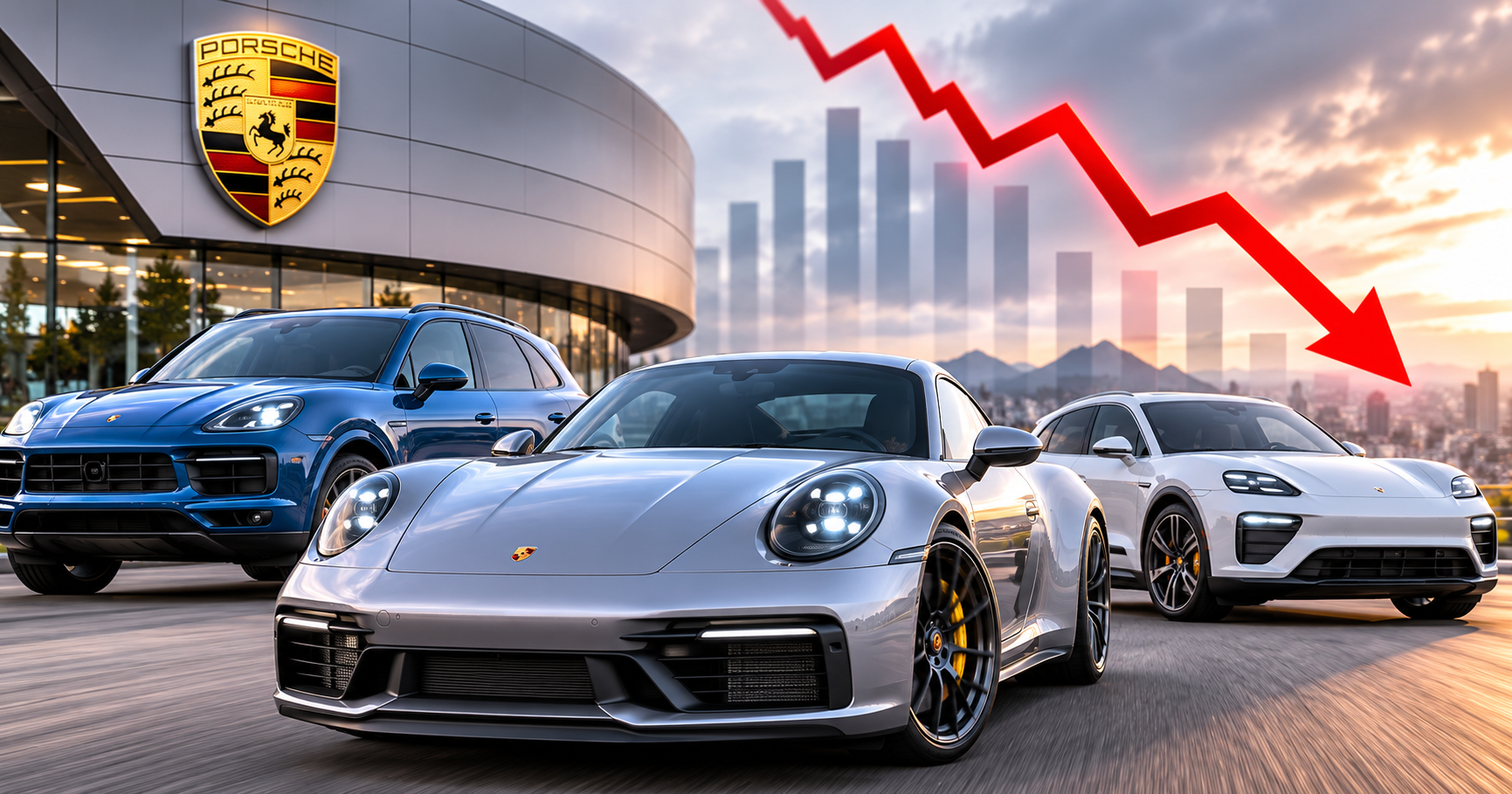
Porsche first-half deliveries declined 16% compared with the same period last year, reflecting what the automaker described as an expected transition rather than a crisis. The company cited the phaseout of the combustion-powered 718, strong electric Macan demand during the comparable period last year, and the expiration of U.S. tax incentives for electric and hybrid vehicles as the primary factors behind the decline.
Sales executive Matthias Becker said the approximately 122,000 vehicle deliveries were below the previous year’s level but aligned with company expectations. He also pointed to new products and the ongoing rollout of the Cayenne Electric as reasons for confidence heading into the second half of the year.
China Leads Regional Declines
Porsche reported mixed performance across its global markets, with China recording the steepest decline. Deliveries there dropped 32% to 14,501 vehicles as the company cited a challenging market environment and its strategy of prioritizing value over sales volume.
North America remained Porsche’s largest individual market with 37,712 deliveries, although the region posted a 13% decline. The automaker attributed that decrease to the expiration of U.S. incentives for electric and hybrid vehicles and the discontinuation of the 718.
Elsewhere, deliveries in Europe excluding Germany fell 14% to 30,278 vehicles. Germany declined 6% to 14,938 deliveries, while the Overseas and Emerging Markets region dropped 18% to 24,877 vehicles, affected by the end of the 718 and instability in the Middle East.
911 Stands Out With Strong Growth
The Porsche 911 was the company’s strongest performer during the first half, with deliveries rising 19% to 30,534 vehicles. Porsche said steady customer demand and the phased introduction of new derivatives, including GTS, Turbo, and GT variants, supported the increase.
The Cayenne remained Porsche’s best-selling model line, recording 38,141 deliveries despite a 9% year-over-year decline. Customer deliveries of the new Cayenne Electric also began at the end of June, marking the start of a new phase for the brand’s top-selling vehicle.
Model Lineup Reflects Ongoing Transition
The remainder of Porsche’s lineup highlighted the challenges of managing both combustion-engine and electric vehicle offerings.
The Macan recorded 35,315 deliveries, down 22% from a year earlier. That total included 19,695 combustion-engine models and 15,620 electric versions, with production of the gasoline-powered Macan scheduled to end in late July.
The Panamera fell 38% to 9,308 deliveries, which Porsche attributed largely to a temporary product gap in China that has since been resolved.
The 718 Boxster and Cayman, whose production ended in October 2025, totaled 2,789 deliveries, representing a 73% decline. Taycan deliveries also decreased 25% to 6,219 vehicles.
Porsche Maintains Focus on Portfolio Realignment
Porsche said it is navigating challenges that include softer electric-vehicle demand, a weak and highly competitive Chinese market, and changes in U.S. policy. At the same time, the company highlighted the strong performance of the 911 and a recent number-one ranking in a closely watched U.S. initial-quality study as signs that its core business remains solid.
The automaker has positioned 2026 as a year to realign its product portfolio with market demand and said it will provide additional details about its long-term Strategy 2035 during a Capital Markets Day scheduled for the autumn.