
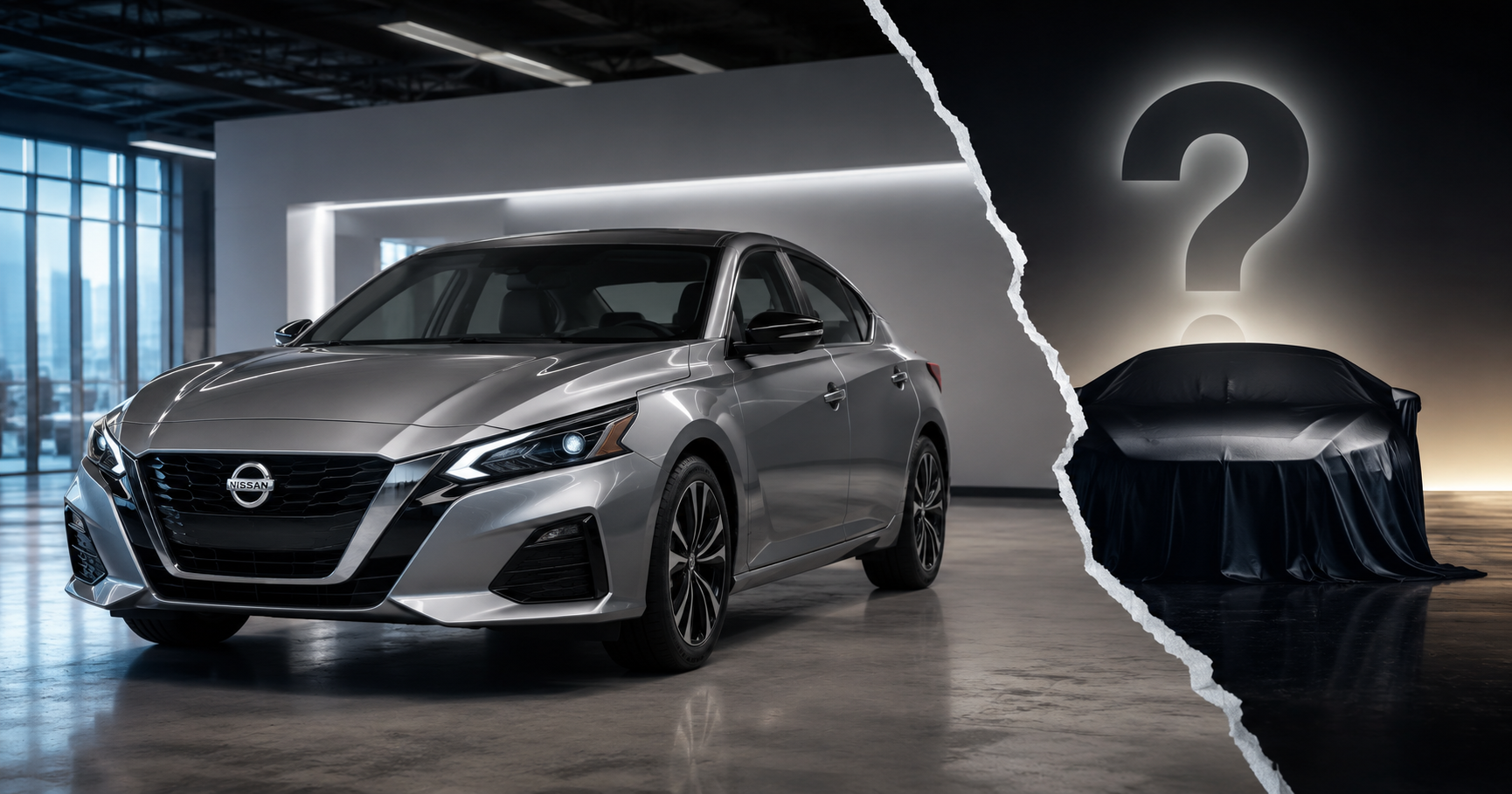
If you’ve been asking “Why Is Nissan Discontinuing the Altima?”, you’re not alone. The announcement surprised many longtime Nissan owners because the Altima has been one of America’s best-known midsize sedans for more than 30 years. Yet behind Nissan’s decision lies a much bigger story than simply ending a popular car.
The official explanation focuses on simplifying Nissan’s lineup and avoiding overlap with the redesigned Sentra. However, industry trends, changing customer preferences, production costs, electrification plans, and fierce competition all played important roles in the decision.
In this guide, we’ll examine the official reasons Nissan provided, uncover the business strategy behind the move, analyze market trends, and explain what the future looks like for buyers considering a Nissan sedan.
Why Is Nissan Discontinuing the Altima?
The short answer is that Nissan is restructuring its North American lineup to focus on vehicles with stronger long-term growth potential.
According to Nissan Americas Senior Vice President and Chief Product & Planning Officer Ponz Pandikuthira, the company is retiring the Altima after three decades to prevent it from competing with the next-generation Nissan Sentra.
That explanation is true—but it only tells part of the story.
Behind the scenes, Nissan is responding to several major industry shifts:
- Declining demand for traditional midsize sedans
- Rapid growth of SUVs and crossovers
- Investment in hybrid and electric vehicles
- Cost reduction through lineup simplification
- Preparing manufacturing capacity for future models
- Improving profitability across North America
Together, these factors made continuing the Altima increasingly difficult to justify.
The Official Reason Nissan Gave
Nissan executives confirmed that the Altima will end production following the 2026 model year.
According to the company, the primary reason is avoiding internal competition with the new Sentra.
Rather than offering multiple gasoline sedans targeting similar buyers, Nissan wants one clear sedan offering.
This simplifies:
- Manufacturing
- Dealer inventory
- Marketing campaigns
- Product development
- Future electrification planning
Instead of splitting sales between two sedans, Nissan expects the Sentra to become the brand’s primary passenger car.
The Secret Reasons Behind Nissan’s Decision
1. Americans Continue Buying SUVs Instead of Sedans
The biggest reason may simply be changing customer behavior.
Over the past decade, American buyers have steadily shifted away from midsize sedans.
Instead, consumers increasingly prefer:
- Compact SUVs
- Crossovers
- Three-row family SUVs
- Hybrid SUVs
- Electric SUVs
Vehicles like the Nissan Rogue consistently attract more buyers because they provide:
- Higher seating position
- Greater cargo space
- All-wheel drive availability
- Family-friendly versatility
- Improved resale value
As consumer demand shifted, maintaining multiple sedan models became less profitable.
2. The Altima Faced Tough Competition
The midsize sedan segment remains highly competitive.
The Altima had to compete against established rivals including:
Several competitors introduced advanced hybrid systems years before Nissan expanded its own hybrid lineup.
Consumers increasingly expected:
- Better fuel economy
- Electrified powertrains
- More technology
- Premium interiors
- Improved safety features
Meeting those expectations would require significant investment in a platform with declining demand.
3. Nissan Needs to Invest in Future Technologies
Developing modern vehicles has become dramatically more expensive.
Automakers must simultaneously invest in:
- Battery technology
- Hybrid systems
- Electric drivetrains
- Advanced software
- Driver-assistance systems
- Connected services
Instead of spreading investment across many aging models, Nissan is concentrating resources on vehicles with stronger future growth potential.
4. Manufacturing Efficiency Matters
Every additional vehicle in a manufacturer’s lineup increases production complexity.
Ending slower-growing models allows Nissan to:
- Reduce production costs
- Improve factory efficiency
- Simplify supply chains
- Reduce inventory expenses
- Increase manufacturing flexibility
This approach has become increasingly common across the automotive industry.
5. Nissan Is Preparing for Electrification
The future of Nissan extends well beyond gasoline-powered sedans.
The company has confirmed plans for:
- Next-generation hybrids
- E-Power technology
- More electric vehicles
- New crossover models
- Advanced driver-assistance features
Ending the Altima frees engineering and financial resources for those projects.
What Happens to the Nissan Sentra?
With the Altima gone, the Sentra becomes Nissan’s only sedan in the American lineup.
This represents a significant shift.
For decades Nissan offered multiple sedans including:
- Versa
- Sentra
- Altima
- Maxima
Now only the Sentra remains.
Nissan believes the latest Sentra offers sufficient technology, efficiency, and value to satisfy most sedan buyers while reducing overlap within the lineup.
Will Nissan Ever Bring Back the Altima?
There is currently no official confirmation that the Altima nameplate will return.
However, automotive history shows discontinued models occasionally make a comeback.
If the name returns, it could appear as:
- A hybrid sedan
- An electric sedan
- A crossover-inspired vehicle
- An entirely new platform
For now, Nissan has announced no replacement carrying the Altima name.
What About Nissan’s Future Sedan Plans?
Although Nissan is reducing its traditional sedan lineup, reports indicate the company has not abandoned passenger cars completely.
Patent filings and industry reports suggest Nissan continues evaluating affordable sedan concepts.
The Skyline name has also resurfaced in future planning discussions, although it is not expected to be sold in America under that name.
Instead, Nissan appears focused on balancing:
- Performance vehicles
- Affordable transportation
- Electrification
- SUV expansion
How the Altima Changed Over Three Decades
The Altima debuted in the early 1990s and evolved into one of Nissan’s most recognizable vehicles in North America.
Throughout its lifespan, it earned a reputation for:
- Comfortable highway driving
- Competitive pricing
- Available all-wheel drive
- Strong reliability
- Fuel-efficient four-cylinder engines
- Sportier SR trims
For many American families, the Altima became an affordable alternative to the Toyota Camry and Honda Accord.
Even as consumer preferences shifted toward SUVs, the Altima remained an important part of Nissan’s identity.
What Models Is Nissan Prioritizing Instead?
Nissan’s future product strategy places greater emphasis on SUVs, crossovers, electrification, and advanced technology.
Upcoming priorities include:
- Next-generation Rogue with E-Power technology
- Future Xterra
- Juke EV
- Expanded electric vehicle lineup
- Potential Skyline-based performance models
- Future sports cars under evaluation
This reflects broader market demand rather than a rejection of passenger cars altogether.
What Does This Mean for Current Altima Owners?
Current owners should not panic.
Discontinuing a vehicle does not mean support disappears overnight.
Nissan dealers are expected to continue providing:
- Factory service
- Warranty repairs
- Replacement parts
- Software updates where applicable
- Routine maintenance
The Altima’s large production volume over multiple generations also means aftermarket parts should remain widely available for years.
Should You Buy a Remaining 2026 Nissan Altima?
For some buyers, purchasing one of the final Altima models may actually make sense.
Potential advantages include:
- Competitive dealer discounts
- Mature engineering
- Known reliability history
- Comfortable highway performance
- Available all-wheel drive
However, shoppers should also consider:
- Future resale values
- Availability of hybrid alternatives
- Nissan’s long-term electrification plans
- Competitors offering newer platforms
Industry Perspective: Why Automakers Are Leaving Sedans Behind
Nissan is far from alone.
Over the past decade, many automakers have reduced or eliminated traditional sedan models in favor of SUVs and crossovers.
Several factors explain the trend:
- Higher profit margins on SUVs
- Growing consumer preference for taller vehicles
- Greater flexibility for families
- Demand for electrified crossovers
- Lower development costs through platform consolidation
The Altima’s discontinuation is part of this broader transformation rather than an isolated decision.
Final Verdict
So, why is Nissan discontinuing the Altima? The answer goes beyond a single explanation.
Officially, Nissan says the move prevents overlap with the new Sentra. In reality, the decision reflects broader market forces that have reshaped the automotive industry over the past decade.
Changing consumer demand, the rise of SUVs, the need to invest in electrification, manufacturing efficiency, and increased competition all contributed to the Altima’s retirement.
While many enthusiasts will miss one of Nissan’s most recognizable sedans, the company’s strategy signals a future centered on hybrid technology, electric vehicles, and crossover SUVs. For current owners, support will continue, while prospective buyers may find attractive deals on the final 2026 models before they leave dealer lots.
Frequently Asked Questions (FAQ)
Why is Nissan discontinuing the Altima?
Nissan says it is discontinuing the Altima to simplify its lineup, avoid competing with the redesigned Sentra, improve manufacturing efficiency, and redirect investment toward SUVs, hybrids, and electric vehicles.
Is the 2026 Nissan Altima the last model?
Yes. Nissan has confirmed the Altima will end production after the 2026 model year.
Will Nissan replace the Altima?
Nissan has not announced a direct replacement. The company is instead expanding its SUV, hybrid, and electric vehicle portfolio.
Can I still buy a Nissan Altima?
Yes. Remaining 2026 models are expected to remain available while dealer inventory lasts.
Will Nissan continue making sedan models?
Yes. The Sentra will remain Nissan’s only sedan in the U.S. lineup following the Altima’s discontinuation.
Will Altima parts and service still be available?
Yes. Nissan dealers are expected to continue providing service, warranty support, and replacement parts for existing Altima owners.