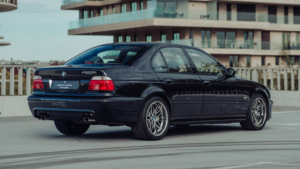

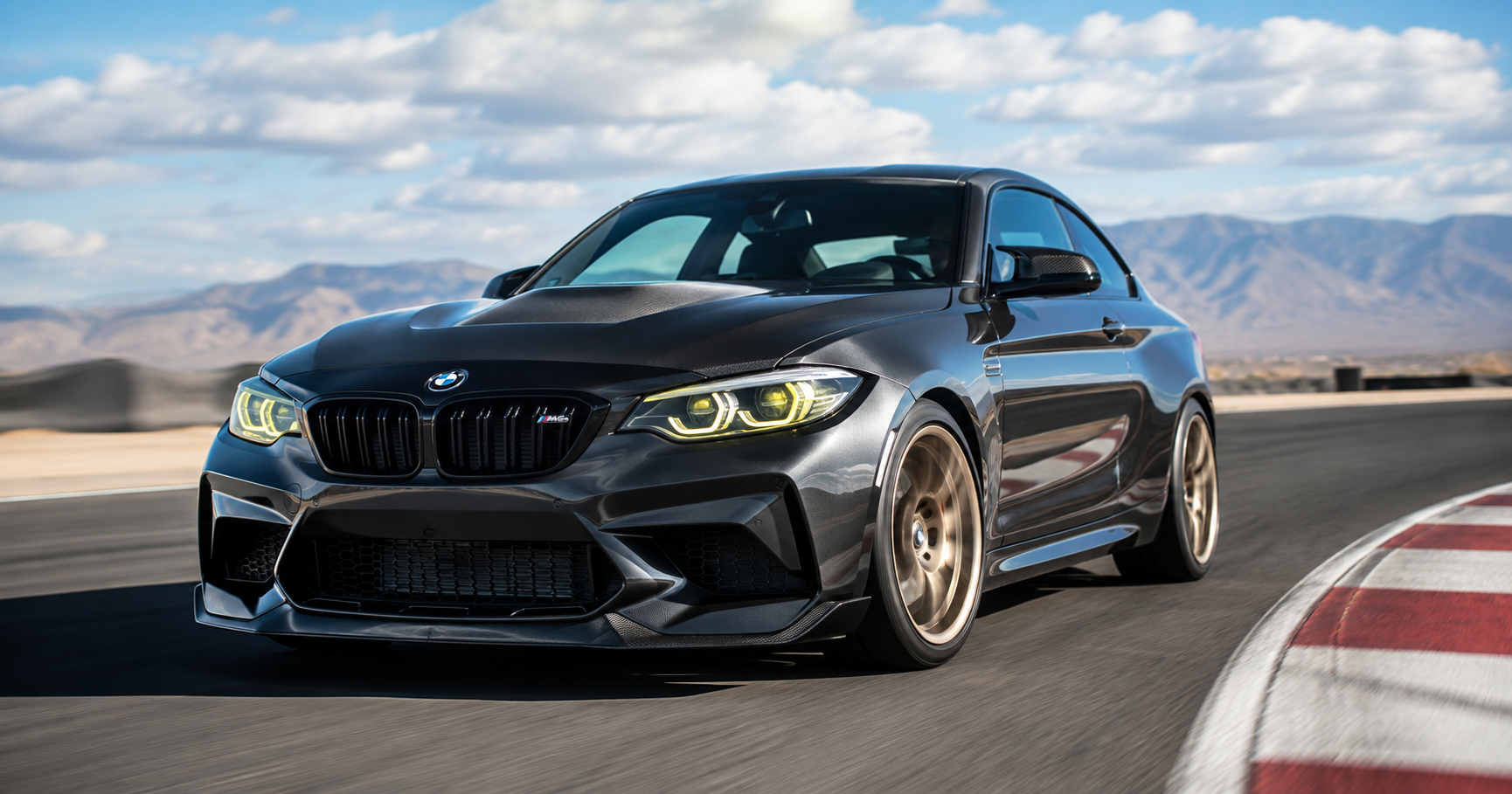
BMW M2 CS stands out as one of the brand’s most focused modern performance cars, combining rear-wheel drive, reduced weight, and the most powerful engine ever fitted to an M2. While the latest model prioritizes track capability, enthusiasm is also growing for a manual-transmission version inspired by BMW’s recently introduced M3 CS Handschalter.
The BMW M2 CS Embraces a Purist Formula
Many sports car enthusiasts consider the BMW M2 the ultimate modern M car because of its compact size. That reputation becomes even stronger with the M2 Competition Sport, which until recently was BMW’s only rear-wheel-drive CS model.
Although it delivers less power than the M3 CS and M4 CS and lacks the xDrive all-wheel-drive system that helps those models accelerate faster, the M2 CS remains a highly capable performance machine that commands respect.
Most Powerful Engine Ever Installed in an M2
The BMW M2 CS is powered by an upgraded 3.0-liter S58 twin-turbocharged inline-six engine producing 523 horsepower and 479 lb-ft of torque, making it the most powerful engine ever installed in an M2.
BMW says the car reaches 60 mph in 3.7 seconds using its eight-speed automatic transmission, a figure that matched testing results exactly. By comparison, the M2 CS’s xDrive-equipped siblings are capable of completing the same sprint in under three seconds.
Weight Reduction Focuses on Track Performance
BMW designed the M2 CS to be lighter and more track-oriented than the standard M2. The model sheds 97 pounds through the use of a carbon fiber trunk, roof, mirror caps, forged alloy wheels, and a carbon fiber center console.
BMW also removed the cupholder as part of its weight-saving measures, reinforcing the model’s focus on performance.
Performance Depends on the Right Setup
Unlike BMW models equipped with xDrive, where the all-wheel-drive system can be deactivated, the rear-wheel-drive M2 CS places complete responsibility for controlling the car on the driver.
On public roads, the car’s performance limits are difficult to approach without exceeding legal speeds. In Comfort and Sport modes, available for the engine, chassis, steering, and brakes, the M2 CS feels relatively composed. The character changes significantly when Sport Plus is selected for the engine and chassis.
Using the most aggressive settings on public roads can make everyday driving uncomfortable. The transmission offers three shift-speed settings in both automatic and manual modes, with the fastest calibration proving difficult to manage smoothly in stop-and-go traffic. Under those settings, the car strongly encourages aggressive acceleration and can become unsettled during gentle driving.
Drivers who find the right combination of settings can store their preferred configuration using the M1 or M2 buttons on the steering wheel for quick access. Compared with standard M models, the CS delivers a sharper driving experience through stiffer engine mounts, quicker throttle response, more precise steering, and a more responsive engine.
M3 CS Handschalter Adds a Manual Transmission
BMW recently introduced its second rear-wheel-drive CS model, the M3 CS Handschalter. Built exclusively for the North American market, the model follows the lightweight CS formula while adding a six-speed manual transmission.
Because of the limitations of BMW’s manual gearbox, output is limited to the standard M3’s 473 horsepower and 406 lb-ft of torque. The car reaches 60 mph in 4.1 seconds, or 3.8 seconds with a one-foot rollout, making it slower than the automatic version but offering a more engaging shifting experience.
Demand Continues for a Manual BMW M2 CS
The M3 CS Handschalter is expected to have a production run of only 800 to 900 units, making it difficult for buyers to secure one. According to the article, BMW dealers are already applying markups, highlighting strong demand for a manual CS model.
The article argues that BMW could follow a similar strategy to Porsche by introducing an M2 CS Handschalter. Enthusiasts already view the M2 as an ideal platform for the CS formula because of its compact dimensions, although the current G87 version omitted some features, including yellow daytime running lights, to keep its starting price below $100,000.
The M3 CS Handschalter carries a lower price than the previous M3 CS at $107,100 compared with $118,700, reflecting its reduced power output. The article suggests a similar pricing adjustment for the M2 CS could create room for features such as yellow daytime running lights and BMW Individual paint colors offered on the M3 Handschalter.
The article concludes that combining the M2 CS with a manual transmission would create what it describes as a near-perfect formula for driving enthusiasts.