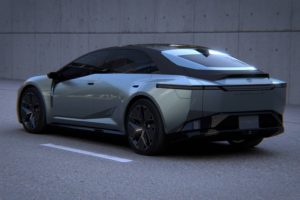


Mercedes-Benz could face an unexpected challenge in the U.S. market as a Senate bill targeting Chinese ownership of connected vehicle manufacturers advances in Washington. Although the automaker has produced vehicles in Alabama for nearly three decades, the proposed legislation could affect Mercedes because Chinese investors collectively own nearly 20% of the company.
Senate Bill Targets Chinese Ownership
The bipartisan Connected Vehicle Security Act, which advanced unanimously through the Senate Commerce Committee, would prohibit the sale or import of connected vehicles from automakers that are more than 15% owned by Chinese entities.
Mercedes-Benz exceeds that threshold. State-owned BAIC owns 9.98% of the company, while Geely founder Li Shufu controls another 9.69%, giving Chinese interests a combined stake of approximately 19.67%.
Although Mercedes-Benz is headquartered in Stuttgart, Germany, and does not have operational control in China, the proposed legislation would apply based on its shareholder structure rather than its vehicles or software.
Legislation Aims to Restrict Chinese-Linked Vehicle Technology
The legislation is intended to prevent Chinese-linked technology from entering the U.S. connected vehicle market. If enacted, it would place into law a connected vehicle rule finalized in early 2025, grant the Commerce Department authority to block vehicle technology considered high risk, and extend those authorities to vehicles connected to Russia, Iran, and North Korea.
Separate measures already restrict Chinese vehicle software beginning with the 2027 model year and hardware starting in 2030. If the bill is approved in its current form, some of its provisions could take effect as early as January 2027.
Supporters Cite National Security Concerns
Supporters of the bill describe it as a national security measure rather than a form of trade protection. Lawmakers argue that connected vehicles can collect sensitive data and have characterized Chinese-linked vehicles as both a surveillance concern and a potential risk to domestic industry.
One of the bill’s sponsors has described the objective as completely closing the U.S. market to Chinese vehicle manufacturers.
Supporters also point to a recent regulatory decision involving Polestar, which is majority-owned by Geely. The company was denied authorization under existing connected vehicle rules, resulting in its exit from the U.S. market, while sister brand Volvo received approval.
Mercedes-Benz Seeks Changes to the Proposal
Mercedes-Benz is lobbying lawmakers to increase the ownership threshold from 15% to 25%, a change that would place the company below the proposed limit.
In making its case, Mercedes has highlighted its U.S. operations, including more than 10,000 employees and manufacturing facilities in Alabama and South Carolina.
A group representing foreign automakers has expressed support for the bill’s overall objective while cautioning against unintended consequences for U.S. manufacturing. Lawmakers are also reportedly considering replacing the fixed ownership threshold with a case-by-case national security review.
The issue comes as Mercedes-Benz reported that its China sales declined by about 30% during the second quarter of 2026, making continued access to the U.S. market increasingly important.
Bill Still Faces Further Debate
The legislation has not yet become law, and its final form remains uncertain. Although the Senate Commerce Committee approved the measure unanimously, Chairman Ted Cruz warned that the current 15% ownership threshold could unintentionally affect Mercedes-Benz.
The bill’s sponsors have said the automaker would have until 2030 to comply with the proposed requirements and could seek a waiver during that period.
The measure will now move to the full Senate, where lawmakers will continue debating how to define a national security threat and whether the proposed ownership threshold should apply to automakers such as Mercedes-Benz.