
The Isuzu Trooper stands out as one of the most extensively rebadged vehicles ever produced, serving as the foundation for numerous models sold under multiple automotive brands around the world. Originally introduced as a rugged, practical SUV, the Trooper was adapted for mainstream, budget, and luxury marques across a wide range of international markets.
What Is a Rebadged Car?
A rebadged car is a vehicle built by one automaker but sold under another company’s brand name. In most cases, the changes are limited to new badges, minor styling revisions, or different trim levels, while the mechanical components remain largely unchanged.
Automakers often use rebadging to reduce research and development costs, expand into new markets, or fill gaps in their product lineups without developing an entirely new vehicle. The approach can benefit both smaller manufacturers seeking a broader audience and larger companies looking to offer products in additional market segments.
Successful rebadging, however, depends on balancing branding, customer expectations, and market positioning. Buyers generally expect a vehicle to align with the identity of the brand selling it, even when its engineering originates elsewhere.
The Isuzu Trooper’s Global Appeal
The Isuzu Trooper debuted in 1981 as a straightforward SUV designed for off-road durability and everyday practicality. Its boxy styling, spacious interior, and rugged construction made it well suited for the South Asian markets where it was sold, while its competitive pricing also helped it gain popularity internationally.
The SUV was offered in two-door and four-door body styles, along with short- and long-wheelbase versions. Early models used a range of inline-four engines, and the addition of General Motors’ 2.8-liter V6 from the Chevrolet S10 during the late 1980s improved its performance.
The second-generation Trooper, produced from 1991 through 2002, introduced significant improvements in styling, comfort, and performance. It also became the platform for the vehicle’s many rebadged versions.
Depending on the market, the second-generation model was available with inline-four and V6 gasoline engines, as well as diesel powertrains. Performance continued to improve during the late 1990s as General Motors, Honda, and Isuzu expanded their partnership.
How Rebadging Can Succeed—or Fail
Rebadging can be successful when a vehicle fits naturally within a brand’s identity. The Honda Passport, based on another Isuzu model, the Rodeo (known as the MU Wizard in Japan), served as an example of how an existing SUV could help expand a manufacturer’s lineup with relatively few changes.
General Motors has also relied on rebadging across its brands. GMC and Chevrolet have long offered closely related trucks and SUVs while targeting different customer segments, allowing both brands to compete successfully within the U.S. market.
The strategy has not always produced positive results. The Pontiac Aztek and Buick Rendezvous struggled following their introductions, while General Motors also rebadged the Chevrolet Suburban as the Cadillac Escalade in an effort to compete with the Lincoln Navigator.
The Many Versions of the Isuzu Trooper
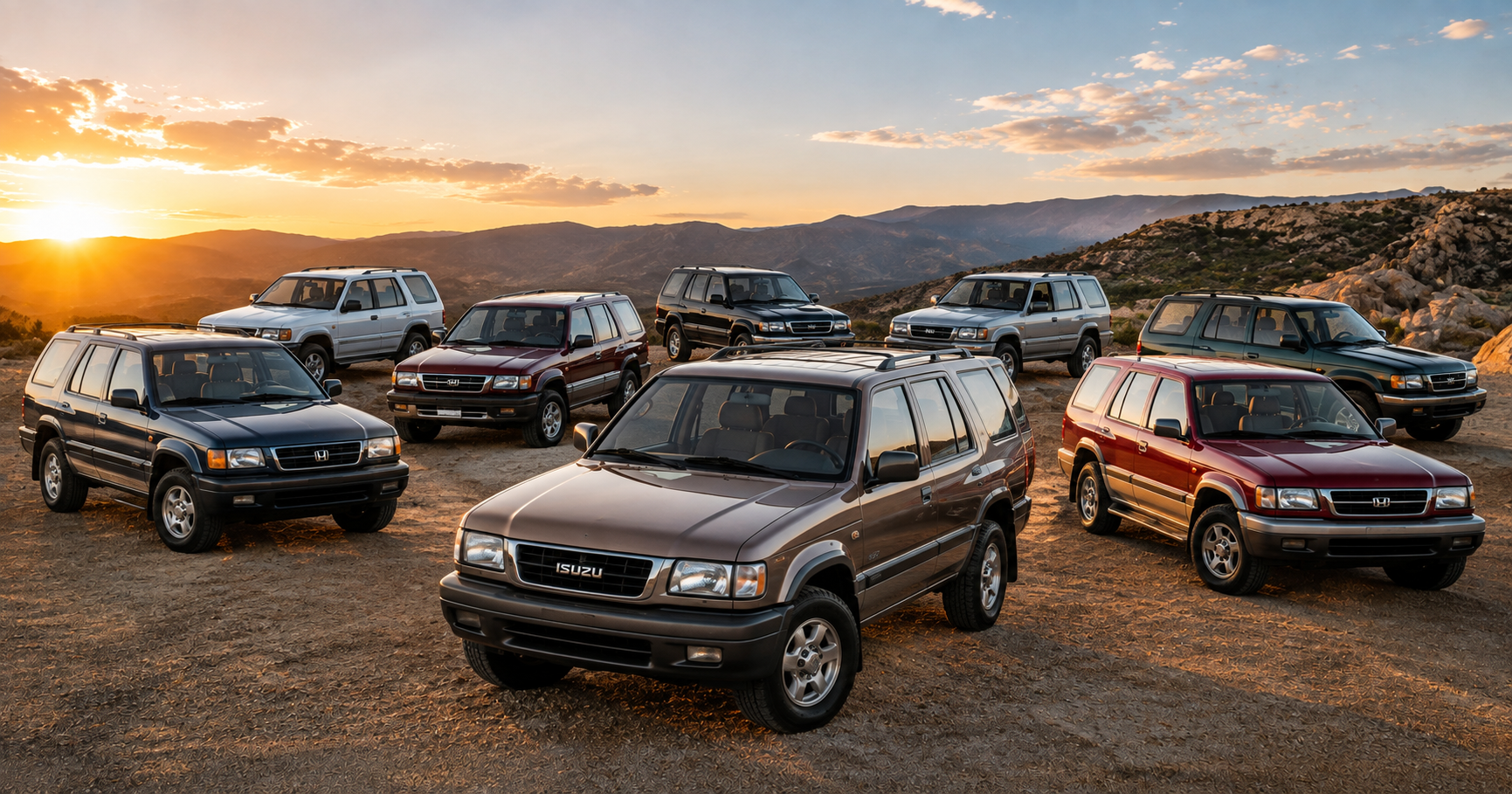
Across two generations, the Isuzu Trooper appeared under numerous brands in markets around the world. Although each version received market-specific updates, the underlying vehicle remained fundamentally the same.
- Honda Horizon (Japan): Sold under Honda branding with minimal design changes.
- SsangYong Korando Family (South Korea): Produced under license with slight styling revisions for the South Korean market.
- Holden Jackaroo (Australia): Rebranded for Australia with a focus on utility.
- Subaru Bighorn (New Zealand): Marketed by Subaru while using the Bighorn name from Isuzu in Japan.
- Caribe 442 (Central America): Sold in Central America under the Isuzu brand.
- Mekong Star 4WD (Vietnam): Locally assembled for Vietnam’s utility vehicle market and reportedly exported.
- Opel Monterey (Europe): Offered in Western Europe with minor styling updates.
- Vauxhall Monterey (United Kingdom): The United Kingdom version of the Opel Monterey.
- Chevrolet Trooper (South America): Sold under Chevrolet branding throughout South America.
- Acura SLX (North America): A luxury-oriented version featuring upgraded materials and Acura branding.
- Daewoo Bighorn (South Korea): Another South Korean variant marketed by Daewoo.
- Sainjiu Trooper (China): A completely knocked-down (CKD) version assembled in China for local markets.
A Platform Shared Around the World
In total, the Isuzu Trooper appeared as 12 distinct models representing 11 automotive brands. While each version featured market-specific branding and minor differences, the vehicle’s rugged design and practical character remained consistent.
The Trooper’s adaptability allowed manufacturers to tailor it for different regions while preserving its core identity, making it one of the most widely rebadged SUVs ever produced.