
NHTSA has elevated its investigation into timing belt failures affecting certain Ford vehicles to an Engineering Analysis, a more advanced stage that allows the agency to conduct additional testing and evaluate whether a safety recall may be warranted. The investigation now covers approximately 135,000 vehicles equipped with Ford’s 1.0-liter three-cylinder engine.
NHTSA Advances Ford Timing Belt Investigation
The National Highway Traffic Safety Administration (NHTSA) began investigating timing belt failures last year involving several Ford models, including the Focus and EcoSport equipped with the company’s 1.0-liter three-cylinder engine. The investigation is separate from a 2024 recall involving the same engine.
The agency has now upgraded the case to an Engineering Analysis, the next stage in its defect investigation process.
The expanded review covers approximately 135,000 vehicles, including:
All of the affected vehicles are equipped with Ford’s 1.0-liter engine.
Investigation Began After Owner Complaints
The investigation originated in December of last year after NHTSA’s Office of Defects Investigation received multiple consumer complaints involving timing belt failures.
By opening an Engineering Analysis, the agency can perform additional technical testing, examine vehicle components, gather more evidence, and determine whether a recall should be pursued.
Wet Timing Belt Design Under Review
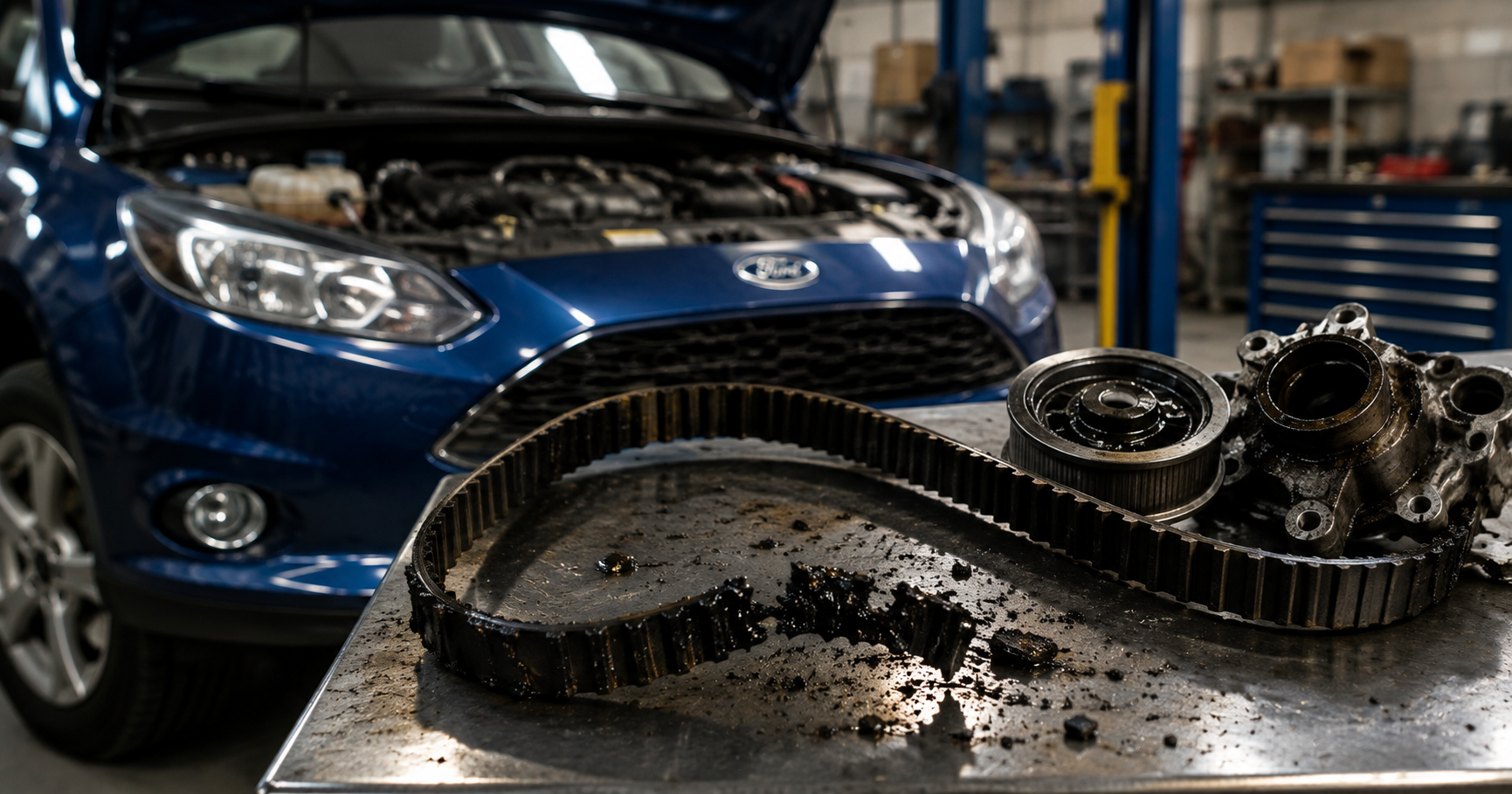
According to NHTSA, the investigation is focused on Ford’s wet timing belt design, in which the timing belt operates inside the engine while immersed in oil.
The agency says the belt material can gradually deteriorate, producing debris that may clog the oil pump pickup screen. As debris accumulates, oil pressure can decrease, reducing engine lubrication and increasing the risk of engine power loss or engine seizure while the vehicle is being driven.
Many owners reported receiving a low oil pressure warning before experiencing engine failure, while others told the agency their engines stopped without any warning.
NHTSA’s analysis states that, in some cases, drivers may not receive sufficient warning to respond safely.
Failure Data Raises Additional Questions
According to the agency, there have been 355 reported incidents associated with the issue.
NHTSA’s documents indicate that the average timing belt failure occurs at approximately 70,000 miles.
The agency also found that 98% of the reported failures occurred well before Ford’s original recommended replacement interval of 150,000 miles. Some affected vehicles also had documented maintenance histories, indicating the issue was not limited to missed service.
No Recall Has Been Announced
NHTSA emphasized that advancing the investigation does not automatically result in a recall.
The agency said it will continue testing and analyzing data as part of the Engineering Analysis. While the evidence collected so far indicates a potential safety concern, additional technical evaluation is required before any further action is taken.
Ford has already introduced a global customer satisfaction program for vehicles equipped with the 1.0-liter Fox Classic timing belt.
Under that program, the recommended timing belt replacement interval has been reduced to 100,000 miles or six years, whichever comes first, instead of the previous 150,000-mile recommendation.
Ford also said owners who previously paid for timing belt-related engine repairs may be eligible for reimbursement.
The Engineering Analysis remains ongoing as NHTSA continues evaluating timing belt failures in affected Ford Fiesta, Focus, and EcoSport models before determining whether additional regulatory action is necessary.