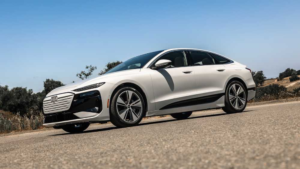


A new Audi patent describes an extended-range electric vehicle that could also operate like a conventional hybrid in certain situations, while sending power to the front wheels, rear wheels, or all four. The design, found by CarBuzz, is unusually complex but could reduce costs by eliminating one electric motor and its associated components.
Audi’s EREV Would Work in Multiple Configurations
The distinction between a plug-in hybrid and an extended-range EV generally comes down to whether the gasoline engine can directly turn the wheels. In an EREV, the engine typically serves to generate electricity rather than drive the wheels.
Audi’s patent describes a different approach. During normal driving, the battery would power a primary electric motor, which would drive the wheels on its axle. When additional traction is needed, a secondary motor could drive the other axle and provide all-wheel drive.
That secondary motor is where the system becomes considerably more complicated.
One Motor Could Serve Multiple Purposes
In a conventional EREV, the gasoline engine uses a separate electric motor to generate electricity. Audi’s patented design instead connects the gasoline engine, which serves as the generator, to the secondary electric motor mounted on an axle.
Special couplings between the engine and motor, as well as between the motor and differential, would allow the vehicle’s computer to determine which components are connected and when.
With a fully charged battery, both electric motors could drive the wheels and regenerate electricity during deceleration. When the battery’s charge is low, the gasoline engine could start and connect to the secondary motor to recharge it.
Audi’s Patent Adds Another Twist
The system could also allow the gasoline engine to connect through the electric motor and directly drive the wheels in certain circumstances. The article notes that this scenario does not appear likely to happen frequently.
GM and Honda have developed systems that similarly allow gasoline engines to drive the wheels at highway speeds, but their setups do not use the same electric motor to both generate power and propel the vehicle.
Audi says its approach could reduce the number of components by eliminating one expensive electric motor and the electrical components associated with it. While that may not make a major difference at the time of purchase, it could provide benefits for customers later on.
At the same time, the system’s numerous connections and specialized couplings would add more moving parts to an already complicated drivetrain.
Why Audi’s Complex EREV Matters
Automakers continue to explore different approaches to improving vehicle technology, and some concepts ultimately have a chance of reaching production. Audi’s patented system could have one significant advantage: the potential to reduce manufacturing costs.
However, the design could present a particular challenge for Audi because all-wheel drive, specifically Quattro, is a signature feature of the company. If the secondary motor needs to generate electricity rather than drive the wheels, the system might not be able to provide all-wheel drive in every situation.
Whether Audi can address that limitation could be important to the viability of the concept.