
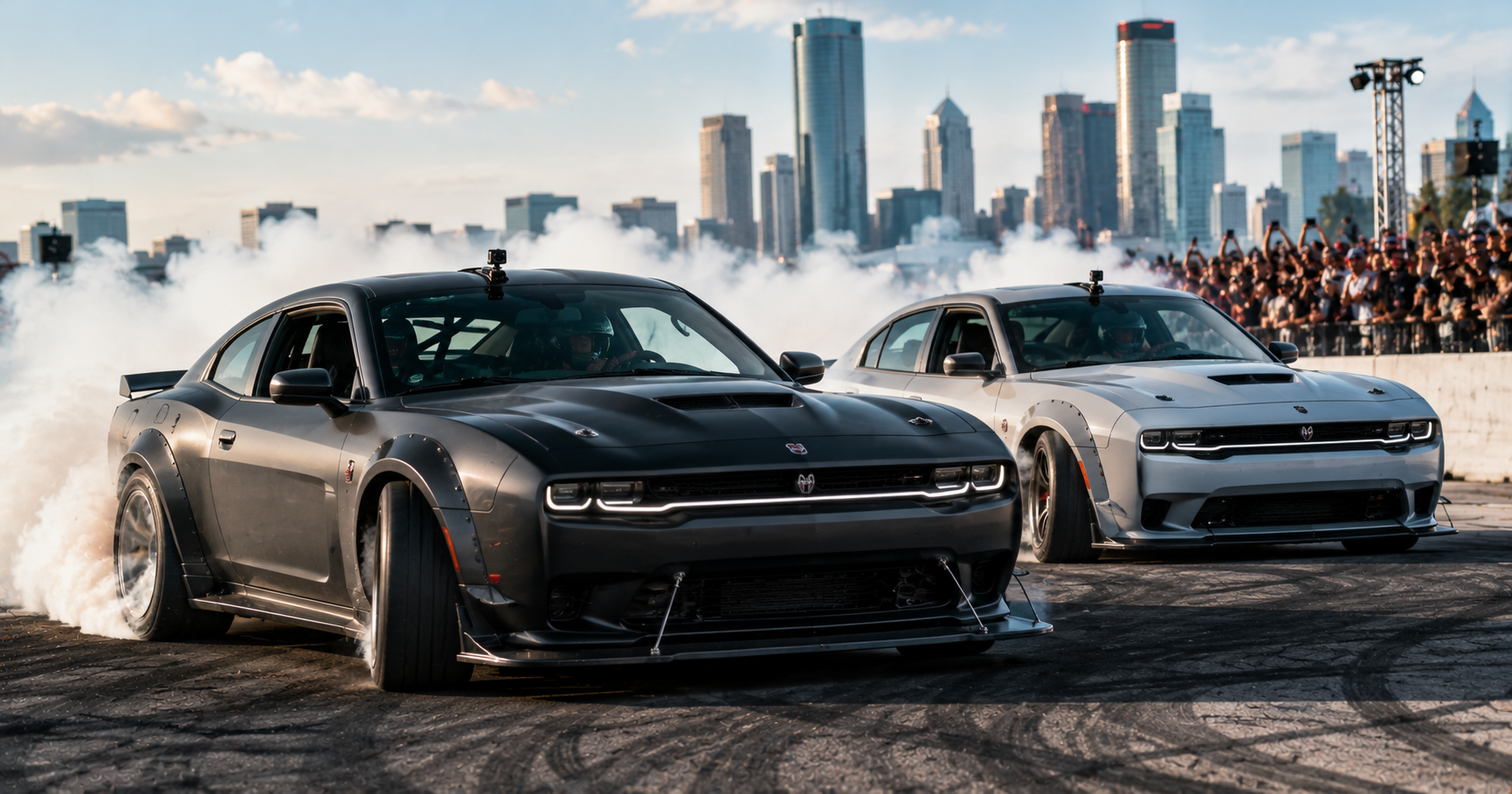
Dodge Charger is getting a very different kind of performance showcase as Stellantis introduces two drift-focused builds designed to bring tire-smoking capability to the new muscle car. Both cars use the twin-turbo 3.0-liter Hurricane inline-six, but extensive modifications raise output to a “conservative estimate” of 750 horsepower.
Two Dodge Chargers Built for Drifting
Stellantis commissioned two drift cars based on the current-generation Dodge Charger. The coupe, called the Boost, and the sedan, called the RPM, or Rapid People Mover, are designed for automotive lifestyle events, with the RPM also serving as a ride vehicle for attendees.
The two cars will debut at Roadkill Nights in suburban Detroit before heading to the next Gridlife event at Laguna Seca and FuelFest in Arizona.
Hurricane Six-Cylinder Gets a Major Power Upgrade
The builds began with the Sixpack H.O. version of the Hurricane inline-six, which produces 550 horsepower and 531 pound-feet of torque from the factory.
Stellantis upgraded both Chargers to an estimated 750 hp using aftermarket turbochargers, new intake systems and MoTec engine management. The coupe uses a single-turbo setup and also received a new exhaust system.
The sedan, meanwhile, was fitted with new intercoolers and cooling-system hardware, potentially supporting the repeated passenger rides it will provide at events.
Rear-Wheel Drive and Manual Transmissions
Power alone is not enough for a dedicated drift car. Stellantis converted both Chargers to pure rear-wheel drive, replacing the stock all-wheel-drive configuration with a setup designed specifically for drifting.
The cars also received manual transmissions in place of their eight-speed automatics. Roll cages, reinforced driveline components and widened fenders complete the builds.
Dodge Charger Attempts to Find Its Muscle-Car Identity
The drift cars highlight a larger issue surrounding the new Charger. The latest model has been criticized for moving away from what made the previous generation so popular with enthusiasts: affordable access to rear-wheel drive and V8 power.
The new Charger combines the iconic styling of the 1968 Charger with modern powertrains, but its critics argue that appearance alone does not recreate the appeal of the previous car. Although the new model is technically a better car, it does not deliver some of the characteristics that fans wanted most.
Dodge Uses Tuning and Drift Builds to Showcase the Charger
Dodge appears to be emphasizing the new Charger’s potential as a tuning platform. The brand has been providing cars to content creators, resulting in numerous Charger videos on YouTube that demonstrate what the vehicle can do with modifications.
The two drift cars serve a similar marketing purpose by showing the Charger performing the kinds of activities enthusiasts associate with muscle cars. With their 750-hp Hurricane engines, rear-wheel drive and manual transmissions, the builds bring the new Charger closer to that role.
For now, the drift cars remain special builds rather than factory offerings. Stellantis has not made a V8-powered version of the current-generation Charger part of this program, leaving the V8 option as the missing piece for enthusiasts who want the new Charger to more closely follow the formula of its predecessor.