
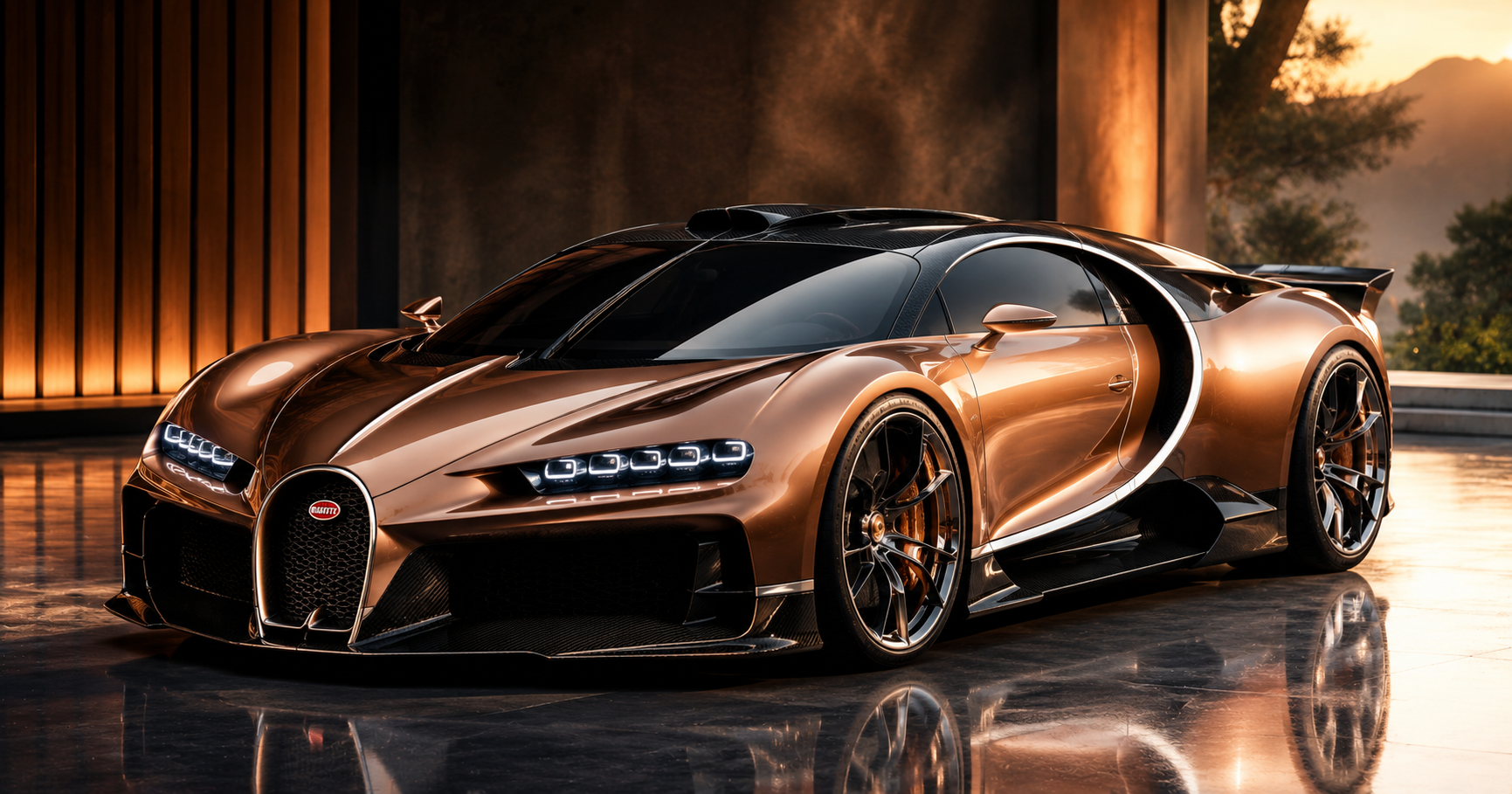
Bugatti Destrier is the latest one-off creation from the automaker’s Programme Solitaire, transforming the aggressive 1,578-horsepower Bolide into a far more graceful interpretation of its W16-powered platform.
From Bolide Aggression to Sculpted Elegance
Bugatti may have built its last W16 engine in July, but the company continues to celebrate the iconic engine layout through its Programme Solitaire series of one-off cars based on existing chassis. The latest creation, called the Destrier, takes its name from the largest and most intimidating horses used in medieval battle.
The Destrier is based on Bugatti’s most aggressive W16-powered model, the 1,578-horsepower Bolide. Rather than retaining the track-only hypercar’s uncompromising appearance, however, the new one-off follows a “Sculpture of Speed” design philosophy that emphasizes sleek, organic forms.
The Lowest Bugatti Ever Produced
Bugatti gave the Destrier a straightforward design brief: take the Bolide and remove its wings, vents and visual aerodynamic elements before reimagining the bodywork around sleekness and purity.
The result stands just 39 inches tall, making the Destrier the lowest model Bugatti has ever produced. Its front end features a wider interpretation of the brand’s horseshoe heritage grille, while the lighting replaces the Bolide’s X-shaped LEDs with a matrix design housed within a more conventional headlight opening.
Much of the Bolide’s aerodynamic technology remains beneath the new bodywork. The bonnet incorporates S-ducts, air curtains and vortex generators, while a roof-mounted air scoop continues feeding cool, fresh air to the mid-mounted 8.0-liter, quad-turbocharged W16.
A brightwork spear runs down the center of the bonnet, across the roof and onto the rear spoiler. The design creates a visual connection to the Bugatti Type 57 SC Atlantic and its distinctive center-ribbed bodywork.
Distinctive Details Set the Destrier Apart
The famous C-line side profile first introduced on the Veyron has been revised for the Destrier. Another brightwork strip is interrupted by the front wheel arch, while the body pinches behind the passenger cabin before expanding over the rear wheels.
The fixed rear wing takes inspiration from the Chiron Profilée, while the thin X-shaped taillights and four exhaust outlets retain clear links to the Bolide.
Bugatti also replaced some of the Bolide’s track-focused details with more refined elements. Only the front splitter and rear diffuser expose their carbon construction, and even those pieces feature a tinted topcoat to complement the car.
The Bolide’s 18-inch wheels have been replaced by 20-inch front and 21-inch rear wheels. Their polished finish fills the Destrier’s low, arched fenders and reinforces the car’s more sculptural appearance.
A Completely Reworked Interior
The Destrier’s cabin is another major departure from the Bolide. Instead of the stripped-out interior of the track car, the Programme Solitaire creation uses rich brown leather and suede throughout the cabin.
An unusual 3D-knit fabric appears on the shoulder bolsters, door panels and twin-cove dashboard nacelles. The Bolide’s race-style steering yoke remains, along with the carbon-intensive cabin tub that integrates the fixed seats and maintains a motorsports-style recumbent seating position.
The duct-style HVAC vents also return on the center console, but Bugatti gives them a more elaborate treatment. Polished hardware secures the vents, while the outlets feature hammered-finish aluminum inspired by the hand-formed armor associated with the knights who may have ridden destriers into battle.
Programme Solitaire’s Growing Collection
The Destrier follows the Brouillard and FKP 16.4 Hommage as another example of Bugatti’s Programme Solitaire coachbuilding operation, which provides individual customers access to the company’s custom design studio.
The Brouillard was the first project produced by the custom studio. It is a closed-roof coupe with a front design closely resembling the W16 Mistral and a rear inspired by the Bolide.
The name Brouillard comes from a thoroughbred horse that Bugatti founder Ettore Bugatti reportedly favored, inspiring the coachbuilding team to pursue a smoother, more organic and graceful design. Horses appear throughout the interior, including on the door panels, while a horse’s head is etched into the glass around the shifter and additional horse details appear on the seats.
The Brouillard uses a 1,578-horsepower, quad-turbocharged W16, the same engine found in the Mistral among other models.
The Design Connection Behind the Destrier
Bugatti says the Destrier differs from the Brouillard and FKP 16.4 Hommage because it does not draw from a specific piece of company history. However, its design philosophy is still connected to the past.
The Bugatti Type 57 chassis served as a multipurpose platform, including its use in the 57C Tank that won the 1939 24 Hours of Le Mans. The Type 57 SC Atlantic also used the race-winning engine and chassis and is widely regarded as Bugatti’s most beautiful car in history.
Programme Solitaire applied a similar idea to the Bolide, transforming the ultra-fast track-focused car into a more graceful rolling sculpture. The Destrier represents the latest expression of that approach while retaining the underlying W16-powered character of its donor car.