

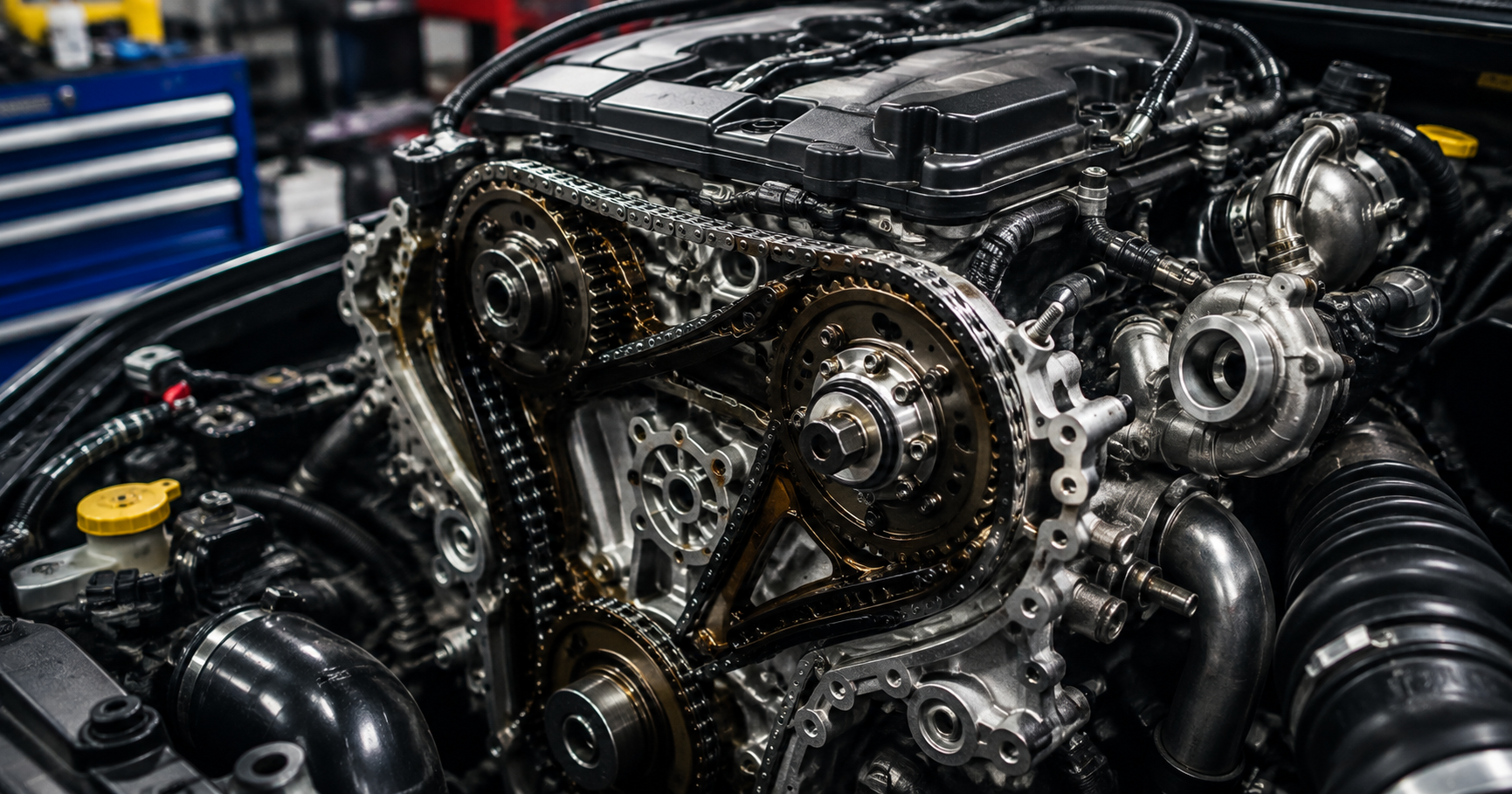
The Jaguar Land Rover Ingenium engine family was introduced in 2015 as the automaker regained control of its powertrain development after years of relying on Ford and BMW engines. Available in 1.5-liter and 2.0-liter four-cylinder gasoline and diesel versions, the lineup later expanded with a 3.0-liter inline-six, but the four-cylinder engines continue to face reliability concerns despite recalls.
The Main Problems With Ingenium Engines
Many of the early Ingenium engine problems center on the diesel models, although the gasoline versions have also experienced issues.
Four-cylinder Ingenium diesels have documented problems involving balance shaft bearings. One of the bearing points is located near the exhaust system, where exposure to higher-than-normal temperatures can affect longevity.
When those bearings wear out, metal shavings can enter the oil circuit. The resulting damage can scar and scratch the lubrication system, clog lines, damage pumps and eventually cause irreversible engine damage.
Short-distance driving can make the situation worse because it does not allow frequent regeneration of the diesel particulate filter. That can lead to oil dilution and accelerated wear.
Gasoline Ingenium Engines Have Their Own Issues
The balance shaft bearing problem is largely avoided in the North American market because diesel engines were not as prevalent there, although diesel Ingenium models were popular options worldwide.
Gasoline-powered Ingenium engines can still suffer from stretched timing chains, variable-valve timing solenoid problems and higher-than-acceptable oil consumption.
The failure rates for the gasoline engines are much lower, but the issues remain a concern for owners.
Can Ingenium Engine Problems Be Prevented?
For European owners, avoiding the diesel engine has been recommended. American owners have been advised to exercise extreme caution with the gasoline engine.
According to Auto Motor und Sport, warning signs are not consistently reliable. By the time rattling noises come from the engine, the damage may already be extensive.
Oil changes for four-cylinder Ingenium engines are scheduled every 21,000 miles, but recommendations have been made to complete the service before another 10,000 miles have passed since the previous oil change.
Repairs Can Be Expensive
Preventive repairs may help reduce concerns, but replacing the balance shafts requires removing the engine and can easily cost thousands.
A replacement engine may not eliminate the problem because it carries the same inherent faults. Even after spending the money on a replacement, the risks are reduced rather than eliminated.
The Ingenium family restored Jaguar Land Rover’s control over its powertrain development, but the continuing problems with its four-cylinder engines remain a significant concern, particularly for diesel models and for gasoline engines in the North American market.