
The 2027 Hyundai Tucson is about to become one of the most dramatically redesigned compact SUVs on the American market. Hyundai has pulled back the curtain on its next-generation Tucson, and while the automaker is keeping powertrain specifications under wraps for now, the visual transformation is impossible to miss.
The fourth-generation Tucson adopts a much more upright and architectural appearance, grows in virtually every major exterior dimension, gains additional rear-seat space and introduces a significantly more premium-looking cabin. Hyundai is also bringing its newer Pleos infotainment philosophy into the SUV, while retaining physical controls instead of relying entirely on a giant touchscreen.
That matters because the Tucson competes in one of the most crowded segments in America. The Toyota RAV4, Honda CR-V, Ford Escape and other compact crossovers have made practicality, efficiency and technology increasingly important. Hyundai’s answer isn’t simply to make the Tucson newer; it is attempting to make it look and feel like a vehicle from a higher class.
Here are the seven upgrades that stand out most on the redesigned 2027 Hyundai Tucson, along with what they could mean for American buyers.
1. The 2027 Hyundai Tucson Gets a Dramatically Bolder Design
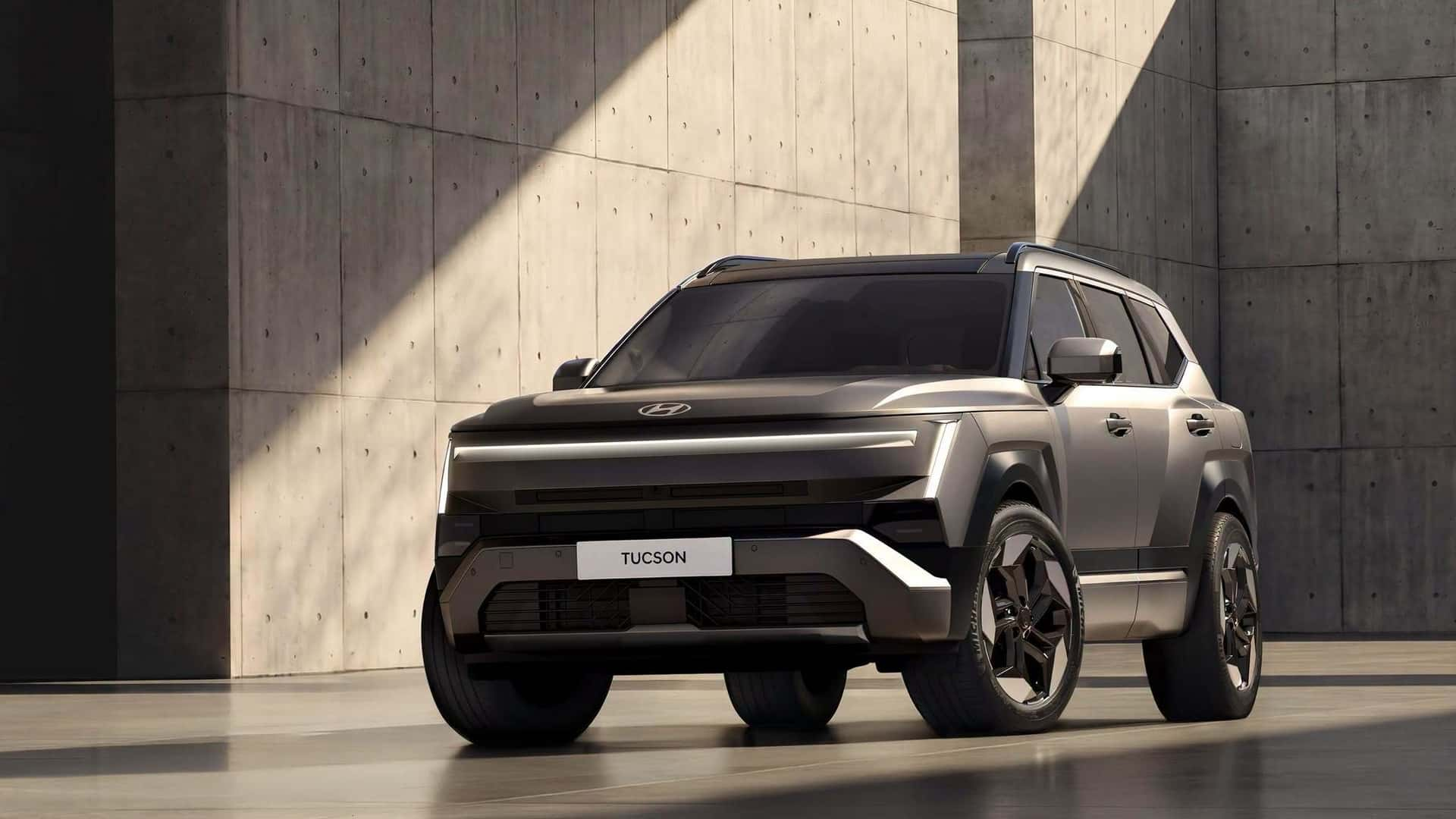
The biggest change is immediately obvious: the new Tucson looks nothing like a routine mid-cycle refresh.
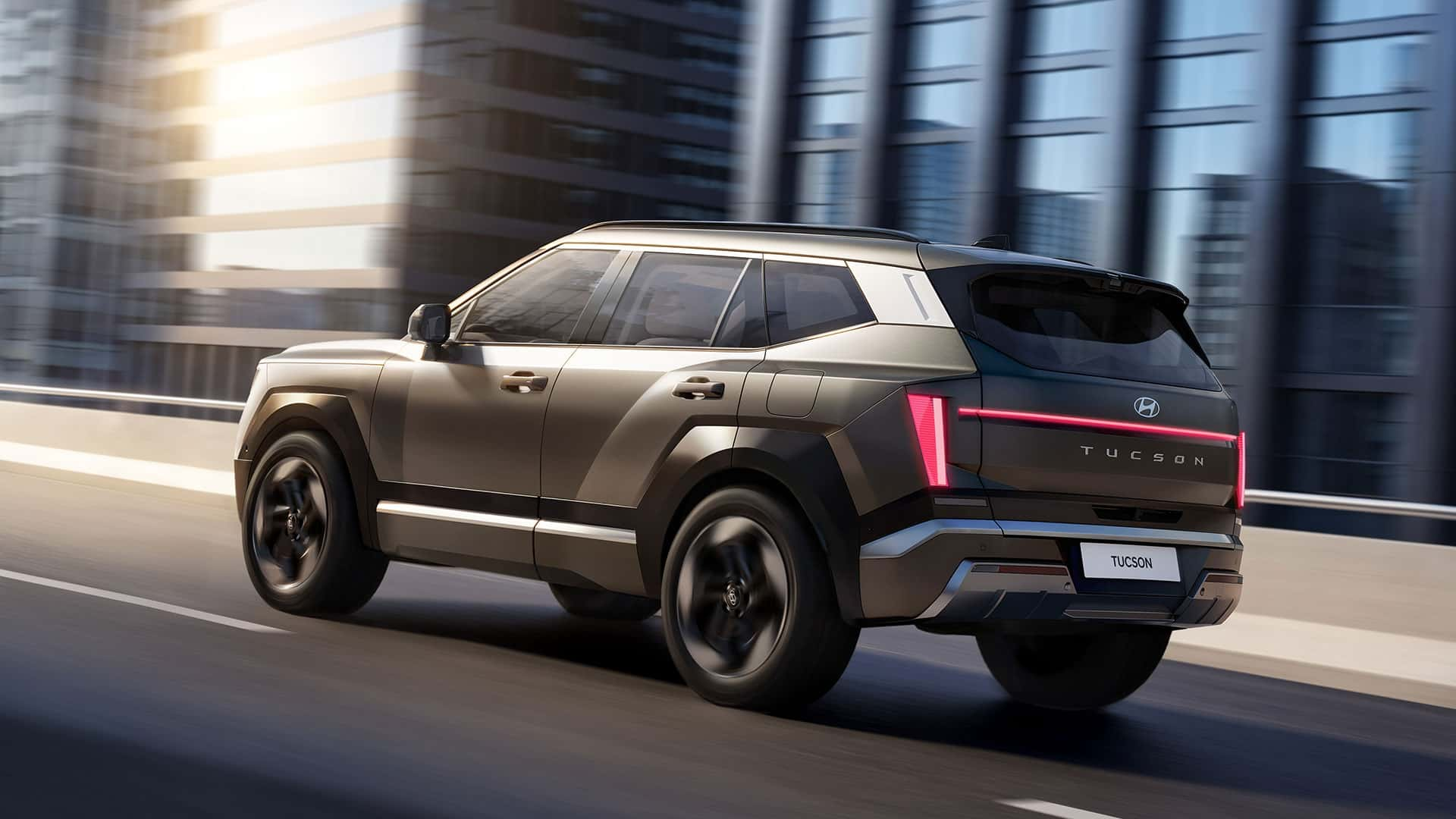
Hyundai has completely reworked the SUV’s proportions and surfaces for its fourth generation, giving it a more squared-off silhouette with pronounced edges and heavily sculpted bodywork. The result is a Tucson that looks considerably more rugged than the outgoing model while still maintaining a sophisticated, futuristic character.
The design follows a broader direction already established by Hyundai’s latest larger SUVs. The Santa Fe and Palisade moved toward boxier proportions, emphasizing an outdoors-oriented identity. The Tucson adopts that philosophy but interprets it for a smaller, more urban-focused crossover.
Hyundai’s Art of Steel design language is particularly visible in the pronounced horizontal elements and sharply defined fenders. The vehicle has a much more planted appearance, helped by larger-looking wheels, bluff fender flares and a substantial rear bumper.
It is an unusual approach for the compact SUV class. Rather than trying to make the Tucson sleek and aerodynamic at all costs, Hyundai has embraced a more architectural appearance.
A more distinctive alternative to the RAV4 and CR-V
For shoppers who think many compact SUVs have started to look interchangeable, this could be one of the Tucson’s biggest advantages.
The new design gives the Hyundai a visual identity that is difficult to confuse with a Toyota RAV4 or Honda CR-V. The proportions are more upright, the surfaces are more expressive and the lighting signature is considerably more dramatic.
Hyundai appears to be betting that buyers will appreciate a compact crossover that looks substantial without moving into a larger SUV category.
2. Full-Width Lighting Gives the Tucson a Futuristic Face
One of the most recognizable features of the new Tucson is its lighting.
The redesigned SUV features a slim front light bar for its daytime running lights, complemented by a matching horizontal lighting treatment at the rear. Hyundai also incorporates an illuminated H motif into the front and rear design.
These details give the 2027 Hyundai Tucson a distinctly modern appearance, particularly at night.
Instead of using lighting simply as a functional element, Hyundai has made it an important part of the vehicle’s identity. The thin horizontal elements visually widen the SUV and reinforce its more substantial stance.
The rear treatment is particularly important because it allows the Tucson to maintain a recognizable design from multiple angles. Many vehicles have become increasingly similar from the front, but distinctive rear lighting can help establish a model’s identity.
Why the lighting matters
In a crowded segment, styling can influence a buying decision just as much as a specification sheet.
Compact SUV buyers frequently prioritize practicality, reliability, fuel economy and price, but that does not mean appearance is irrelevant. Hyundai appears to understand that equation. The new Tucson combines functional proportions with styling that is more likely to attract attention in a dealership parking lot.
3. The 2027 Hyundai Tucson Is Bigger in Almost Every Direction
The redesigned Tucson isn’t merely visually larger. Hyundai has confirmed that the new generation grows in several important dimensions.
The body is longer, wider and taller, while the wheelbase also increases. Those changes should have practical consequences for passengers and cargo rather than simply making the vehicle look more imposing.
| Dimension | 2027 Hyundai Tucson | 2026 Hyundai Tucson | Change |
|---|---|---|---|
| Wheelbase | 109.6 inches | 108.5 inches | +1.1 inches |
| Length | 185.0 inches | 182.7 inches | +2.3 inches |
| Width | 75.0 inches | 73.4 inches | +1.6 inches |
| Height | 66.3 inches | 65.6 inches (FWD) | +1.3 inches |
| Second-row headroom | 40.6 inches | 39.5 inches | +1.1 inches |
The 2.3-inch increase in overall length is especially significant because it gives Hyundai additional room to work with without pushing the Tucson into a fundamentally different vehicle category.
The wheelbase grows to 109.6 inches, while overall width reaches 75 inches. Hyundai also raises the vehicle’s height to 66.3 inches.
For shoppers, these numbers translate into a simple benefit: the new Tucson should feel more spacious and substantial from behind the wheel and inside the cabin.
More rear-seat room
Rear passengers receive a particularly useful upgrade. Second-row headroom increases to 40.6 inches, up 1.1 inches compared with the previous model.
That may not sound transformative on paper, but an extra inch of headroom can make a noticeable difference for taller passengers, especially during longer road trips.
Hyundai has also increased the rear-door opening angle from 73 degrees to 83 degrees. That should make climbing into the back seat easier and could be especially useful for families installing child seats or loading bulky objects.
4. The Interior Moves Closer to Premium-SUV Territory
If the exterior is the most obvious change, the cabin may be the more important one for everyday owners.
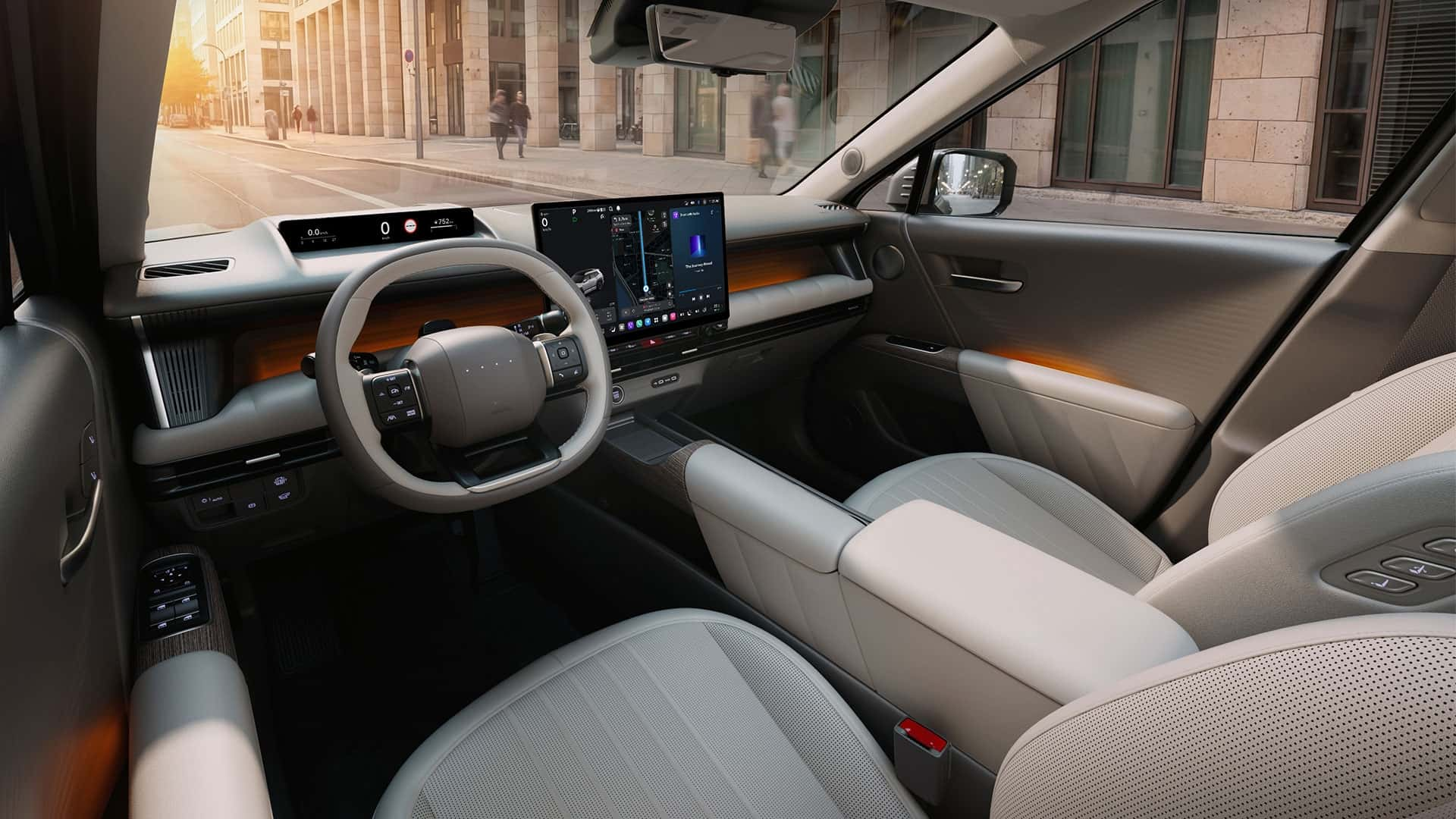
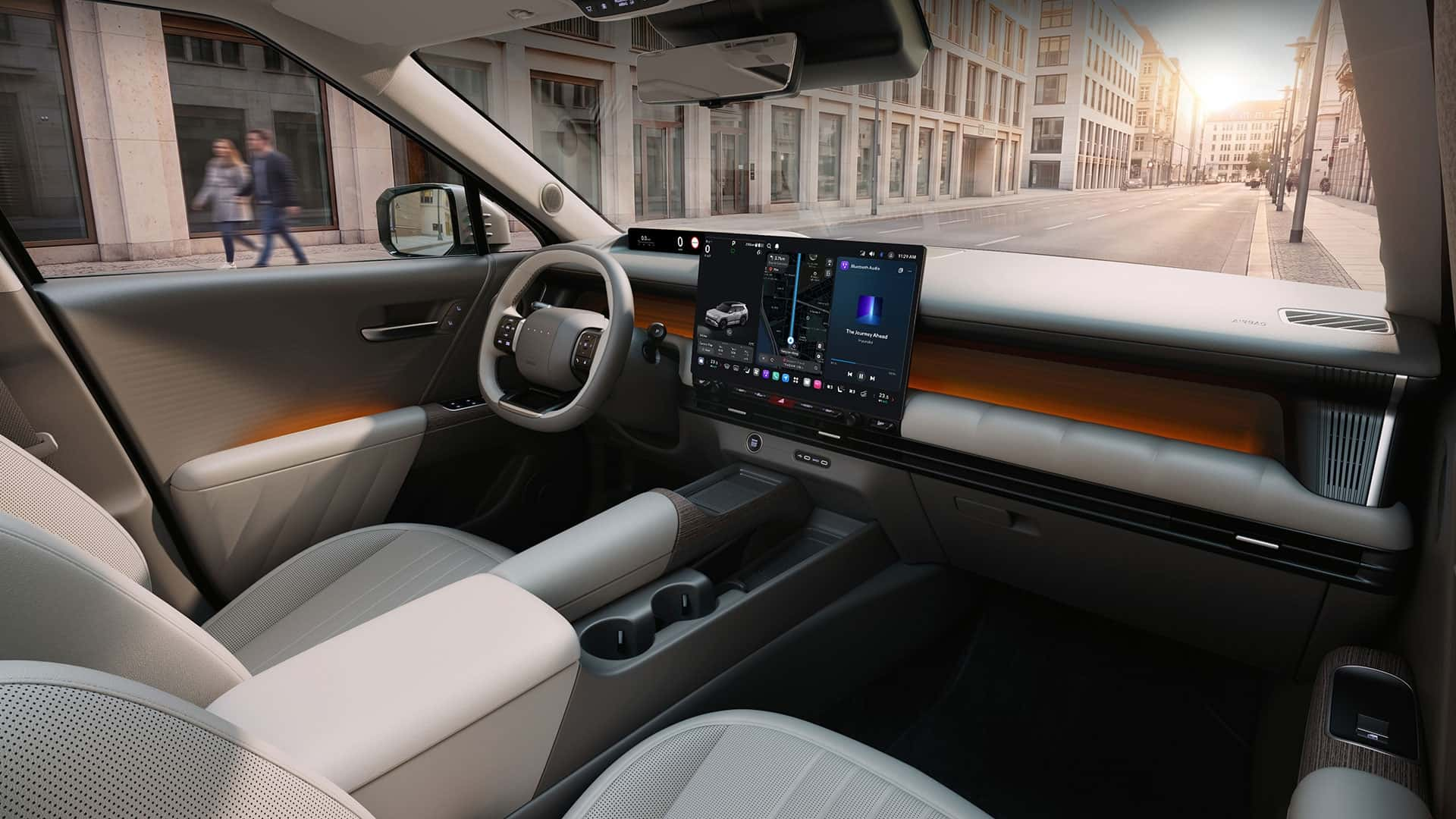
Hyundai has redesigned the interior around a horizontal dashboard layout and a cleaner, more upscale appearance. The cabin shown in the reveal features light-colored upholstery, ambient lighting, soft-looking materials and decorative trim that give the Tucson a considerably more premium atmosphere.
The goal appears clear: make the compact Hyundai feel like it belongs in a more expensive segment.
This strategy is increasingly common among mainstream automakers. Buyers have become accustomed to getting premium-style technology and design without necessarily paying luxury-brand prices. Hyundai has already moved in this direction with several recent models, and the new Tucson continues the trend.
A slim digital instrument display remains
Perhaps more importantly, Hyundai has not abandoned the driver’s instrument display in favor of placing everything on a central touchscreen.
The redesigned Tucson uses a slim digital instrument display positioned directly in front of the driver. That keeps important driving information within the driver’s natural field of view.
For drivers who dislike the increasingly common trend of putting critical vehicle information exclusively on a center screen, this is a welcome decision.
5. Pleos Technology Could Transform the Tucson’s Infotainment Experience
The new cabin also introduces Hyundai’s newer Pleos software direction.
Hyundai has not yet confirmed every specification of the Tucson’s infotainment system, including the final screen size for the U.S.-market vehicle. However, the interior design clearly emphasizes a large central display integrated into the new dashboard.
The important point is that Hyundai appears to be combining modern digital technology with conventional controls.
Below the central display is a row of physical controls, providing a more traditional method for accessing frequently used functions. This could prove to be a smart compromise for drivers who want advanced software without having to navigate a touchscreen for every adjustment.
Why physical controls still matter
Touchscreens can look futuristic, but physical buttons and switches remain useful when a driver needs to make an adjustment without taking their eyes away from the road for an extended period.
Hyundai’s approach suggests that the company is trying to avoid turning the Tucson’s cabin into a completely screen-dependent environment.
The final U.S. specifications will determine how much of this technology makes it into production vehicles, but the direction is clear: the next Tucson is expected to be significantly more digital while retaining familiar controls.
6. Familiar Gas, Hybrid and Plug-In Hybrid Powertrains Could Return
This is where Hyundai is being much more cautious.
The automaker has revealed the design and dimensions of the new Tucson but has not yet released complete technical specifications for its powertrains. That means buyers should separate confirmed information from reasonable expectations.
The current Tucson lineup offers gasoline, hybrid and plug-in hybrid options, and the redesigned model is expected to continue offering a similar range of propulsion choices.
Based on the information available so far, the expected lineup could include:
- A standard 2.5-liter four-cylinder gasoline engine.
- A hybrid system combining a turbocharged 1.6-liter four-cylinder with an electric motor.
- A plug-in hybrid using the turbocharged 1.6-liter engine with a larger battery and more powerful electric assistance.
These configurations should not be treated as final U.S.-market specifications until Hyundai officially confirms them.
Front-wheel drive and all-wheel drive
The redesigned Tucson is also expected to retain the basic choice between front-wheel drive and all-wheel drive.
That would make sense strategically. The Tucson serves a broad audience, ranging from urban commuters who prioritize efficiency to buyers in colder regions who want additional traction.
Maintaining familiar drivetrain options would also reduce the risk of alienating existing Tucson customers during a major generational redesign.
7. The Tucson XRT Is Coming Back, While an N Line Remains a Question Mark
Hyundai has confirmed that a more rugged Tucson XRT variant is planned for the new generation.
That is consistent with the direction of the redesigned SUV. The standard Tucson already has a boxier and more adventurous appearance, and the XRT should push that personality further with additional rugged styling elements.
The bigger mystery is whether Hyundai will bring back a sportier N Line or introduce a true performance-oriented N model.
The U.S. previously received a Tucson N Line, but that version was discontinued for the 2026 model year. Importantly, the previous N Line emphasized appearance rather than delivering a major increase in horsepower.
Hyundai has not confirmed a new N Line or N version for the fourth-generation Tucson, although at least one sportier variant has been rumored.
What We Know About the 2027 Hyundai Tucson So Far
Because Hyundai’s reveal focused almost entirely on design, there is still a substantial amount of information to come.
For now, the clearest picture looks like this:
- Generation: Fourth-generation Tucson.
- Design: Completely redesigned with a boxier, more architectural appearance.
- Length: 185 inches.
- Width: 75 inches.
- Height: 66.3 inches.
- Wheelbase: 109.6 inches.
- Second-row headroom: 40.6 inches.
- Rear-door opening: 83 degrees.
- Infotainment: Expected to use Hyundai’s Pleos software system.
- Drivetrain: Front-wheel drive and all-wheel drive are expected.
- Powertrains: Gas, hybrid and plug-in hybrid configurations are expected, but final specifications remain unconfirmed.
- XRT: Planned.
- U.S. availability: Expected to follow the initial Korean launch, with the broader rollout likely in 2027.
How Much Bigger Is the 2027 Tucson?
The new Tucson’s dimensional changes are significant enough to deserve attention.
At 185 inches long, the redesigned SUV is 2.3 inches longer than the 2026 model. Its wheelbase grows by 1.1 inches, while width increases by 1.6 inches. Height also increases.
Those changes should benefit passenger comfort, packaging and cargo versatility. Hyundai has specifically highlighted additional cargo space as part of the redesign, although complete U.S. cargo-volume figures have not yet been provided.
The larger body also gives the Tucson a more substantial road presence. This is important because Hyundai is not simply competing on utility; it is attempting to make the vehicle look more expensive and more commanding.
Could the New Tucson Get an Extended-Range EV Powertrain?
There is another interesting possibility surrounding the next-generation Tucson.
Hyundai CEO José Muñoz has said the automaker plans to launch its first extended-range electric vehicles in 2027. That technology could potentially become part of Hyundai’s broader electrification strategy.
However, Hyundai has not confirmed that the Tucson will be one of the first models to receive an extended-range EV system.
That distinction is important. The fact that Hyundai is developing range-extender technology does not mean the 2027 Tucson will automatically receive it.
For now, shoppers should consider the gas, hybrid and plug-in hybrid configurations as the more realistic expectations until Hyundai announces otherwise.
Why the 2027 Tucson Could Be a Major Deal for Hyundai
The Tucson is not a niche product for Hyundai. It is one of the automaker’s most important global nameplates and has become particularly significant in the United States.
According to the research surrounding the reveal, Hyundai sold approximately 234,000 Tucson units last year in the U.S., substantially ahead of the Elantra, which was roughly 86,000 units behind.
That sales performance helps explain why Hyundai may be conservative underneath the radically different exterior.
When a vehicle is already selling strongly, completely changing its mechanical formula can introduce unnecessary risk. Hyundai can instead concentrate on design, packaging, technology and efficiency while retaining a familiar basic formula.
The strategy behind the redesign
In many ways, the new Tucson represents Hyundai’s broader product strategy.
The automaker is giving mainstream vehicles increasingly upscale designs, adding advanced software and improving interior presentation while maintaining the practicality expected from a family crossover.
The Tucson is particularly well suited to this approach because its customer base is broad. It can serve as a commuter vehicle, family crossover, road-trip vehicle or entry point into Hyundai’s SUV lineup.
2027 Hyundai Tucson vs. the Competition
The compact SUV segment is among the most competitive categories in the American automotive market, which means the new Tucson cannot rely on styling alone.
The Toyota RAV4 has a strong reputation for efficiency and resale value. The Honda CR-V is known for its spacious cabin and broad appeal. Other competitors offer their own combinations of technology, performance, price and practicality.
The Tucson’s advantage could be the combination of design and equipment.
Rather than attempting to win one category outright, Hyundai appears to be creating a vehicle that offers a little bit of everything: distinctive styling, multiple powertrain choices, available all-wheel drive, modern technology, generous interior dimensions and a more premium cabin.
That could make the 2027 Hyundai Tucson particularly appealing to buyers who want something different from the most predictable choices in the segment.
What Buyers Should Watch Before Ordering
Despite the impressive reveal, there are several unanswered questions that could significantly affect the Tucson’s value proposition.
- Pricing: Hyundai has not yet provided final U.S. pricing for the redesigned Tucson.
- Engine output: Final horsepower and torque figures remain unconfirmed.
- Fuel economy: Official EPA ratings are still unavailable.
- Hybrid specifications: Hyundai has not released complete technical details for the next-generation hybrid system.
- Plug-in hybrid range: The battery capacity and official electric range remain unknown.
- U.S. trim levels: The final American-market lineup has not been announced.
- Performance variants: A new N Line or N model remains unconfirmed.
These details will ultimately determine whether the new Tucson is simply one of the most attractive compact SUVs or one of the segment’s strongest all-around choices.
When Will the 2027 Hyundai Tucson Go on Sale?
Hyundai is expected to launch the redesigned Tucson in Korea later in 2026, with other markets following afterward. The U.S. rollout is expected to take place in 2027.
That timeline means American shoppers should expect more information about pricing, trims, engines, fuel economy, technology and availability as the launch approaches.
For now, Hyundai is deliberately revealing the vehicle in stages. The design has been shown first, while the mechanical and commercial details are being saved for a later announcement.
Is the 2027 Hyundai Tucson Worth Waiting For?
For buyers who are not in a hurry, the answer could be yes.
The fourth-generation Tucson represents a much more substantial change than a typical facelift. Its larger dimensions should improve cabin usability, the redesigned interior looks significantly more upscale, and the exterior gives Hyundai a distinctive answer to increasingly conservative competitors.
The biggest reason to wait, however, is that the most important unanswered questions involve the powertrain and price.
If Hyundai manages to maintain competitive fuel economy and pricing while improving technology and interior quality, the new Tucson could become an even stronger contender in the U.S. compact SUV market.
If you are shopping specifically for a hybrid or plug-in hybrid, waiting may be even more worthwhile because the final specifications could determine whether the new model offers a meaningful improvement over the outgoing generation.
Final Verdict
The 2027 Hyundai Tucson is shaping up to be much more than a cosmetic update. Hyundai has taken one of its most important SUVs and given it a completely new visual identity, larger dimensions and a substantially redesigned cabin.
The seven biggest upgrades are clear: a bolder boxy exterior, distinctive full-width lighting, a larger body, increased rear-seat space, a more premium interior, next-generation infotainment and a continued focus on multiple gas and electrified powertrain options.
There is still plenty we don’t know. Hyundai has yet to reveal complete engine specifications, official EPA ratings, U.S. pricing and the final trim lineup. Those details will determine the Tucson’s ultimate competitiveness.
But the early picture is compelling. Hyundai has avoided playing it safe with the design, while the increased dimensions and technology suggest the company is trying to make the Tucson feel like a bigger, more sophisticated vehicle without abandoning the compact SUV formula that made it successful.
For American shoppers, that combination could make the next-generation Tucson one of the most interesting new compact SUVs to watch as it approaches the U.S. market.
Frequently Asked Questions About the 2027 Hyundai Tucson
What is new for the 2027 Hyundai Tucson?
The 2027 Tucson is an all-new fourth-generation model with a completely redesigned exterior and interior. It is longer, wider and taller than the outgoing model and features a more boxy design, new lighting signatures, a redesigned dashboard and Hyundai’s newer Pleos infotainment direction.
How big is the 2027 Hyundai Tucson?
The new Tucson measures 185 inches long, 75 inches wide and 66.3 inches tall, with a 109.6-inch wheelbase. It is larger in all of those dimensions than the 2026 model.
Will the 2027 Tucson be bigger than the 2026 Tucson?
Yes. The 2027 model is 2.3 inches longer, 1.6 inches wider and approximately 0.8 inches taller than the 2026 Tucson based on the dimensions provided by Hyundai. Its wheelbase also increases by 1.1 inches.
Will the 2027 Hyundai Tucson have a hybrid?
Hyundai has not released the complete final powertrain lineup for the new Tucson. However, the existing Tucson offers gas, hybrid and plug-in hybrid configurations, and those types of powertrains are expected to remain part of the next-generation strategy.
Will the 2027 Tucson have all-wheel drive?
All-wheel drive is expected to remain available on the redesigned Tucson, alongside front-wheel drive. Hyundai has not yet published the complete U.S.-market drivetrain specifications.
Will there be a 2027 Hyundai Tucson XRT?
Yes. Hyundai has shown that a new Tucson XRT is planned. The XRT should provide a more rugged interpretation of the redesigned SUV.
Will there be a 2027 Hyundai Tucson N Line?
Hyundai has not confirmed a new N Line or N version for the fourth-generation Tucson. A sportier variant has been rumored, but official specifications and availability remain unknown.
When will the 2027 Hyundai Tucson be available in the U.S.?
The redesigned Tucson is expected to launch in Korea later in 2026, with the U.S. and other global markets following in 2027. Exact American-market availability has not yet been announced.
How much will the 2027 Hyundai Tucson cost?
Hyundai has not announced official U.S. pricing for the 2027 Tucson. Pricing should become clearer as the American launch approaches and Hyundai reveals the final trim levels and equipment.
Does the 2027 Tucson have more interior space?
Yes. The larger exterior dimensions create additional room inside, and second-row headroom increases to 40.6 inches, up from 39.5 inches in the previous model. The rear doors also open to 83 degrees instead of 73 degrees, making access easier.