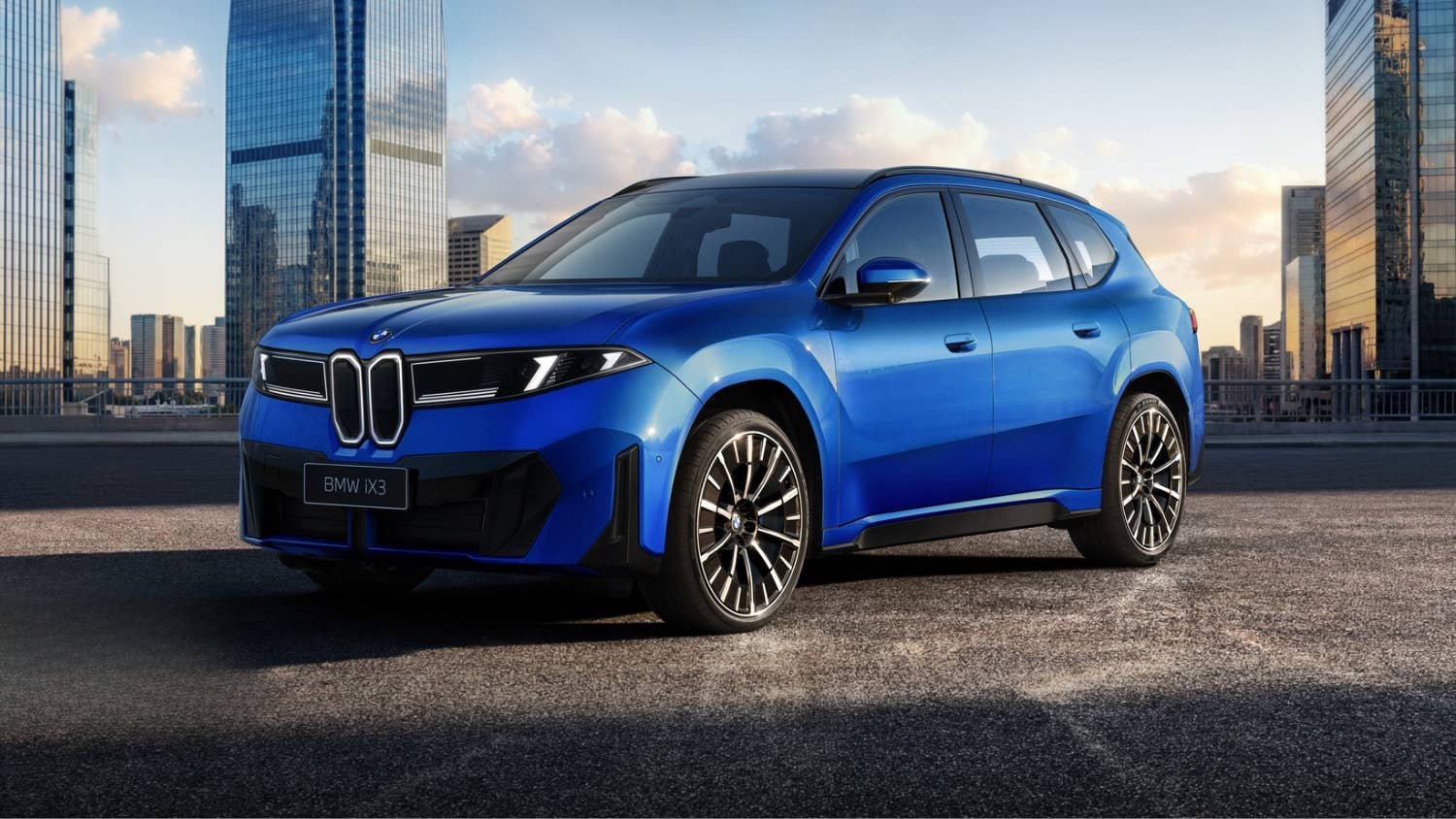
BMW says its expanding suite of active safety systems has helped prevent 243,977 potential collisions, as the automaker introduces new technologies across its latest generation of vehicles, including the iX3, i3, X5 and heavily revised 7 Series.
The vehicles are part of BMW’s next-generation Neue Klasse lineup, although the X5 and 7 Series remain based on pre-Neue Klasse architecture. Beyond their updated designs and capabilities, BMW is placing particular emphasis on safety, offering more active systems as standard and adding new features designed to intervene without unnecessarily disrupting the driver.
BMW Active Safety Systems Aim to Intervene Without Irritation
Active safety features can sometimes become intrusive by intervening when drivers do not believe assistance is necessary. BMW says it has worked to reduce that problem by refining how systems such as its lane-keep assistant respond.
The system provides warnings or steering interventions when it detects an unintended lane departure or an imminent collision. If the driver activates the turn signal, actively turns the steering wheel, or looks over their shoulder, the vehicle will not prevent a lane departure unless there is a collision risk or the maneuver would cause the vehicle to leave the road.
BMW says the goal is to keep the systems closely monitoring the road while making their operation feel more natural and less intrusive. The approach helped the new iX3 achieve a five-star Euro NCAP rating despite more stringent testing for 2026.
Other safety upgrades include a new exit warning system with an active door-opening delay. Side radars monitor the vehicle’s surroundings for approaching vehicles and bicycles and can prevent a door from opening immediately if doing so could cause a collision.
BMW has also introduced emergency steering intervention, which automatically steers a vehicle around an obstacle without leaving the lane. BMW says the feature is currently unique among competitors.
The system can also reposition a vehicle within its lane if it detects another vehicle getting dangerously close. Meanwhile, the Panoramic Vision display can show recognized traffic signs, including stop lights, yield signs, stop signs, no-entry signs and crosswalk warnings.
An attentiveness assistant can also detect whether a driver is experiencing a medical emergency and safely bring the vehicle to a stop. The system activates the hazard lights and calls emergency services unless the driver overrides it.
Smarter Parking and Maneuvering in BMW’s Neue Klasse
BMW is also expanding safety technology for parking and low-speed maneuvering. In addition to active park distance control, which brakes before the vehicle hits an obstacle, new BMW models feature emergency braking for cross-traffic situations where a driver’s visibility alone may not have been enough to avoid a collision.
The automaker has also added extra protection to address crashes caused by confusing the brake and accelerator pedals. If the system detects an obstacle less than one meter, or 39.3 inches, away at speeds of up to 2 km/h, or 1.24 mph, while also detecting “an unusually rapid and forceful depression of the accelerator pedal,” it intervenes.
The system then applies controlled braking until the vehicle comes to a stop.
With more powerful vehicles and increasingly advanced driver-assistance technology, BMW is continuing to expand its active safety systems while focusing on making interventions less intrusive. The automaker’s latest technologies build on its claim that active steering and braking interventions have already helped prevent 243,977 potential collisions.