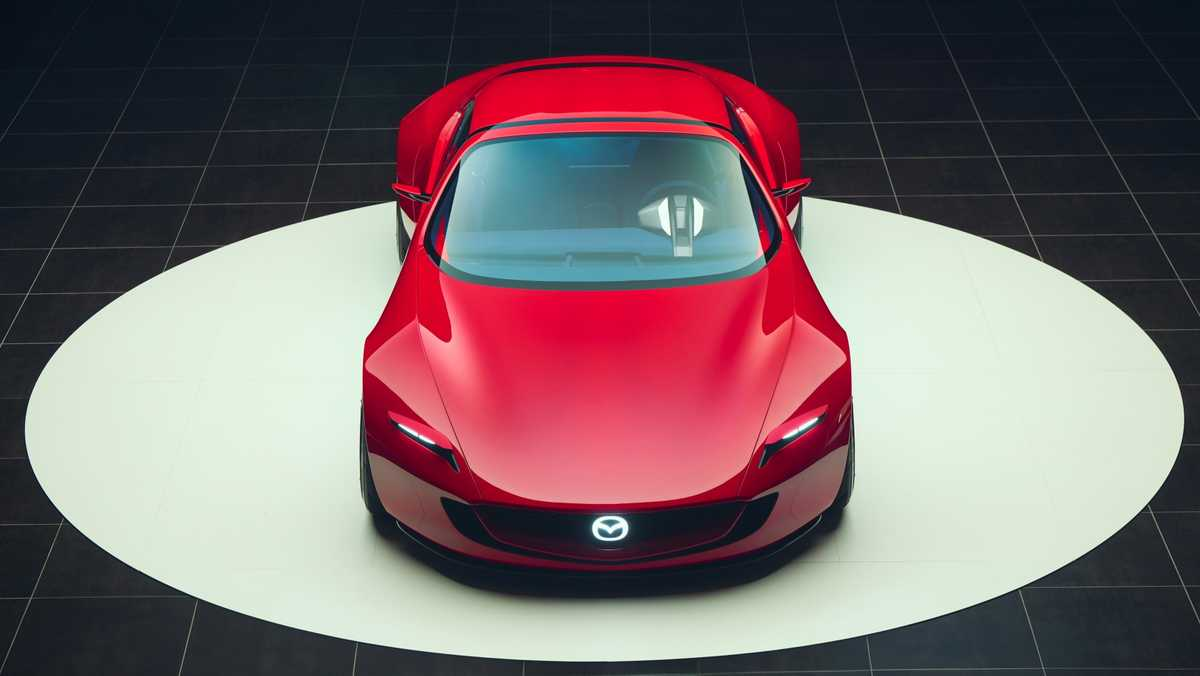
Mazda has built a strong following among car enthusiasts through its focus on driving enjoyment and distinctive styling. Now, Mazda’s lead designers have offered a closer look at the design process behind those shapes, including the company’s continued use of clay models and its emphasis on taking time to refine each design.
Clay Modeling Starts the Design Process
Automakers around the world still use clay models as part of vehicle design, although generally not to the same extent as in the past. Mazda continues to rely heavily on the traditional method.
Speaking with Design Week, Mazda head of design Ikuo Maeda and Mazda’s head of design in Europe, Jo Stenuit, explained that clay modeling is among the earliest stages of the company’s design process.
The process begins with hand-drawn designs. Designers then create small clay models before moving on to computer models.
The approach allows designers to create subtle and complex shapes more easily. The Design Week reporter noted that Maeda showed designs illustrating the complexity of some of Mazda’s shapes created through the use of clay models.
Mazda’s production and concept cars from the last decade reflect that approach, with their designs featuring very few straight lines or flat planes. Instead, their body panels are defined by continuous curves and organic, soft shapes that can be complex to create digitally but can be crafted more naturally by hand.
Mazda Designers Take Their Time
Stenuit also told Design Week that Mazda pushes to give its designers as much time as possible to develop their work. The goal is to get the designs as close to perfection as possible rather than rushing them into production.
That patience is paired with the company’s traditional approach to modeling, giving Mazda’s designers more time to refine the details of its vehicles.
How Mazda’s Design Philosophy Extends to Engineering
Mazda’s attention to small details is not limited to styling. The company has applied a similar philosophy to engineering and, ultimately, to the way its cars drive.
One example is Mazda’s G-Vectoring Control, a system used in basically every Mazda right now. It is designed to very slightly reduce power when entering a turn, shifting weight slightly forward toward the front wheels to aid turn-in and make it more precise and smoother.
Another technology developed by Mazda is Kinematic Posture Control, which is used on the CX-90, CX-70 and Miata.
The system applies a small amount of brake force to the rear inside wheel while cornering. This slightly reduces body roll while also helping with cornering.
It is another example of Mazda’s effort to deliver a smooth and natural ride while keeping its cars engaging. That same focus on small details helps explain why the company takes a deliberate approach to both engineering and the styling of its vehicles.