
Toyota has confirmed that the ninth-generation Hilux will gain a hydrogen-powered variant, with the Hilux FCEV scheduled to debut in 2028 as the Japanese automaker seeks to “develop its reputation as an innovator in the segment.”
Toyota Targets 248-Mile Range for Hilux FCEV
Toyota has not yet revealed full specifications for the production model, but it is targeting a driving range of 248 miles on the WLTP cycle and towing capacity of up to 5,512 pounds.
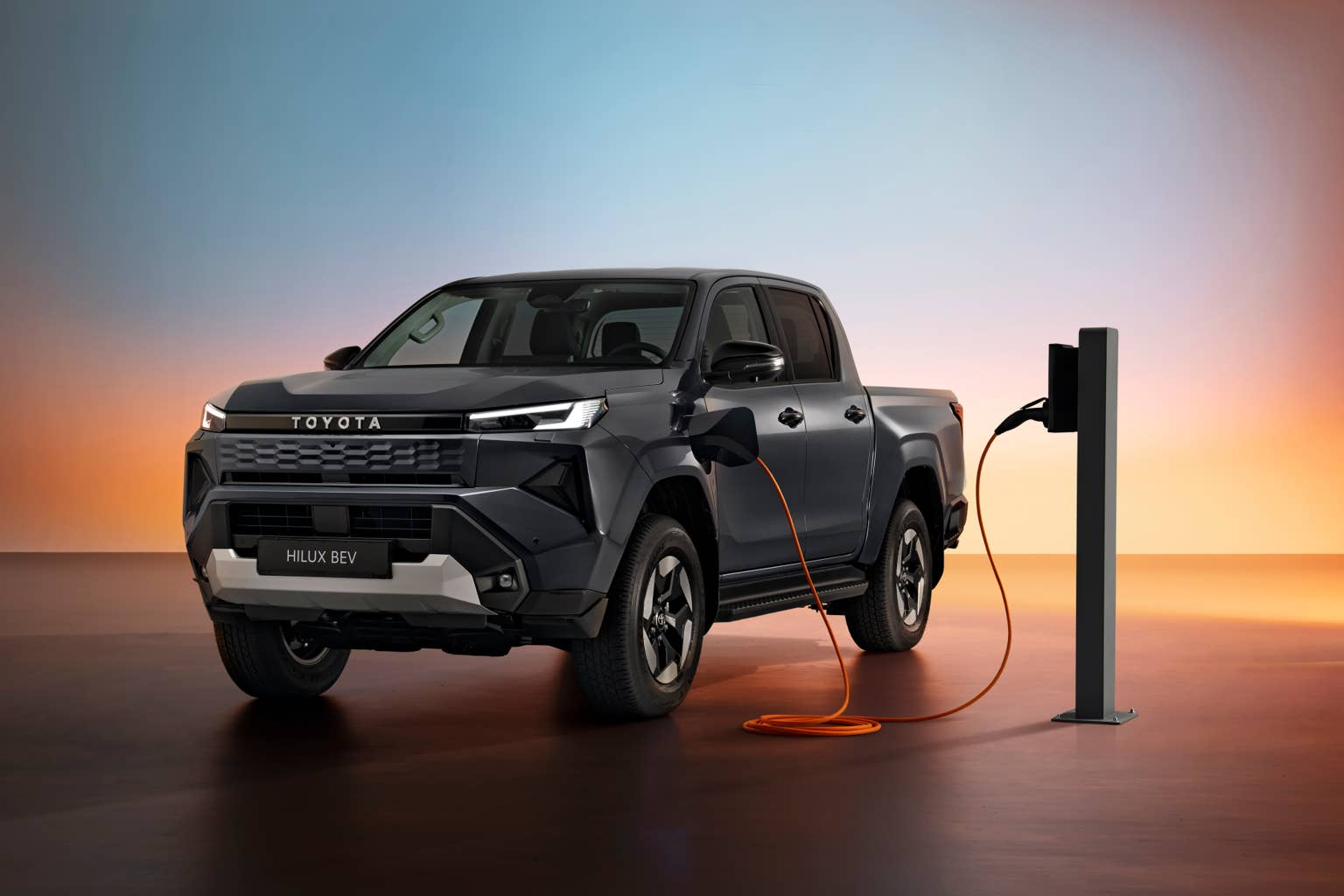
Those targets would put the Hilux FCEV ahead of Toyota’s battery-electric Hilux in both areas. The Hilux BEV uses a 59.2 kWh battery and front and rear eAxles for permanent all-wheel drive, but its WLTP-estimated range is 160 miles.
The battery-electric model also has a towing capacity of 3,527 pounds, considerably below the 5,512-pound target Toyota has set for the hydrogen-powered version.
The company has not yet said what will power the production model beyond confirming its fuel-cell drivetrain. Output figures and additional technical details are expected to be announced closer to the vehicle’s reveal date.
Hilux Hydrogen Development Began in 2022
Toyota began developing a hydrogen-powered Hilux in 2022 and unveiled its first working prototype the following year. By 2024, the company had assembled 10 examples at its manufacturing facility in Burnaston, UK.
Five of those vehicles were used for field testing, while the remaining examples were assigned to demonstration duties.
The prototypes used technology derived heavily from the Mirai, including its fuel-cell system and three high-pressure hydrogen tanks installed within the pickup’s ladder-frame chassis. A 180-horsepower electric motor powered the rear wheels, while the tanks held a combined 17.2 pounds of hydrogen.
Toyota claimed at the time that the prototypes could travel up to 373 miles on a full load of hydrogen. That figure, however, has not carried over to the range target announced for the production model due in 2028.
Toyota’s Long History With Hydrogen Power
The Hilux FCEV builds on technology Toyota has been developing for decades. The company began work on fuel-cell powertrains in 1993, while the original Mirai entered production more than two decades ago as one of the first series-production hydrogen fuel-cell passenger cars.
Earlier vehicles including the Honda FCX Clarity, Toyota FCHV and Honda FCX were leased in very limited numbers through a specialized dealer network.
Toyota has also explored hydrogen combustion technology. The automaker campaigned a specially developed GR Corolla in Japan’s Super Taikyu endurance series, although that vehicle burned hydrogen in an internal combustion engine rather than using hydrogen to generate electricity.
Why Toyota Is Pursuing a Hydrogen Hilux
For the Hilux, Toyota sees fuel-cell technology as a way to provide greater range and towing capability than a battery-electric powertrain while maintaining zero-emission driving.
Those characteristics are particularly relevant to a pickup designed for towing and long-distance travel, forming the basis for Toyota’s decision to bring the hydrogen-powered Hilux FCEV to market in 2028.