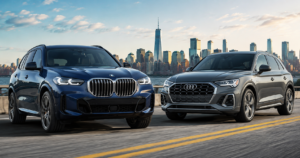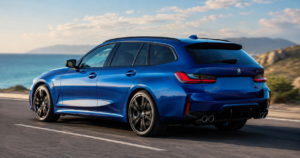

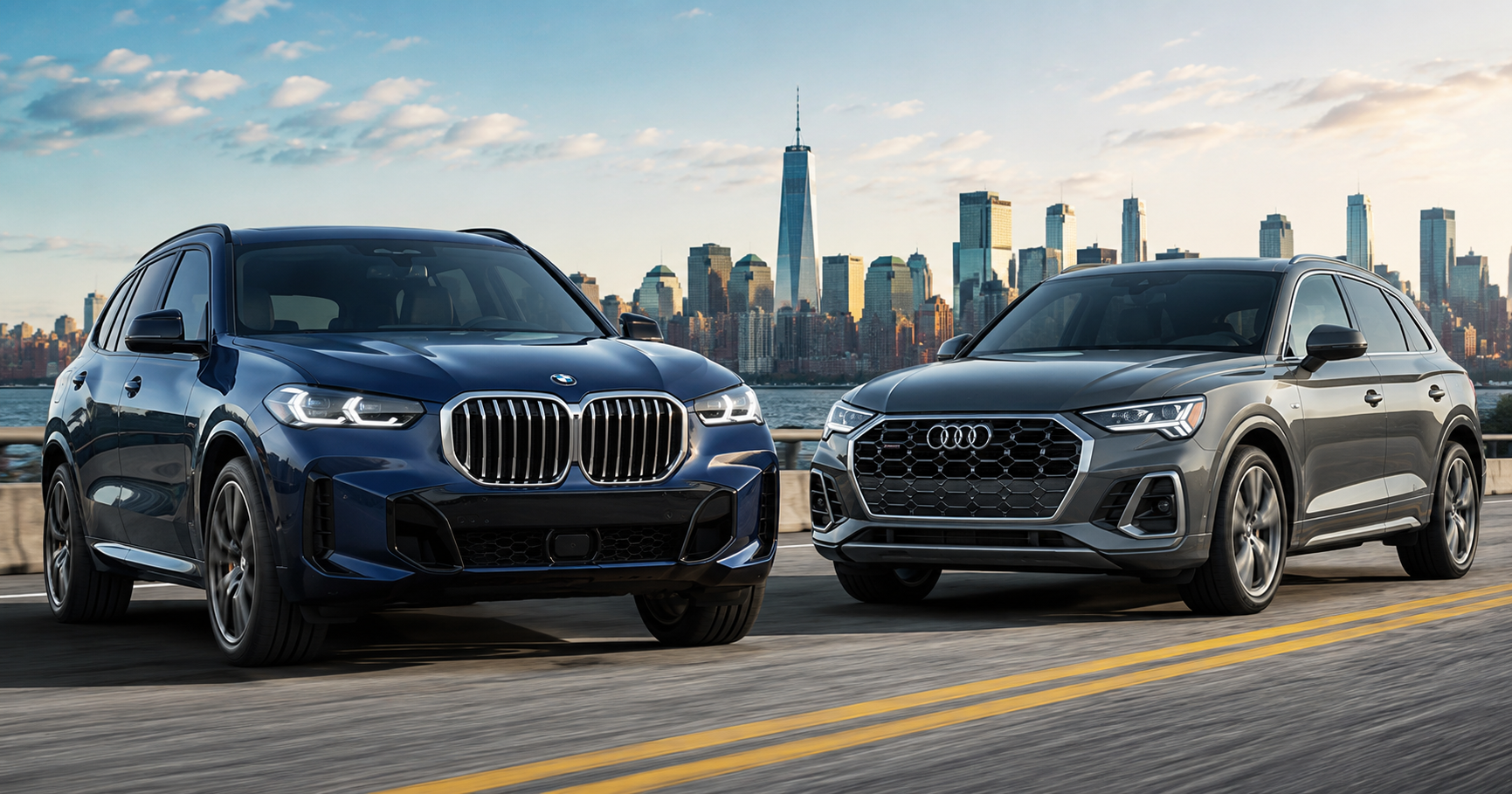
BMW has widened its lead over Audi in the U.S. luxury vehicle market during the first half of 2026, strengthening its position as the brand remains on pace to retain the luxury sales crown. While BMW continued posting year-over-year growth across several key models, Audi recorded a sharp decline in overall sales, expanding the gap between the two rivals.
BMW Extends Its Lead in the U.S. Luxury Market
BMW sold 186,944 vehicles in the United States during the first half of 2026, marking a 4.7% increase compared with the same period a year earlier. The figures exclude Mini sales.
Audi reported 67,916 U.S. sales over the same period, representing a 17% year-over-year decline. As a result, the sales difference between the two automakers has grown significantly.
One year ago, BMW led Audi by 96,548 vehicles. In the first half of 2026, that advantage increased to 119,028 vehicles despite the brands competing across many similar vehicle segments.
BMW Credits Product Strategy and Dealer Network
“Our second-quarter results reflect the confidence customers continue to place in the BMW brand and validate our long-term strategy for the U.S. market,” said Sebastian Mackensen, President and CEO, BMW of North America.
“We have outperformed the market and achieved our goal of gaining share in both the premium segment and the overall U.S. market because we have the right products at the right time and an outstanding dealer network that delivers for our customers every day.”
BMW’s Core Models Continue to Perform
BMW reported strong gains across several of its highest-volume models during 2026. The 3 Series, X3, and X5 all posted notable increases, while the brand outperformed Audi in nearly every segment where the two manufacturers compete.
For example, BMW sold 41,554 X5 SUVs during the first half of the year, compared with 7,683 sales for the Audi Q7.
Top-Selling Models in the First Half of 2026
| BMW | Audi |
|---|---|
| X5 (41,554 sales) | Q5 (22,138 sales) |
| X3 (37,671 sales) | Q3 (10,906 sales) |
| 3 Series (18,731 sales) | A5 (8,882 sales) |
| 4 Series (15,573 sales) | Q7 (7,683 sales) |
| X1 (15,018 sales) | Q8 (6,344 sales) |
Audi’s Electric SUV Sales Decline Sharply
Audi’s electric SUV lineup experienced some of its steepest declines during the first half of 2026. The Q4 Sportback e-tron recorded just eight sales, representing a 99% drop. The standard Q4 e-tron declined 93%, while the Q6 e-tron fell 87%.
The brand also saw declines in its gasoline-powered SUV lineup, including the Q3 and Q5.
Some Audi models posted gains, including the A5, which increased 7%, the A6, up 20%, and the A6 Sportback e-tron, which rose 91%. However, those increases were not enough to offset weaker demand across the rest of the lineup.
BMW Shows Strength Across Its Portfolio
BMW continued to post gains even among longer-running models. The 3 Series increased 32.3%, while the X5 rose 23.7% compared with the same period last year.
The BMW iX declined 48.9% as the company prepares to discontinue the electric SUV.
Volkswagen Group Restructuring Could Affect Audi EV Models
Some of Audi’s electric vehicle models may not remain in the lineup for much longer as the Volkswagen Group looks to cut up to 50% of its models as part of a major restructuring effort.
2026 Sales Highlight Diverging Performance
The first-half 2026 sales results show BMW expanding its lead over Audi in the United States, supported by growth across several of its core vehicles. Audi, meanwhile, recorded declining sales across much of its SUV and electric vehicle lineup, resulting in a substantially wider gap between the two luxury brands.