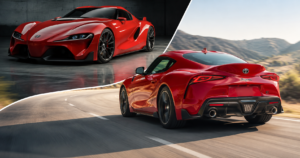

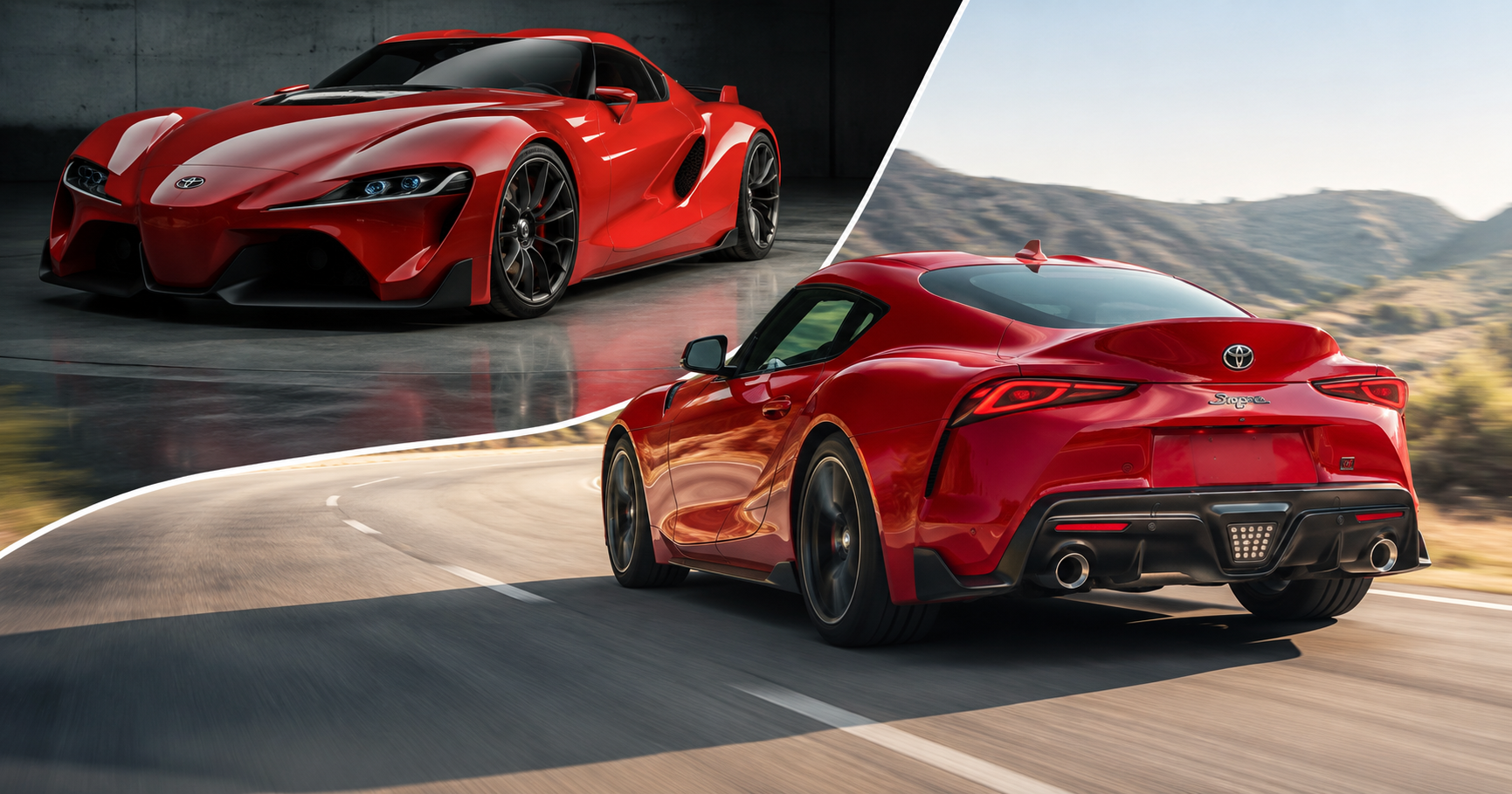
The fifth-generation Toyota Supra has effectively reached the end of its run, with no direct replacement expected for the foreseeable future. While its time on the market may have seemed brief, new comments from Calty Design’s Studio Chief Designer Alex Shen offer a closer look at how the Toyota FT-1 concept evolved into the production Supra and the challenges that shaped its development.
Calty’s Role in Shaping the Toyota Supra
Alex Shen, Studio Chief Designer at Toyota’s California-based Calty Design studio, explained how the team behind the concept that ultimately became the MkV Supra approaches vehicle design. Calty is responsible for a wide range of exploratory projects, many of which are never intended to become production vehicles.
“We’re an advanced design studio so a lot of our work is not really intended for the public consumption,” Shen said. “Maybe those ideas aren’t quite hashed out yet, or still kind of in the works.”
According to Shen, Calty regularly develops what the team calls “early studies”—design exercises created to explore styling ideas rather than represent a final production vehicle.
From Design Study to the FT-1 Concept
Each year, Calty designers select a project they want to explore. One of those projects eventually became the vehicle that would later be known as the Supra.
Rather than simply presenting drawings, the team wanted decision-makers to experience the concept firsthand. At the time, however, sports cars were widely viewed as money-losing products.
“We hadn’t heard anything about, you know, any production plans in the future,” Shen said. “We had a pretty good image at the time already.”
As the project evolved, the designers focused on preserving what Shen described as the spirit of the Supra.
“The thing that kind of kept it a Supra was kind of the spirit of what it’s supposed to do, right? Version by version, it changed from like a Celica Supra to a pure sports car,” Shen said.
That led the design team to ask a simple question: “What should it be next?”
Creating a Sports Car Experience
The answer became the Toyota FT-1 concept. Shen said appearance alone would not be enough to convince company leadership to support the project.
“You’re supposed to drive these sports cars. It should be visceral,” Shen said. “It’s not enough just to put a car out there, right?”
At that stage, the team had only a design rather than a functioning vehicle. To help demonstrate the concept, Calty partnered with Polyphony Digital.
“So we put it in the machine. We put it in Gran Turismo,” Shen said.
According to Shen, after only a couple of laps in the digital FT-1, Akio-san approved moving forward. Calty leadership then authorized the construction of a show car, even though no production program had yet received approval.
Production Challenges Behind the Supra
When development progressed, Calty still had not planned for the shared platform with BMW or the engineering and financial constraints that would come with it.
The design team ultimately had to adapt its vision to the realities of the joint platform while also working within the financial limitations of a program that, as described in the original account, was not expected to generate significant profits.
A Project That Reached Production
Shen noted that not every concept created by Calty reaches production, making the journey from the FT-1 concept to the fifth-generation Toyota Supra a notable achievement.
“Time always tells how good of a product you designed,” Shen said.
The story illustrates how an exploratory design project, a digital demonstration through Gran Turismo, and later engineering compromises ultimately resulted in the production fifth-generation Toyota Supra.