
Subaru Sports Vehicle Development is entering one of its most significant eras in decades. As many automakers shift their focus toward crossovers and electric vehicles, Subaru is taking an unexpected—but welcome—approach by strengthening its commitment to enthusiast-focused performance cars.
The company’s decision to establish a dedicated Sports Vehicle Planning Office inside its newly created Product Innovation Division signals far more than an internal organizational change. It represents a strategic investment in future performance vehicles, faster engineering processes, and the continued evolution of Subaru’s legendary STI DNA.
For driving enthusiasts, this development is particularly exciting because Subaru executives have confirmed that multiple STI-engineered vehicles equipped with manual transmissions are already under development. At the same time, Subaru is embracing digital engineering technologies that dramatically reduce development time while allowing engineers greater creative freedom.
This guide explains everything currently known about Subaru’s new sports vehicle strategy, how it affects future WRX and BRZ models, why digital development matters, and what enthusiasts can realistically expect as Subaru moves toward 2027 and beyond.
Why Subaru Sports Vehicle Development Matters
Performance vehicles have always been an important part of Subaru’s identity.
While Subaru is widely recognized for practical all-wheel-drive vehicles like the Forester, Outback, Crosstrek, and Ascent, its reputation among enthusiasts has largely been built through rally-inspired performance models.
Vehicles such as:
- WRX
- WRX STI
- BRZ
- Legacy GT
- Impreza WRX
have helped define Subaru’s image for decades.
However, stricter emissions regulations, changing consumer demand, and increasing electrification created uncertainty around the future of Subaru’s sports car lineup.
The creation of the Sports Vehicle Planning Office sends a clear message that performance remains an essential pillar of Subaru’s long-term strategy.
The Creation of Subaru’s Sports Vehicle Planning Office
Rather than treating performance projects as smaller side programs, Subaru has now established a specialized department dedicated entirely to sports vehicle development.
This office operates within the newly formed Product Innovation Division, giving engineers and planners greater flexibility during development.
The objective is simple:
- Reduce bureaucracy
- Speed up engineering
- Improve communication
- Develop exciting enthusiast vehicles faster
- Create room for more experimental performance projects
According to Chief Technical Officer Tetsuo Fujinuki, Subaru intentionally moved away from traditional development methods that relied heavily on repeated meetings and lengthy approval cycles.
Instead, the company wants faster decision-making supported by advanced digital engineering.
Digital Engineering Is Changing Everything
Traditional Vehicle Development
Historically, automakers relied on multiple physical prototypes throughout the development process.
Each prototype required:
- Engineering reviews
- Wind tunnel testing
- Structural validation
- Road testing
- Component redesign
This process often consumed years before production approval.
Subaru’s New Digital Approach
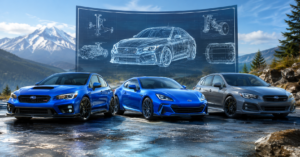
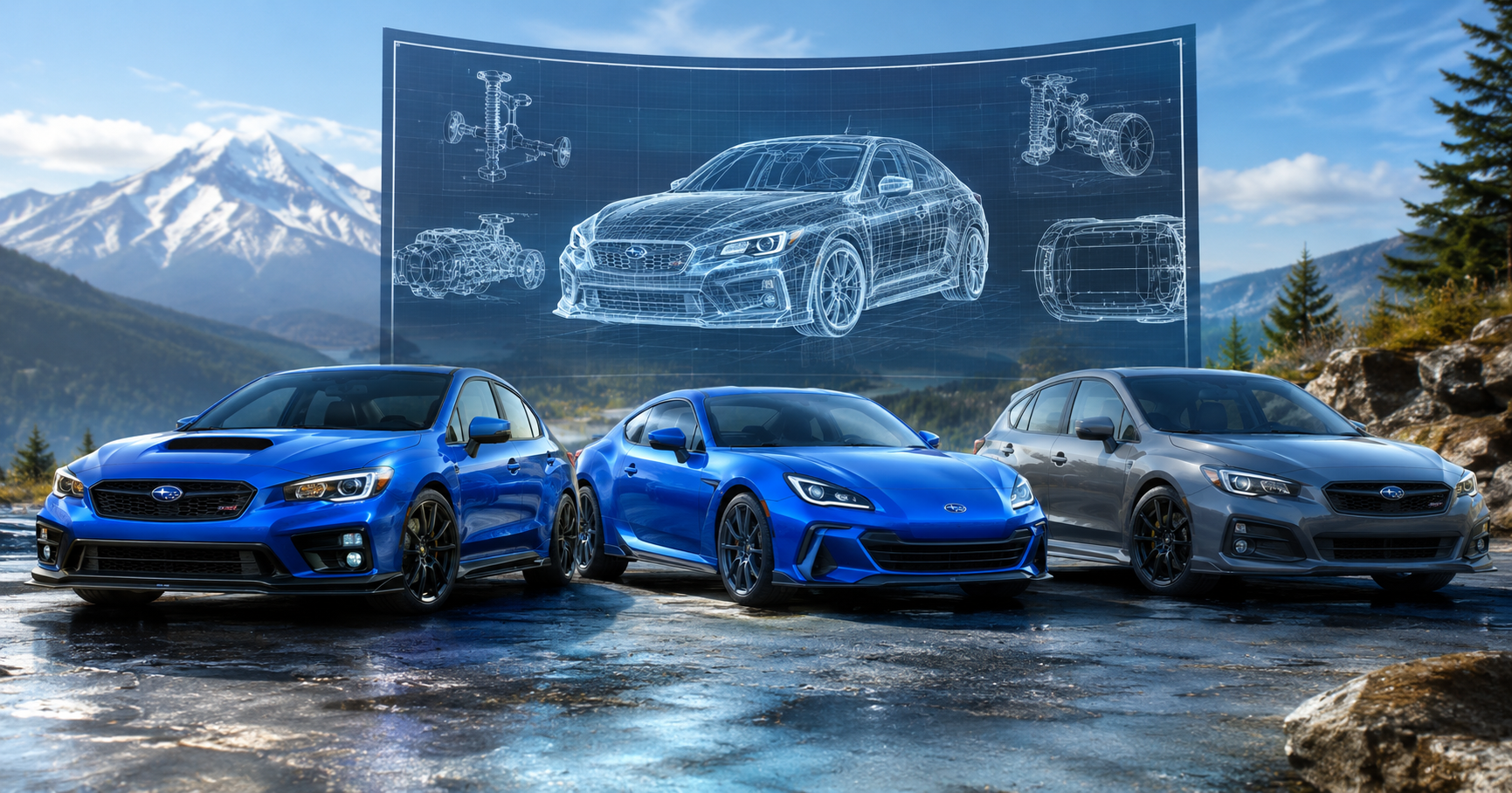
Subaru has significantly expanded its use of digital simulations.
Engineers now evaluate numerous design elements virtually before building physical prototypes.
This includes:
- Chassis rigidity simulations
- Suspension geometry
- Aerodynamics
- Crash analysis
- Weight distribution
- Cooling performance
- Powertrain integration
Digital engineering allows Subaru to identify problems earlier while testing more ideas in less time.
The result is quicker product development without compromising engineering standards.
Why Development Speed Matters
Automotive technology evolves rapidly.
Consumer expectations change almost every year.
Competition from manufacturers such as Toyota, Honda, Hyundai, BMW, and Porsche continues to intensify.
Reducing development time offers several advantages:
- Lower engineering costs
- Faster product launches
- More frequent updates
- Greater flexibility
- Improved competitiveness
For performance vehicles, quicker development also means Subaru can respond faster to enthusiast feedback.
Three STI-Engineered Models Are Already Planned
Perhaps the biggest revelation surrounding Subaru Sports Vehicle Development is confirmation that three STI-engineered vehicles are actively being developed.
Although Subaru has not officially announced specifications, executives have outlined the general direction.
1. A More Powerful WRX
The upcoming WRX is expected to receive meaningful performance upgrades.
Importantly, this is not expected to revive the traditional WRX STI nameplate.
Instead, Subaru appears to be creating a model positioned between today’s WRX and the former STI.
Potential improvements may include:
- Higher horsepower
- Improved suspension tuning
- Enhanced braking system
- Revised aerodynamics
- Reduced vehicle weight
- STI-inspired chassis upgrades
Keeping a manual transmission available demonstrates Subaru’s continued support for driving enthusiasts.
2. Higher-Performance BRZ
The BRZ already enjoys a strong reputation as one of the purest affordable sports cars available.
A higher-performance STI-engineered version could elevate its appeal even further.
Possible enhancements include:
- Revised suspension
- Improved handling balance
- More aggressive styling
- Additional aerodynamic components
- Performance-oriented interior upgrades
- Potential engine refinements
Even modest increases in performance could make the BRZ an even stronger competitor in the affordable sports coupe segment.
3. Possible Impreza TX Hot Hatch
The third vehicle may surprise longtime Subaru fans.
Reports suggest Subaru is considering a hot hatch potentially carrying the Impreza TX name.
If introduced, this model could appeal to buyers looking for:
- Practical daily usability
- Sporty driving dynamics
- Manual transmission
- Compact dimensions
- Affordable pricing
A modern Subaru hot hatch could also revive some of the excitement once associated with earlier Impreza performance variants.
The Importance of Manual Transmissions
Manual transmissions continue disappearing across the automotive industry.
Many manufacturers have eliminated them entirely due to:
- Lower customer demand
- Improved automatic transmissions
- Emissions regulations
- Electrification
Subaru’s commitment to offering manuals in all three upcoming STI-engineered vehicles reflects an understanding of its enthusiast community.
For many drivers, shifting gears manually remains an essential part of the sports car experience.
How Subaru Balances Performance and Practicality
Subaru has no intention of becoming a niche sports car manufacturer.
Mainstream vehicles remain the foundation of its business.
Popular models like the:
- Forester
- Outback
- Crosstrek
- Ascent
- Solterra
will continue generating the majority of sales.
Sports vehicles instead serve several strategic purposes.
- Strengthen brand image
- Attract younger buyers
- Support engineering innovation
- Maintain enthusiast loyalty
- Differentiate Subaru from competitors
Electrification Will Influence Future Performance Cars
Subaru has confirmed that electrified performance vehicles remain under consideration.
Although specific products have not yet been announced, several possibilities exist.
Potential Future Technologies
- Hybrid performance systems
- Electric torque vectoring
- Battery-assisted acceleration
- Regenerative braking optimization
- Electric all-wheel drive enhancements
The challenge will be preserving the engaging driving experience Subaru enthusiasts expect while meeting stricter environmental regulations.
How Digital Development Could Benefit Customers
Consumers may never see Subaru’s engineering software, but they could experience its benefits every day.
Faster digital development can lead to:
- Better reliability through earlier testing
- More refined handling
- Improved quality control
- Reduced engineering costs
- Quicker feature updates
- Shorter product cycles
These improvements ultimately make future performance cars more competitive without sacrificing Subaru’s reputation for durability.
Competition in the Modern Performance Segment
Subaru enters an increasingly competitive market.
Enthusiasts today can choose from numerous affordable performance vehicles.
| Vehicle | Primary Strength |
|---|---|
| Subaru WRX | Turbocharged AWD performance |
| Toyota GR Corolla | Rally-inspired hot hatch |
| Honda Civic Type R | Track-focused precision |
| Toyota GR86 | Lightweight rear-wheel-drive coupe |
| Hyundai Elantra N | Affordable high performance |
| Volkswagen Golf R | Premium AWD hatchback |
Subaru’s renewed investment demonstrates its determination to remain a serious player in this highly competitive segment.
What Enthusiasts Should Watch Before 2027
Several milestones will likely shape Subaru Sports Vehicle Development over the next few years.
- Official unveiling of the first STI-engineered model.
- Powertrain announcements.
- Potential hybrid technology integration.
- Confirmation of the Impreza TX.
- Production timing.
- Global market availability.
- Performance specifications.
- Pricing information.
Why Subaru Isn’t Reviving the Traditional STI—At Least Not Yet
One of the biggest questions surrounding Subaru’s future is whether the iconic WRX STI badge will return. While the company has not confirmed a full revival, its current strategy suggests a more gradual approach.
Instead of launching a direct successor immediately, Subaru appears to be focusing on STI-engineered vehicles that incorporate performance hardware, chassis tuning, and enthusiast-oriented features without necessarily wearing the full STI badge.
This strategy gives engineers greater flexibility to adapt future models to changing emissions standards while keeping the STI philosophy alive.
The Bigger Picture: Subaru’s Long-Term Performance Vision
Looking beyond individual models, Subaru’s investment in sports vehicle planning reflects a broader commitment to maintaining brand identity during a period of industry transformation.
As electrification, software-defined vehicles, and digital engineering become increasingly important, manufacturers face the challenge of preserving the emotional connection drivers have with their cars.
Subaru’s approach attempts to combine advanced development tools with traditional enthusiast values:
- Driver engagement
- Manual transmissions
- Balanced handling
- Accessible performance
- Everyday usability
If successful, this strategy could allow Subaru to remain one of the few mainstream automakers still offering engaging performance vehicles while adapting to future technologies.
Final Thoughts
Subaru Sports Vehicle Development is entering a transformative phase that could define the brand’s performance identity well into the next decade. The establishment of a dedicated Sports Vehicle Planning Office, combined with faster digital engineering and the development of three STI-engineered manual-transmission models, demonstrates that Subaru is not abandoning enthusiasts despite the industry’s rapid shift toward electrification.
Although many details remain under wraps, Subaru’s strategy is becoming increasingly clear. The company intends to preserve its performance heritage while embracing modern engineering techniques, allowing it to develop more ambitious vehicles in less time.
For WRX, BRZ, and potential hot hatch fans, the coming years promise to be among the most exciting Subaru has delivered in a long time.
Frequently Asked Questions
What is Subaru Sports Vehicle Development?
It refers to Subaru’s new strategy for designing future performance vehicles through its dedicated Sports Vehicle Planning Office, emphasizing faster engineering, enthusiast-focused products, and STI-inspired innovation.
How many new STI-engineered models are expected?
Subaru executives have indicated that three STI-engineered manual-transmission vehicles are currently in development.
Will Subaru bring back the WRX STI?
There is no official confirmation. Current plans point toward a more powerful WRX with STI engineering rather than a direct revival of the traditional WRX STI.
Will future Subaru performance cars have manual transmissions?
Yes. Company executives have indicated that the three upcoming STI-engineered vehicles are planned with manual gearboxes.
Is Subaru developing electric performance cars?
Subaru has confirmed it is exploring electrified performance vehicles, although technical details and launch timing have not yet been announced.
Why is digital engineering important?
Digital development enables Subaru to simulate, test, and refine vehicles virtually, reducing development time, improving efficiency, and allowing engineers to pursue more ambitious performance projects before building physical prototypes.