

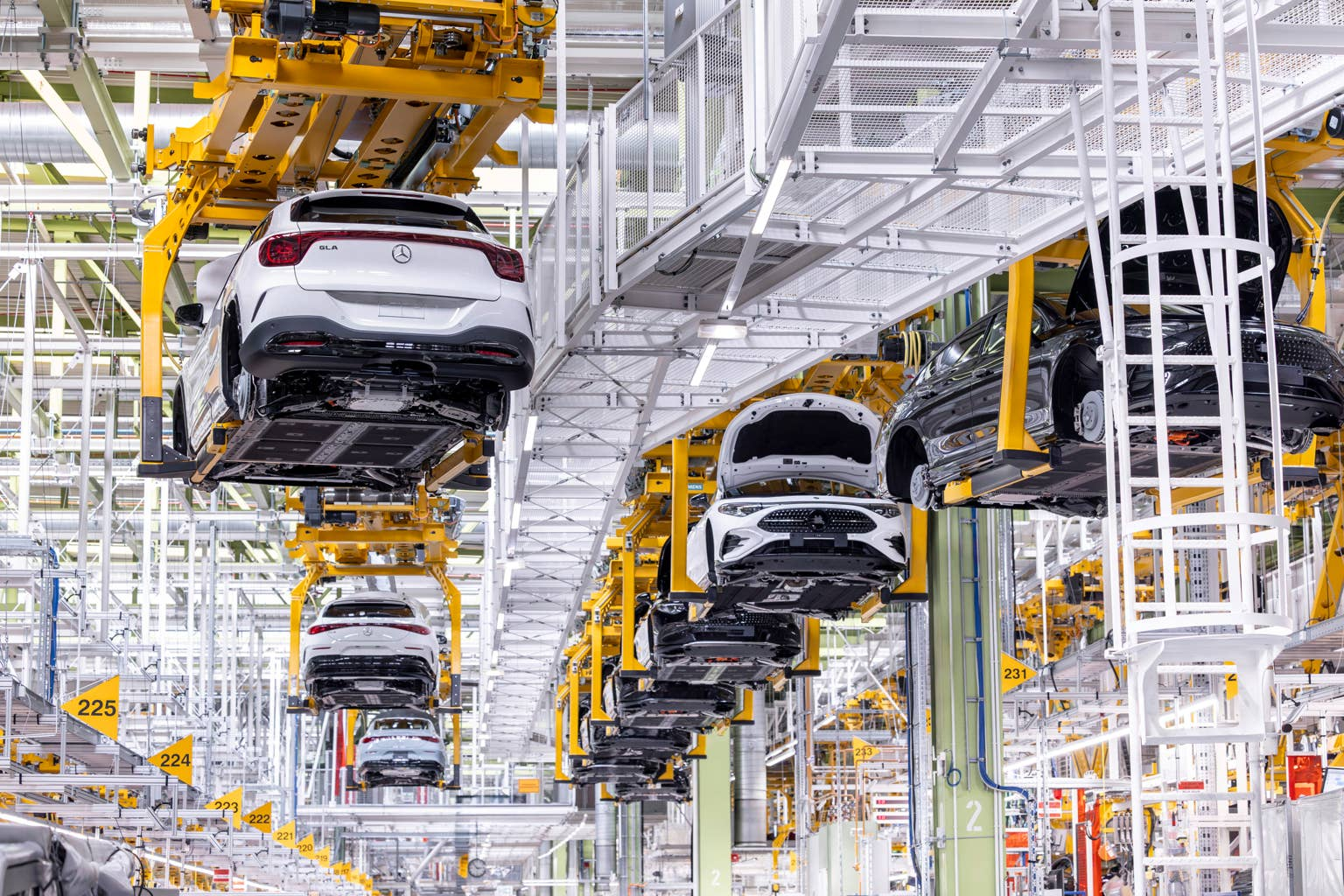
Mercedes-Benz is facing a critical cost-cutting challenge in Germany, with the automaker warning that it could close two facilities if it cannot reduce expenses. The development adds to mounting pressure on the German auto industry, where profits have tumbled, productivity is down, and Chinese cars have become a major challenge.
Mercedes-Benz Warns of Potential Plant Closures
According to a report by Reuters, Mercedes-Benz production chief Michael Schiebe gathered employees in Sindelfingen and warned that the company could close plants if costs are not reduced.
Schiebe said the company’s goal is to preserve all of its German locations, but warned that failing to do so could result in the closure of two facilities.
“Our clear goal is to maintain all of our German locations. If we are unable to do this, we will have to close one German assembly plant and one German powertrain plant,” he said.
Workers’ Council Pushes Back
The announcement drew a strong response from the general workers’ council, which opposed the possibility of plant closures.
“Threatening plant closures is no way to shape the future. Anyone who resorts to such threats must expect our determined resistance,” a representative said.
The representative also rejected the idea of using potential closures to pressure employees into accepting concessions.
“If the management board believes it can pressure employees with the ultimatum of ‘concessions or plant closures,’ our answer is a clear ‘not on our watch’,” the representative said.
No Plants Have Been Selected for Closure
The potential closures are not final, and Mercedes-Benz has not identified which facilities could be affected. The company operates three vehicle assembly plants and seven powertrain facilities in Germany.
Sindelfingen produces mid-size to higher-end models, while Bremen handles compact vehicles and Rastatt produces entry-level models.
That leaves the future of the company’s German operations tied to an agreement between Mercedes-Benz and its unions on labor and operational cost-saving measures.
Cost Pressures Mount for Mercedes-Benz
The challenge extends beyond simply selling more vehicles. Mercedes-Benz needs to reduce labor and operational costs to keep all ten German plants running.
Labor costs in Germany are high, while the brand has also been affected by tariffs. Those pressures come as the broader German auto industry faces declining profits, lower productivity and growing competition from Chinese cars.
For now, the closure of one German assembly plant and one German powertrain plant remains a possibility rather than a final decision, but the warning has placed additional pressure on Mercedes-Benz and its workforce as they negotiate cost-saving measures.