
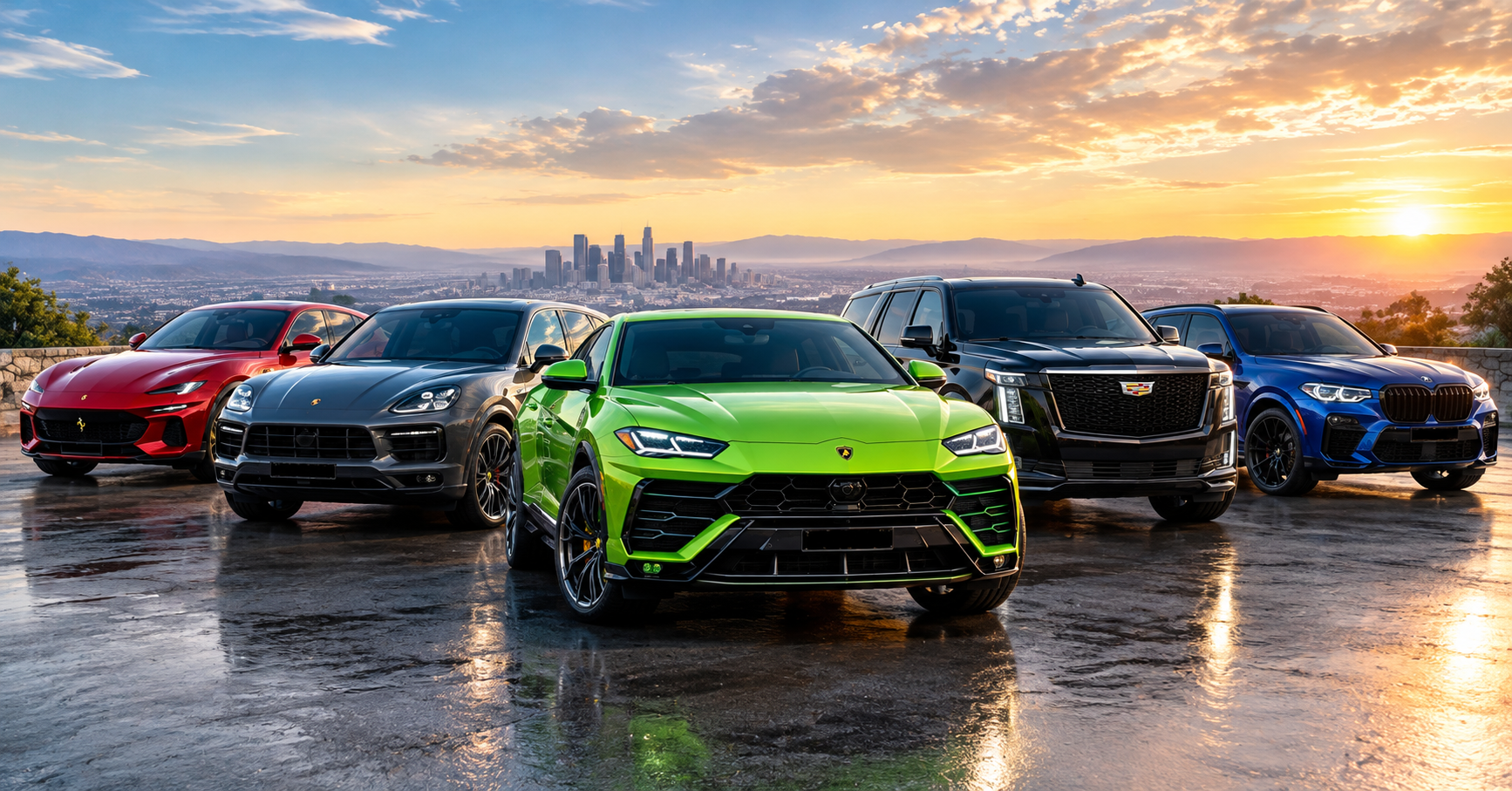
The best performance SUVs 2026 buyers can choose from deliver far more than straight-line speed. They combine supercar-inspired acceleration, sophisticated suspension systems, premium interiors, and the everyday practicality that makes an SUV appealing in the first place. From electrified Italian exotics to track-focused German machines and powerful American V-8 models, the segment offers a remarkable range of driving experiences.
But maximum horsepower does not automatically make an SUV the right choice. Some models prioritize track performance and precise handling, while others focus on luxury, family space, towing capability, or dramatic acceleration. The Cadillac Escalade-V and Mercedes-AMG GLS 63, for example, deliver substantial power without abandoning their large, three-row SUV identities.
This guide examines 10 standout performance SUVs for 2026, comparing their powertrains, acceleration, pricing, expert assessments, and practical strengths. Rather than treating horsepower as the only measure of performance, it explains what makes each model distinctive and which type of driver is most likely to appreciate it.
What Makes the Best Performance SUVs of 2026 Stand Out?
A modern performance SUV must balance several competing priorities. More power can improve acceleration, but vehicle weight, transmission calibration, traction, braking performance, and suspension tuning all influence how effectively that power reaches the road.
Comfort matters, too. An SUV that feels exceptional on a racetrack may become tiring during a long commute if its suspension is excessively firm. Likewise, a powerful family vehicle must offer sufficient passenger space, useful cargo capacity, and a driving experience that remains manageable in everyday traffic.
Automotive publications evaluate these vehicles using different methods. Car and Driver considers approximately 200 data points when assessing SUVs, including acceleration, handling, comfort, cargo space, fuel efficiency, value, and driving enjoyment. Its fastest-SUV rankings also consider manufacturers’ claimed top speeds. Edmunds, meanwhile, publishes performance observations based on its own testing and driving evaluations.
Those distinctions are important when comparing published figures. A manufacturer’s acceleration claim is not necessarily equivalent to a publication’s independently measured result, and a ranking focused on top speed may produce a different outcome from one emphasizing handling or daily usability.
The Three Main Performance SUV Categories
- Electrified hyper-SUVs: Models such as the Lamborghini Urus SE combine electric assistance with powerful combustion engines, delivering exceptional output and rapid acceleration.
- Track-focused European SUVs: Vehicles such as the Porsche Cayenne Turbo GT and BMW X5 M emphasize chassis control, braking, steering response, and high-speed stability.
- Large American performance SUVs: The Cadillac Escalade-V and Dodge Durango SRT Hellcat prioritize V-8 character, strong acceleration, substantial road presence, and practical utility.
These categories overlap, but they help explain why the best performance SUVs 2026 are not interchangeable. A driver seeking a weekend track vehicle has different priorities from a family that wants three rows of seats and effortless highway passing power.
1. Lamborghini Urus SE: The Electrified Performance Powerhouse
Key Specifications
- Starting price: Approximately $252,007
- Powertrain: Twin-turbocharged 4.0-liter V-8 with an electric motor
- Battery: 25.9-kWh battery pack
- Combined output: 789 horsepower and 701 lb-ft of torque
- Claimed acceleration: 0–62 mph in 3.4 seconds
- Car and Driver rating: 9/10
The 2026 Lamborghini Urus SE represents the direction of Lamborghini’s performance SUV lineup. With the Urus S and Urus Performante no longer in production, the plug-in-hybrid SE is the configuration available for the 2026 model year.
Its powertrain combines a twin-turbocharged 4.0-liter V-8 with an electric motor and a 25.9-kWh battery. The system produces 789 horsepower and 701 lb-ft of torque, giving the SUV the output expected from a vehicle carrying Lamborghini’s performance-oriented identity.
The electric motor supplements the combustion engine, adding another source of propulsion to an already powerful package. This combination allows the Urus SE to occupy a different position from traditional V-8 performance SUVs while retaining the engine configuration that defines its character.
Car and Driver has praised the Urus for its dramatic styling and exceptional performance, describing its SUV body as an ambitious attempt at practicality alongside what the publication calls extreme performance.
Why the Urus SE Deserves Attention
The Urus SE is designed for buyers who want exotic-car acceleration without giving up the higher seating position and general utility of an SUV. Its 789-hp output places it among the most powerful models in this comparison, while its plug-in-hybrid system distinguishes it from conventional gasoline-powered rivals.
However, its starting price puts it firmly in the exotic luxury category. Buyers must also consider the complexity of a high-output hybrid powertrain and the potential running costs associated with a vehicle of this class.
Best suited for: Buyers seeking an exotic performance SUV with electrified power, dramatic styling, and exceptional output.
2. Ferrari Purosangue: A Rare V-12 Performance SUV
Key Specifications
- Starting price: Approximately $432,986
- Engine: 6.5-liter naturally aspirated V-12
- Power: 715 horsepower
- Fuel economy: 12 mpg combined
- Seating: Four occupants
- Car and Driver rating: 9.5/10
The 2026 Ferrari Purosangue takes a different approach to high-performance SUV design. Instead of combining a turbocharged engine with electric assistance, it relies on a naturally aspirated 715-hp V-12 to establish its identity.
That engine is central to the Purosangue’s appeal. In a segment increasingly shaped by turbocharging, hybridization, and electric propulsion, Ferrari’s V-12 provides a distinctive alternative for buyers who prioritize traditional high-performance engineering.
Car and Driver ranks the Purosangue first in its fastest-SUV list and gives it a 9.5/10 rating. The publication also highlights its Italian styling, four-seat configuration, and powerful V-12 engine.
The starting price of approximately $432,986 makes the Purosangue the most expensive vehicle in this 10-model comparison. Its four-seat layout also establishes a different approach to passenger accommodation from larger family-oriented SUVs with three rows.
What Buyers Should Consider
The Purosangue is aimed at a narrow group of buyers who want Ferrari performance in a vehicle with greater versatility than a conventional two-door sports car. Its four-seat configuration accommodates passengers, but it does not offer the three-row flexibility available in the Audi SQ7 or Mercedes-AMG GLS 63.
Fuel consumption is another consideration. The listed combined rating of 12 mpg reflects the trade-offs associated with a powerful V-12 in a performance-focused vehicle.
Best suited for: Buyers who prioritize exclusivity, Italian design, and the distinctive character of a naturally aspirated V-12.
3. Porsche Cayenne Turbo GT: A Track-Focused SUV
Key Specifications
- Engine: Twin-turbocharged V-8
- Power: 650 horsepower
- Tested acceleration: 0–60 mph in 3.2 seconds, according to Edmunds
- Advertised top speed: 190 mph
- Pricing note: The supplied research lists $92,250 as a Cayenne range starting point, not a verified Turbo GT starting price.
The Porsche Cayenne Turbo GT approaches performance from a different direction than the Italian exotics. Its defining characteristic is not simply its horsepower figure but the combination of acceleration, braking, handling, and everyday road manners.
Edmunds recorded a 3.2-second sprint from zero to 60 mph in its testing, making the Cayenne Turbo GT the quickest SUV in that publication’s cited test results. Porsche advertises a top speed of 190 mph.
Those numbers establish its performance credentials, but the driving experience is an equally important part of the story. Edmunds describes the Cayenne Turbo GT as one of the best performance SUVs its staff has driven, highlighting acceleration, braking, handling, and a ride that remains surprisingly livable.
This balance matters because high-performance SUVs must operate in environments that range from smooth highways to uneven urban streets. A vehicle that can deliver rapid acceleration while maintaining composure over ordinary roads offers more versatility than one optimized exclusively for a racetrack.
Why Handling Matters as Much as Horsepower
Acceleration is only one part of a performance vehicle’s capabilities. Strong brakes, predictable steering, and effective suspension tuning help determine how confidently a driver can manage speed through corners and bring the vehicle to a controlled stop.
The Cayenne Turbo GT’s reputation rests on this broader approach to performance. Its 650-hp V-8 provides substantial power, while Edmunds’ assessment emphasizes the way the SUV combines speed with handling and comfort.
Potential buyers should nevertheless verify the exact model’s price, equipment, tire specification, and seating configuration before comparing it with other Cayenne versions. The broader Cayenne lineup includes multiple powertrains and configurations, and prices cannot be transferred from one version to another without confirmation.
Best suited for: Drivers who value precise handling, rapid acceleration, strong braking, and track-day capability in a premium SUV.
4. Porsche Cayenne E-Hybrid: Electrified Performance With Everyday Utility
Key Specifications
- Starting price: Approximately $105,450
- Powertrain: Plug-in hybrid
- Fuel economy: 22 mpg combined, as listed in the supplied research
- Car and Driver rating: 9.5/10
The Porsche Cayenne E-Hybrid is aimed at buyers who want performance but do not necessarily need the most track-focused configuration in the lineup. Its plug-in-hybrid powertrain offers a different balance from the Cayenne Turbo GT’s high-output V-8 approach.
The appeal of a performance plug-in hybrid is its ability to combine electric propulsion with a gasoline engine. Depending on the vehicle’s charge level and operating conditions, electric assistance can contribute to acceleration and reduce gasoline consumption during suitable driving.
The listed combined fuel-economy figure is 22 mpg, although buyers should confirm the exact model-year configuration and official EPA rating before making direct efficiency comparisons. Plug-in-hybrid fuel consumption can vary substantially with charging frequency, driving conditions, and the distance covered using electric power.
Car and Driver gives the Cayenne a 9.5/10 rating and ranks the E-Hybrid among its leading midsize performance SUV hybrid choices.
Hybrid Efficiency Versus Maximum Performance
A plug-in hybrid can make sense for drivers whose daily routines include shorter trips and access to charging. Regular charging may allow some driving to be completed using electricity, while the gasoline engine provides additional flexibility for longer journeys.
That advantage depends on how the vehicle is used. A driver who rarely charges the battery may experience different fuel consumption from someone who consistently uses the plug-in system as intended.
The Cayenne E-Hybrid therefore serves a different purpose from the Turbo GT. One emphasizes the combination of electrification and performance, while the other is focused more directly on maximum driving capability.
Best suited for: Drivers seeking premium SUV performance with plug-in-hybrid flexibility and a balance of power and efficiency.
5. Audi RS Q8: High Performance With a More Subtle Identity
Key Specifications
- Starting price: Approximately $139,695
- Fuel economy: 16 mpg combined, as listed in the supplied research
- Car and Driver rating: 8.5/10
- Performance role: High-performance luxury SUV alternative to the Lamborghini Urus
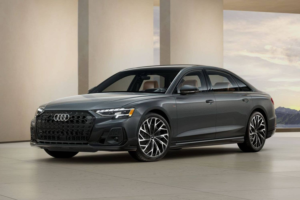
The 2026 Audi RS Q8 offers another route into the high-performance luxury SUV segment. It combines an aggressive performance identity with the comparatively restrained styling associated with Audi’s design language.
Car and Driver says the RS Q8 offers nearly identical performance to the Lamborghini Urus in a subtler package, with a price difference of approximately $100,000. That comparison makes the Audi particularly interesting for buyers who want exotic-SUV performance without placing the same emphasis on an Italian supercar badge.
The supplied starting-price figure of $139,695 places the RS Q8 well below the listed Urus SE price of approximately $252,007. The gap is substantial, although exact differences depend on equipment, options, market conditions, and the configurations being compared.
Why the RS Q8 Could Be the Rational Exotic
Performance buyers do not always need the most expensive vehicle to obtain the driving characteristics they want. For some, a less conspicuous design and a lower entry price can be more appealing than maximum exclusivity.
The RS Q8 fits that approach. Its positioning emphasizes high performance in a premium SUV format, giving buyers an alternative to more expensive exotic-branded rivals.
The listed fuel economy of 16 mpg combined is also worth considering when calculating ownership costs. Fuel consumption is only one part of the budget, however; tires, brakes, insurance, servicing, and depreciation can all influence the cost of operating a high-performance SUV.
Best suited for: Buyers who want serious performance, understated styling, and a lower starting price than the Lamborghini Urus SE.
6. Audi SQ7: Three Rows Without Giving Up Performance
Key Specifications
- Starting price: Approximately $95,195
- Engine: Twin-turbocharged 4.0-liter V-8
- Power: 500 horsepower
- Torque: 568 lb-ft
- Tested acceleration: 0–60 mph in 3.9 seconds, according to Edmunds
- Car and Driver rating: 9.5/10
- Seating: Three rows
The 2026 Audi SQ7 demonstrates that performance does not have to come at the expense of family practicality. Its twin-turbocharged 4.0-liter V-8 produces 500 horsepower and 568 lb-ft of torque, while the SUV retains three rows of seating.
Edmunds recorded a 3.9-second run from zero to 60 mph in its testing. That is a strong result for a vehicle designed to accommodate more passengers than many conventional performance SUVs.
The SQ7 also illustrates why power figures alone do not tell the whole story. A three-row vehicle must balance acceleration with passenger comfort, steering behavior, suspension control, and the additional demands associated with a larger body.
Edmunds praises the SQ7’s combination of driving enjoyment and comfort, highlighting its air suspension and precise steering. Those attributes matter to families who may spend more time commuting, traveling, or transporting passengers than driving on a track.
A Practical Choice for Performance-Minded Families
Consider a household that needs space for several passengers but still wants an SUV that accelerates confidently onto a highway. A two-row performance crossover may deliver the desired speed but fall short on seating capacity.
The SQ7 addresses that need with three rows and a powerful V-8. Its configuration makes it more directly comparable with the Mercedes-AMG GLS 63 than with two-seat or four-seat exotic performance vehicles.
Fuel consumption and vehicle size remain important considerations. Buyers should evaluate the third row’s suitability for their passengers and determine whether the vehicle’s dimensions work for their garage, parking spaces, and daily routes.
Best suited for: Families who need three rows of seats but still want substantial power and engaging driving dynamics.
7. BMW X5 M: Driver-Focused M Performance
Key Specifications
- Starting price: Approximately $132,450
- Fuel economy: 15 mpg combined, as listed in the supplied research
- Car and Driver rating: 8.5/10
- Performance role: Driver-focused midsize performance SUV
The 2026 BMW X5 M is designed for buyers who want an SUV with a pronounced performance identity without moving into the price territory of an exotic Italian model.
Its role in the segment centers on the combination of power, handling, and the everyday usefulness of a midsize luxury SUV. That makes it relevant to drivers who want one vehicle to serve as a daily commuter and a more engaging option for winding roads.
Car and Driver gives the X5 M an 8.5/10 rating and identifies it among its midsize performance SUV choices. The publication’s broader evaluation approach considers more than acceleration, including handling, comfort, utility, efficiency, and driving enjoyment.
What to Consider Before Buying
The X5 M’s listed starting price of approximately $132,450 places it in the premium performance category. Its 15-mpg combined fuel-economy figure also highlights the operating-cost trade-off associated with a high-performance gasoline SUV.
For shoppers, the main question is whether the added performance capability justifies the higher purchase price and potential ownership expenses compared with a less powerful luxury crossover.
Drivers who regularly use the vehicle’s performance capabilities may appreciate the specialized engineering. Those who mainly drive in heavy traffic may find that comfort, visibility, fuel economy, and standard equipment are equally important in their decision.
Best suited for: Drivers who want a midsize luxury SUV with a performance-focused character and everyday versatility.
8. BMW X6 M Competition: Coupe Styling Meets SUV Performance
Key Specifications
- Starting price: Approximately $137,550
- Tested acceleration: 0–60 mph in 3.48 seconds, according to the supplied Edmunds research
- Car and Driver rating: 8.5/10
- Performance role: Coupe-styled high-performance SUV
The 2026 BMW X6 M Competition targets buyers who want performance combined with a more distinctive body style. Its sloping roofline separates it visually from the more conventional shape of the X5 M.
Edmunds’ cited testing recorded a 3.48-second sprint from zero to 60 mph. That result puts the X6 M Competition firmly in the high-performance category, although acceleration alone does not establish which vehicle will deliver the best overall driving experience.
Car and Driver gives the model an 8.5/10 rating, matching the rating listed for the X5 M in the supplied research.
X6 M Competition Versus X5 M
The choice between these BMW models largely comes down to styling preferences and practical requirements. The X5 M follows a more traditional SUV shape, while the X6 M Competition emphasizes a coupe-like profile.
That difference can influence the ownership experience. Buyers should compare rear-seat headroom, cargo access, luggage space, visibility, and the ease of loading bulky items rather than assuming the two vehicles provide identical utility.
The X6 M Competition’s listed starting price is approximately $5,100 higher than the X5 M’s. The actual price difference may change with options and equipment, so buyers should compare similarly configured vehicles.
Best suited for: Drivers who want strong acceleration and a distinctive coupe-SUV design, with less emphasis on maximizing traditional cargo practicality.
9. Mercedes-AMG GLS 63: A Large SUV With Serious Speed
Key Specifications
- Power: 603 horsepower
- Torque: 627 lb-ft
- Tested acceleration: 0–60 mph in 3.8 seconds without launch control, according to Edmunds
- Edmunds rating: 7.6/10
- Performance role: Large three-row luxury performance SUV
The 2026 Mercedes-AMG GLS 63 combines the dimensions and passenger capacity of a large luxury SUV with the output of a dedicated performance model. Its 603 horsepower and 627 lb-ft of torque provide substantial power for a vehicle designed to carry multiple passengers.
Edmunds recorded a 3.8-second sprint from zero to 60 mph without launch control. The publication also notes that the GLS 63 handles winding roads surprisingly well despite its size.
That combination is central to the model’s appeal. Large SUVs generally place a premium on passenger comfort and interior space, but the AMG version adds a performance-oriented character that distinguishes it from more conventional luxury family vehicles.
Luxury, Space, and Acceleration
For a buyer who regularly transports family members or travels with several passengers, the GLS 63 presents a different proposition from the smaller Porsche Cayenne Turbo GT or BMW X6 M Competition.
Its three-row format supports a more family-focused mission, while the AMG engineering emphasizes acceleration and road performance. That does not mean every buyer will need or prefer its additional size, but it gives the vehicle a clear place in the performance SUV market.
Prospective owners should consider the costs associated with a large, powerful luxury vehicle, including fuel, tires, brakes, insurance, and maintenance. They should also test the third row with the passengers who will use it most frequently.
Best suited for: Buyers who want a large, luxurious three-row SUV with substantial acceleration and performance-oriented handling.
10. Cadillac Escalade-V: American V-8 Power at Full Volume
Key Specifications
- Engine: Supercharged 6.2-liter V-8
- Power: 682 horsepower
- Torque: 653 lb-ft
- Tested acceleration: 0–60 mph in 4.8 seconds, according to Edmunds
- Edmunds rating: 6.5/10
- Available technology: Super Cruise
The 2026 Cadillac Escalade-V takes the American approach to high-performance SUVs to an extreme. It combines a supercharged 6.2-liter V-8 with the large body and three-row format of Cadillac’s flagship SUV.
The engine produces 682 horsepower and 653 lb-ft of torque. Edmunds recorded a 4.8-second run from zero to 60 mph, approximately two seconds quicker than the standard Escalade according to the supplied research.
Its performance character differs from that of the Porsche Cayenne Turbo GT. The Escalade-V places greater emphasis on V-8 sound, strong straight-line acceleration, road presence, and the spacious format of a large luxury SUV.
Edmunds describes the engine’s sound as reminiscent of a seventh-generation Chevrolet Corvette Z06 and notes the SUV’s forceful acceleration, while observing that it is more of a straight-line performer.
What Makes the Escalade-V Different?
The Escalade-V is not primarily intended to be a lightweight track vehicle. Its size and format make it a different kind of performance machine, one that combines substantial engine output with passenger space and a commanding road presence.
That distinction is important when interpreting its acceleration time. A vehicle’s 0–60-mph performance does not fully measure its handling, braking consistency, steering precision, or comfort over long distances.
Super Cruise availability adds another dimension to the Escalade-V’s technology offering. Buyers should confirm the specific vehicle’s equipment and feature availability before purchasing.
Fuel economy is another major consideration for a supercharged V-8 SUV. Prospective owners should budget for fuel and the operating costs associated with a large, high-powered luxury vehicle.
Best suited for: Buyers who want an unmistakable American performance SUV with a supercharged V-8, generous space, and dramatic straight-line acceleration.
How the 10 Best Performance SUVs of 2026 Compare
The models in this guide serve different purposes, and a comparison of their headline figures helps illustrate those differences. Prices and specifications below reflect the supplied research and should be confirmed against the exact model-year configuration before purchase.
| Model | Power | Published Acceleration Figure | Primary Strength |
|---|---|---|---|
| Lamborghini Urus SE | 789 hp | 3.4 seconds to 62 mph | Electrified exotic performance |
| Ferrari Purosangue | 715 hp | No comparable figure supplied | Naturally aspirated V-12 exclusivity |
| Porsche Cayenne Turbo GT | 650 hp | 3.2 seconds to 60 mph in Edmunds testing | Track-focused handling |
| Porsche Cayenne E-Hybrid | Not specified in the supplied research | No comparable figure supplied | Plug-in-hybrid performance |
| Audi RS Q8 | Not specified in the supplied research | No comparable figure supplied | Subtle styling and high performance |
| Audi SQ7 | 500 hp | 3.9 seconds to 60 mph in Edmunds testing | Three-row practicality |
| BMW X5 M | Not specified in the supplied research | No comparable figure supplied | Driver-focused midsize SUV |
| BMW X6 M Competition | Not specified in the supplied research | 3.48 seconds to 60 mph in Edmunds testing | Coupe-SUV styling and acceleration |
| Mercedes-AMG GLS 63 | 603 hp | 3.8 seconds to 60 mph without launch control | Large luxury performance SUV |
| Cadillac Escalade-V | 682 hp | 4.8 seconds to 60 mph | American V-8 power and space |
The acceleration figures in this table are not perfectly interchangeable. Some are manufacturer claims, while others come from publication testing. The Urus SE figure is measured to 62 mph, whereas most of the others are stated to 60 mph. Test conditions and equipment can also affect results.
For that reason, the table is best used to understand each SUV’s performance profile rather than as a definitive ranking based on tenths of a second.
Performance SUVs Beyond the Top 10
The 10 models above cover much of the premium and exotic performance SUV market, but they are not the only vehicles worth considering in 2026. Buyers with different budgets or a preference for electric power have several additional options.
Porsche Cayenne Electric
The Porsche Cayenne Electric expands the model family’s powertrain choices beyond gasoline and plug-in-hybrid versions. TrueCar’s October 2026 performance-SUV listing gives the electric Cayenne an output range of 402 to 844 horsepower and lists towing capacity of up to 7,716 pounds.
Those figures suggest that the electric Cayenne deserves consideration from buyers who want a high-output electric SUV rather than a combustion-powered model. However, the exact output, equipment, range, and charging specifications depend on the particular version.
Ford Mustang Mach-E
The Ford Mustang Mach-E is another alternative for shoppers focused on electric performance. MotorTrend’s 2026 compact performance-SUV rankings place it first with a 9.5/10 rating, ahead of the Hyundai Ioniq 5 at 9.3/10 and the Kia EV6 at 9.1/10.
These electric crossovers occupy a different price and vehicle-size segment from the Ferrari Purosangue and Lamborghini Urus SE. They are relevant to shoppers who prioritize electric propulsion and a performance-oriented driving experience over exotic-car exclusivity.
BMW X3 M50 xDrive
The BMW X3 M50 xDrive offers another option for buyers who want performance in a smaller luxury SUV. The supplied research lists a 393-hp turbocharged inline-six and a 0–60-mph time of 4.4 seconds.
Edmunds identifies it as its overall top sport-SUV pick. Its smaller format makes it worth considering for drivers who want an engaging daily vehicle without moving into the size or price category of flagship performance SUVs.
Dodge Durango SRT Hellcat
The Dodge Durango SRT Hellcat remains an option for buyers drawn to American V-8 performance and three-row practicality. The supplied research lists a 2026 starting price of $81,990 and combined fuel economy of 13 mpg.
Its place in the market differs from that of the European track-focused SUVs. Buyers considering the Durango should compare its seating, towing requirements, fuel consumption, and performance equipment with their intended use.
How to Choose the Right Performance SUV in 2026
Choosing among the best performance SUVs 2026 requires more than comparing horsepower or acceleration figures. The right model depends on how the vehicle will be used, how many passengers it must carry, and how much the buyer is prepared to spend on ownership.
1. Decide How Much Performance You Actually Need
A 789-hp SUV offers a different level of performance from a 393-hp compact sport SUV, but the difference may not be equally important to every driver.
For everyday commuting, highway merging, and family travel, a well-engineered midsize performance SUV may already offer more acceleration than most drivers regularly use. Buyers who attend track days or prioritize exotic-car performance may place greater value on the capabilities of the Cayenne Turbo GT, Urus SE, or Purosangue.
2. Match the Vehicle to Your Passenger Needs
Passenger capacity can narrow the field quickly. The Audi SQ7 and Mercedes-AMG GLS 63 offer three rows, while the Ferrari Purosangue is configured for four occupants.
Buyers should check actual seating dimensions and test the third row if children or adults will use it frequently. Cargo space also matters, especially when a vehicle must carry luggage, sports equipment, or other bulky items.
3. Compare Total Ownership Costs
The purchase price is only the starting point for budgeting. Performance SUVs can require expensive tires and brakes, and high-output engines may consume considerable fuel.
Insurance premiums, scheduled maintenance, repairs, financing costs, and depreciation should also be considered. An SUV with a lower starting price may not necessarily have lower long-term ownership costs, so buyers should request insurance estimates and review maintenance requirements before committing.
4. Understand Hybrid and Electric Trade-Offs
Hybrid and electric performance SUVs can deliver rapid acceleration, but their ownership requirements differ from those of gasoline-powered models.
For plug-in hybrids such as the Urus SE and Cayenne E-Hybrid, charging access and charging frequency affect how much the driver benefits from electric propulsion. Fully electric vehicles require additional consideration of charging availability, driving range, and charging time.
Cold weather can reduce electric driving range, while performance-oriented tires and driving styles can also influence energy consumption. Buyers should evaluate their typical routes and charging options rather than relying exclusively on peak horsepower figures.
5. Test the Vehicle on Ordinary Roads
Published acceleration times provide useful comparisons, but they cannot fully capture ride comfort, steering feel, visibility, seat support, or cabin noise.
A test drive should include the kinds of roads the vehicle will encounter most often. Pay attention to suspension behavior over uneven pavement, maneuverability in parking lots, visibility at intersections, and how easily passengers enter and exit.
For track-focused models, buyers should also consider tire costs, brake wear, and the conditions required to experience the vehicle’s capabilities safely and legally.
Frequently Asked Questions
What are the best performance SUVs in 2026?
Standout options include the Lamborghini Urus SE, Ferrari Purosangue, Porsche Cayenne Turbo GT, Porsche Cayenne E-Hybrid, Audi RS Q8, Audi SQ7, BMW X5 M, BMW X6 M Competition, Mercedes-AMG GLS 63, and Cadillac Escalade-V. Each serves a different purpose, ranging from exotic performance to family-oriented speed and luxury.
What is the fastest SUV in 2026?
The answer depends on the ranking method and whether the comparison uses manufacturer claims or independent testing. Car and Driver ranks the Lamborghini Urus first in its cited fastest-SUV list, followed by the Ferrari Purosangue and Aston Martin DBX. Edmunds identifies the Porsche Cayenne Turbo GT as its quickest tested SUV in the supplied research, recording 0–60 mph in 3.2 seconds.
What is the most powerful performance SUV in 2026?
Among the models discussed here, the Lamborghini Urus SE produces 789 horsepower. The supplied TrueCar research lists the Porsche Cayenne Electric with outputs reaching 844 horsepower, making the exact answer dependent on which available models and configurations are included in the comparison.
Which performance SUV is best for families?
The Audi SQ7 is a strong option for families who need three rows of seating alongside substantial power. Its 500-hp twin-turbocharged V-8 and Edmunds-tested 3.9-second 0–60-mph time combine performance with a practical passenger layout. The Mercedes-AMG GLS 63 is another option for buyers seeking a larger luxury SUV.
Which performance SUV is best for track driving?
The Porsche Cayenne Turbo GT is a prominent choice for drivers who prioritize track capability. Edmunds recorded a 3.2-second 0–60-mph time and praised its acceleration, braking, handling, and ride quality. The BMW X5 M and X6 M Competition are additional models to evaluate for performance-focused driving.
Are electric performance SUVs faster than gasoline SUVs?
Some electric SUVs can accelerate extremely quickly because electric motors deliver immediate torque. However, acceleration varies by model, battery state, traction, and test conditions. Gasoline and hybrid SUVs may offer different advantages in refueling time, long-distance travel, and sustained performance, so the best choice depends on the driver’s priorities.
Is a plug-in-hybrid performance SUV worth buying?
A plug-in hybrid may be attractive to drivers who can charge regularly and want electric propulsion for some trips without relying exclusively on public charging infrastructure. Its potential fuel savings depend on charging habits, driving conditions, and the vehicle’s electric range. Buyers should compare the purchase price, operating costs, and performance of the specific hybrid model with those of its gasoline-powered alternatives.
Which performance SUV offers the best value?
Value depends on the buyer’s budget and definition of performance. The Audi RS Q8 is positioned as a less expensive alternative to the Lamborghini Urus while offering closely related performance characteristics, according to Car and Driver. The BMW X3 M50 xDrive and Genesis GV70 3.5T are other options for buyers seeking strong performance in a less expensive vehicle category than exotic luxury SUVs.
Are performance SUVs practical for everyday driving?
Many performance SUVs can serve as daily drivers, but their suitability varies. Models such as the Audi SQ7 and Mercedes-AMG GLS 63 offer three-row seating, while midsize vehicles may be easier to maneuver and park. Buyers should assess ride comfort, fuel consumption, visibility, cargo space, and maintenance costs before choosing a model.
Should I buy or lease a performance SUV?
Buying may suit drivers who intend to keep a vehicle for many years, while leasing can appeal to those who prefer changing vehicles more frequently. The decision depends on the contract terms, mileage allowance, depreciation, financing costs, maintenance coverage, and expected ownership period. Buyers should compare the full financial commitment rather than focusing only on the monthly payment.
Final Takeaway: Performance Means More Than Horsepower
The best performance SUVs 2026 span several distinct approaches to speed and utility. The Lamborghini Urus SE combines a V-8 with electric assistance, the Ferrari Purosangue preserves the appeal of a naturally aspirated V-12, and the Porsche Cayenne Turbo GT emphasizes the combination of acceleration, braking, and handling.
Elsewhere, the Audi RS Q8 offers an alternative to the exotic-SUV category, the SQ7 and Mercedes-AMG GLS 63 preserve three-row practicality, and the BMW X5 M and X6 M Competition bring a performance-focused character to midsize luxury SUVs. The Cadillac Escalade-V completes the group with supercharged V-8 power and a spacious American luxury-SUV format.
There is no single model that suits every buyer. The most useful comparison starts with the intended mission: track driving, everyday commuting, family transportation, electrified performance, or the distinctive experience of an exotic SUV. Once those priorities are clear, horsepower, acceleration, pricing, and ownership costs become much more meaningful measures of which vehicle belongs in the driveway.