
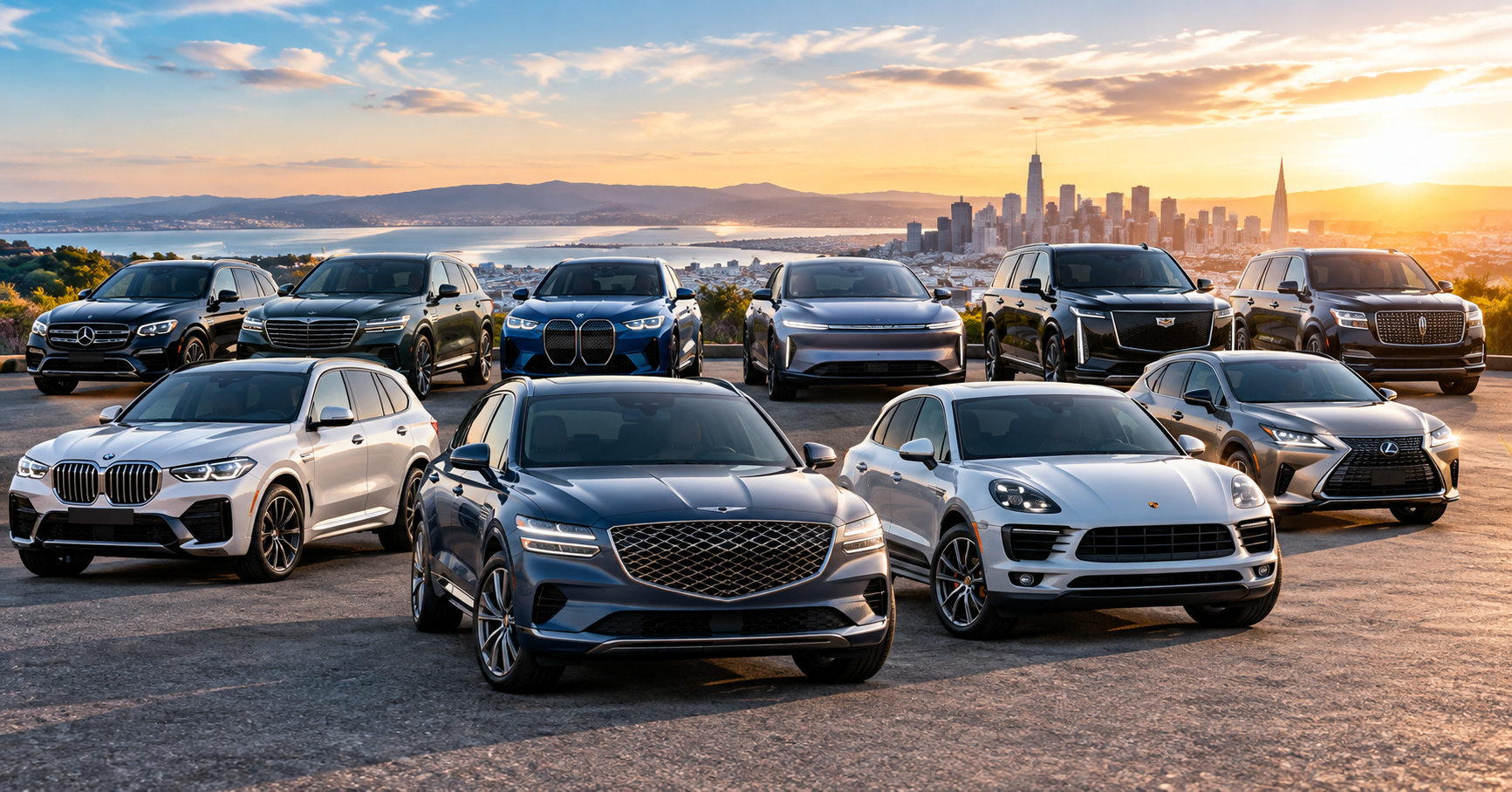
Buying a luxury SUV in 2026 means looking beyond the badge on the grille. Premium vehicles now compete on fuel economy, electric range, cabin technology, passenger space, ride comfort, and the features included for the price. A prestigious name alone is no longer enough to justify spending $60,000, $80,000, or well over $100,000 on a new vehicle.
However, the right choice depends on how you intend to use your SUV. A commuter may prioritize efficiency and parking convenience, while a growing family needs accessible rear seats and useful cargo space. Drivers considering an electric model must also evaluate charging access, range requirements, and ownership costs.
This guide examines 10 luxury SUVs worth considering in 2026, using reported pricing, expert evaluations, efficiency figures, electric-range estimates, and practical ownership considerations to help buyers narrow their choices.
How We Evaluated the Best Luxury SUVs 2026
A useful luxury-SUV comparison should look at more than performance figures or interior materials. A vehicle can deliver an impressive driving experience and still be the wrong purchase if it costs too much to operate or does not meet a household’s space requirements.
This guide considers several factors, drawing on the supplied Car and Driver and Kelley Blue Book research, manufacturer information, and reported specifications for each model.
- Purchase price and equipment: How the starting price compares with the vehicle’s premium features and intended role.
- Comfort and refinement: Cabin quality, ride comfort, and the overall experience of spending time behind the wheel.
- Performance: Driving character, handling, and suitability for different road conditions and preferences.
- Efficiency: Combined fuel-economy estimates for gasoline and hybrid models, or estimated driving range for electric SUVs.
- Space and practicality: Passenger capacity, cargo usefulness, and suitability for family responsibilities.
- Technology: Infotainment, convenience equipment, and relevant model-year changes.
- Ownership considerations: Warranty coverage, service access, insurance, depreciation, and potential maintenance costs.
Car and Driver reports evaluating luxury SUVs across approximately 200 data points, including handling, comfort, cargo space, efficiency, value, and driving enjoyment. Kelley Blue Book offers another perspective through category recommendations and expert ratings. Neither approach replaces an individual test drive, but both provide useful starting points for comparing vehicles.
The models below form a practical buyer’s shortlist rather than a universal ranking. Prices, fuel-economy figures, and electric-range estimates come from the supplied research and can vary by powertrain, trim, options, and configuration. Buyers should confirm current figures before placing an order.
1. Genesis GV70: A Strong Choice for Luxury and Value
Reported starting price: $50,480 | Combined fuel economy: 21–23 mpg
The Genesis GV70 makes a compelling case for shoppers who want a premium compact SUV without immediately moving into the highest price brackets. Its appeal centers on distinctive styling, a technology-focused cabin, and an emphasis on driving engagement.
Car and Driver gives the GV70 a 9.5 out of 10 rating in its supplied 2026 luxury-SUV rankings, while Kelley Blue Book identifies it as a leading luxury compact SUV with a 4.8 out of 5 expert rating. Those assessments make it a noteworthy option for buyers comparing established European brands with newer luxury alternatives.
For the 2026 model year, the GV70 receives interior and design updates, according to the supplied research. These changes reinforce its position as a premium crossover that places considerable emphasis on presentation and cabin experience.
Why It Deserves a Place on Your Shortlist
- A reported starting price below $55,000.
- Styling and interior technology that support its premium positioning.
- A balance of everyday usability and engaging driving characteristics.
- Strong expert assessments from Car and Driver and Kelley Blue Book.
What to consider: Genesis has a smaller dealer network than major competitors such as BMW, Mercedes-Benz, and Lexus. Service convenience may therefore vary by location. Before purchasing, check nearby service facilities, warranty terms, insurance costs, and the equipment included in your preferred trim.
Best suited to: Buyers seeking a stylish compact luxury SUV with substantial premium appeal at a comparatively accessible starting price.
2. Porsche Macan: For Drivers Who Value Handling
Reported starting price: $67,650 | Combined fuel economy: 19–21 mpg
Luxury SUVs are often purchased for comfort and convenience, but some drivers want a vehicle that remains entertaining on a winding road. The Porsche Macan targets that audience, placing a stronger emphasis on handling and driver involvement than a purely comfort-focused crossover.
Car and Driver gives the 2026 Macan a 10 out of 10 rating in its supplied compact luxury-SUV rankings. The publication describes the model as a benchmark for athletic compact crossovers, supporting its reputation among performance-oriented buyers.
The Macan’s appeal is not limited to its badge. Its driving character is central to the ownership proposition, making it worth considering for someone who regularly drives alone or with one passenger and values responsive handling.
What Buyers Should Weigh
- Performance-oriented engineering and an emphasis on driving enjoyment.
- A premium brand and compact footprint compared with larger luxury SUVs.
- A higher starting price than the Genesis GV70 and Mercedes-Benz GLC.
- Fuel-economy figures that may be less attractive to efficiency-focused shoppers.
The Macan may not be the most practical choice for every household. Buyers should assess rear-seat comfort, cargo capacity, options pricing, and the cost of insurance and maintenance before deciding whether its driving advantages justify the additional expense.
It is also important to distinguish the gasoline-powered Macan from the separate Macan Electric. The supplied research lists the electric version at a starting price of $82,650, with an estimated range of 290–332 miles. These are different powertrain choices with different ownership requirements.
Best suited to: Drivers who place handling and a sporty driving experience high on their priority list.
3. Mercedes-Benz GLC: Everyday Comfort in a Compact Package
Reported starting price: $50,900 | Combined fuel economy: 26–27 mpg
The Mercedes-Benz GLC is worth considering for shoppers who want an upscale compact SUV with a polished, comfortable character. Its role in this comparison is straightforward: provide the premium experience expected from a traditional luxury brand while remaining practical for commuting, errands, and weekend travel.
Car and Driver gives the 2026 GLC a 9 out of 10 rating in the supplied compact luxury-SUV rankings. Its reported combined fuel economy of 26–27 mpg also makes it an interesting comparison against more performance-oriented options in the category.
The GLC’s reported starting price places it close to the Genesis GV70. A direct test drive is particularly useful here. Rather than assuming one badge offers better value, buyers should compare standard equipment, seating comfort, infotainment usability, and the cost of similarly equipped trims.
Questions to Ask Before Buying
- Does the standard equipment meet your needs, or will desirable features require costly packages?
- Are the infotainment controls and driver-assistance features easy to use?
- How comfortable are the rear seats for the people who will use them most?
- What are the expected insurance, maintenance, and ownership costs?
Best suited to: Buyers who want a refined compact luxury SUV for daily driving and prefer a traditional premium-brand experience.
4. Genesis GV80: Premium Space for Family Life
Reported starting price: $59,195 | Combined fuel economy: 19–22 mpg
Moving into a larger luxury SUV changes the buying equation. Rear-seat access, passenger comfort, luggage capacity, and the ability to accommodate different family needs become more important than a small advantage in handling or acceleration.
The Genesis GV80 appeals to buyers who want a substantial premium vehicle without automatically paying the prices associated with some established European competitors. Kelley Blue Book gives the GV80 a 4.8 out of 5 expert rating and recognizes it in the luxury midsize category in the supplied research.
Its reported starting price of $59,195 puts it within reach of shoppers considering a well-equipped compact luxury SUV, although the final price depends on trim and options. That makes a careful equipment comparison essential.
Is the GV80 Right for Your Family?
Start with the actual seating configuration. Third-row availability and usable space depend on the version being considered. Families should not assume every configuration offers the same passenger capacity.
Bring child seats to a dealership if possible, test access to the rear seating area, and inspect the cargo compartment with the seats in their normal positions. These steps can reveal more about everyday practicality than a specification sheet alone.
Best suited to: Buyers who want a premium midsize SUV with a well-appointed cabin, useful passenger space, and a competitive starting price.
5. BMW X5: The Versatile Midsize All-Rounder
Reported starting price: $69,750 | Combined fuel economy: 19–25 mpg
The BMW X5 occupies an important position among the best luxury SUVs 2026 shoppers may consider because it aims to balance several priorities rather than focusing on just one. It combines premium cabin appointments, practical utility, refined road manners, and a driving experience that remains a key part of BMW’s identity.
Car and Driver gives the 2026 X5 a 9.5 out of 10 rating in the supplied midsize luxury-SUV rankings. Its assessment emphasizes the combination of luxury, refinement, and practicality, making it an appealing option for households that want one vehicle to handle commuting, long trips, and everyday responsibilities.
The X5 also offers powertrain choices that affect running costs and driving requirements. The supplied research notes a 2026 update to the X5 xDrive50e plug-in hybrid: its AC charging rate increases from 7.4 kW to 11 kW.
That change can matter to owners who regularly charge at home using compatible equipment. However, a higher charging rate is only useful when the vehicle, charging hardware, and electrical installation support it. Buyers should confirm compatibility and understand the difference between charging capability and real-world charging time.
Why the X5 Is Worth Comparing
- A versatile balance of comfort, refinement, and practicality.
- A range of powertrain choices, including a plug-in hybrid.
- A premium interior and a driving experience aimed at a broad audience.
- Multiple configurations that allow buyers to prioritize different needs.
Its reported starting price is considerably higher than those of the GV70 and GLC. Buyers should compare similarly equipped vehicles and calculate the cost of optional packages rather than relying on the entry price alone.
Best suited to: Shoppers looking for a midsize luxury SUV that balances family duties, highway travel, and driving enjoyment.
6. Lucid Gravity: An Electric SUV Built Around Range and Space
Reported starting price: $81,550 | Estimated range: 337–450 miles
The Lucid Gravity represents a different approach to premium utility. Instead of adapting a traditional gasoline SUV to electric power, it belongs to a segment in which battery range, electric power delivery, cabin packaging, and charging convenience are central to the buying decision.
Car and Driver gives the 2026 Gravity a 10 out of 10 rating in the supplied midsize luxury-SUV rankings. The research highlights its upscale cabin and a maximum estimated driving range of 450 miles per charge, depending on configuration.
Range is an important advantage on paper, particularly for drivers who regularly cover long distances. Still, the maximum estimate should not be treated as a guaranteed result. Actual range varies with configuration, driving speed, temperature, terrain, passenger and cargo loads, and climate-control use.
What to Consider Before Buying an Electric Luxury SUV
- Home charging: Determine whether you can install suitable charging equipment where you park.
- Road-trip planning: Check charging availability along routes you use regularly.
- Real-world range: Leave a practical buffer instead of planning every trip around the maximum estimate.
- Purchase and insurance costs: Compare the full ownership budget, not just fuel savings.
- Service and software: Investigate local service access, warranty coverage, and connected features.
For a household with reliable home charging, the Gravity may offer a compelling alternative to a gasoline-powered family SUV. For someone who relies entirely on public charging, the experience will depend more heavily on local infrastructure and regular travel patterns.
Best suited to: Buyers seeking a spacious, premium electric SUV with substantial estimated range and a modern ownership experience.
7. BMW iX: Electric Luxury With a Focus on Comfort
Reported starting price: $76,600 | Estimated range: 279–318 miles
The BMW iX is an electric option for drivers who want to move away from gasoline without giving up the comfort and premium appointments expected from a luxury SUV. Its futuristic design distinguishes it from more traditional BMW models, while its electric powertrain changes the everyday driving experience.
The supplied Car and Driver research gives the iX a 9.5 out of 10 rating in its 2026 midsize luxury-SUV rankings. Its estimated range of 279–318 miles is lower than the maximum figure reported for the Lucid Gravity, but range is only one part of the ownership equation.
For many buyers, a vehicle that comfortably covers daily driving with charging available at home may be more useful than one with a longer maximum range but a substantially higher purchase price. The iX deserves consideration from drivers who value comfort, electric operation, and a premium cabin.
BMW iX Versus Lucid Gravity
The choice comes down to priorities and configuration. The Gravity’s reported range reaches as high as 450 miles, while the iX is listed at 279–318 miles. Their starting prices also differ, with the iX reported at $76,600 and the Gravity at $81,550.
Those figures provide a useful starting point, not a complete verdict. Compare the exact versions available, seating and cargo requirements, charging performance, equipment, warranty terms, and local service options before choosing either vehicle.
Best suited to: Buyers who want an electric luxury SUV with a distinctive design, a premium cabin, and range suited to their daily routine.
8. Lexus RX Hybrid: Efficiency for Everyday Luxury
Reported starting price: $55,075 | Combined fuel economy: 27–36 mpg
For shoppers who want better fuel economy without making the switch to a fully electric vehicle, the Lexus RX Hybrid offers a practical middle ground. Its appeal is especially relevant to drivers who cover a mixture of city streets, suburban roads, and highway miles and want to reduce fuel use while retaining the familiar convenience of gasoline refueling.
The reported combined fuel economy ranges from 27 to 36 mpg, depending on configuration. Buyers should confirm the rating for the exact trim and powertrain they intend to purchase rather than assuming every RX Hybrid achieves the upper end of the range.
The 2026 RX also receives several equipment and lineup changes, according to the supplied Lexus pressroom information. Wireless phone charging becomes standard, an Appearance Package is introduced for the F SPORT Handling and F SPORT Performance grades, and a Premium grade is added for the RX 450h+ plug-in hybrid.
Why Hybrid Power Can Make Sense
A conventional hybrid can improve fuel economy without requiring an owner to plan trips around public charging stations. A plug-in hybrid offers another option for drivers who can charge regularly and want to use electric power for some journeys, although its benefits depend on driving habits and charging access.
Buyers should distinguish the RX Hybrid from the RX 450h+ plug-in hybrid when comparing prices, equipment, and operating costs. They should also consider how much of their driving takes place in conditions where the selected powertrain can deliver its expected efficiency.
Best suited to: Drivers who prioritize fuel efficiency, everyday comfort, and the convenience of a hybrid luxury SUV.
9. Cadillac Escalade IQ: Full-Size Electric Luxury
Reported starting price: $127,405 | Cadillac-estimated range: Up to 465 miles
The Cadillac Escalade IQ takes the familiar full-size luxury-SUV concept into the electric era. It combines a large footprint and high-end positioning with a battery-powered drivetrain, appealing to buyers who want substantial road presence without a traditional gasoline powertrain.
Cadillac lists an estimated range of up to 465 miles for the Escalade IQ in the supplied research, alongside a 205-kWh battery figure. The range estimate is manufacturer-provided and should be understood as a maximum estimate rather than a promise of real-world driving distance under every condition.
The longer Escalade IQL adds 4.2 inches of length and more third-row room, with a reported estimated range of 460 miles. The additional space may be relevant to families who regularly transport several passengers, although they should compare actual seating configurations and cargo capacity before choosing between versions.
What the Escalade IQ Asks of Its Owner
At a reported starting price above $127,000, this is a major financial commitment. Buyers should consider charging installation, electricity rates, insurance, depreciation, and the availability of qualified service support alongside the vehicle’s equipment and range.
Its size also deserves attention. A full-size SUV can be useful for families, long-distance travel, and transporting bulky items, but parking garages, narrow streets, and crowded urban areas may make daily use more challenging.
Best suited to: Buyers seeking a full-size electric luxury SUV with substantial estimated range, a commanding presence, and room for family travel.
10. Lincoln Navigator: Traditional Full-Size Comfort
Expert rating: 4.6 out of 5 from Kelley Blue Book
Not every luxury buyer wants an electric vehicle or a sporty European crossover. The Lincoln Navigator represents the traditional full-size luxury-SUV approach, prioritizing a spacious cabin, passenger comfort, road presence, and the ability to accommodate demanding family schedules.
Kelley Blue Book gives the Navigator a 4.6 out of 5 expert rating in the supplied research and describes its appeal in terms of comfort and capability. For households that regularly travel with several passengers, the larger format can offer advantages that a compact or midsize SUV cannot easily replicate.
The Navigator is worth evaluating against the Cadillac Escalade and Escalade IQ. These vehicles appeal to shoppers who want substantial luxury SUVs, but their powertrains and ownership requirements differ. A gasoline-powered full-size SUV involves fuel costs and conventional refueling, while an electric model requires access to suitable charging and a plan for longer trips.
Where the Navigator Makes Sense
- Families who regularly need generous passenger space.
- Drivers who value a comfortable, traditional luxury-SUV experience.
- Buyers who prefer a full-size vehicle over a compact performance crossover.
- Households that can accommodate a large vehicle’s parking and operating requirements.
Its exact purchase price, fuel economy, equipment, and towing specifications should be confirmed for the selected 2026 trim. Buyers should also test third-row access and inspect the cargo area with all intended passenger seats in use.
Best suited to: Families who prioritize full-size comfort, space, and a traditional premium driving experience.
Best Luxury SUVs 2026: Quick Comparison
The following table summarizes the reported figures in the supplied research. These numbers are starting points for comparison; trim selection, optional equipment, and powertrain can change the final purchase price and efficiency.
| SUV | Reported Starting Price | Efficiency or Range | Best Fit |
|---|---|---|---|
| Genesis GV70 | $50,480 | 21–23 mpg combined | Compact luxury value |
| Porsche Macan | $67,650 | 19–21 mpg combined | Driving enjoyment |
| Mercedes-Benz GLC | $50,900 | 26–27 mpg combined | Everyday refinement |
| Genesis GV80 | $59,195 | 19–22 mpg combined | Premium family utility |
| BMW X5 | $69,750 | 19–25 mpg combined | Versatile midsize luxury |
| Lucid Gravity | $81,550 | 337–450 miles estimated | Electric range and space |
| BMW iX | $76,600 | 279–318 miles estimated | Electric comfort |
| Lexus RX Hybrid | $55,075 | 27–36 mpg combined | Fuel efficiency |
| Cadillac Escalade IQ | $127,405 | Up to 465 miles estimated | Full-size electric luxury |
| Lincoln Navigator | Confirm current trim pricing | Confirm current configuration | Traditional full-size comfort |
Note: Fuel-economy and range figures are not directly interchangeable. EPA ratings, manufacturer estimates, and real-world results can differ. Confirm the current window sticker and official specifications for the exact vehicle.
Which Luxury SUV Offers the Best Value in 2026?
Value is not the same as the lowest starting price. A vehicle that costs less initially may require expensive options to match a competitor’s equipment, while a more expensive SUV could offer a powertrain or cabin configuration that better suits its owner’s needs.
For many compact-SUV shoppers, the Genesis GV70 is an important starting point because its reported entry price is around $50,000 and both Car and Driver and Kelley Blue Book rate it highly. The Mercedes-Benz GLC is another useful comparison, particularly for drivers who prioritize comfort and reported fuel economy.
Families who need more room should compare the Genesis GV80 with the BMW X5 and Lincoln Navigator. These vehicles serve different size and price categories, so the best comparison depends on how many passengers travel regularly and whether third-row seating is necessary.
For electric buyers, the Lucid Gravity and BMW iX illustrate why purchase price and range should be considered together. The Gravity has a higher reported maximum range, while the iX has a lower reported starting price. The practical winner for an individual household depends on daily mileage, charging access, configuration, and total ownership costs.
Calculate the Total Cost of Ownership
Before deciding, compare the following expenses over the period you expect to keep the vehicle:
- Purchase price: Include destination charges, taxes, dealer fees, and optional equipment.
- Financing: Compare interest rates, loan terms, and the total amount paid rather than focusing only on the monthly payment.
- Energy: Estimate annual gasoline or electricity costs using your typical mileage and local prices.
- Insurance: Request quotes for the exact model and trim before signing a contract.
- Maintenance and repairs: Review scheduled servicing, warranty coverage, tires, and potential out-of-pocket expenses.
- Depreciation: Research current residual-value estimates for the particular model and powertrain.
- Convenience: Consider nearby dealerships, service facilities, home charging, and public charging availability.
This approach provides a more realistic picture of what a luxury SUV will cost than comparing sticker prices alone.
Should You Choose Gas, Hybrid, Plug-In Hybrid, or Electric?
Powertrain choice has become one of the most important decisions in the luxury-SUV market. Each option offers different advantages, and none is automatically the right answer for every driver.
Gasoline-Powered SUVs
Traditional gasoline models can make sense for buyers who want familiar refueling, regularly travel long distances, or do not have convenient access to charging. The Porsche Macan, Mercedes-Benz GLC, and Lincoln Navigator represent different approaches to this segment. Fuel economy and operating costs vary substantially by model and engine.
Conventional Hybrids
A conventional hybrid combines a gasoline engine with electric assistance and generally does not require plugging in. The Lexus RX Hybrid is worth considering for drivers who want improved fuel economy while retaining ordinary refueling convenience.
Plug-In Hybrids
A plug-in hybrid has a rechargeable battery that can support electric driving under suitable conditions. Its value depends on regular charging, the distance driven between charges, and how the gasoline engine is used. The BMW X5 xDrive50e is one example in this comparison.
Fully Electric SUVs
Electric models such as the Lucid Gravity, BMW iX, and Cadillac Escalade IQ eliminate gasoline consumption during driving, but they introduce different considerations, including charging time, electricity costs, route planning, and battery-related range changes in cold or demanding conditions.
For someone who can charge at home and drives predictable daily distances, an EV may be convenient. For a driver without dependable charging access, a hybrid or gasoline vehicle may be easier to live with. The most suitable choice is the one that matches actual driving habits rather than an assumed ideal scenario.
How to Choose the Right Luxury SUV for Your Needs
Before visiting a dealership, narrow your shortlist to two or three vehicles that meet your budget and space requirements. Then evaluate each candidate against the same practical checklist.
- For commuting: Compare fuel economy, seat comfort, visibility, parking convenience, and infotainment controls.
- For driving enjoyment: Test steering response, ride quality, acceleration, and handling on roads you know.
- For families: Bring child seats, test rear-seat access, and check cargo space with the required seats occupied.
- For long-distance travel: Evaluate highway comfort, luggage capacity, fuel stops, or charging locations along regular routes.
- For electric ownership: Confirm charging access, usable range for your routine, warranty terms, and local service support.
- For long-term value: Compare insurance, maintenance, financing, depreciation estimates, and the features included at the actual purchase price.
Take the same route during each test drive if possible. A consistent comparison makes it easier to identify meaningful differences in ride comfort, road noise, visibility, braking, and control layout.
Finally, check the exact vehicle identification number and window sticker before purchase. Model-year equipment, powertrain availability, destination charges, and dealer inventory can change. Confirming these details helps ensure that the vehicle you buy matches the specifications used in your comparison.
Frequently Asked Questions
What Is the Best Luxury SUV for 2026?
There is no single best choice for every buyer. The Genesis GV70 is a strong value-oriented compact option, the Porsche Macan emphasizes driving enjoyment, the BMW X5 balances luxury and practicality, and the Lucid Gravity is worth considering for electric range and space. The right choice depends on budget, seating needs, powertrain preference, and ownership costs.
Which Luxury SUV Offers the Best Value for the Money?
The Genesis GV70 and GV80 are strong candidates based on their reported starting prices and expert assessments in the supplied research. To identify the better value for your needs, compare standard equipment, similarly equipped trims, warranty coverage, service access, insurance, and expected depreciation.
What Is the Best Luxury SUV for Families in 2026?
The Genesis GV80, BMW X5, and Lincoln Navigator are worth evaluating for family use, depending on the required size and seating configuration. Buyers who need a third row should confirm that the selected trim provides it and test passenger access, child-seat installation, and cargo space with all intended seats occupied.
What Is the Best Electric Luxury SUV in 2026?
The Lucid Gravity is a leading candidate for shoppers who prioritize estimated range and space, with the supplied research listing up to 450 miles depending on configuration. The BMW iX offers a different balance of price, comfort, and range, while the Cadillac Escalade IQ targets full-size luxury buyers with a manufacturer-estimated range of up to 465 miles.
Which Luxury SUV Gets the Best Gas Mileage?
Among the 10 models in this guide, the Lexus RX Hybrid has the highest reported combined fuel-economy range, at 27–36 mpg depending on configuration. The broader supplied research also identifies the Lexus UX300h at 42–43 mpg combined and the Lexus NX Hybrid at 39–40 mpg combined. Those models are additional options for shoppers prioritizing efficiency, and their exact ratings should be verified for the selected model year and trim.
Are Luxury SUVs Worth the Extra Cost?
They can be worthwhile when buyers value features such as a more refined cabin, premium materials, comfort, performance, technology, and specific powertrain options. However, mainstream SUVs may provide more passenger space or equipment for less money. A test drive and total-cost comparison can help determine whether the luxury upgrade offers enough practical benefit.
Should I Buy or Lease a Luxury SUV in 2026?
Buying may suit drivers who plan to keep a vehicle for many years, want to avoid mileage limits, or prefer long-term ownership. Leasing can provide a shorter commitment and may be attractive to shoppers who want to change vehicles frequently. Compare the total lease payments, fees, mileage limits, insurance requirements, financing costs, and expected resale value before choosing.
Which Luxury SUV Holds Its Value Best?
Resale value varies by model, trim, powertrain, mileage, condition, market demand, and purchase price. Lexus and Porsche have strong resale reputations in many vehicle categories, but buyers should verify current three- and five-year residual estimates for the exact SUV under consideration rather than assuming one brand always retains more value.
Is an Electric Luxury SUV Cheaper to Own Than a Gasoline SUV?
It depends on purchase price, local electricity and gasoline costs, insurance, charging installation, maintenance, depreciation, and annual mileage. An electric SUV may reduce energy and certain maintenance expenses, but those savings do not automatically offset a higher purchase price or every ownership cost. Calculate the expected expenses for your own driving pattern.
What Should I Check Before Buying a 2026 Luxury SUV?
Compare the final transaction price, standard equipment, safety features, fuel economy or electric range, warranty coverage, insurance quotes, service availability, passenger and cargo space, and likely depreciation. Test-drive the exact configuration whenever possible and verify the current specifications with the manufacturer or dealer.
Final Verdict: Spend on What Matters to You
The best luxury SUVs 2026 buyers can choose from offer very different interpretations of premium ownership. The Genesis GV70 and GV80 make a case for value and design, the Porsche Macan prioritizes driving engagement, and the BMW X5 aims to balance comfort with versatility. The Lexus RX Hybrid appeals to efficiency-minded households, while the Lucid Gravity, BMW iX, and Cadillac Escalade IQ bring different electric-SUV propositions to the market.
For drivers who need traditional full-size space and comfort, the Lincoln Navigator remains a vehicle worth testing. Its priorities differ from those of a compact luxury crossover, but that is precisely why shoppers should start with their actual requirements rather than a generic ranking.
Ultimately, the smartest purchase is not necessarily the most expensive SUV, the one with the longest estimated range, or the model with the highest expert score. It is the vehicle that delivers the right combination of comfort, space, equipment, performance, efficiency, and ownership costs for your household.
Compare the final prices of similarly equipped models, test-drive your leading candidates, and investigate service and ownership costs before signing. Those steps will do more to ensure that your next luxury SUV is worth the money than choosing a vehicle based on its badge alone.