
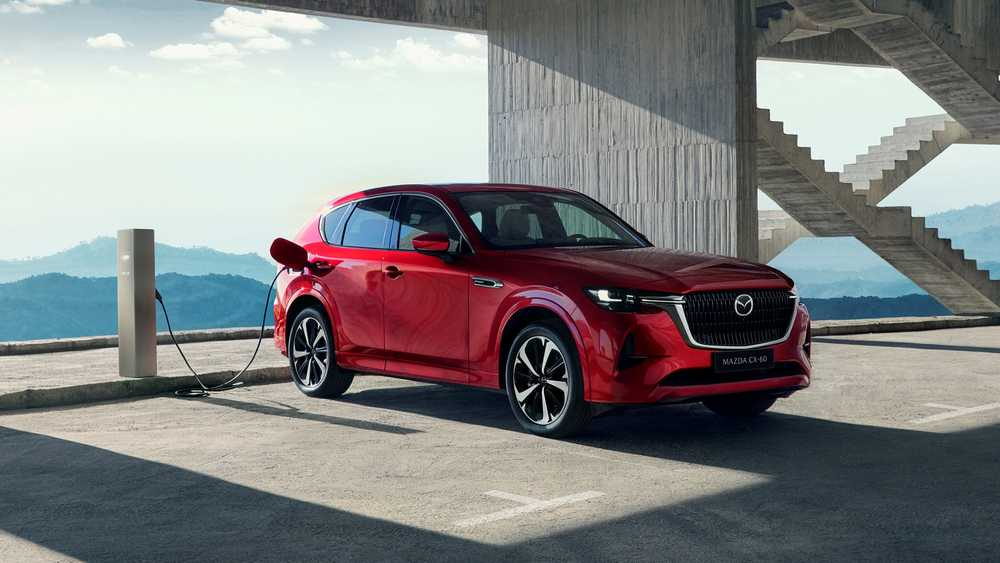
Mazda is not rushing to abandon combustion engines for an all-electric future, with the automaker saying gasoline-powered vehicles will remain highly relevant in key markets including the U.S. and Japan.
Mazda Sticks With Combustion Engines
While many automakers raced to catch up with Tesla and invested heavily in electric vehicles, Mazda took a more cautious approach to electrification. The company introduced a compliance car in the U.S. and worked to meet European legislation, while continuing to develop combustion-engine technology.
Some automakers committed to transitioning their entire lineups to all-electric vehicles by specific years, only to walk back those plans. Mazda did not make the same commitment, and the company continues to see a significant role for combustion engines.
Speaking with Car Magazine, Moritz Oswald, Project Manager for Product Planning and Co-Creation at Mazda Motor Europe, said Mazda has no plans to abandon combustion engines.
“Combustion engines are still, globally, super relevant. If you talk about markets, such as the US, combustion engines for the next couple of years will definitely be the way to go. BEV [Battery Electric Vehicle] share is still super low there, even with Tesla’s home market. Also in Japan, we see combustion engines are still very relevant.”
Hybrids Remain Part of Mazda’s Strategy
Mazda’s position on combustion engines does not mean the company is resisting all forms of electrification. Hybrid technology appears to be an important part of its strategy, with both regular hybrids and plug-in hybrid vehicles (PHEVs) already featured in Mazda’s lineup.
Oswald also told Car that there is “a surprise coming for the 3.3” in the CX-60, along with a more potent and Euro 7-compliant powertrain for the CX-5.
The comments point to PHEV drivetrains potentially expanding across more of Mazda’s model lineup, although the source does not provide further details about those developments.
Mazda Takes a Cautious Approach to Software-Defined Vehicles
Mazda has also taken a relatively simple approach to vehicle technology as other automakers have invested heavily in making their cars increasingly software-driven and high-tech.
The automaker has shown some movement in infotainment, however, moving away from its small-screen, more-buttons approach with the new Mazda CX-5.
When it comes to software-defined vehicles (SDVs), Mazda does not appear to be rushing into the technology. At the same time, the company recognizes that the industry is moving in that direction and that eventually Mazda will need to participate.
“The industry is very quickly moving toward SDVs,” Oswald said. “I’m not sure if customers are also going that route – but anyway, we need to stay competitive because probably it’s going to be a very quick adaption and at some point, you have to be in that game.”
For now, Mazda’s approach combines continued development of combustion engines with hybrid technology while taking a measured position on battery-electric vehicles and software-defined cars.