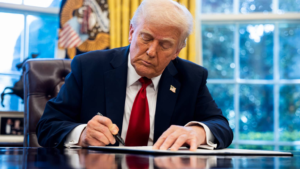

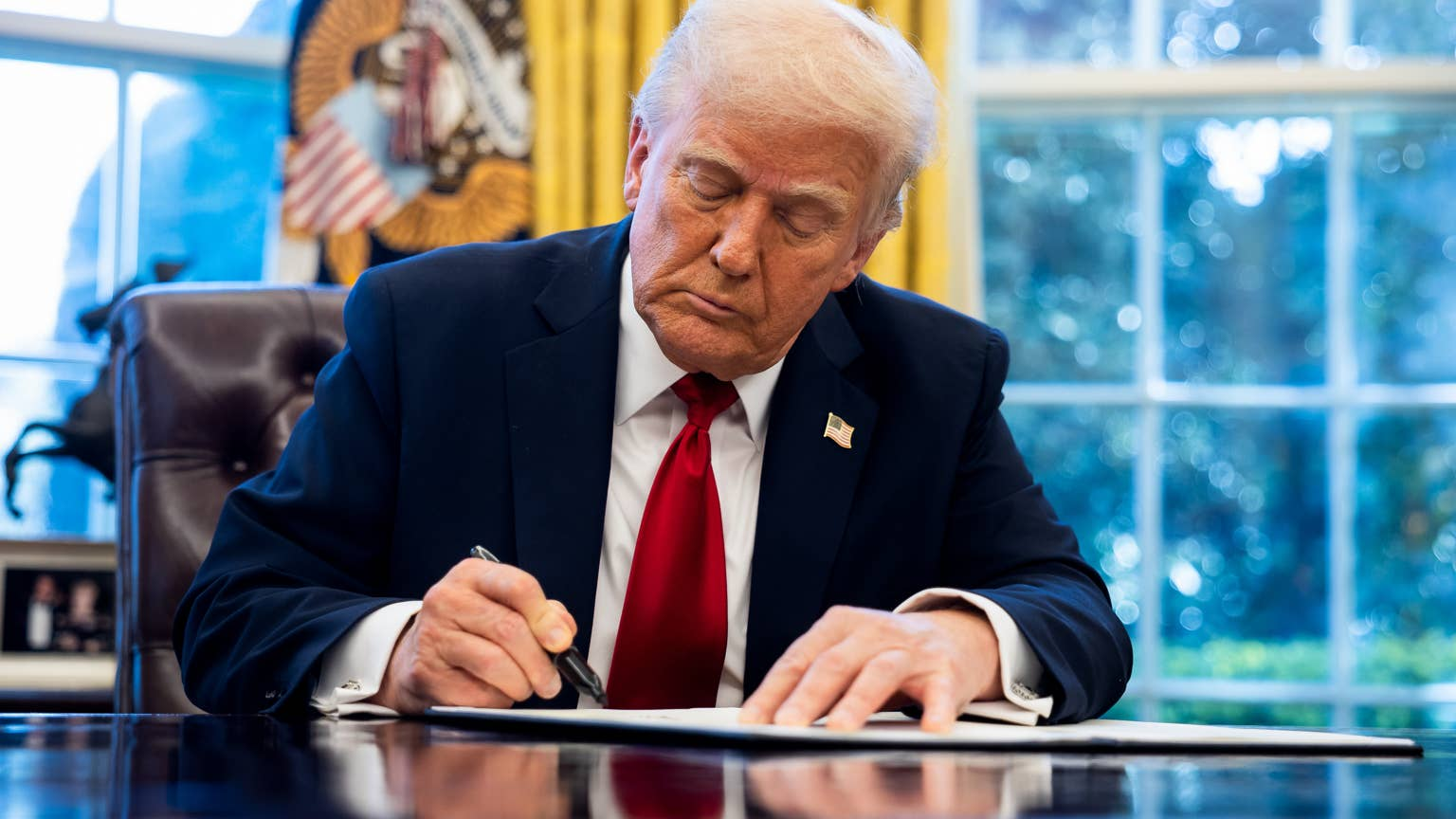
U.S. President Donald Trump said Saturday that he approved new fuel economy standards that would replace Biden-era requirements, giving automakers more room to continue offering combustion-powered vehicles as the U.S. electric vehicle market faces pressure.
Trump Moves to Replace Biden-Era Standards
The shift follows the administration’s reversal of several EV-friendly policies after Trump took office in January 2025. Most notably, the federal $7,500 EV tax credit ended after September 30, 2025, contributing to a sharp slowdown in the U.S. EV market.
The full details of the new fuel economy standards have not yet been disclosed. Under the Biden-era Corporate Average Fuel Economy, or CAFE, standards, the industry fleetwide average was projected to reach roughly 50.4 mpg for cars and light trucks by model year 2031.
Those requirements pushed automakers toward more fuel-efficient vehicles, including hybrids and EVs. Trump referred to the previous policy as a “ridiculous EV Mandate” in a Truth Social post and said the new standards would lead to lower-priced cars, help plants return to operation and bring back jobs.
Combustion Vehicles Could Get More Room
Rolling back the previous standards would give automakers more flexibility to continue offering combustion-powered cars without relying as heavily on hybrids and EVs.
Combustion models may also be more affordable than comparable hybrid vehicles because hybrids require additional hardware, including an electric motor and high-voltage battery. The change comes as the average new-car transaction price in the U.S. surpassed $50,000 in December last year.
High fuel prices, however, could make electrified vehicles more appealing.
Trump also criticized EV adoption, saying in his post that it had “forced Americans into cars they never wanted” while wasting “billions on chargers that were never built.”
Automakers Face a Changing EV Market
With the U.S. EV market already under pressure, EV-only brands such as Tesla, Rivian and Lucid could face further headwinds. Other automakers may also adjust to the changing environment.
Volkswagen, for example, ended production of the ID.4 at its plant in Chattanooga, Tennessee. Ram has also canceled the all-electric 1500 REV and introduced performance-focused alternatives, including the 1500 TRX SRT and the 1500 Rumble Bee lineup.
Trump Says Auto Investment Has Surpassed $100 Billion
Trump also said that more than $100 billion is being invested in the American auto industry under his administration, adding that “that’s just the beginning.”
The new fuel economy standards are expected to be finalized on Monday.
Some States Still Offer EV Incentives
Despite the broader shift toward combustion vehicles, some states continue to provide incentives aimed at encouraging EV adoption.
California is one example, offering an instant rebate of up to $3,500 on qualifying new zero-emission vehicles for first-time EV buyers. Up to $1,750 is available for qualifying used models.