
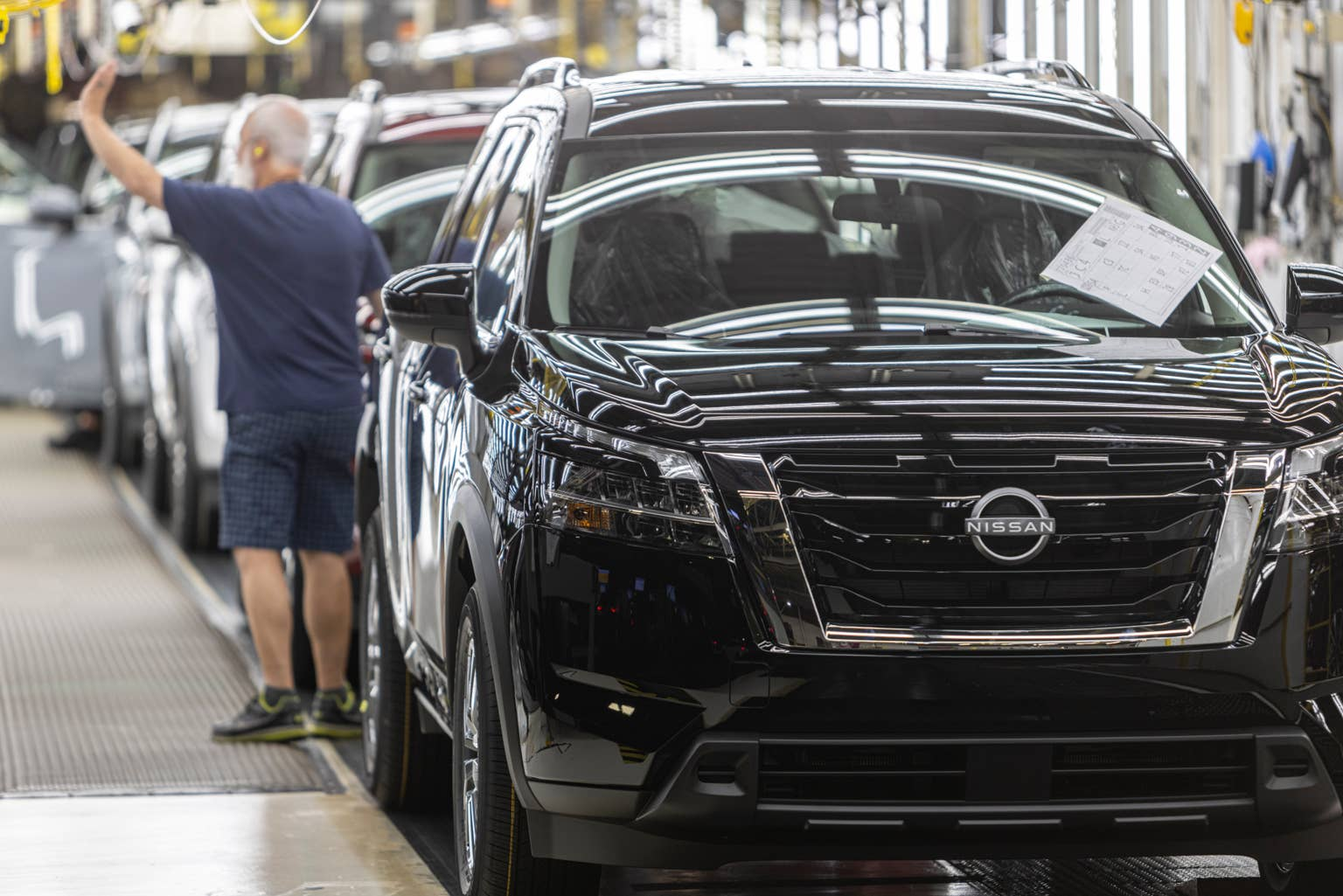
Nissan Motor is expanding its U.S. manufacturing footprint, targeting local production for 80% of the vehicles it sells in the American market by the end of 2030 as the automaker responds to tariff pressures and shifts in North American trade policy.
Nissan Pushes to Expand Local Production
Speaking at a recent media roundtable, Christian Meunier, chairperson of the Management Committee for Nissan Americas, said the automaker shifted toward localizing vehicle assembly and supply chains following tariff pressures introduced during the Trump administration.
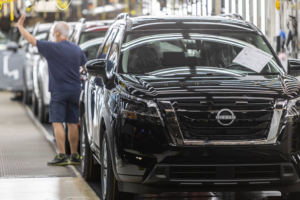
Before those trade policies took effect, Nissan manufactured roughly 40% of its U.S. volume locally. That figure has since risen to 65% across six production operations in the Americas.
The move comes as trade developments across North America encourage automakers to reconsider their supply networks. Federal policy pushing for domestic auto production to account for at least half of regional vehicle manufacturing has added pressure on international manufacturers to reassess where vehicles and components are produced.
For Nissan, expanding U.S. assembly provides a structural buffer against import levies that directly affect operating margins.
Rogue, Pathfinder and Frontier Lead the Strategy
To reach its 80% production target, Nissan is focusing on its highest-volume vehicles in the American market. The Rogue, Pathfinder and Frontier together account for 55% of the company’s total U.S. sales, making the three models central to its broader core model strategy.
According to a Nikkei report, the focused portfolio is a key part of Nissan’s Re:Nissan restructuring plan, which aims to stabilize regional operations after years of market share erosion.
Changes to the company’s product portfolio are already supporting the strategy. Nissan recently halted North American production of the Rogue plug-in hybrid, citing the expiration of federal purchasing incentives.
Instead, Nissan will introduce its e-Power hybrid system to the U.S. this November on imported Rogue models. Local assembly of those models is planned for 2028.
Japanese Automakers Adjust to Trade Pressures
Nissan’s manufacturing changes reflect broader adjustments among Japanese automakers. Rivals such as Honda and Toyota are expanding domestic hybrid production as cross-border supply chains face greater scrutiny.
At the same time, Canadian factory output is encountering reduced tariff exemptions, increasing the importance of direct manufacturing inside U.S. borders for automakers operating across North America.
Nissan Faces a Manufacturing Reset
Meunier’s assessment of Nissan’s recent market approach points to a significant shift in how the company is managing its operations. The automaker had relied for years on volume discounting and fleet sales to sustain operations while giving less attention to structural manufacturing efficiency.
Trade restrictions ultimately pushed management toward greater discipline in production, capital allocation and localized inventory management.
As global auto trade continues to face tariff pressures, Nissan is responding by increasing the share of vehicles produced locally for the U.S. market. The company’s target is to reach an 80% local production rate by the end of 2030.