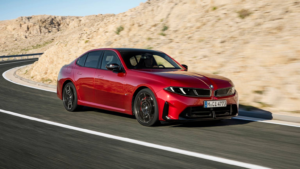

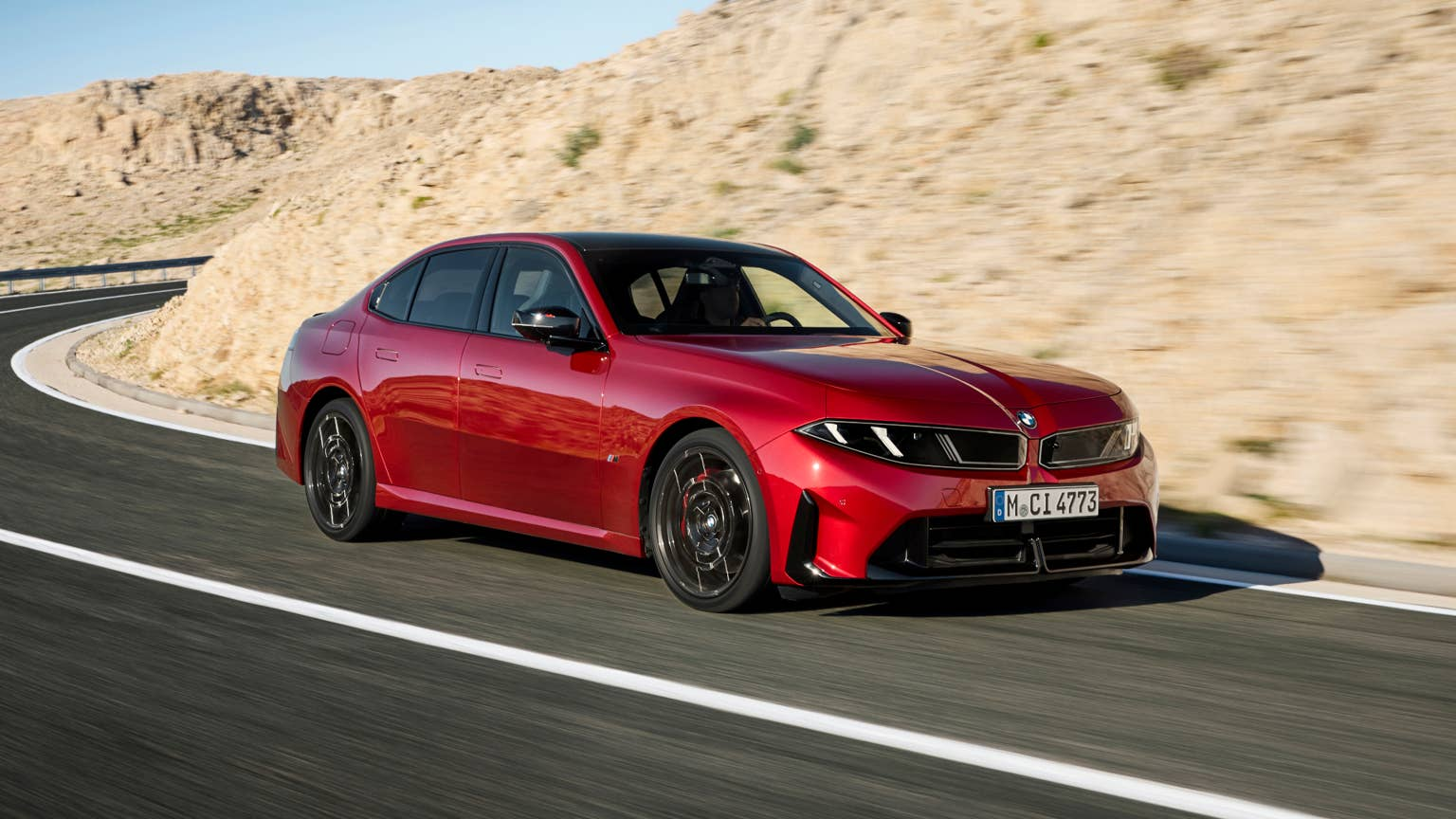
The 2027 BMW 3 Series has been revealed with turbocharged four- and six-cylinder engines, 48-volt mild-hybrid technology, updated chassis hardware and a redesigned interior built around BMW’s latest technology. The new G50-generation sedan also brings higher outputs, faster acceleration and a new M350 performance model.
2027 BMW 3 Series Powertrains
The 2027 BMW 3 Series will be offered in 330, 330 xDrive and M350 xDrive forms. Unlike the all-electric i3 sedan, the combustion-powered 3 Series retains four- and six-cylinder engines while using mild-hybrid technology to improve performance and efficiency without adding an all-electric driving mode.
The range-topping M350 replaces the previous M340i as the performance-focused model. It uses a 3.0-liter turbocharged straight-six paired with 48-volt mild-hybrid technology and a 17-hp electric motor positioned between the transmission and crankshaft.
Total output reaches 437 horsepower and 428 lb-ft of torque, representing increases of 51 hp and 30 lb-ft over the G20 M340i. BMW says the M350 can accelerate from 0 to 60 mph in 3.9 seconds, compared with 4.1 to 4.4 seconds for the previous M340i depending on drivetrain.
xDrive all-wheel drive and an eight-speed automatic transmission are standard on the M350. BMW has not indicated that rear-wheel drive will be offered, but the car includes a rear-drive setting called “Drift Moment” along with an M Drag Meter for displaying acceleration data.
Performance tires allow the M350 to reach a top speed of 155 mph. A manual transmission is not indicated for the model.
330 and 330 xDrive Models
The 330 and 330 xDrive use a 2.0-liter turbocharged four-cylinder engine paired with 48-volt mild-hybrid technology and an eight-speed automatic transmission.
Both versions produce 255 horsepower and 295 lb-ft of torque. A belt-driven starter-generator provides the mild-hybrid assistance, while 0-to-60-mph acceleration takes 5.9 seconds. Sport tires allow a top speed of 155 mph.
The “i” suffix has been removed from the gasoline-powered models, as BMW seeks to avoid confusion with the i prefix used on its electric vehicles.
Engine Technology and Efficiency
The power increases do not come solely from electrification. BMW has introduced new Valvetronic variable valve control programs with switchable exhaust valves, along with variable intake-valve lift.
These changes reduce drag torque by roughly 66 percent, allowing the rotating assembly to require less energy to move and lose less energy when off-throttle.
The engines also use a Miller combustion cycle and new turbochargers. BMW has revised the intake ports, combustion chambers, camshaft timing, fuel injection, ignition and exhaust-gas flow routing.
BMW says the combined measures will keep the 3 Series legal in the U.S. and Europe until at least the end of the decade.
2027 BMW 3 Series Chassis and Handling
The G50 3 Series is larger across several areas, but BMW says wider tracks and a longer wheelbase will help maintain its cornering character while also improving comfort.
The chassis and body structures have been extensively revised, while the sedan receives a new steering ratio and BMW Driving Stack suite of chassis controls. The braking system is also new, while the suspension receives revised geometry.
Up front, the 3 Series uses a double-joint spring-strut design with more camber and increased positive caster trail. The five-link rear axle receives modified negative caster trail and additional camber.
Both the front and rear suspension systems feature preloaded anti-roll bar mounts designed to keep the chassis stiff. Newly developed lift-related dampers and a larger wheel diameter, increasing from 654 millimeters to 680 mm, are also designed to improve traction and comfort.
Adaptive suspension is available, including Adaptive M Suspension at the top of the range. Both adaptive options require sport steering with a variable ratio. BMW says the systems improve handling and reduce stopping distances when ABS is required.
The M350 xDrive receives model-specific spring and damper rates along with a tower-to-front strut bar in the engine bay.
2027 BMW 3 Series Interior and Technology
The 330 and M350 retain the unconventional two- or four-spoke steering-wheel design. All steering wheels include shift paddles, including those fitted to the 2.0-liter models.
The cabin features a 17.9-inch central touchscreen running Operating System X, along with a full-width Panoramic iDrive display positioned between the dashboard and the base of the windshield.
A 3D head-up display is available, while every 3 Series model receives a panoramic glass sunroof. Electric seats with memory are standard, with multifunction seats offering lumbar support and backrest-width adjustment available as an option.
The optional seats provide ventilation in the gasoline-powered models, while M350 buyers can also choose M Sport seats featuring illuminated M logos.
Dual-zone climate control is standard. Physical controls remain for the parking brake, transmission selector, rear-window defroster, hazard lights and audio volume, but climate functions are controlled entirely through the screen.
Tri-zone climate control and heated seats are optional.
A seven-speaker, 205-watt audio system is standard. M Performance models receive a more powerful Harman Kardon system with Dolby Atmos support, although BMW has not specified its speaker count or power output.
Interior themes include Contemporary, BMW M and BMW Individual. The Contemporary theme uses faux leather in Digital White, Castanea, Agave Green or Black. BMW M combines a different imitation leather with M PerformTex faux suede, while BMW Individual offers real Merino leather exclusively in Black.
2027 BMW 3 Series Design and Features
The G50 3 Series adopts BMW’s Neue Klasse design language while retaining proportions distinct from the electric i3 sedan. Without a large battery pack, the side skirts follow a straighter line, while the hood is flatter to accommodate the engine.
The sedan also features more prominent-looking flared wheel arches and trim around the glasshouse. Wheel sizes range up to 20 inches, while 19-inch designs are standard, including on the M350, which receives Style 1139 M wheels in Jet Black.
BMW will offer 11 exterior colors, including Le Castellet Blue, which is exclusive to the i3 and 3 Series. Individual paint finishes will also be available, although BMW has not yet provided a list of colors.
The 330 and 330 xDrive can be equipped with the M Aerodynamics package as part of the M Sport package. It adds several M350 styling elements, including the bumpers, side skirts and diffuser.
The M350 also receives a black trunk-lid spoiler as standard. Another notable change is its quad-exit exhaust, while optional features include M yellow running lights and Iconic Glow lighting between the clusters.
2027 BMW 3 Series Pricing
BMW has not yet announced option pricing or specified an arrival window. The automaker expects dealership deliveries to begin before the end of the year. All listed prices exclude the mandatory $1,350 destination charge.
- BMW 330: $49,900
- BMW 330 xDrive: $51,900
- BMW M350 xDrive: $65,900
- BMW i3 50 xDrive: $61,500
For comparison, the 2026 BMW 330i was priced at $49,350 before its $1,175 destination charge, while the 330i xDrive was $51,350. The 2026 M340i was $63,650, and the M340i xDrive was $65,650.
BMW i3 M60 xDrive Also Coming
BMW has also announced a more powerful i3 version called the M60 xDrive. The electric model will receive M touches similar to those applied to the range-topping gasoline model.
The 2027 3 Series lineup therefore expands the Neue Klasse design language across both gasoline and electric models while combining updated powertrains, revised chassis technology and expanded digital features.