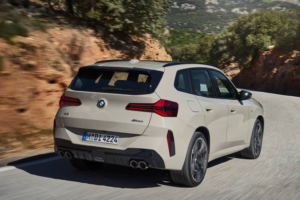

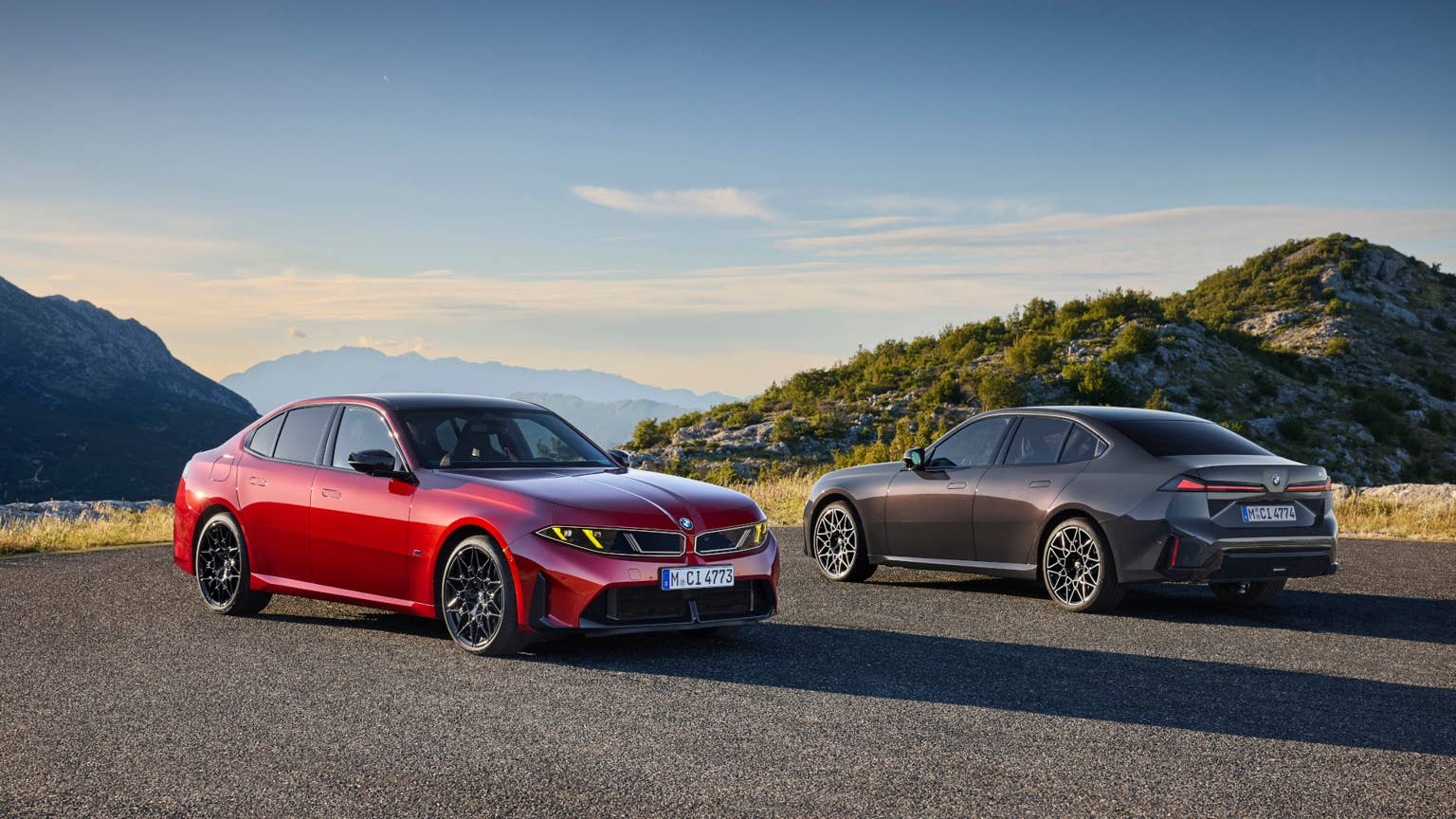
BMW has unveiled the combustion-powered 3 Series, bringing the all-new 3 Series family closer to completion after the i3 made its world premiere six months ago. The two models share a similar design approach, but they are built on distinctly different platforms.
The 3 Series Family Is Nearly Complete
The lineup is not fully complete yet. BMW has confirmed that a plug-in hybrid 3 Series is still coming, while Touring wagon versions of both the i3 and 3 Series have yet to be revealed.
The i3 previewed what to expect from the gas-powered 3 Series, giving the two models a closely related appearance despite their different powertrain architectures.
BMW 3 Series and i3 Look Similar at First
From the front, the 3 Series and i3 are difficult to distinguish. Their headlights, “grille” and front bumpers appear nearly identical, although differences become easier to see when the cars are viewed from an angle.
The i3 has its wheels positioned farther apart, along with a slightly longer wheelbase. The 3 Series also features a longer, lower hood than the i3.
The most straightforward explanation is that the 3 Series needs to accommodate a straight-six engine, while the i3 does not. However, the differences between the two models extend well beyond their exterior proportions.
Different Platforms Under the Skin
Although the redesigned 3 Series looks like a Neue Klasse model, its underlying architecture is more familiar. The new 3 Series continues to use the CLAR platform found in the outgoing model.
BMW has heavily modified and updated that architecture, however, making the redesigned 3 Series an all-new model rather than simply a reskin. BMW followed a similar approach with the 2027 X5, giving it a dramatic redesign inside and out while retaining an evolution of the previous architecture.
The i3 takes a different approach. It is a purely Neue Klasse model built on a completely different architecture, allowing BMW to maximize interior space, extend the wheelbase and accommodate a large battery.
Why BMW Chose Separate Architectures
BMW has not explained why it chose not to combine the electric and combustion chassis into one architecture, as Mercedes-Benz has done with some models and BMW has done with the 5 Series and 7 Series.
One possibility is that combining both powertrains could have made the car look too bulky or created compromises involving battery size or engines because of the vehicle’s smaller footprint.
X3 and X5 Show the Packaging Challenge
The X3 and iX3, along with the X5 and iX5, provide examples of BMW’s approach to different powertrains. The X5 and iX5 have larger dimensions, which may give BMW more room to package both internal-combustion and electric powertrains without significant compromises.
An X3-sized vehicle presents a tighter packaging challenge. Combining the two architectures could make the vehicle too cramped or limit the iX3’s battery size.
As a result, building new-generation electric vehicles from the ground up may have been the only solution without compromising the packaging of the EV or the combustion-powered model.