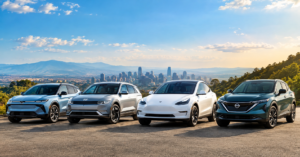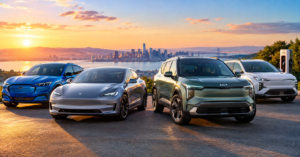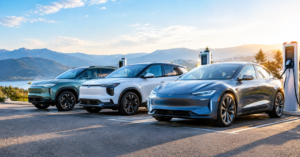

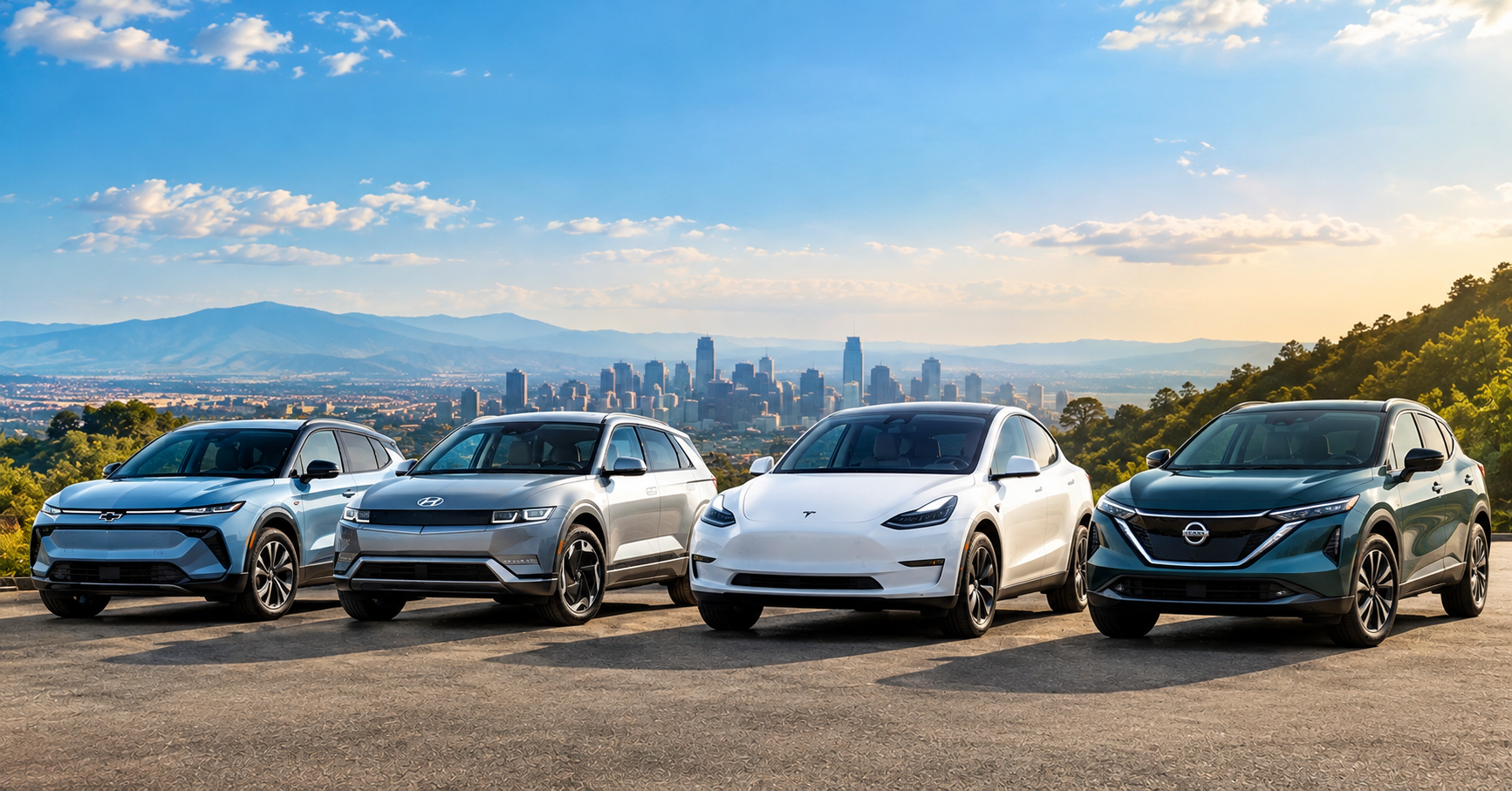
Shopping for the best affordable electric SUVs 2026 buyers can actually justify is more complicated than simply looking for the lowest sticker price. The federal EV tax credit is gone, but automakers have responded with lower prices, longer driving ranges and more standard equipment.
But price alone does not determine value. Charging speed, usable range, interior space, warranty coverage, technology, ownership costs and real-world performance all matter. A vehicle that costs less initially may not be the smartest choice for a driver who regularly takes long highway trips.
Based on the research and expert testing in this guide, these are seven affordable electric SUVs worth putting on a 2026 shopping list.
The 7 Best Affordable Electric SUVs for 2026
- 2026 Chevrolet Equinox EV — Best Overall Value
- 2026 Hyundai Ioniq 5 — Best All-Around Choice
- 2026 Tesla Model Y — Best Mainstream Electric SUV
- 2026 Nissan Ariya — Best for Comfort and Refinement
- 2026 Volkswagen ID.4 — Best Family-Friendly Option
- 2026 Chevrolet Bolt EUV — Best Low-Cost Option When Available
- Kia EV3 — Best Affordable Small Electric SUV
How We Define Value in an Affordable EV SUV
There is no single definition of an affordable electric SUV. A vehicle priced at $35,000 can be a better value than one costing $30,000 if it delivers substantially more range, faster charging, better equipment or greater practicality.
For this list, value is based on several factors rather than purchase price alone.
- Purchase price: How close the SUV gets to the mainstream compact-crossover price range.
- Driving range: EPA-estimated range is the primary benchmark, with real-world testing considered where available.
- Charging: DC fast-charging capability can make a major difference for road-trip drivers.
- Practicality: Passenger space, cargo room and everyday usability matter for SUV buyers.
- Features: Standard technology, comfort equipment and driver-assistance features contribute to overall value.
- Warranty: Battery and powertrain coverage can be particularly important for EV shoppers.
- Ownership considerations: Charging access, maintenance, insurance and potential repair costs can affect the long-term equation.
Range figures also need context. EPA estimates are useful for comparing vehicles, but real-world range can change with speed, weather, driving style and other conditions. The research for this guide therefore distinguishes EPA figures from independent range tests whenever both are available.
1. 2026 Chevrolet Equinox EV: Best Overall Value
The 2026 Chevrolet Equinox EV makes perhaps the clearest case for affordable electric SUV value. Its FWD LT1 starts at $34,995 before destination charges, or roughly $36,390 including destination according to the supplied Edmunds pricing information.
More importantly, the Equinox EV pairs that relatively accessible price with a claimed 319 miles of EPA-estimated range in front-wheel-drive configuration. AWD models are rated at 307 miles.
Independent testing makes the value equation even more interesting. Edmunds achieved 356 miles in its real-world EV range test, exceeding the official EPA figure.
Edmunds described the Equinox EV as the best value for an EV from a range-and-cost perspective. That assessment captures why the Chevrolet stands out: buyers do not have to sacrifice long-distance range simply to get into a relatively affordable electric SUV.
Why the Equinox EV stands out
- Starts below $35,000 before destination.
- Up to 319 miles of EPA-estimated FWD range.
- 356 miles in Edmunds’ real-world range test.
- Compact-SUV proportions suit everyday family use.
- Offers a strong range-per-dollar proposition.
Who should buy it?
The Equinox EV is particularly appealing to commuters and families who want maximum driving range without moving into a much more expensive EV category.
The main compromise is that the interior and technology are more functional than flashy. Higher trims can also move closer to the pricing of competitors such as the Tesla Model Y.
2. 2026 Hyundai Ioniq 5: Best All-Around Electric SUV
The 2026 Hyundai Ioniq 5 remains one of the most compelling choices for shoppers who want a combination of design, space, technology and fast charging.
Pricing is especially important in 2026. The supplied research places the starting price around $35,000 to $36,600 depending on trim and source, while Kelley Blue Book lists $36,600 for the SE Standard Range.
Long-range rear-wheel-drive versions can deliver up to 318 miles of EPA-estimated range. The base Standard Range model is rated at 245 miles.
The Ioniq 5 also has a major advantage for road-trip drivers: its 800-volt charging architecture can take the battery from approximately 10% to 80% in around 20 minutes under suitable charging conditions.
Why the Ioniq 5 is a value pick
Kelley Blue Book has described the Ioniq 5 as a top pick among compact electric SUVs, highlighting its design, features and value. Hyundai’s pricing strategy is also significant because the 2026 model received a substantial price reduction that USA Today noted was close to the value of the federal EV credit that had disappeared.
- Up to 318 miles of EPA-estimated range.
- Fast 10%-to-80% charging in about 20 minutes.
- 800-volt electrical architecture.
- Strong interior space and distinctive design.
- 10-year/100,000-mile powertrain warranty.
The trade-offs
Some competitors now offer slightly more range, while rear visibility and certain technology details have generated criticism in reviews.
Still, for shoppers who value fast charging and a more distinctive interior experience, the Ioniq 5 is one of the strongest all-around affordable electric SUVs for 2026.
3. 2026 Tesla Model Y: Best Mainstream Electric SUV
The 2026 Tesla Model Y remains a major player in the affordable-to-mainstream electric SUV market. Depending on configuration and source, pricing starts around $39,990 to $41,630.
The base rear-wheel-drive version is rated at 321 miles of EPA-estimated range. Edmunds also tested a Long Range AWD version at 327 miles.
The Model Y’s appeal goes beyond its range figure. Buyers also get access to Tesla’s Supercharger network, an established software ecosystem and a familiar electric-SUV format that has helped make the Model Y one of the market’s most recognized EVs.
Why the Model Y remains competitive
- Up to 321 miles of EPA-estimated range for the base RWD model.
- Strong efficiency and competitive range.
- Extensive Supercharger access.
- Established software and technology ecosystem.
- Mainstream SUV practicality.
Kelley Blue Book notes the Model Y’s combination of technology, competitive range and affordability, while Edmunds gives it an 8.2/10 rating in the supplied research.
What buyers should consider
The Model Y’s minimalist interior is not for everyone. The firm ride on some configurations and reports of build-quality variability are additional considerations.
For buyers who prioritize charging-network access and technology, however, the Model Y remains one of the most complete mainstream electric SUVs available in this price range.
4. 2026 Nissan Ariya: Best for Comfort and Refinement
The 2026 Nissan Ariya takes a different approach from the Tesla Model Y. Rather than focusing heavily on minimalist technology, it emphasizes a quiet and comfortable driving experience combined with modern cabin technology.
The FWD version with the 87-kWh battery can reach up to 304 miles of EPA-estimated range. Pricing is roughly $39,590 to $41,653 depending on trim and source.
That places the Ariya in direct competition with several mainstream electric SUVs while keeping more than 300 miles of official range within reach.
Why consider the Ariya?
- More than 300 miles of EPA-estimated range.
- Quiet and comfortable ride.
- Modern interior technology.
- Alternative to Tesla’s software-focused approach.
- Pricing in the low-$40,000 range depending on configuration.
The biggest compromise
Charging speed is where the Ariya gives up ground to some newer competitors. Its DC fast-charging capability of around 130 kW trails some rivals with faster charging systems.
Real-world highway range can also fall to roughly 250–270 miles when driving at 70 mph or more, according to the supplied research.
That makes the Ariya especially attractive to buyers who value comfort and refinement more than the fastest possible charging stops.
5. 2026 Volkswagen ID.4: Best Family-Friendly Option
The 2026 Volkswagen ID.4 is not the newest or cheapest SUV on this list, but it remains relevant because of its practical interior and familiar crossover proportions.
Pricing is approximately $45,095 to $46,570 depending on trim and source. EPA range estimates span 206 to 291 miles depending on configuration.
Independent testing again adds useful context. Edmunds drove a single-motor rear-wheel-drive ID.4 for 299 miles in its EV Range Test.
Why the ID.4 makes the list
For a family that cares more about interior space and comfortable everyday driving than outright acceleration or cutting-edge charging speeds, the ID.4 can make sense.
- Spacious cabin.
- Useful cargo capacity.
- Comfortable everyday driving character.
- Nearly 300 miles in Edmunds’ range test.
- Traditional SUV proportions and familiar controls.
The main drawback is pricing. At more than $45,000 depending on configuration, the ID.4 does not have the same price advantage as the Equinox EV or some versions of the Ioniq 5.
Infotainment and driver-assistance systems have also received mixed reviews in previous years, while some buyers may find the cabin materials less upscale than expected at this price.
6. 2026 Chevrolet Bolt EUV: Best Low-Cost Option When Available
The Chevrolet Bolt EUV deserves a special mention because its position in the 2026 market depends on availability. The supplied research places its starting price around $28,900 for the 1LT trim, making it one of the least expensive electric crossovers discussed here.
Its EPA-estimated range is approximately 265 miles, with real-world mixed-driving results in the supplied research ranging from about 255 to 270 miles.
That is not the longest range in this group, but the low purchase price changes the calculation for shoppers whose daily driving needs are modest.
Why the Bolt EUV remains interesting
- Starting price around $28,900 when available.
- Approximately 265 miles of EPA-estimated range.
- More rear-seat space than the standard Bolt.
- Potentially one of the lowest-cost paths into an electric crossover.
The availability issue
The Bolt EUV should not be treated as a guaranteed widely available 2026 purchase. The research specifically qualifies it as an option if still in dealer stock in 2026.
For shoppers who cannot find one, the newer Kia EV3 provides an important alternative in the same broad affordability conversation. The EV3 is technically a 2027 model-year vehicle that goes on sale during calendar year 2026, so buyers should distinguish between model year and purchase year.
The Bolt EUV is also smaller and less powerful than many newer compact electric SUVs, and its DC fast-charging capability is adequate rather than class-leading.
7. Kia EV3: Best Affordable Small Electric SUV
The Kia EV3 is the wildcard in this list because it illustrates how quickly the affordable EV market is changing.
The vehicle discussed in the research is technically a 2027 model-year EV that goes on sale in 2026. That distinction matters, but it does not make the EV3 irrelevant to someone shopping for an affordable electric SUV during calendar 2026.
The base Light FWD starts around $29,890, while the Wind FWD with the larger battery is listed at $34,990.
Range varies substantially by battery and configuration. The Light FWD is rated at 221 miles with a 58.3-kWh battery, while the Wind FWD with an 81.4-kWh battery can reach 321 miles. AWD is rated at 280 miles in the supplied research.
Why the EV3 matters
The EV3 combines a sub-$35,000 price with the potential for more than 300 miles of range. Electrek described it as the best-packaged affordable EV in the U.S. based on its price, range and available AWD.
- Base price around $29,890.
- Wind FWD starts around $34,990.
- Up to 321 miles of range in the long-range FWD configuration.
- Available AWD with 280 miles of range.
- Small-SUV footprint suited to urban and suburban driving.
The trade-off is size. The EV3 does not provide the same interior and cargo capacity as larger options such as the Equinox EV or Ioniq 5. Performance and charging speed are also more modest.
For buyers who want a small electric SUV with a low starting price and long-range potential, however, the EV3 represents where affordable EVs are heading.
Which Affordable Electric SUV Has the Best Range?
Range is one of the most important considerations when shopping for an electric SUV, but the answer depends on whether you are comparing EPA estimates or independent testing.
The 2026 Tesla Model Y reaches 321 miles of EPA-estimated range in its base RWD configuration. The long-range AWD version achieved 327 miles in Edmunds’ testing.
The Chevrolet Equinox EV is rated at 319 miles for FWD and went an impressive 356 miles in Edmunds’ real-world range test.
The Hyundai Ioniq 5 reaches 318 miles with the long-range RWD configuration, while the Nissan Ariya reaches up to 304 miles.
These figures demonstrate why shoppers should avoid treating one range number as the entire story. A vehicle’s EPA estimate provides a standardized comparison, while an independent road test can show how a particular vehicle performs under specific conditions.
Range comparison
- Chevrolet Equinox EV: 319 EPA miles; 356 miles in Edmunds testing.
- Tesla Model Y: 321 EPA miles for base RWD; 327 miles in Edmunds testing for Long Range AWD.
- Hyundai Ioniq 5: up to 318 EPA miles.
- Nissan Ariya: up to 304 EPA miles.
- Kia EV3: up to 321 miles for the long-range Wind FWD.
- Volkswagen ID.4: up to about 291 EPA miles depending on configuration; 299 miles in Edmunds testing.
- Chevrolet Bolt EUV: about 265 EPA miles.
Are Affordable Electric SUVs Still a Good Deal Without the EV Tax Credit?
This is one of the most important questions for 2026 buyers.
The federal Clean Vehicle Credit of up to $7,500 for new EVs applied only to vehicles acquired on or before September 30, 2025. New EVs purchased and placed in service on or after October 1, 2025 do not qualify under the federal credit rules described in the research.
That means a buyer shopping for a 2026 model during calendar year 2026 should not build a purchase budget around receiving the former federal $7,500 incentive.
Automakers have responded in other ways. The 2026 Hyundai Ioniq 5 is a notable example, with pricing reduced by an amount USA Today reported was close to the value of the lost federal incentive.
The result is a market where affordability increasingly depends on the actual MSRP, manufacturer incentives, charging costs and total ownership costs rather than simply the availability of a federal tax credit.
What shoppers should compare instead
- Vehicle price and destination charges.
- Available manufacturer or dealer incentives.
- Home charging installation costs.
- Expected electricity costs.
- Insurance costs.
- Maintenance and repair considerations.
- Battery and powertrain warranty coverage.
- Expected driving range for your normal use.
Affordable EV SUV vs. Hybrid SUV in 2026
Electric SUVs are not automatically the right choice for every buyer. The charging situation at home and on the road can be just as important as the vehicle’s purchase price.
The research notes that conventional hybrid sales increased by almost 27% year over year while plug-in sales declined. That market shift reflects a practical consideration: hybrids eliminate the need to plan charging stops while still offering fuel-saving benefits.
A hybrid may be more practical if you frequently take long trips, live somewhere with limited public charging or cannot install convenient home charging.
An EV can make more sense for drivers who have reliable home charging and predictable daily mileage. For those buyers, an affordable electric SUV with 300-plus miles of EPA range can provide a substantial amount of flexibility.
What to Check Before Buying an Affordable Electric SUV
The sticker price is only the beginning. Before signing a purchase agreement, work through the following checklist.
1. Calculate your actual daily mileage
Do not automatically pay more for the longest-range battery. If you drive 30 to 50 miles per day and charge at home every night, a shorter-range EV may already meet your needs.
2. Confirm your home-charging situation
Home charging can dramatically simplify EV ownership. Determine whether you can install a suitable charger and whether your electrical setup can support it.
3. Map your regular road trips
Look beyond the number of charging stations. Check where chargers are located along your usual routes and consider charging speed, network availability and reliability.
4. Compare DC fast-charging performance
Two EVs with similar EPA range can have very different road-trip experiences if one can replenish its battery much faster.
5. Check insurance costs
Do not assume a lower purchase price guarantees lower ownership costs. Insurance premiums can vary substantially by model.
6. Review reliability information
Road-test performance and reliability are separate measurements. A new EV may drive exceptionally well while having limited long-term reliability data.
7. Compare warranties
Battery and powertrain coverage should be part of any EV comparison, particularly when evaluating vehicles at similar prices.
8. Test the technology before buying
Touchscreens, driver-assistance systems and infotainment interfaces differ significantly. Spend enough time in the vehicle to make sure the controls work for you.
Pros and Cons of Buying an Affordable Electric SUV in 2026
Pros
- Several models now start in the mid-$30,000s or lower.
- Multiple affordable SUVs offer more than 300 miles of EPA-estimated range.
- EVs can provide lower fuel and maintenance costs depending on usage.
- Newer models offer improved interiors, comfort and technology.
- Home charging can make everyday driving highly convenient.
Cons
- The federal $7,500 new-EV credit no longer applies to 2026 purchases under the stated rules.
- Public charging availability and reliability remain uneven by region.
- Insurance and specialized repairs can be expensive.
- Rapid EV model turnover can affect resale dynamics.
- Cold weather, highway speeds and driving style can reduce real-world range.
Which Affordable Electric SUV Is Right for You?
There is no single model that will be perfect for every shopper. The right choice depends on what you value most.
- Best overall value: Chevrolet Equinox EV.
- Best all-around package: Hyundai Ioniq 5.
- Best mainstream EV SUV: Tesla Model Y.
- Best for comfort: Nissan Ariya.
- Best for family practicality: Volkswagen ID.4.
- Best low-cost option when available: Chevrolet Bolt EUV.
- Best small affordable EV: Kia EV3.
For a buyer focused on maximum range per dollar, the Equinox EV is particularly compelling. For someone who values fast charging and a distinctive design, the Ioniq 5 deserves a close look. Tesla’s Model Y remains attractive for buyers who place a high priority on charging-network access and software.
Meanwhile, the Ariya and ID.4 offer different interpretations of value, emphasizing comfort and practicality. The Bolt EUV is compelling primarily when inventory makes it available at its low price, while the Kia EV3 demonstrates how aggressively the affordable EV category is evolving.
FAQ: Best Affordable Electric SUVs 2026
What is the cheapest electric SUV in 2026?
When available in dealer inventory, the Chevrolet Bolt EUV is among the least expensive electric crossovers discussed in the research, with a starting price around $28,900. The Kia EV3 also starts below $30,000 at about $29,890, although it is technically a 2027 model-year vehicle going on sale during calendar 2026.
What is the best affordable electric SUV under $35,000?
The Chevrolet Equinox EV is one of the strongest options near this threshold, with a $34,995 MSRP before destination and 319 miles of EPA-estimated FWD range. The Kia EV3 also enters the conversation with a $29,890 base price and a $34,990 Wind FWD version capable of up to 321 miles.
Which affordable electric SUV has the longest range?
The Tesla Model Y reaches 321 EPA-estimated miles in its base RWD configuration, while the Chevrolet Equinox EV is rated at 319 miles and the Hyundai Ioniq 5 reaches 318 miles. The Equinox EV is particularly notable because Edmunds achieved 356 miles in its independent range test.
Is the federal EV tax credit still available in 2026?
No. Based on the supplied research, the federal Clean Vehicle Credit of up to $7,500 applied only to vehicles acquired on or before September 30, 2025. New EVs purchased and placed in service on or after October 1, 2025 do not qualify under those rules.
Are affordable electric SUVs reliable?
Reliability varies significantly by model, brand and model year. Consumer Reports and other testing organizations have noted that some EVs can experience reliability issues, particularly during the first model year of a new design. Buyers should therefore evaluate predicted reliability separately from road-test performance.
Is the Hyundai Ioniq 5 a good value in 2026?
The Ioniq 5 remains a strong value candidate because of its pricing, up to 318 miles of range, fast charging, spacious interior and warranty coverage. Its 2026 price reduction is also significant because it helps offset some of the financial impact of the expired federal EV credit.
Should I buy an electric SUV or a hybrid in 2026?
An EV can be particularly convenient for drivers with dependable home charging and predictable daily mileage. A hybrid may be more practical for shoppers who regularly take long trips, lack convenient charging or want to avoid charging stops.
What should I prioritize when shopping for an affordable EV SUV?
Start with your actual driving needs. Compare purchase price, EPA range, real-world testing where available, charging speed, home-charging access, insurance, warranty coverage, reliability information and total ownership costs.
Methodology and Sources
This comparison is based on the supplied research covering 2026 pricing, EPA-estimated range, independent range testing, expert evaluations and manufacturer information. The research references Edmunds, Kelley Blue Book, Car and Driver, Cars.com, USA Today, Chevrolet, Hyundai, Nissan, Volkswagen and Electrek, among other sources.
Pricing and range can vary by trim, drivetrain, battery configuration, destination charges and market conditions. EPA estimates should not be treated as guarantees of real-world range. Independent tests can also produce different results depending on speed, weather and testing conditions.
The Kia EV3 is identified separately because the research describes it as a 2027 model-year vehicle that goes on sale during 2026. The Chevrolet Bolt EUV is likewise qualified based on potential dealer-stock availability.
The Bottom Line
The 2026 electric SUV market looks very different from it did before the federal EV credit expired. Buyers have lost a major incentive, but automakers have responded with aggressive pricing and products that offer more range and equipment for the money.
The Chevrolet Equinox EV is particularly notable for combining a sub-$35,000 starting MSRP with 319 miles of EPA-estimated range and a 356-mile Edmunds test result. The Hyundai Ioniq 5 brings fast charging and strong overall value, while the Tesla Model Y combines competitive range with extensive Supercharger access.
The Nissan Ariya makes a case for comfort, the Volkswagen ID.4 emphasizes family practicality, and the Chevrolet Bolt EUV remains an interesting low-cost option when available. Meanwhile, the Kia EV3 shows just how far affordable EV technology is moving, offering a long-range configuration at a price below many mainstream electric SUVs.
For shoppers, the most important lesson is simple: do not judge an electric SUV by sticker price alone. Compare the price against range, charging capability, practicality and your actual driving habits. In 2026, there are more affordable EV choices than ever, but the best value is the one that fits the way you drive.