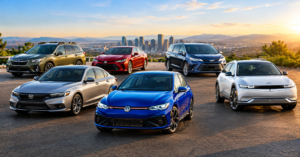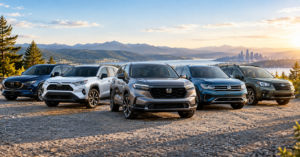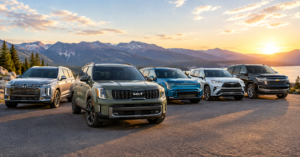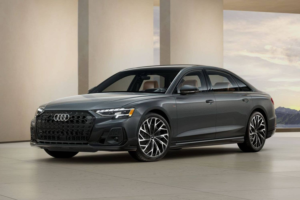

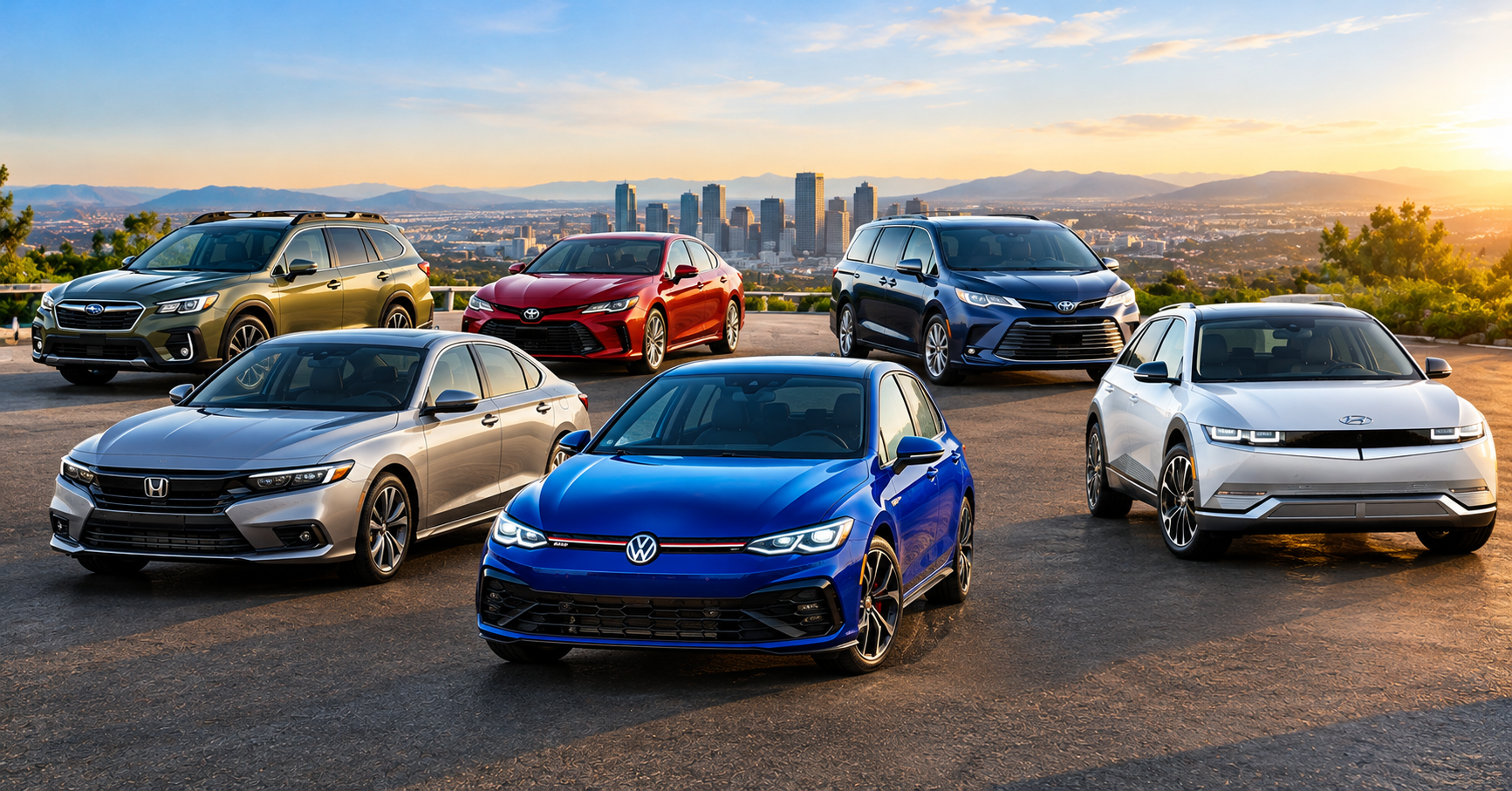
Buying a new car in 2026 means navigating more choices than ever. Hybrid powertrains are becoming mainstream, electric vehicles are competing for family-car shoppers, and traditional sedans are attracting renewed attention. Meanwhile, SUVs and minivans continue to offer the space and flexibility many American households need. With prices, fuel costs, insurance, and maintenance all affecting the final bill, choosing the right vehicle requires more than comparing horsepower or checking out a touchscreen.
Each model serves a different purpose. The Golf GTI and Golf R appeal to drivers who want performance in a practical package. The Civic Hybrid and Camry target shoppers seeking everyday efficiency. The Ioniq 5 provides an all-electric alternative, while the Outback and Sienna address different family and cargo needs.
Rather than treating one vehicle as the universal winner, this guide examines what each model is designed to do, which buyers should consider it, and what trade-offs deserve attention before signing a purchase agreement.
What Matters Most When Shopping for a 2026 Car?
The best new car is not necessarily the one with the most power, the largest display, or the longest list of features. It is the vehicle that fits your budget, driving habits, passengers, and long-term ownership plans.
1. Look Beyond the Starting Price
A vehicle’s advertised price is only the beginning. The full cost of ownership can include financing, insurance, fuel or electricity, scheduled maintenance, tires, registration, and depreciation.
For example, a hybrid sedan may cost more upfront than a comparable gasoline model, depending on the trim and available incentives. However, a driver who covers substantial annual mileage may benefit from lower fuel consumption over time. The financial result depends on the purchase price, fuel prices, driving conditions, and how long the owner keeps the vehicle.
Electric vehicles require a slightly different calculation. Buyers should consider home-charging installation, electricity rates, public-charging access, insurance, and expected resale value. A low advertised energy cost does not automatically make every EV the least expensive option for every household.
2. Prioritize Safety and Everyday Usability
Safety deserves particular attention when comparing new vehicles. Kelley Blue Book’s family-car guidance identifies safety as a leading consideration for shoppers and evaluates vehicles using factors that include crash-test results, value, reliability, resale prospects, cargo capacity, and child-seat fit.
Before buying, check the specific model year’s ratings from the Insurance Institute for Highway Safety (IIHS) and the National Highway Traffic Safety Administration (NHTSA). Safety equipment and crash-test results can vary by vehicle, configuration, and model year, so avoid assuming that every vehicle in a manufacturer’s lineup performs identically.
Also consider the details that shape daily use:
- Can the vehicle accommodate your passengers and child seats comfortably?
- Is the cargo area large and accessible enough for groceries, luggage, or sports equipment?
- Are the controls easy to operate while driving?
- Does the vehicle offer the visibility and parking assistance you need?
- Will its fuel economy, charging needs, or maintenance requirements fit your routine?
3. Choose the Right Powertrain for Your Routine
Hybrid and electric vehicles have expanded the choices available to American drivers, but neither powertrain is ideal for every situation.
A conventional hybrid combines a gasoline engine with electric assistance and does not generally require plugging in. That can make it attractive to drivers who want improved fuel efficiency without changing how they refuel. An EV runs on electricity and can be convenient for drivers with reliable home charging, suitable daily mileage, and access to charging infrastructure.
Gasoline-powered vehicles remain relevant, particularly for shoppers who prioritize a particular driving experience, need a specific capability, or find that a conventional powertrain better suits their budget and travel patterns.
The right choice depends on where you drive, how far you travel, the weather in your area, and whether you can charge at home or work.
1. Volkswagen Golf GTI and Golf R: Performance With Everyday Practicality
Best for: Drivers who want an engaging car without giving up everyday usability.
The Volkswagen Golf GTI and Golf R stand out in the 2026 market because they combine compact-car practicality with a stronger performance focus. Both appeal to drivers who want something more involving than a conventional commuter car while retaining a relatively manageable footprint.
MotorTrend selected the Golf GTI and Golf R as its 2026 Car of the Year winners. The publication highlighted the latest versions for raising the standard set by their predecessors, with value, class competitiveness, and significance in the new-car market contributing to the recognition.
Why the Golf GTI Deserves Attention
The GTI is aimed at buyers who want a sportier driving experience in a practical hatchback. Its appeal lies in the combination of an enthusiast-oriented character and the everyday usefulness expected from a compact car.
For a driver who commutes during the week but enjoys a winding road on the weekend, that combination can be more useful than a larger, more powerful vehicle. The hatchback layout also provides flexibility for carrying luggage, shopping, and other everyday cargo.
Where the Golf R Fits
The Golf R takes the same general formula in a more performance-focused direction. It is worth considering for drivers who want a more specialized driving experience but still need a car that can handle ordinary responsibilities.
Buyers should compare the GTI and Golf R by looking at the actual transaction price, equipment, insurance costs, and the features they will use regularly. A higher-performance trim is not automatically the better purchase if the less expensive model already meets the driver’s needs.
Potential Trade-Offs
- Price: Performance-oriented versions can cost more than ordinary compact cars.
- Comfort: A sportier suspension setup may feel firmer on rough pavement.
- Insurance: Coverage costs depend on the vehicle, driver, location, and insurer, so obtain quotes before buying.
- Space: A compact hatchback may not provide the passenger or cargo capacity required by larger families.
Buying verdict: The Golf GTI and Golf R deserve a place on the shortlist for shoppers who value driving enjoyment alongside daily usability. MotorTrend’s award adds independent editorial recognition, but buyers should still test-drive both versions and compare their prices and equipment.
2. Honda Civic Hybrid: An Efficient Daily Driver
Best for: Commuters, first-time new-car buyers, and drivers who want a practical hybrid.
The Honda Civic Hybrid represents a different approach from the performance-oriented Golf. Instead of making sporty driving the primary attraction, it focuses on providing a well-rounded compact car for everyday use.
MotorTrend included the 2026 Honda Civic Hybrid Hatchback among its Car of the Year contenders and described it as potentially one of the most recommendable cars on sale. That recognition supports the Civic Hybrid’s position as a vehicle worth considering across a wide range of daily-driving needs.
Why the Civic Hybrid Makes Sense
A compact hybrid can be particularly appealing to drivers who spend much of their time commuting, running errands, or navigating urban traffic. Its gasoline-electric powertrain is designed to reduce fuel consumption compared with less efficient alternatives, although actual results depend on driving style, traffic, weather, and route conditions.
The Civic’s compact dimensions can also make it easier to maneuver and park than a midsize sedan or SUV. For someone who regularly drives through crowded neighborhoods or uses tight parking garages, that practical advantage can matter more than a larger vehicle’s additional space.
The hatchback configuration adds flexibility for shoppers who need to carry more than a conventional sedan trunk can easily accommodate.
What Buyers Should Evaluate
Efficiency is only one part of the decision. Check the seating position, rear-seat room, cargo opening, infotainment system, visibility, and ease of using the controls. A car that feels comfortable during a short dealership drive may feel different after an hour on the highway.
Also compare the Civic Hybrid with other compact cars and hybrid sedans using the actual trim prices available in your area. Standard equipment, dealer fees, financing offers, and optional packages can change the value equation.
Who Might Prefer Something Else?
Drivers who frequently carry several adults, need three rows, or regularly transport bulky equipment may find a larger vehicle more suitable. Enthusiasts who prioritize stronger performance may also prefer a dedicated sport trim or a performance-focused alternative.
Buying verdict: The Civic Hybrid is a compelling candidate for shoppers who want a compact daily driver with hybrid efficiency and broad usability. It is particularly relevant for people who want to reduce gasoline use without relying on public charging infrastructure.
3. Toyota Camry: A Hybrid-Only Midsize Sedan
Best for: Drivers who need a comfortable everyday sedan and want hybrid efficiency.
The Toyota Camry remains an important option for buyers who want a midsize sedan rather than an SUV. Its hybrid-only powertrain strategy gives shoppers a straightforward starting point: the model is built around gasoline-electric propulsion rather than offering a conventional gasoline-only alternative in the lineup described in the research brief.
The 2026 Camry has a listed starting price of $30,700. Through the first nine months of 2026, U.S. sales reached 260,684 units, according to the supplied AutoGuide research. That sales figure demonstrates that the midsize sedan continues to attract substantial buyer interest despite the popularity of crossovers and SUVs.
Why Consider the Camry?
A midsize sedan can provide a useful balance of passenger comfort, everyday maneuverability, and trunk space. It is generally easier to park than many large SUVs, while still providing more room than a typical subcompact car.
The hybrid powertrain may be especially attractive to drivers who commute long distances or spend considerable time in stop-and-go traffic. However, the potential fuel savings should be assessed against the vehicle’s price and the driver’s actual annual mileage.
For shoppers who do not need a high seating position, off-road capability, or a third row, the Camry offers a practical alternative to the larger vehicles that dominate many dealership lots.
Camry vs. Honda Accord
The Toyota Camry and Honda Accord belong on the same shopping list because both serve drivers looking for a family-friendly midsize sedan. Their value should be judged using comparable trims and equipment rather than headline prices alone.
Compare the following before deciding:
- Purchase price: Include destination charges, dealer fees, and optional equipment.
- Fuel economy: Check official figures for the exact trim and consider your driving conditions.
- Comfort: Test front- and rear-seat space, ride quality, and road noise.
- Technology: Confirm that the infotainment, connectivity, and driver-assistance features meet your needs.
- Ownership costs: Compare insurance quotes, maintenance schedules, and estimated resale values.
Potential Drawbacks
Drivers who regularly need to carry tall cargo, large pets, or bulky recreational equipment may prefer an SUV or hatchback. Buyers should also compare the Camry’s equipment and final price against competing sedans instead of assuming that a popular model is automatically the best financial choice.
Buying verdict: The Camry is a strong candidate for buyers who want a hybrid midsize sedan with broad everyday appeal. Its sales performance indicates that the sedan remains relevant, while its hybrid-only configuration makes powertrain selection simpler.
4. Honda Accord: A Family Sedan With Renewed Momentum
Best for: Families and commuters who want midsize-sedan space.
The Honda Accord remains an important alternative to the Camry for shoppers who prefer a conventional sedan layout. Its appeal centers on the combination of passenger space, daily usability, and a familiar format that does not require adapting to the size of a larger SUV.
The 2026 Accord has a listed starting price of $30,845 in the supplied research. Through the first three quarters of 2026, U.S. sales reached 145,520 units, an increase of 32.7% year over year, according to AutoGuide’s reported figures.
That growth gives the Accord a noteworthy position in a market where SUVs often dominate consumer attention. It also reinforces the value of comparing sedans before automatically moving to a crossover.
Why the Accord Belongs on Your List
For households that primarily transport people rather than bulky cargo, a midsize sedan can meet daily needs without the extra footprint of a three-row vehicle. The Accord is worth evaluating for school runs, commuting, highway travel, and regular family use.
Its listed starting price is close to the Camry’s, so the most useful comparison is likely to come from examining equivalent trims, standard features, and real dealer offers. Even a small difference in the final transaction price can matter when combined with financing costs and insurance premiums.
What to Check During a Test Drive
Do not evaluate the Accord only from the driver’s seat. Ask passengers to sit in the back, test the ease of entering and exiting, and load the trunk with items you regularly carry.
During the drive, pay attention to visibility, braking feel, highway noise, ride comfort, and the usability of the controls. If you drive on highways frequently, spend enough time at highway speeds to determine whether the car feels comfortable for extended trips.
Accord vs. an SUV
The Accord may be a better fit for someone who values sedan handling and does not need extra ground clearance or a large cargo opening. A compact SUV may be more practical for buyers who regularly carry tall items, navigate rough access roads, or prefer a higher seating position.
The right choice depends on the tasks the vehicle must perform. Neither body style is inherently better for every household.
Buying verdict: The Accord deserves consideration from anyone shopping for a family sedan. Its reported sales growth in 2026 provides useful market context, but a direct test drive and trim-level price comparison should guide the final decision.
5. Hyundai Ioniq 5: An Electric SUV for Family Life
Best for: Families interested in all-electric driving and SUV practicality.
The Hyundai Ioniq 5 offers a different ownership experience from the hybrid sedans on this list. It is an all-electric vehicle aimed at buyers who want the packaging and utility of a crossover without a gasoline powertrain.
The supplied research lists a starting price of $36,600 and identifies the Ioniq 5 as a Kelley Blue Book 2026 Best Family Car. It was also a contender in MotorTrend’s 2026 Car of the Year field.
Why Families May Consider the Ioniq 5
An electric crossover can appeal to households that want quiet operation, electric acceleration, and the convenience of charging at home. For drivers with a suitable home-charging setup, routine charging can reduce the need to visit fuel stations.
The Ioniq 5’s crossover format is also worth considering for everyday family tasks, including school transportation, shopping, and weekend travel. However, buyers should confirm that the cabin, cargo area, and child-seat arrangements suit their own household.
Charging Is a Major Part of the Decision
Before purchasing an EV, think about where it will be charged most of the time. Home charging can make ownership easier, but renters and residents of buildings without dedicated charging may need to rely more heavily on public infrastructure.
Public charging can work well for some drivers, but the experience depends on station availability, charging speeds, pricing, and the routes they travel. A buyer who regularly makes long trips through areas with limited charging options should plan those journeys before choosing an electric vehicle.
Cold weather can also affect an EV’s usable range and energy consumption. If you live in a region with harsh winters, research real-world performance in cold conditions rather than relying exclusively on a published range figure.
Calculate the Real Cost of EV Ownership
Compare the purchase price with your expected electricity costs, charging equipment, insurance, maintenance, and likely resale value. Check whether any incentives are currently available to you, and verify eligibility and timing with the relevant official program before including them in your calculations.
Do not assume that an EV automatically costs less to own than a hybrid. The outcome depends on purchase price, mileage, electricity rates, fuel prices, charging habits, and depreciation.
Potential Trade-Offs
- Charging access: Ownership is more convenient when reliable charging is available at home or work.
- Trip planning: Some long-distance routes require advance charging stops.
- Weather: Low temperatures can affect range and charging performance.
- Depreciation: Future resale values can be difficult to predict, so compare current ownership estimates.
Buying verdict: The Ioniq 5 is worth a close look for families who want an electric crossover and can accommodate its charging needs. Its KBB family-car recognition makes it a notable candidate, but charging access should be part of the decision from the beginning.
6. Subaru Outback: Practicality for Changing Weather and Weekend Trips
Best for: Drivers who value all-weather capability, visibility, and cargo flexibility.
The Subaru Outback occupies a useful middle ground between a traditional passenger car and an SUV. It is aimed at drivers who want practical cargo space and all-weather capability without necessarily moving to a larger three-row vehicle.
The supplied research lists a starting price of $36,445 for the 2026 Outback and identifies it as Edmunds’ Best Midsize SUV. Edmunds praised the redesigned model for technology, comfort, usable space, visibility, and standard symmetrical all-wheel drive, while also acknowledging limitations involving power and fuel economy.
Why the Outback Appeals to Practical Buyers
Standard all-wheel drive can be a meaningful advantage for drivers who regularly encounter rain, snow, or slippery roads. It is not a substitute for appropriate tires or careful driving, but it can be a useful part of an all-weather vehicle package.
The Outback’s cargo-oriented layout can also suit people who carry outdoor gear, luggage, pets, or bulky shopping. Drivers who travel frequently between cities and rural areas may appreciate the combination of usable space and a vehicle footprint that remains more manageable than that of a large SUV.
What the Trade-Offs Mean in Daily Use
Edmunds’ assessment notes that the Outback’s boxer-four engine can feel underpowered and that fuel economy is not a standout feature. Those limitations matter most to drivers who frequently accelerate onto busy highways, climb steep grades, tow equipment, or prioritize low running costs.
On the other hand, a driver who values visibility, standard all-wheel drive, and cargo flexibility may consider those compromises acceptable. The key is to evaluate the vehicle in the conditions where you will actually use it.
Outback vs. a Conventional SUV
Compare the Outback with vehicles such as the Toyota RAV4 and Honda CR-V if you are considering a practical all-weather vehicle. Look at cargo dimensions, rear-seat comfort, fuel economy, ground clearance, safety ratings, and the equipment included at your preferred price point.
Do not rely only on the manufacturer’s cargo-volume figure. Open the rear hatch and see whether your regular items fit easily. If you transport a stroller, camping gear, or a large dog, a physical test can reveal practical differences that specifications do not fully explain.
Buying verdict: The Outback is worth considering for shoppers who need a versatile vehicle for changing weather and everyday cargo. Its standard all-wheel drive is a notable feature, but buyers should test the powertrain and compare fuel costs before committing.
7. Toyota Sienna: A Family Vehicle Built Around Practicality
Best for: Larger families that prioritize passenger access and flexible interior space.
The Toyota Sienna makes the case for choosing a minivan over an SUV. Although three-row SUVs receive considerable attention, a minivan can offer a more practical layout for households that regularly transport children, grandparents, friends, and bulky everyday items.
The supplied research lists a starting price of $42,415 for the 2026 Sienna. It is a hybrid-only minivan and appears on Kelley Blue Book’s 2026 Best Family Cars list. The research also identifies it as a leading seller in the minivan segment.
Why a Minivan Can Be the Sensible Family Choice
Sliding side doors can make it easier to load children in tight parking spaces, while the lower floor and accessible cabin can simplify entry and exit. Those advantages become especially valuable when installing child seats or helping passengers into the third row.
A minivan’s interior is designed around moving people and their belongings. For families who regularly carry several passengers, school bags, sports equipment, groceries, and luggage, that layout can be more useful than a vehicle chosen primarily for its rugged appearance.
The Sienna’s hybrid-only powertrain also appeals to buyers who want a family hauler designed to use less fuel than many conventional large vehicles. Actual fuel economy depends on traffic, weather, passenger load, and driving style, so compare official ratings with your expected use.
Sienna vs. a Three-Row SUV
Three-row SUVs remain reasonable choices for buyers who need specific capabilities or prefer their driving position. But families should evaluate how often they use the third row and how easy it is to access.
Before choosing an SUV, test how children enter and exit, whether child seats block access to other seats, and how much luggage fits when all rows are occupied. These are daily-use considerations, not minor details.
For a minivan, test the sliding doors, seat adjustment, storage compartments, and cargo area. Make sure the layout accommodates the people and equipment you carry most often.
What to Consider Before Buying
- Space: Confirm that all regular passengers fit comfortably.
- Child-seat access: Install your actual child seats during a dealership visit if possible.
- Cargo: Test the luggage space with all intended seating positions in use.
- Parking: Make sure the vehicle’s size suits your garage and regular parking locations.
- Cost: Compare the final price and ownership estimates with those of three-row SUVs.
Buying verdict: The Sienna is a strong candidate for families who prioritize passenger access, interior flexibility, and hybrid operation. It may not suit buyers who specifically want an SUV, but it deserves a test drive before a household commits to a three-row crossover.
How the Seven Cars Compare
The following table summarizes the role each vehicle plays in this guide. Starting prices reflect the figures in the supplied research and should be verified for the exact model, trim, destination charges, and dealer offer before purchase.
| Vehicle | Best suited to | Powertrain direction | Starting price in research | Main consideration |
|---|---|---|---|---|
| Volkswagen Golf GTI / Golf R | Driving enthusiasts | Performance-focused gasoline models | Not specified | Compare performance, ride comfort, and trim costs |
| Honda Civic Hybrid | Commuters and compact-car shoppers | Hybrid | Not specified | Balance efficiency with cabin and cargo needs |
| Toyota Camry | Midsize-sedan buyers | Hybrid-only lineup | $30,700 | Compare trims, comfort, and total ownership costs |
| Honda Accord | Families and commuters | Compare available powertrains by trim | $30,845 | Evaluate passenger space and equivalent-trim pricing |
| Hyundai Ioniq 5 | Families considering an EV | All-electric | $36,600 | Charging access, range needs, and depreciation |
| Subaru Outback | All-weather and cargo-focused drivers | Gasoline; standard symmetrical all-wheel drive | $36,445 | Powertrain response and fuel economy |
| Toyota Sienna | Larger families | Hybrid-only | $42,415 | Minivan practicality versus SUV preferences |
Hybrid vs. Electric vs. Gasoline: Which Makes Sense in 2026?
The powertrain decision can affect the ownership experience for years. Instead of choosing based on headlines, start with the type of driving you do most often.
Choose a Hybrid if You Want Efficiency Without Plugging In
Hybrids such as the Civic Hybrid, Camry, and Sienna are worth considering if you want to reduce gasoline consumption without planning your day around charging. They can be particularly convenient for households that lack home-charging access but still want an electrified powertrain.
However, compare the purchase price and official fuel-economy ratings for the exact configuration. A hybrid’s financial advantage depends on the difference in price, annual mileage, fuel costs, and ownership period.
Choose an EV if Charging Fits Your Life
The Ioniq 5 is relevant to drivers who want an all-electric crossover and have a practical way to recharge it. Home charging can simplify daily use, particularly if the vehicle can be plugged in overnight.
Before buying, map out your typical routes and longer trips. Consider the charging options near home, work, and frequently visited destinations. Buyers should also check current electricity rates and any installation expenses.
Keep Gasoline Models on the List if They Meet Your Needs
A conventional gasoline vehicle can still be a sensible choice when its purchase price, driving characteristics, and capabilities align with a buyer’s priorities. The Golf GTI, Golf R, and Outback illustrate how buyers may prioritize driving enjoyment or all-weather versatility instead of focusing exclusively on maximum fuel savings.
The important comparison is the complete ownership package, not a simple assumption that one powertrain is always superior.
How to Buy a 2026 Car Without Overpaying
After narrowing your shortlist, the next step is to compare real transaction costs. An advertised starting price can help you decide which models to investigate, but it does not tell you what you will pay for a specific vehicle at a particular dealership.
Step 1: Set a Total Budget
Decide how much you can comfortably spend each month and how much you can put down. Include insurance, fuel or electricity, maintenance, registration, and parking where applicable. Avoid setting your budget using the monthly payment alone, because a longer loan term can reduce the payment while increasing the total interest paid.
Step 2: Compare Similar Trims
When comparing two cars, make sure their equipment is reasonably equivalent. A lower-priced base trim may not include features offered as standard on a competitor. Conversely, an expensive trim may add equipment you do not need.
Ask dealers for itemized out-the-door quotes that identify the vehicle price, destination charges, taxes, registration, dealer fees, optional accessories, and any discounts. This creates a more useful basis for comparison.
Step 3: Get Insurance Quotes Before Signing
Insurance costs can vary significantly according to the driver, address, coverage limits, claims history, and vehicle. Request quotes for the specific models and trims you are considering before making a final decision.
Step 4: Research Reliability and Resale Value
Historical reliability and resale data can help frame expectations, but they are not guarantees about a particular vehicle. Compare model-specific information, warranty coverage, maintenance schedules, and projected ownership costs. For a new or redesigned model, recognize that long-term data may be more limited.
Step 5: Test-Drive More Than One Vehicle
A single test drive can make a car seem appealing without revealing how it compares with alternatives. Drive your leading candidates on similar roads and evaluate visibility, braking, seat comfort, noise, acceleration, and ease of parking.
If you are shopping for a family vehicle, bring the people and equipment that matter most. Try the child seats, fold the rear seats, and test the cargo area rather than relying only on a specification sheet.
Step 6: Decide Whether to Buy or Lease
Buying can make sense for drivers who expect to keep the vehicle for many years or who need flexibility with mileage. Leasing may appeal to shoppers who prefer changing vehicles regularly or want a shorter commitment, but lease terms, mileage limits, fees, and end-of-term conditions require close attention.
Compare the total cost over the same period, including upfront payments, monthly payments, insurance, maintenance responsibilities, and likely end-of-term costs. A lower monthly lease payment does not automatically make leasing less expensive overall.
Are Sedans Making a Comeback?
The supplied 2026 sales figures suggest that sedans continue to play a meaningful role in the American market. Through the first nine months of the year, Toyota Camry sales reached 260,684 units, while Honda Accord sales reached 145,520. The research also reports growth for the Toyota Corolla and Honda Civic over the same period.
Those figures do not prove that every sedan is gaining popularity, nor do they mean that SUVs are losing their appeal across the board. They do show why buyers should compare body styles rather than assume that a crossover is the default answer.
A sedan may be easier to park, offer the driving position a shopper prefers, and provide enough room for everyday passengers. A crossover or SUV may offer a more useful cargo opening, higher seating, or additional capability. The best choice depends on the actual job the vehicle needs to do.
Final Verdict: Which 2026 Car Should You Buy?
The most useful lesson from these 2026 car reviews is that the right vehicle depends on your priorities, not a universal ranking.
- For driving enjoyment: Consider the Volkswagen Golf GTI or Golf R, both recognized by MotorTrend as its 2026 Car of the Year winners.
- For compact hybrid commuting: Put the Honda Civic Hybrid on your shortlist.
- For a hybrid midsize sedan: Compare the Toyota Camry with the Honda Accord.
- For an electric family crossover: Evaluate the Hyundai Ioniq 5, especially if home charging is practical.
- For all-weather practicality: Test-drive the Subaru Outback and assess its powertrain and fuel economy for your routes.
- For family space and easy access: Compare the Toyota Sienna with three-row SUVs before deciding that you need an SUV.
Before committing, compare out-the-door prices, inspect safety ratings, request insurance quotes, and test-drive your leading candidates. Think carefully about fuel or charging costs and how long you intend to keep the vehicle.
The strongest purchase is the one that balances affordability, safety, comfort, and usability over the years you own it. With a clear budget and a realistic understanding of your driving needs, these seven vehicles provide a useful starting point for shopping the 2026 market.
Frequently Asked Questions About 2026 Car Reviews
What is the best new car to buy in 2026?
There is no single best choice for every buyer. MotorTrend named the Volkswagen Golf GTI and Golf R its 2026 Car of the Year winners, while the Honda Civic Hybrid is a strong candidate for shoppers seeking an efficient compact daily driver. The right option depends on budget, passenger needs, driving habits, and preferred powertrain.
What is the best hybrid car in 2026?
The Toyota Camry, Honda Civic Hybrid, and Toyota Sienna serve different needs. The Camry is a midsize sedan, the Civic Hybrid is a compact car, and the Sienna is a family-oriented minivan. Compare their prices, fuel economy, passenger space, and cargo capacity before choosing.
What is the best electric car for families in 2026?
The Hyundai Ioniq 5 is a notable option because Kelley Blue Book included it on its 2026 Best Family Cars list. Families should also consider charging access, expected driving range, child-seat fit, cargo capacity, insurance, and long-distance travel needs.
What is the best family vehicle in 2026?
The Toyota Sienna is worth considering for families who prioritize sliding doors, passenger access, and a flexible interior. Shoppers who prefer an SUV should compare suitable alternatives based on third-row access, cargo space with all seats in use, safety ratings, and total ownership costs.
Should I buy a hybrid or an EV in 2026?
A hybrid may suit drivers who want to reduce fuel consumption without relying on charging infrastructure. An EV may be a good fit for buyers with convenient charging and driving patterns that align with the vehicle’s range. Compare purchase price, energy costs, charging access, weather, and resale-value estimates.
Are new cars safer in 2026?
Many new vehicles offer standard safety equipment and available driver-assistance technologies, but features and crash-test performance vary by model and trim. Review the specific vehicle’s IIHS and NHTSA results, confirm which safety systems are included, and test whether the controls are easy to use.
Should I buy or lease a 2026 car?
Buying may suit drivers who plan to keep their vehicles for a long time or need unrestricted mileage. Leasing can suit those who prefer a shorter ownership cycle, provided the mileage limits, fees, and end-of-lease conditions work for them. Compare total costs over the same period instead of focusing only on monthly payments.
Which 2026 cars hold their value best?
Resale value varies by model, trim, mileage, condition, market demand, and time of sale. Toyota, Honda, Subaru, and Porsche have strong resale reputations in many segments, but buyers should review current model-specific estimates and five-year ownership-cost projections rather than assuming every vehicle from a brand will retain value equally well.
What should I check before buying a new car?
Review the out-the-door price, safety ratings, insurance costs, warranty, maintenance schedule, fuel economy or charging requirements, and estimated resale value. Test-drive competing models on similar routes and verify that the seating, controls, and cargo space work for your everyday needs.