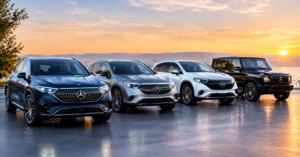

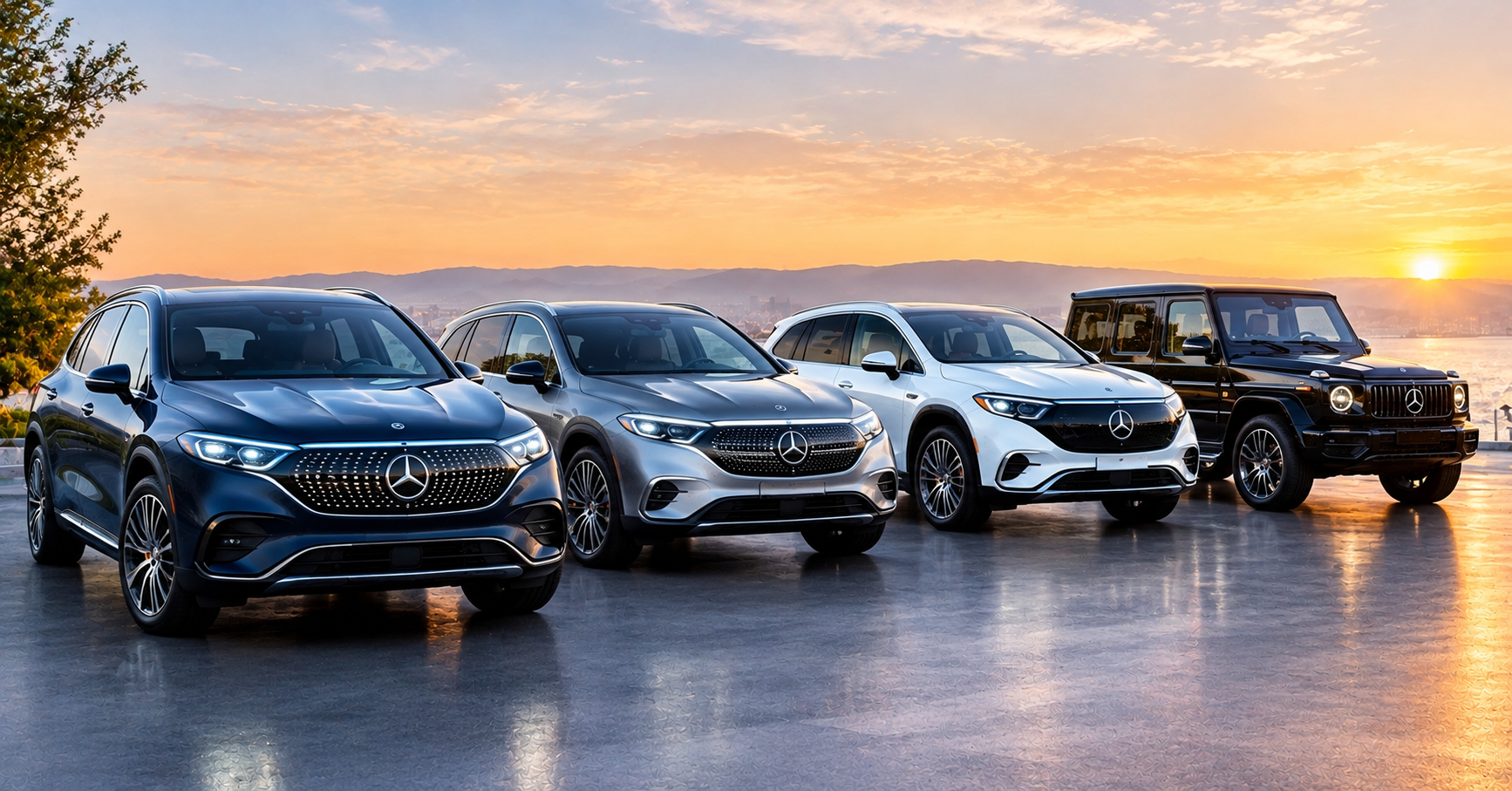
Mercedes-Benz electric SUVs offer everything from relatively attainable luxury transportation to six-figure flagships and an all-electric off-road icon. But choosing the right model in 2026 requires more than comparing horsepower or cabin technology. Buyers also need to consider driving range, price, passenger space, charging convenience, and the brand’s changing electric-vehicle lineup.
The Mercedes-Benz EQE 320+ SUV stands out as a compelling everyday luxury EV, with a starting price of $64,950 and an EPA-estimated range of 302 miles. The EQS SUV offers a more premium experience and optional three-row seating, while the electric G-Class targets buyers who prioritize off-road capability and distinctive styling. However, the planned end of production for several models after 2026 makes this model year particularly important for shoppers.
Mercedes Electric SUVs Ranked for 2026: Quick Verdict
Mercedes-Benz’s electric SUV lineup spans multiple price points and priorities. The following ranking focuses on value, range, luxury, performance, passenger space, and intended use rather than treating every vehicle as a direct competitor.
- Mercedes-Benz EQE 320+ SUV: Best overall for everyday luxury and value.
- Mercedes-Benz EQS SUV: Best for flagship comfort, space, and available third-row seating.
- Mercedes-AMG EQE SUV: Best for buyers seeking high performance in a luxury electric SUV.
- Mercedes-Benz G 580 with EQ Technology: Best for electric off-road capability and G-Class styling.
- Mercedes-Maybach EQS 680 SUV: Best for exclusive, chauffeur-oriented luxury.
These recommendations reflect the vehicles’ different missions. A family seeking a comfortable daily driver has different priorities from an enthusiast shopping for acceleration or a luxury buyer who wants an electric G-Class.
2026 Mercedes Electric SUV Price, Range, and Power Comparison
Price and EPA range provide a useful starting point when comparing electric SUVs. The figures below represent the listed configurations. Prices are starting MSRP figures before taxes, registration, dealer fees, and optional equipment unless otherwise noted.
| Model | Starting MSRP | EPA Range | Power | Seating |
|---|---|---|---|---|
| Mercedes-Benz EQE 320+ SUV | $64,950 | 302 miles | 315 hp / 416 lb-ft | 5 |
| Mercedes-Benz EQS 450+ SUV | $91,200 | 312 miles | 355 hp | 5; optional 7 |
| Mercedes-AMG EQE SUV | $97,400 | 235 miles | 617 hp / 701 lb-ft | 5 |
| Mercedes-Benz EQS 580 SUV | About $120,600 | 317 miles | 536 hp | 5; optional 7 |
| Mercedes-Benz G 580 with EQ Technology | $163,200 | 239 miles | 579 hp / 859 lb-ft | 5 |
| Mercedes-Maybach EQS 680 SUV | $181,150 | Configuration-dependent | High-output dual-motor AWD | 4 or 5 |
Specifications can vary by trim, drivetrain, equipment, and final vehicle configuration. Buyers should confirm the current manufacturer’s pricing and EPA range for the exact vehicle they intend to purchase.
What the Numbers Mean for Shoppers
The EQE 320+ SUV starts $26,250 below the EQS 450+ SUV. That difference can matter to buyers who want Mercedes-Benz luxury without paying for the flagship’s additional space and equipment.
The EQS models offer slightly more EPA-estimated range, but the improvement is relatively modest compared with the price increase. The EQS may still justify its premium for shoppers who value a more upscale cabin, additional passenger capacity, and a larger luxury-SUV experience.
The G 580 takes a different approach. Its $163,200 starting price and 239-mile EPA range make it difficult to justify on efficiency or everyday value alone. Its appeal instead rests on the G-Class design, four-motor electric drivetrain, and off-road mission.
1. Mercedes-Benz EQE 320+ SUV: Best Overall
The Mercedes-Benz EQE 320+ SUV is the most balanced choice in this lineup for buyers who want a premium electric SUV without moving into six-figure territory. Its $64,950 starting price makes it the least expensive model in this comparison, while its 302-mile EPA-estimated range is suitable for many daily commutes, errands, and longer drives.
With 315 horsepower and 416 pound-feet of torque, the EQE 320+ has the output needed for everyday driving. Its five-seat layout also makes it a straightforward choice for couples, small families, and drivers who do not need a third row.
Why the EQE 320+ SUV Ranks First
- Accessible entry price: Its starting MSRP is substantially below that of the EQS SUV.
- Useful driving range: The EPA-estimated 302 miles provides flexibility for everyday travel.
- Luxury equipment: Standard features listed in the research include dual 12.3-inch displays, a panoramic roof, and heated front seats.
- Everyday usability: Its five-seat cabin suits drivers who want a luxury crossover rather than a large, three-row SUV.
- Potential purchase discounts: Edmunds reports potential savings of up to $10,336 from MSRP, although actual offers depend on the vehicle, dealer, location, and timing.
Where the EQE 320+ Falls Short
The EQE is not the automatic choice for every luxury-EV buyer. The base 320+ uses rear-wheel drive, while shoppers who regularly drive in snowy conditions may prefer an all-wheel-drive configuration. Buyers should compare the actual equipment and price of the 4Matic model before deciding.
Its range is slightly below that of the longest-range EQS SUV configuration, and some reviewers consider its driving performance and range ordinary relative to its price. Those limitations become more relevant when shoppers can find discounts on more expensive models.
There is also a significant ownership consideration: the EQE SUV is expected to end production after the 2026 model year. That does not automatically make it a poor purchase, but it gives buyers another reason to evaluate warranty coverage, expected ownership duration, and resale prospects before signing a deal.
Who Should Buy It?
Choose the EQE 320+ SUV if you want a quiet, well-equipped luxury electric SUV for commuting, errands, and routine family use. It makes the most sense for buyers who value the balance between price, range, and premium features more than maximum horsepower or a third row.
Skip it if: You need seven seats, want the highest available performance, or would rather buy a model with a longer future in Mercedes-Benz’s lineup.
2. Mercedes-Benz EQS SUV: Best for Flagship Luxury and Space
The Mercedes-Benz EQS SUV occupies the flagship position in the brand’s electric-SUV range. It costs considerably more than the EQE, but the higher price brings a larger luxury-vehicle experience and the option of third-row seating in applicable configurations.
The EQS 450+ SUV starts at $91,200 and has an EPA-estimated range of 312 miles. The more powerful EQS 580 SUV is listed at about $120,600 and offers 536 horsepower, with a reported EPA range of 317 miles for the configuration covered in the research.
Why Consider the EQS SUV?
- Available three-row seating: An optional third row gives the EQS an advantage for families who occasionally need extra passenger capacity.
- Longer rated range: Depending on configuration, the EQS offers between 312 and 317 miles of EPA-estimated range.
- Strong acceleration: The 536-hp EQS 580 provides substantial power. The research also cites a 4.0-second 0-to-60-mph time for the related EQS 550 4Matic specification.
- Premium cabin experience: Reviewers have praised the EQS SUV for its quietness, comfort, and luxury appointments.
The Price of Moving Up to the EQS
The EQS 450+ costs $26,250 more than the EQE 320+ before options. Buyers should identify which features they will actually use rather than assuming that a higher price automatically translates into better value.
For a household that regularly carries additional passengers, the available third row may be worth the difference. Drivers who usually travel alone or with one passenger may find that the less expensive EQE covers their needs without requiring a flagship-sized budget.
The EQS also has trade-offs. Car and Driver has described the SUV as luxurious but lacking in driving excitement. Consumer Reports has praised its quiet, quick, and luxurious character while noting that Mercedes-Benz’s brand reliability affects its overall assessment.
Who Should Buy the EQS SUV?
The EQS SUV is worth considering if cabin refinement, premium equipment, and optional three-row seating are central to your purchase. It is especially relevant to buyers who want an electric alternative to a large, traditional luxury SUV.
Skip it if: You are primarily seeking the lowest purchase price or the best range-per-dollar ratio. The EQE 320+ costs much less while delivering a range figure close to the EQS 450+.
3. Mercedes-AMG EQE SUV: Best for Performance
The Mercedes-AMG EQE SUV targets drivers who want more performance than the standard EQE provides. Its reported output of 617 horsepower and 701 pound-feet of torque makes it one of the most powerful options in this comparison, but that performance comes with a higher price and a shorter EPA-estimated range.
The AMG EQE SUV starts at $97,400, compared with $64,950 for the EQE 320+. That is a difference of $32,450 before options, making the AMG a very different proposition from the value-focused model.
What Makes the AMG EQE Distinctive?
The main reason to choose the AMG is its performance-oriented powertrain. The additional output is attractive to drivers who prioritize rapid acceleration and a more sporting character while still wanting a luxury SUV.
It retains the EQE SUV’s general five-seat format, so buyers do not have to move into the larger EQS to obtain a more powerful electric Mercedes. That can be appealing to enthusiasts who prefer a midsize footprint over a full-size flagship.
The Compromises: Range and Cost
The AMG EQE SUV has a reported EPA-estimated range of 235 miles, well below the standard EQE 320+’s 302 miles. The difference matters for drivers who regularly make long trips or have limited access to convenient charging.
Its price also places it close to the starting territory of the EQS SUV. A buyer who values space, a more luxurious flagship experience, or optional third-row seating may prefer to compare both models before choosing the AMG.
Production of the EQE SUV and AMG EQE SUV is expected to end after the 2026 model year, according to the supplied research. Prospective buyers should consider how that timeline fits their ownership plans and verify the availability of the exact trim they want.
Who Should Buy the AMG EQE SUV?
Consider it if performance is a leading priority and you are comfortable paying more while accepting less driving range. It is not the logical default for every shopper, but it fills a distinct role for drivers who want a high-output electric Mercedes SUV.
Skip it if: You want the longest possible range, the lowest purchase price, or the most passenger space for your money.
4. Mercedes-Benz G 580 with EQ Technology: Best Electric Off-Roader
The Mercedes-Benz G 580 with EQ Technology is the most unconventional vehicle in this ranking. Rather than adapting a conventional crossover formula, it brings an all-electric powertrain to the recognizable G-Class, a vehicle associated with rugged styling and off-road capability.
Starting at $163,200, the G 580 is substantially more expensive than the EQE and EQS SUVs. It uses four electric motors and a 116-kWh battery, with reported output of 579 horsepower and 859 pound-feet of torque.
What Sets the Electric G-Class Apart?
- Four-motor drivetrain: The vehicle’s electric setup is central to its distinct driving and off-road character.
- Strong torque: Its 859 lb-ft rating gives it substantial available pulling force.
- Distinctive design: Buyers get the recognizable G-Class appearance rather than the smoother shape of the EQE and EQS crossovers.
- Fast charging capability: The research lists a peak DC fast-charging rate of 200 kW.
Why Its 239-Mile Range Matters
The G 580’s EPA-estimated range is 239 miles. That is lower than the EQE 320+ and both standard EQS configurations discussed here, despite the G-Class’s large battery.
Highway travel can make the difference more pronounced. Car and Driver recorded 160 miles in its 75-mph highway range test, according to the research. That result is a publication-specific test outcome, not the EPA rating, but it illustrates why real-world range can differ from official estimates.
For buyers who frequently travel between cities, the G 580 may require more charging planning than the other Mercedes electric SUVs. Its boxier shape and specialized mission make it a vehicle to choose for its unique qualities, not simply because it is electric.
Who Should Buy the G 580?
The electric G-Class makes sense for buyers who specifically want a G-Class and value its off-road character, design, and high-output electric drivetrain. It may also appeal to drivers who want a distinctive luxury vehicle and are willing to accept the price and range compromises.
Skip it if: You need maximum driving range, strong everyday value, or an electric SUV primarily intended for frequent long-distance commuting.
5. Mercedes-Maybach EQS 680 SUV: Best for Ultra-Luxury Buyers
The Mercedes-Maybach EQS 680 SUV sits at the top end of the lineup, with a reported starting price of $181,150. Its purpose is different from that of the EQE 320+: rather than maximizing affordability or range, it emphasizes exclusivity, status, and an especially luxurious passenger experience.
The research lists a four- or five-seat layout, depending on configuration. That makes the Maybach particularly relevant to buyers who value rear-seat comfort and a more exclusive cabin over maximum passenger capacity.
What Buyers Are Paying For
The Maybach badge places the EQS 680 in a different segment from the standard EQS SUV. Buyers are paying for the model’s ultra-luxury positioning and distinctive presentation rather than a dramatic improvement in everyday practicality.
The research does not provide a precise EPA range figure for the Maybach version. Shoppers should verify the official rating for the specific model year and configuration rather than assuming it matches the standard EQS SUV.
A Model-Year Decision Matters
The Maybach EQS 680 SUV is expected to leave the U.S. lineup after the 2026 model year, according to the supplied research. That makes it especially important for buyers to confirm availability and understand the implications for long-term ownership and resale.
Who should buy it? Buyers who want the most exclusive Mercedes electric-SUV experience and are comfortable with the six-figure price. For shoppers focused on value or everyday family use, the standard EQS SUV is a more sensible starting point.
What Changed in the Mercedes Electric SUV Lineup for 2026?
The 2026 model year is an important transition period for Mercedes-Benz’s electric vehicles in the United States. Several models returned to the market, naming conventions changed, and multiple vehicles are expected to leave production after this model year.
The EQE SUV Gets New Model Names
The previous EQE 350+ and EQE 350 4Matic names have been replaced by EQE 320+ and EQE 320 4Matic, respectively, according to the supplied research. The lower numerical badges do not mean the new versions are less powerful; the EQE 320+ is listed at 315 horsepower.
For used-car shoppers and buyers comparing listings, this change is worth remembering. A model with a lower badge number is not necessarily the older or less powerful version, so compare the model year and specifications directly.
The EQB Is No Longer Part of the 2026 Lineup
The compact EQB electric SUV was discontinued for 2026, according to the research. A future electric successor may arrive with a next-generation model, but shoppers should not treat that possibility as a confirmed release schedule.
The EQE SUV Family Is Approaching the End of Production
The EQE SUV and AMG EQE SUV are expected to end production after the 2026 model year, with a replacement anticipated for 2027. That makes current inventory, pricing, and the timing of any replacement important considerations.
Discontinuation does not mean a vehicle immediately loses its warranty or becomes unsupported. However, buyers should ask a dealer about warranty terms, service arrangements, parts availability, and any model-specific details that could affect their ownership experience.
The Maybach EQS 680 SUV Is Also Being Dropped
The Maybach EQS 680 SUV is expected to leave the U.S. lineup after 2026 as well. Buyers considering this model should confirm availability and whether the specific configuration they want can still be ordered or sourced from dealer inventory.
Which Mercedes Electric SUV Has the Longest Range?
Based on the figures in the research, the EQS 580 SUV has the highest listed EPA-estimated range at 317 miles. The EQS 450+ follows at 312 miles, while the EQE 320+ is rated at 302 miles.
- EQS 580 SUV: 317 miles, according to the supplied configuration data.
- EQS 450+ SUV: 312 miles.
- EQE 320+ SUV: 302 miles.
- G 580 with EQ Technology: 239 miles.
- AMG EQE SUV: 235 miles.
Range alone should not determine the purchase. The EQS 580 offers the longest listed range, but it also costs considerably more than the EQE 320+. For a driver whose daily travel is well within the EQE’s range, the extra rated miles may not justify the price difference.
It is also important to separate EPA estimates from real-world driving. Speed, temperature, elevation, climate-control use, wheel and tire choices, passenger load, and driving style can all affect how far an EV travels on a charge. Drivers who regularly use highways should look for independent highway range tests as well as official ratings.
Charging and Ownership: What Buyers Should Consider
Electric-SUV ownership involves more than comparing the price on the window sticker. Charging access, electricity costs, insurance, depreciation, tires, financing, and maintenance can all affect the total cost of ownership.
Home Charging Can Make Daily Use Easier
Drivers with a suitable home-charging setup can recharge overnight and begin many days with a full battery. This can reduce the need to visit public charging stations for routine driving.
Before buying, check whether your home has an appropriate electrical setup, whether installation work is needed, and what charging equipment is included or available for the exact vehicle. Renters and apartment residents should investigate charging access at their residence before choosing an EV.
Plan for Road-Trip Charging
For longer trips, compare the routes you actually drive with the available fast-charging network. Peak charging power is only one part of the equation: charging speed also depends on the battery’s state of charge, temperature, charger capability, and the vehicle’s charging curve.
The G 580’s 239-mile EPA estimate and shorter independent highway result make route planning especially relevant. Buyers considering the EQE or EQS should still account for weather and highway speeds rather than treating EPA range as a guaranteed distance between charging stops.
Compare the Full Ownership Cost
A discounted purchase price can make a luxury EV more attractive, but the final financial picture depends on more than the initial deal. Compare:
- Final negotiated purchase price, including dealer fees and options.
- Insurance premiums for the exact trim.
- Home electricity rates and public charging costs.
- Expected depreciation and future resale demand.
- Tire replacement costs and maintenance needs.
- Financing terms and any incentives for which you qualify.
- Warranty coverage and local service availability.
Because several Mercedes electric SUVs are approaching the end of their production runs, it is particularly useful to compare current inventory discounts with the long-term ownership plan. A large discount may be appealing, but it should be weighed against the vehicle’s range, equipment, warranty, and likely resale considerations.
How Mercedes Electric SUVs Compare With Rivals
Mercedes-Benz is not the only brand selling premium electric SUVs in the United States. Buyers may also consider the Tesla Model X, BMW iX, Rivian R1S, and Volvo EX90. These vehicles differ in pricing, interior design, passenger capacity, performance, charging experience, and driving character.
Mercedes EQE SUV vs. Tesla Model X
The EQE 320+ starts at $64,950 and has a listed EPA range of 302 miles. The Tesla Model X occupies a higher price tier and is known for its performance-oriented approach and distinctive Falcon Wing rear doors. Shoppers should compare exact model years and trims, since price and range vary by configuration.
The choice often comes down to priorities: the Mercedes emphasizes a traditional luxury-brand experience, while Tesla buyers may place greater weight on software, the charging ecosystem, and performance options.
Mercedes EQS SUV vs. BMW iX
The EQS SUV focuses on a flagship luxury experience and offers optional third-row seating in applicable configurations. Buyers cross-shopping the BMW iX should evaluate each vehicle’s cabin layout, driving range, charging capabilities, comfort, and actual transaction price rather than assuming one brand is automatically superior.
Mercedes EQS SUV vs. Rivian R1S
The Rivian R1S is a relevant alternative for buyers who want an electric SUV with three-row seating and an adventure-oriented identity. The EQS SUV takes a more traditional luxury approach. Seating needs, road-trip habits, charging access, and the type of driving the vehicle will regularly perform should guide the comparison.
Mercedes EQS SUV vs. Volvo EX90
The Volvo EX90 is another three-row electric-SUV alternative. Shoppers should compare the available seating configurations, safety and driver-assistance equipment, cargo needs, charging specifications, and price of similarly equipped vehicles before making a decision.
Which Mercedes Electric SUV Should You Buy?
The best Mercedes electric SUV for 2026 depends on what you expect from your vehicle and how much you are prepared to spend.
- For most everyday buyers: Start with the EQE 320+. It offers the lowest listed starting price and a 302-mile EPA-estimated range.
- For families who need more space: Compare the EQS SUV with its optional third-row seating and premium cabin.
- For performance enthusiasts: The AMG EQE SUV offers 617 horsepower and 701 lb-ft of torque, but its range is lower and its price is much higher than the standard EQE.
- For off-road-focused luxury buyers: The G 580 with EQ Technology offers a distinctive four-motor electric G-Class experience, at a substantial price and with a 239-mile EPA range.
- For ultra-luxury shoppers: The Maybach EQS 680 SUV targets exclusivity and rear-seat luxury, but its price and planned discontinuation make careful consideration essential.
Before committing to a purchase, test-drive the exact trim, check the official window sticker, confirm the EPA range, and obtain a written quote. Ask the dealer about current inventory, incentives, warranty coverage, charging equipment, and the implications of the model’s production timeline.
For shoppers who want a balanced mix of luxury, usable range, and a lower starting price, the EQE 320+ is the logical place to begin. The EQS SUV is worth the additional cost when its space and flagship features address specific needs. The AMG EQE, electric G-Class, and Maybach serve more specialized buyers whose priorities justify their respective compromises.
Frequently Asked Questions
Which Mercedes electric SUV is the best overall in 2026?
The Mercedes-Benz EQE 320+ SUV is the best overall choice for many buyers because it starts at $64,950, offers an EPA-estimated 302 miles of range, and provides a five-seat luxury cabin. Its planned end of production after 2026 is an important factor to consider.
Which Mercedes electric SUV has the longest range?
Based on the supplied figures, the Mercedes-Benz EQS 580 SUV has the longest listed range at 317 miles. The EQS 450+ is rated at 312 miles, and the EQE 320+ at 302 miles. Always verify the EPA rating for the exact trim and configuration.
How much does the 2026 Mercedes EQE SUV cost?
The 2026 Mercedes-Benz EQE 320+ SUV has a listed starting MSRP of $64,950. The AMG EQE SUV starts at $97,400. Options, dealer fees, taxes, and registration can increase the final purchase price.
Is the Mercedes EQE SUV being discontinued?
According to the supplied research, the EQE SUV and AMG EQE SUV are expected to end production after the 2026 model year, with a replacement anticipated for 2027. Buyers should confirm current availability and future-model details with Mercedes-Benz.
Is the Mercedes EQB available for 2026?
No. The supplied research reports that the compact Mercedes EQB was discontinued for the 2026 model year. A future electric successor has been discussed, but buyers should wait for official details before relying on a launch date or specification.
Does the Mercedes EQS SUV have a third row?
Yes. The EQS SUV offers an optional third row in applicable configurations. Seating availability can vary by trim and equipment, so confirm the layout of the specific vehicle before buying.
Is the electric Mercedes G-Class worth its price?
The G 580 with EQ Technology is most relevant to buyers who specifically want an electric G-Class, its distinctive design, and its off-road-oriented drivetrain. With a $163,200 starting price and a 239-mile EPA-estimated range, it is less compelling for shoppers who prioritize value or long-distance efficiency.
Is the Mercedes-Maybach EQS 680 SUV being discontinued?
The supplied research reports that the Mercedes-Maybach EQS 680 SUV is expected to leave the U.S. lineup after the 2026 model year. Prospective buyers should confirm remaining inventory and ordering availability with a dealer.
What should I check before buying a Mercedes electric SUV?
Compare the final purchase price, EPA range, charging access, seating configuration, insurance costs, warranty coverage, expected depreciation, and service availability. For models approaching the end of production, also ask about current inventory and the manufacturer’s plans for replacement models.