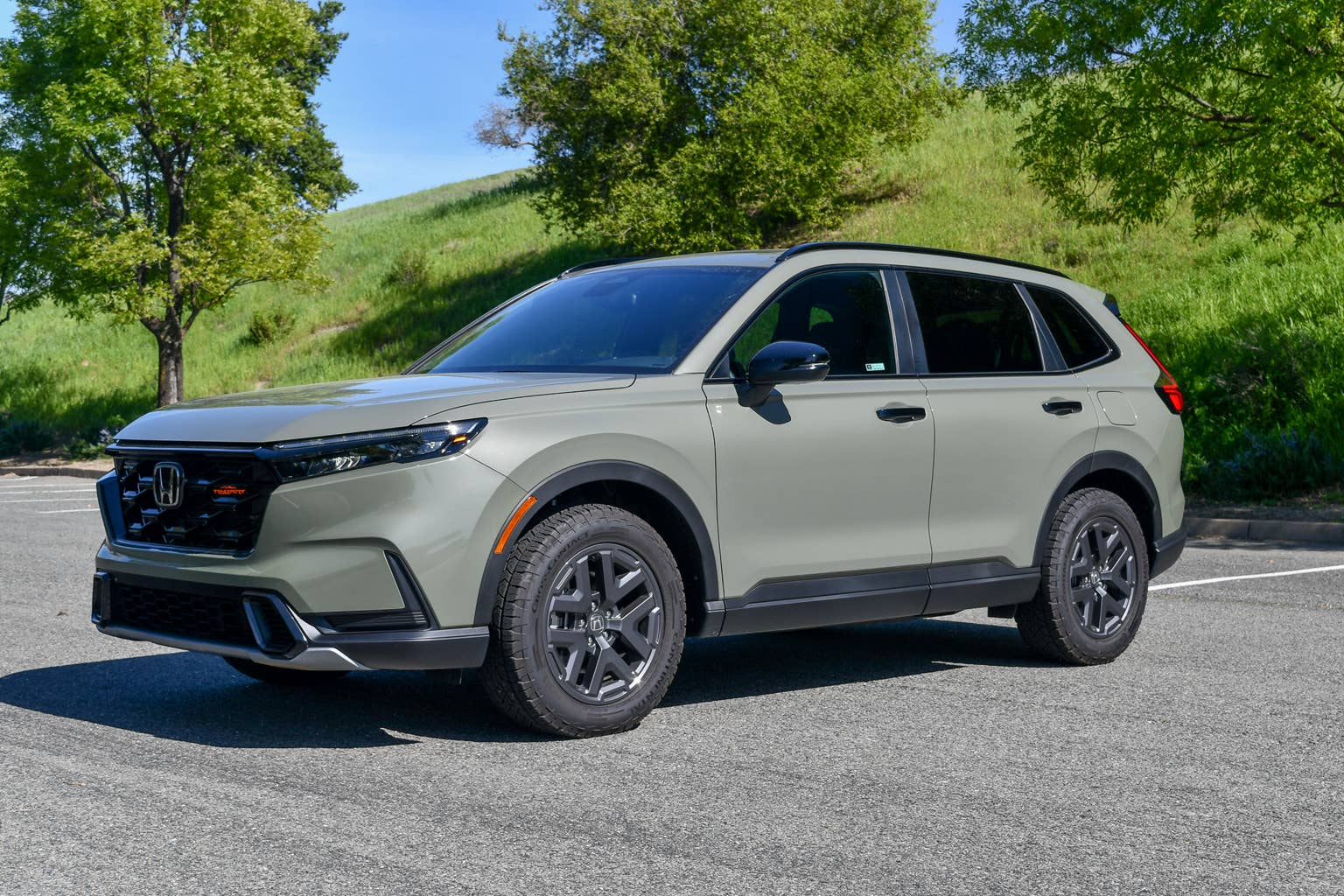
Honda is recalling nearly 5,000 vehicles in the United States because defective tire repair kit components were mistakenly distributed as replacement parts, leaving some vehicles with a safety issue that had already been addressed in an earlier recall. The latest campaign, identified by the National Highway Traffic Safety Administration (NHTSA) as 26V663, affects certain CR-V Hybrid and Accord Hybrid models from 2023 through 2026, along with one 2025 CR-V Fuel Cell EV.
The problem involves a tire repair kit nozzle that can allow pressure to build inside the sealant bottle under certain conditions. If the bottle’s pressure relief valve fails, excessive pressure could cause the cap to detach, increasing the risk of injury.
Which Honda Vehicles Are Included in the Recall?
The recall covers 4,804 vehicles across three electrified Honda models. The affected population includes:
- 2025 Honda CR-V Fuel Cell EV: One vehicle powered by hydrogen.
- 2023–2026 Honda CR-V Hybrid: 2,745 vehicles.
- 2023–2026 Honda Accord Hybrid: 2,058 vehicles.
Earlier this year, Honda recalled more than one million vehicles because of defective tire repair kits that could injure users. The original remedy involved replacing either the tire repair kit nozzle or the sealant bottle.
However, some vehicles that had already received repairs are now included in another recall because defective components were mistakenly supplied as replacements.
How the Defective Tire Repair Kits Could Cause Injuries
The safety concern centers on a one-way valve inside the tire repair kit nozzle. If the nozzle is not properly connected to the tire valve, pressure can build inside the sealant bottle.
If the bottle’s pressure relief valve fails to function, the resulting pressure could force the cap to detach. Honda’s recall identifies this as a potential injury risk.
All vehicles covered by the latest campaign are electrified models. Rather than involving a problem with their powertrains, the recall concerns the tire repair kits supplied with these vehicles.
Why These Honda Models Use Tire Repair Kits
The affected vehicles come from the factory with tire repair kits instead of the spare tires available in conventional gasoline-powered models. Possible explanations include the need for additional space for electrified powertrain components, such as batteries, and the weight savings provided by lighter repair kits.
The recall is not intended to address a newly identified design flaw. Instead, the issue stems from a supplier mix-up involving defective components that should not have been distributed as replacement parts.
What Honda Will Do to Fix the Problem
Affected owners will need to return to a dealership for an inspection of the tire repair kit nozzle. The nozzle will be replaced if necessary.
Honda estimates that only 1% of the vehicles included in the recall population have the defect. The company is not aware of any warranty claims or reports of injuries or deaths related to this latest issue.
According to the safety campaign, the supplier failed to implement adequate change-point management. As a result, older defective parts were mixed with redesigned components and mistakenly shipped as replacement parts.
Honda Recall Notifications Begin November 16, 2026
Honda will begin notifying affected vehicle owners on November 16, 2026. Owners whose vehicles fall within the recall population will need to follow the inspection and replacement procedure outlined in the campaign.
How Honda’s Recall Total Compares With Other Automakers
Honda has issued 14 recalls this year, including campaigns involving motorcycles. One of its larger recalls affected more than 880,000 Pilot, Ridgeline, Passport, and Acura MDX vehicles because of a rear suspension defect.
The automaker’s recall total remains below those of several competitors. Toyota has issued 25 recalls this year, while Hyundai has issued 19. Ford leads the list with 78 recalls, followed by Stellantis and General Motors, with 38 and 25 recalls, respectively.
The latest tire repair kit campaign adds another recall to Honda’s 2026 total, requiring inspections and, where necessary, replacement nozzles for affected CR-V Hybrid, Accord Hybrid, and CR-V Fuel Cell EV vehicles.