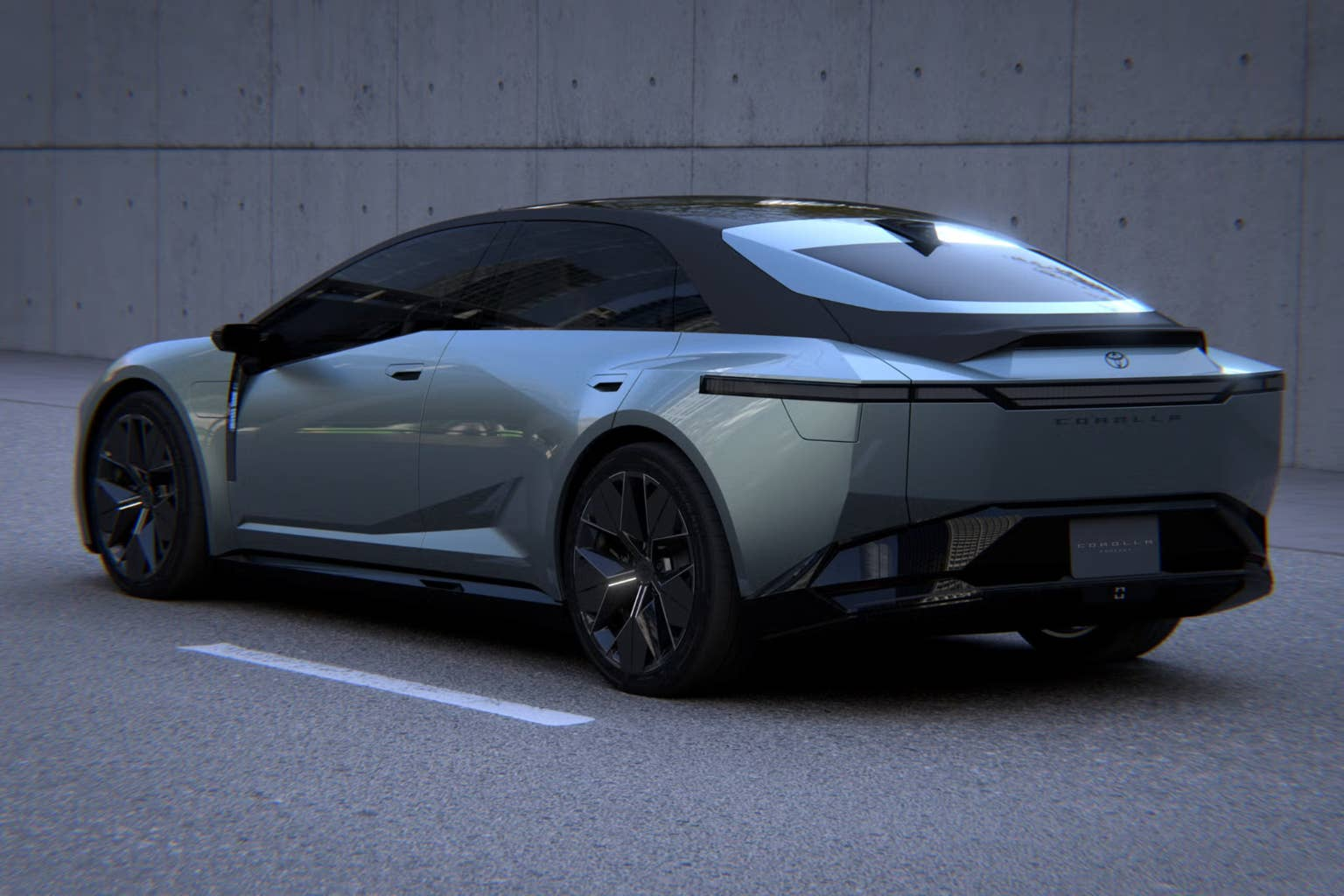
The next-generation Toyota Corolla is expected to arrive in 2027 with a different approach to vehicle electronics that could make it easier for Toyota to offer gasoline, hybrid, plug-in hybrid, and fully electric versions of the popular model. According to reports from Japan, the automaker plans to divide the Corolla’s electronic systems into four separate domains, moving away from the more centralized architectures used by Tesla and many Chinese electric vehicles.
The reported system would separate driver-assistance technology, motion control, cockpit functions, and body electronics into distinct groups, each with its own controller. While Toyota has yet to release extensive details about the next Corolla, the approach could provide greater flexibility across different powertrain configurations.
How Toyota’s Four-Domain Electronic System Works
According to Nikkei CrossTech, the next-generation Toyota Corolla will organize its electronics into four main domains: driver-assistance technology, motion control, cockpit features, and body electronics.
These categories would cover a range of vehicle functions, including crash avoidance, braking, infotainment, power windows, and headlights. Each domain would reportedly have a dedicated controller, allowing Toyota to manage and modify individual systems as needed.
The approach differs from the centralized electronic architectures associated with Tesla and many Chinese electric vehicles, which consolidate numerous functions into a smaller number of powerful computers.
Why the New Architecture Could Support Multiple Powertrains
One of the main potential advantages of Toyota’s four-domain system is flexibility. Rather than redesigning an entire electronic architecture whenever the Corolla receives a different engine or powertrain, Toyota could adjust the motion-control domain to accommodate the specific configuration.
This could allow the same basic electronic architecture to support a conventional gasoline engine, a hybrid powertrain, a plug-in hybrid system, or a fully electric setup. The approach aligns with Toyota’s decision to develop vehicles for multiple powertrain types rather than focusing exclusively on electric vehicles.
By keeping the different electronic domains separate, Toyota could also make it easier to develop different versions of the Corolla without rebuilding the vehicle’s entire electronic system for each configuration.
Potential Safety and Software Update Benefits
Separating vehicle functions into distinct domains could help prevent problems in one system from affecting another. For example, a malfunction in the infotainment system would not necessarily interfere with the brakes or driver-assistance technology.
The separation could also make it easier to identify problems within individual systems and ensure that vehicle electronics meet applicable requirements. Over-the-air software updates are another potential benefit, allowing certain vehicle functions to receive improvements after the vehicle has been purchased.
However, these benefits have not been detailed in a comprehensive official announcement from Toyota, and the reported system’s final specifications remain unconfirmed.
The Trade-Offs of Toyota’s Four-Domain Approach
The architecture could introduce additional hardware compared with more centralized electronic systems. Four separate domains may require more wiring, heavier wiring harnesses, and additional control units.
Using several powerful controllers also does not necessarily reduce hardware costs. These trade-offs could offset some of the advantages of separating the Corolla’s electronic functions, although Toyota has not provided detailed cost information for the reported system.
What to Expect From the 2027 Toyota Corolla
The next-generation Toyota Corolla is expected to arrive in 2027, with the sedan likely to launch first. The upcoming model is also expected to feature a new 1.5-liter four-cylinder engine, alongside a hybrid version.
Some reports have suggested that the hybrid Corolla could achieve 70 mpg, but Toyota has not confirmed that figure. The fuel-economy claim should therefore be treated as unverified rather than an official specification.
Toyota has not yet released many details about the next-generation model, and its specifications and launch timing could still change.
Toyota’s Next Corolla Remains Under Wraps
The reported four-domain electronic architecture could give Toyota a flexible foundation for the next Corolla, allowing the automaker to accommodate multiple powertrain types while keeping key vehicle functions separate. However, the system’s final configuration, costs, and implementation details remain unclear as the expected 2027 launch approaches.