Elon Musk has offered a closer look at the next-generation Tesla Roadster, unveiling ambitious performance claims, rocket-inspired thrusters and an unusual aerodynamic system as the electric sports car moves toward a targeted 2028 production date. First announced in 2017, the Roadster has spent nearly nine years awaiting its next major milestone, with shifting timelines and limited updates leaving prospective buyers uncertain about when the vehicle will reach customers.
The latest presentation showcased technology that goes well beyond conventional sports-car engineering, including a system designed to generate enough suction to hold the vehicle upside down. Yet despite the dramatic demonstrations, Tesla has not provided a complete set of production specifications, leaving important questions about the car’s final performance, practicality and availability unanswered.
Musk described the Roadster as a vehicle that would be “better than a James Bond vehicle.” He also joked that the demonstration would probably work, adding that if it did not, the audience would be at a safe distance.
Tesla Roadster Performance Claims Reach New Heights
When Tesla first announced the Roadster, the company outlined a series of ambitious performance targets. The original specifications included a tri-motor powertrain producing over 7,300 lb-ft of torque, acceleration from 0 to 60 mph in 1.9 seconds and a top speed exceeding 250 mph.
Tesla also promised a 200-kWh battery and a claimed driving range of 620 miles, figures that would place the electric sports car among the most ambitious performance vehicles on paper.
The latest presentation raised the acceleration target even further. Musk now claims the Roadster can reach 60 mph in one second, potentially going below that mark. During the demonstration, a figure of 0.81 seconds was mentioned, but the livestream did not establish how the run was timed or verified.
Tesla also cited a top speed of 230 mph, with Musk expressing hope that the car could eventually go faster. That figure falls short of the original promise of more than 250 mph, and the company did not release a complete updated specification sheet explaining the difference.
Rocket Thrusters and a Fan System Set the Roadster Apart
Beyond acceleration, the next-generation Roadster’s unusual hardware could play a central role in its performance. Tesla says its multi-mode fan system draws air from beneath the vehicle to generate downforce, including at very low speeds.
The system is designed to work alongside ground sealing and active aerodynamics to improve traction and cornering. Its approach recalls the technology used in the McMurtry Spéirling, which is known for its fan-assisted downforce concept.
The Roadster also features cold-gas thrusters that use electrically operated actuators to make rapid adjustments intended to stabilize the car during flight. Tesla’s presentation included an airborne stunt, although the demonstration does not establish what the production vehicle will ultimately be capable of delivering.
Together, the fan system and thrusters represent some of the most distinctive elements of Tesla’s latest Roadster showcase. However, the company has yet to provide a comprehensive explanation of how the systems will operate in the final production car.
New Roadster Design Features Hidden Aerodynamics
The next-generation Roadster retains a sleek, low-slung sports-car profile, with two seats and sharply sculpted bodywork. Its appearance differs substantially from the concept Tesla showed in 2017.
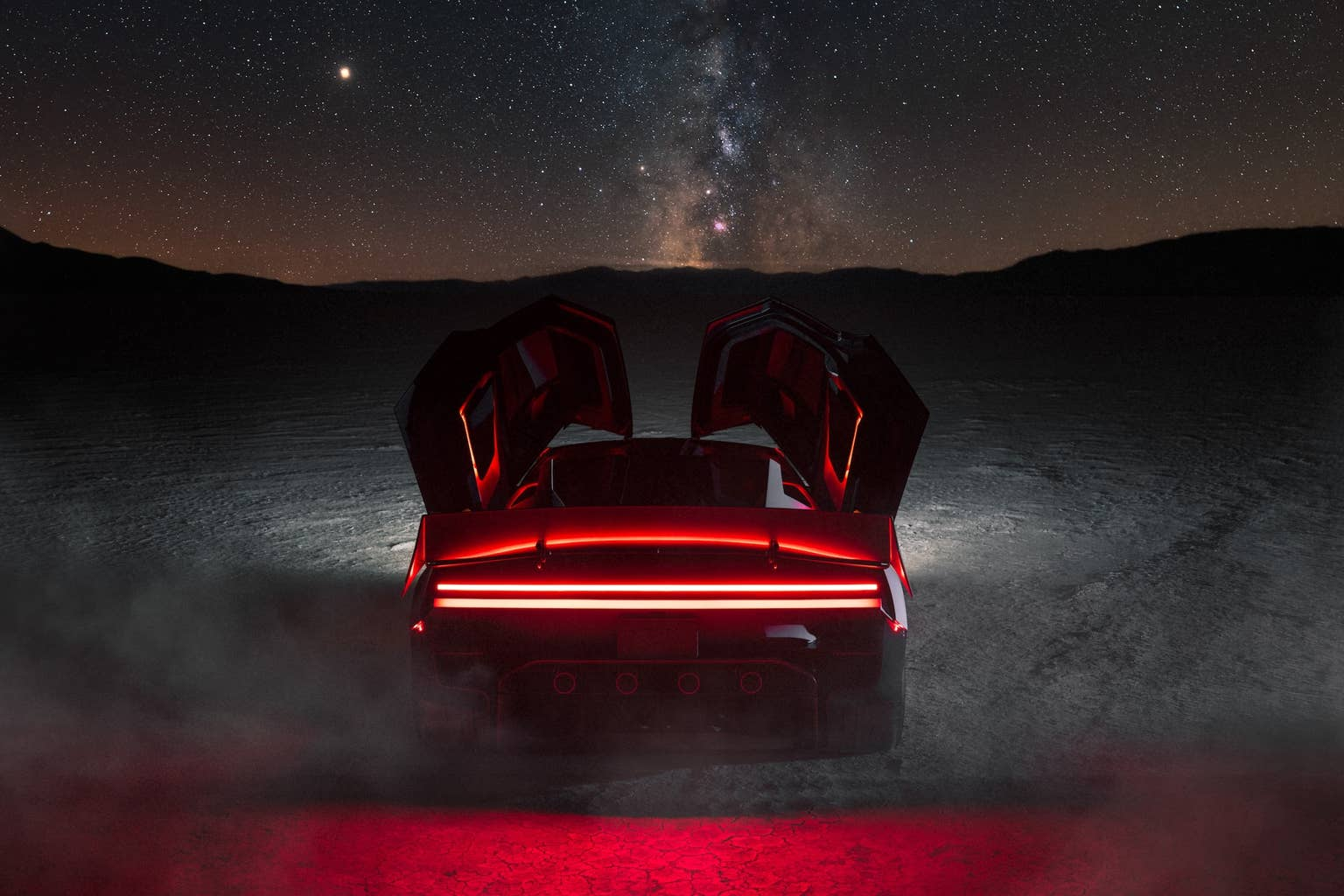
Tesla describes the design approach as hidden aerodynamics, with concealed headlights, a full-width rear taillight and flush-mounted aerodynamic elements integrated into the body. Lightweight wheels with thin spokes contribute to the exterior design, while an automatically adjusting rear wing is intended to help manage aerodynamic performance.
The company also highlighted its Ano White finish, which Tesla says draws inspiration from aerospace technology and offers specialized protective properties.
Interior Details Remain Limited
Tesla has disclosed relatively little about the Roadster’s interior. The presentation identified a steer-by-wire system, which replaces a conventional mechanical steering connection with electronic controls.
Musk and Tesla have positioned the Roadster as a driver’s car rather than an autonomous vehicle, indicating that manual driving will remain central to its purpose.
According to the livestream, the fan system and thrusters are positioned at the rear of the vehicle. Their integration is a defining feature of the Roadster, but Tesla has not yet provided a comprehensive breakdown of the production interior, controls or standard equipment.
Tesla Targets 2028 Production After Years of Delays
Whether the Roadster will finally reach customers remains the central question surrounding the project. Musk said production is planned for 2028 “for real,” emphasizing that the timeline is now serious.
However, the production date remains a target rather than a confirmed delivery schedule. The Roadster was first announced in 2017, and the latest presentation did not establish a firm timetable for customer deliveries.
Tesla’s website also teases additional SpaceX-related features, describing the Roadster as a combination of car and rocket technology. The company suggests these additions could further enhance the vehicle’s performance, but the available details do not establish exactly what the package will include or when it will be available.
Pricing and complete production specifications were not established in the presentation notes. As a result, prospective buyers still lack key information about the final vehicle, including its confirmed capabilities and the details of its additional technology.
The latest reveal gives the next-generation Tesla Roadster a more tangible form after years of anticipation, but major questions remain unresolved. With production targeted for 2028, Tesla must still turn its ambitious performance claims and experimental features into a production vehicle capable of reaching customers.