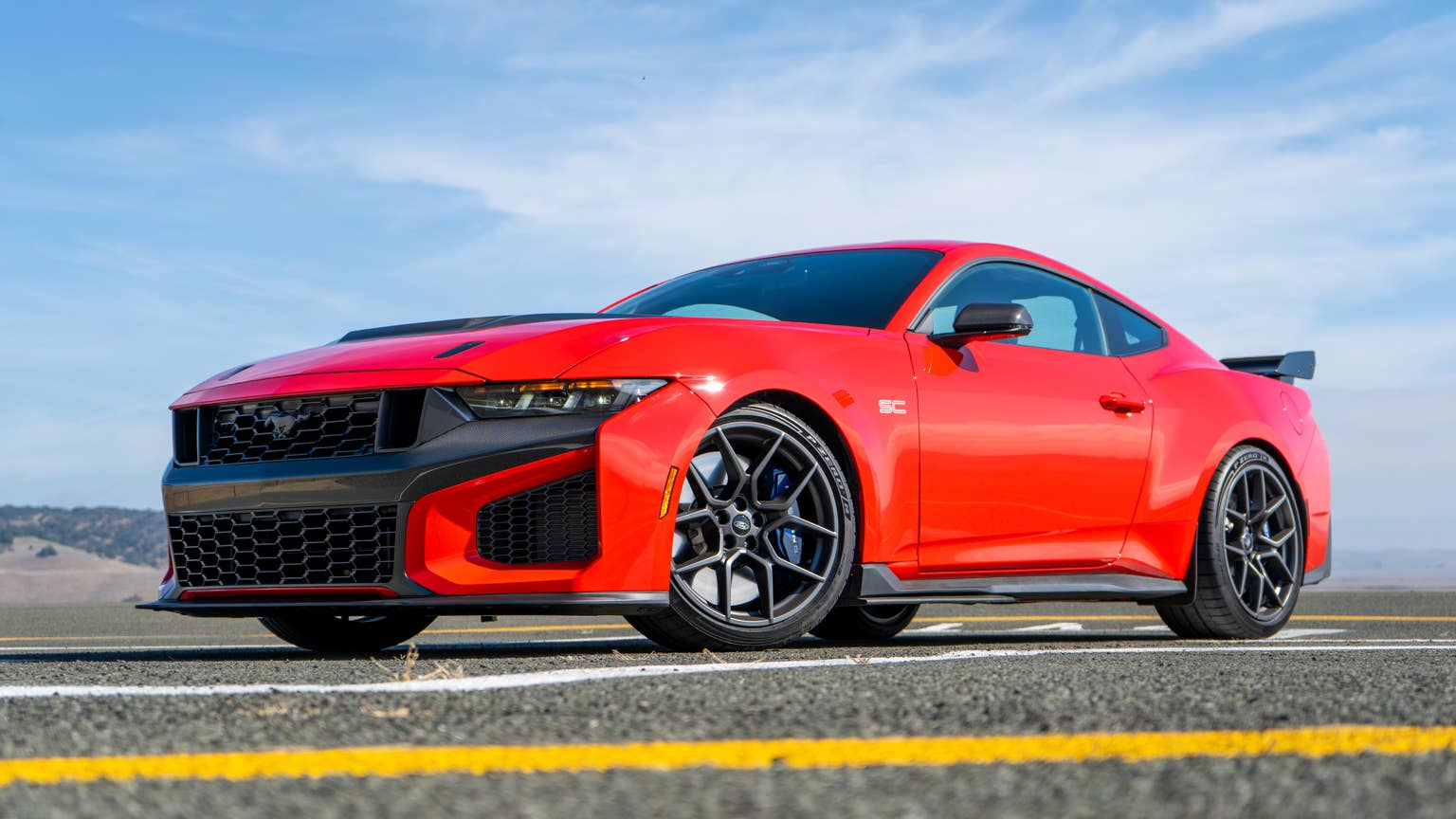
Ford considered calling its supercharged Mustang the Dark Horse Boss before settling on the Mustang Dark Horse SC, according to a report from Ford Authority. The automaker even filed a trademark for the alternative name before changing direction, reportedly because combining “Dark Horse” and “Boss” did not sound quite right.
The decision leaves the new high-performance Mustang with a name that highlights its place in the Dark Horse lineup and signals its supercharged powertrain. It also avoids reviving a historic Mustang badge or using the Shelby GT500 name, which previous models established as a hallmark of supercharged V8 performance.
Why Ford Considered the Dark Horse Boss Name
According to Ford Authority, sources familiar with the decision confirmed that Ford initially considered the Mustang Dark Horse Boss name before abandoning the idea. The company went as far as filing a trademark, but the combination of the two familiar Mustang terms reportedly did not deliver the result Ford wanted.
The Boss name carries considerable weight in Mustang history. Ford introduced the Boss 302 and Boss 429 in 1969, creating performance-focused versions of the pony car for enthusiasts seeking more than the standard Mustang offered.
Although both names have strong ties to the Mustang brand, pairing Boss with Dark Horse apparently created an awkward-sounding name. Ford ultimately chose to keep Dark Horse as the foundation and add SC to identify the supercharged model.
The Boss Name Has Deep Mustang Roots
The original Boss 302 and Boss 429 played different roles in Ford’s performance lineup. The Boss 302 was developed for Trans-Am racing, while the Boss 429 was created to help Ford get its 429-cubic-inch V8 into NASCAR.
Both models became important parts of the Mustang’s early performance history. The Boss 302 name later returned for the 2012 and 2013 model years, pairing a high-revving 5.0-liter V8 with upgraded suspension and track-focused components.
That version served as a more performance-oriented counterpart to the Mustang GT, appealing to drivers who wanted greater track capability. The distinction between the GT and a more focused performance model remains relevant to the positioning of the Dark Horse SC.
Given the Boss name’s history, applying it to a supercharged Mustang could have made sense. However, Dark Horse is establishing its own identity, and adding another historic name could have complicated the model’s branding rather than strengthened it.
Why the Mustang Dark Horse SC Name Makes Sense
The Dark Horse SC name keeps the vehicle connected to the existing Mustang lineup while making its supercharged configuration clear. It also avoids suggesting that Ford is bringing back the Boss name for a new model.
Rather than combining two established Mustang names, Ford has retained Dark Horse and added SC as a straightforward reference to the car’s supercharger. The approach gives the model a distinct identity without directly reviving a previous performance badge.
Ford has also positioned the Dark Horse SC within the Ford Racing camp, connecting the car to the company’s own motorsport efforts rather than relying on the Shelby name.
Why Ford Didn’t Revive the Shelby GT500
Another question surrounding the Dark Horse SC is why Ford did not simply bring back the Shelby GT500 name. Previous GT500 models built a strong reputation by combining supercharged V8 engines with serious performance, making the badge an obvious candidate for another high-output Mustang.
According to the report, licensing costs may have played a role in Ford’s decision. Using the Shelby name reportedly costs the automaker millions of dollars in licensing fees, and dropping it gives Ford more control over its performance lineup while avoiding those expenses.
Ford’s stated positioning for the Dark Horse SC instead emphasizes its connection to Ford Racing and the company’s own motorsport identity. That approach allows the automaker to distinguish the car without leaning on Shelby’s legacy.
Ford Settles on Dark Horse SC
Ford’s decision leaves the Mustang Dark Horse SC with a name that identifies it as part of the Dark Horse family and highlights its supercharged configuration. The automaker considered the Dark Horse Boss name and filed a trademark before ultimately abandoning the idea, according to Ford Authority.
Although the Boss and Shelby GT500 names both have established places in Mustang performance history, Ford has chosen not to use either for this model. The Dark Horse SC name reflects the company’s decision to build on the Dark Horse identity while keeping the car connected to Ford Racing.