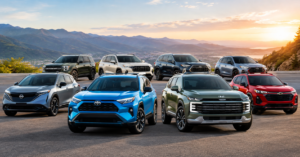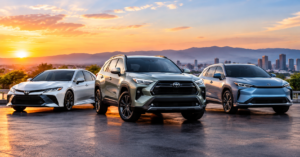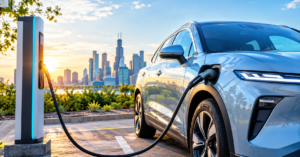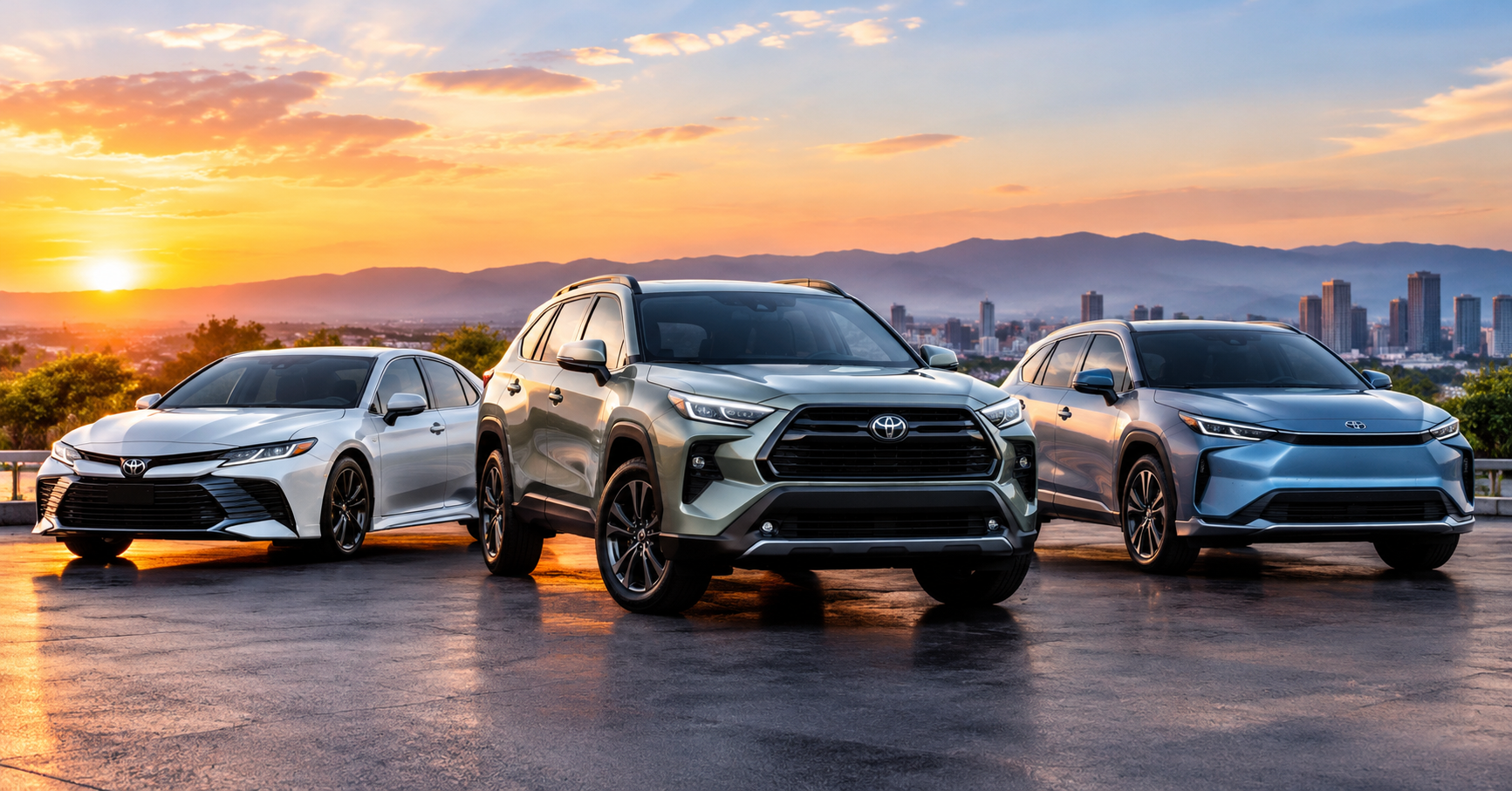
Toyota news 2026 highlights a major shift in how the automaker is building its lineup for American drivers. The redesigned RAV4 is available exclusively with hybrid or plug-in hybrid power, the bZ electric SUV offers more range and additional configurations, and electrified vehicles account for a growing share of Toyota and Lexus sales in the United States. At the same time, several recalls make it important for shoppers to check vehicle identification numbers before buying or taking delivery of a new model.
The biggest takeaway from Toyota news 2026 is that the company is expanding electrification without requiring every customer to switch to a fully electric vehicle. Hybrids and plug-in hybrids remain central to its strategy, while the bZ lineup gives buyers an all-electric alternative. Here are seven major developments and what they mean if you are shopping for a Toyota in the United States.
1. The 2026 Toyota RAV4 Goes Hybrid-Only
The sixth-generation 2026 Toyota RAV4 is one of the most significant developments in Toyota news 2026. For the U.S. market, the compact SUV is offered exclusively with electrified powertrains: a conventional hybrid or a plug-in hybrid. Buyers looking for a traditional gasoline-only RAV4 will need to consider a different model or model year.
The change matters because the RAV4 has long appealed to drivers who want the higher seating position, cargo flexibility, and everyday practicality of an SUV without moving to a larger vehicle. By making electrification standard across the RAV4 lineup, Toyota is turning hybrid technology into the default choice rather than an upgrade reserved for selected trims.
Starting price and arrival timing
The 2026 RAV4 Hybrid with front-wheel drive starts at $31,900 MSRP, excluding dealer processing and handling. Initial U.S. dealership arrivals began in December 2025, bringing the new generation into the 2026 model-year market.
The starting MSRP is an important reference point, but it does not necessarily represent the final price a buyer will pay. Destination charges, dealer fees, optional equipment, taxes, and registration costs can increase the total. Popular trims may also be priced differently depending on local inventory and dealer demand.
Three design families and more trim choices
Toyota has organized the new RAV4 lineup around three design families: Core, Rugged, and Sport. The approach gives shoppers a clearer way to compare versions based on their intended use and preferred appearance.
- Core: Designed for mainstream buyers who want an everyday compact SUV.
- Rugged: Aimed at drivers who prefer an adventure-oriented look and equipment.
- Sport: Focused on a more athletic appearance and driving-oriented presentation.
The lineup includes the new Woodland grade and the first RAV4 GR Sport offered in the U.S. market. These additions broaden the range of choices beyond the conventional family-SUV formula.
What buyers should consider
The move to hybrid-only powertrains makes it easier for shoppers to choose an electrified RAV4 without paying for a fully electric vehicle or planning around charging infrastructure. A conventional hybrid combines a gasoline engine with electric-motor assistance and a battery that is recharged through the vehicle’s operating system, including regenerative braking. Drivers do not need to plug it in.
A plug-in hybrid, by contrast, has a larger battery that can be charged externally and is designed to provide an electric-driving component before relying more heavily on its gasoline engine. Its usefulness depends partly on charging access and driving habits.
Before choosing between the two, buyers should compare the exact trim’s price, fuel-economy ratings, equipment, and warranty terms. A plug-in hybrid may be attractive for short daily trips when regular charging is available, while a conventional hybrid may be more convenient for drivers who cannot charge at home or work.
2. The 2026 Toyota bZ Gains More Range and a New Woodland Model
The 2026 Toyota bZ is another major part of Toyota news 2026, particularly for shoppers who want to move to an all-electric SUV. Toyota has expanded the model’s configurations to provide more choice in battery capacity, drivetrain, range, and output.
The bZ starts at $34,900 MSRP for the XLE front-wheel-drive model, excluding destination and handling charges. However, the entry-level version is not the only configuration worth considering. Buyers who prioritize driving range may want to compare it with the XLE FWD Plus, while drivers who need all-wheel drive have additional options.
2026 Toyota bZ pricing and specifications
| Model | Starting MSRP | Reported range or output |
|---|---|---|
| bZ XLE FWD | $34,900 | 236 miles; 168 horsepower |
| bZ XLE FWD Plus | $37,900 | Up to 314 miles; 221 horsepower |
| bZ XLE AWD | $39,900 | 288 miles; 338 horsepower |
| bZ Woodland AWD | $45,300 | Up to 281 miles; 375 horsepower |
Prices exclude applicable destination, handling, dealer, tax, and registration charges. Range figures are configuration-specific estimates, and actual driving range can vary with temperature, speed, terrain, climate-control use, tire selection, and driving style.
The 314-mile configuration stands out
The bZ XLE FWD Plus uses a 74.7-kWh battery and is projected to deliver up to 314 miles of range. That figure makes the configuration particularly relevant to shoppers who want an electric SUV for commuting and longer trips but are concerned about how often they will need to charge.
Range is only one part of the ownership calculation. Buyers should also consider charging speed, access to public charging, home-charging installation costs, and the amount of time typically spent driving each day. A vehicle with more range may reduce charging stops, but it may not be worth the added purchase price for someone whose daily travel is short and predictable.
The bZ Woodland brings more power and rugged styling
The 2026 bZ Woodland adds a more adventure-focused option to Toyota’s all-electric range. It features all-wheel drive, 375 horsepower, and standard X-MODE, along with an EPA-estimated range of up to 281 miles. With optional all-terrain tires, the estimated range falls to 260 miles.
The Woodland starts at $45,300 MSRP before applicable fees. Its higher output and all-wheel-drive setup may appeal to buyers who want stronger performance and additional traction-oriented features. However, shoppers should not treat rugged styling or all-wheel drive as proof that a vehicle is suitable for every off-road environment. Tire choice, ground clearance, vehicle dimensions, and the manufacturer’s stated operating limits remain important.
For buyers comparing the bZ with a RAV4 Hybrid, the core distinction is straightforward: the bZ operates entirely on electricity, while the RAV4 Hybrid uses gasoline alongside electric assistance. The right choice depends on charging access, driving patterns, upfront budget, and whether a fully electric ownership experience suits the household.
3. Hybrids Become a Bigger Part of Toyota’s U.S. Business
Toyota news 2026 is not just about individual models. Sales figures show that electrified vehicles have become a central part of the company’s business in the United States.
Toyota Motor North America reported 117,215 electrified vehicles sold in September 2026, a year-over-year increase of 37.8%. Electrified vehicles represented 58.2% of the company’s monthly sales volume. For the third quarter, electrified sales totaled 363,367, up 28.5% from the same period a year earlier and accounting for 57.4% of Toyota and Lexus U.S. sales.
These figures show that electrification is no longer a small corner of Toyota’s lineup. Conventional hybrids, plug-in hybrids, and battery-electric vehicles now account for a substantial portion of its sales mix.
Why conventional hybrids remain important
Hybrid vehicles offer a middle ground for drivers who want to reduce gasoline use but do not want to plan every trip around charging. They can be particularly appealing to people who park on the street, rent an apartment without charging access, regularly travel long distances, or prefer the familiarity of a gasoline-powered vehicle.
That flexibility helps explain why Toyota continues to emphasize hybrids across high-volume vehicles such as the Camry, RAV4, Sienna, Highlander, and Tacoma. The available powertrain varies by model, so buyers should check the specific vehicle’s configuration rather than assume every Toyota offers the same hybrid system.
What stronger demand means for shoppers
Higher sales do not automatically mean every Toyota will be difficult to find, and national figures cannot predict the inventory at a particular dealership. However, strong demand for popular models can influence the availability of certain trims, the amount of time a buyer waits for a preferred configuration, and the discounts a dealer is willing to offer.
Shoppers should compare the actual selling price of multiple vehicles, including similarly equipped trims at nearby dealerships. A lower advertised price may not be the best deal if the vehicle has fewer features or the final transaction includes additional dealer-installed products and fees.
It is also important to distinguish sales growth from proof of future pricing. The reported results describe what Toyota sold during specific periods; they do not guarantee that prices will rise, discounts will disappear, or a particular model will remain in short supply.
4. The 2026 Toyota Camry Adds a Nightshade Edition
The 2026 Toyota Camry continues the model’s hybrid-only strategy in the United States, but its update is more focused on styling than on a full redesign. The key addition is the Nightshade Edition, based on the SE grade.
The Nightshade package gives the sedan a darker, sportier appearance through Midnight Black Metallic exterior details, 19-inch satin-black wheels, gloss-black badging, and other exterior elements. It provides an alternative for shoppers who want a more distinctive-looking Camry without moving to a completely different vehicle.
Why the Nightshade Edition matters
Special editions can make a familiar model feel more individual, but buyers should determine whether the added appearance features justify any price difference. Dark exterior accents and larger wheels may be attractive, yet they do not automatically translate into better fuel economy, more power, or improved everyday comfort.
Wheel and tire specifications can also influence ride quality, replacement costs, and efficiency. Buyers who plan to keep their vehicle for several years should compare the full equipment list and estimated ownership costs, not just the exterior appearance.
Is the 2026 Camry a new generation?
No. The 2026 Camry carries forward the existing generation and adds the Nightshade Edition and related styling details. Shoppers should focus on available trims, hybrid efficiency, equipment, and transaction pricing rather than expecting a complete mechanical or structural redesign for the 2026 model year.
For drivers who want a midsize sedan rather than an SUV, the Camry remains an important option in Toyota’s electrified lineup. The decision between a Camry and a RAV4 is largely about body style, cargo needs, passenger requirements, and personal preference rather than whether one model is electrified and the other is not.
5. Major Recalls Make VIN Checks Essential
Among the most important items in Toyota news 2026 are recalls affecting certain RAV4 Plug-in Hybrid, bZ, and Grand Highlander vehicles, along with related Lexus models. A recall does not mean every vehicle of the same model and year is affected. Eligibility depends on the specific vehicle and its identification number.
For anyone buying a new or used Toyota, the practical step is to check the VIN and confirm whether an applicable repair has been completed. Buyers should not rely solely on a dealer’s verbal assurance or assume that a vehicle is unaffected because it appears new or has low mileage.
2026 RAV4 Plug-in Hybrid: possible system shutdown
Toyota recalled approximately 31,000 U.S. vehicles from the 2026 RAV4 Plug-in Hybrid line because a fault involving the plug-in-hybrid electronic control unit could cause the system to shut down while driving.
The planned remedy is a free electronic control unit software update at Toyota dealerships. Owner notifications were scheduled for early December 2026, so buyers should verify the latest recall status and remedy availability rather than assume the repair has already been performed.
For a buyer considering a RAV4 Plug-in Hybrid, the recall is a reason to verify the vehicle’s status and repair documentation before delivery. It is not, by itself, evidence that every 2026 RAV4 or every RAV4 Plug-in Hybrid has the same issue.
2026 Toyota bZ and Lexus RZ: battery ECU issue
Approximately 16,200 vehicles from the 2026 Toyota bZ and Lexus RZ lines were recalled over a battery electronic control unit error that could shut down the electric drive system. The remedy is a free software update to the battery ECU.
This recall is particularly relevant to buyers comparing electric vehicles because the drive system depends on electronic controls managing the battery and propulsion components. Prospective owners should confirm whether their exact vehicle is included and whether the required update has been completed.
Shoppers should also ask the selling dealer for written confirmation of completed recall work. For an electric vehicle, it is sensible to confirm that any outstanding software remedy has been addressed before finalizing the purchase.
2026 Grand Highlander and Lexus TX: rear-axle carrier concern
Toyota also recalled approximately 5,400 vehicles from the 2026 Grand Highlander and Lexus TX lines because improperly manufactured rear-axle carriers could break and affect vehicle stability.
This issue differs from the electronic-control problems affecting the RAV4 Plug-in Hybrid and bZ. It involves a mechanical component that can influence vehicle behavior. Buyers considering an affected model should check the VIN, obtain the current remedy instructions, and confirm that any required repair has been completed.
How to check a Toyota recall before buying
- Get the VIN. Ask the seller or dealer for the vehicle identification number of the exact vehicle you intend to purchase.
- Check the recall status. Use the official U.S. vehicle recall lookup to see whether the vehicle has an open recall.
- Ask about outstanding work. Confirm whether the vehicle is subject to a recall and whether the repair is available.
- Request documentation. If the remedy has been completed, ask for written service records or confirmation from the dealership.
- Recheck before delivery. Verify the status again if the purchase takes place well after the initial inspection.
Recall campaigns can apply only to specific production batches or vehicle configurations. A VIN check is especially important when buying used, purchasing a vehicle that has been sitting in inventory, or taking delivery from another market.
6. Pricing and Dealer Negotiations Matter More Than Ever
Another practical theme in Toyota news 2026 is how buyers should approach pricing. The expansion of hybrid and electric options gives shoppers more ways to compare vehicles, but the MSRP is only the starting point of the purchasing decision.
Toyota’s reported U.S. sales growth suggests continued demand, especially for popular vehicles. Still, a national sales report cannot tell a shopper how much negotiating room exists at a particular dealership. Local inventory, trim popularity, vehicle color, incentives, and the timing of the purchase can all affect the final deal.
Compare the out-the-door price
When evaluating a new Toyota, ask each dealer for an itemized out-the-door price. This should account for the vehicle price, destination and handling charges, dealer fees, taxes, registration, and any optional products included in the offer.
Comparing the full amount prevents a low advertised price from obscuring additional charges. It also makes it easier to determine whether an apparent discount is genuine or offset by accessories, protection packages, or other add-ons.
Compare equivalent trims and powertrains
Comparisons are most useful when the vehicles have similar equipment. For example, a base bZ XLE FWD and a bZ XLE FWD Plus differ in price, battery configuration, output, and projected range. A buyer who compares only the starting price may overlook the features that make one configuration better suited to daily use.
The same principle applies to the RAV4 Hybrid and Plug-in Hybrid. Their purchase prices and operating characteristics can differ, so shoppers should consider their expected mileage, charging access, and how long they plan to own the vehicle.
Calculate total ownership costs
The cheapest vehicle to buy is not always the least expensive to own. Buyers should consider fuel or electricity costs, insurance, maintenance, tire replacement, financing, depreciation, and any home-charging equipment needed for an electric or plug-in hybrid vehicle.
For a conventional hybrid, the convenience of not needing an external charger may be valuable. For a fully electric bZ, the ability to charge at home can make everyday use simpler, but the purchase decision should account for the cost and practicality of installing a charger when one is needed.
There is no universal winner. A driver with a short daily commute and home charging may find an EV convenient, while a household that frequently takes long road trips or lacks dependable charging access may prefer a conventional hybrid. The right comparison uses the driver’s real circumstances rather than a broad assumption about one powertrain being best for everyone.
7. Toyota’s Strategy: Hybrids First, EVs for Specific Needs
The broader direction behind Toyota news 2026 is a multi-pathway electrification strategy. Rather than making battery-electric vehicles the default choice across the entire lineup, Toyota is investing in conventional hybrids and plug-in hybrids while expanding and improving its fully electric offerings.
This approach gives buyers more flexibility. A conventional hybrid can reduce gasoline consumption without requiring charging infrastructure. A plug-in hybrid adds the possibility of electric driving for some daily trips while retaining a gasoline engine. A battery-electric vehicle eliminates gasoline use during driving but requires a plan for charging.
When a Toyota hybrid may make more sense
A conventional hybrid may be a strong fit for buyers who:
- Want improved fuel efficiency without plugging in.
- Regularly drive long distances and prefer familiar refueling stops.
- Do not have reliable access to home or workplace charging.
- Want an electrified vehicle without making a full transition to battery-electric driving.
The RAV4 Hybrid and Camry represent different ways to apply that approach. The RAV4 offers SUV packaging and cargo flexibility, while the Camry serves drivers who prefer a midsize sedan.
When a plug-in hybrid may be the better fit
A plug-in hybrid may be attractive to someone who can charge regularly and wants to cover some daily driving using electricity, while retaining a gasoline engine for longer trips. The actual benefit depends on the vehicle’s electric range, how often it is charged, and the distance driven between charging sessions.
Drivers who rarely plug in may not realize the full potential of a plug-in hybrid. Before paying more for one, shoppers should assess whether charging will become a consistent part of their routine.
When a fully electric Toyota may be worth considering
The bZ may be a good candidate for buyers who can charge at home or work, want an all-electric driving experience, and can match the vehicle’s range and charging requirements to their travel patterns.
The XLE FWD Plus, with projected range of up to 314 miles, may appeal to drivers who prioritize range. The bZ Woodland offers a more rugged design and 375 horsepower, but its estimated range is lower than that of the longer-range front-wheel-drive configuration.
Prospective EV owners should evaluate charging access before purchasing. They should also check the charging options available for their regular longer trips and understand that cold weather, high speeds, terrain, and accessory use can reduce the distance achieved on a charge.
What Toyota Buyers Should Do Before Making a Decision
The changes in Toyota news 2026 create more choices, but they also make careful comparisons more important. Before signing a purchase agreement, shoppers should follow a few practical steps.
- Set a total budget. Include taxes, fees, insurance, financing, and expected operating costs.
- Choose the right powertrain. Decide whether a conventional hybrid, plug-in hybrid, or battery-electric vehicle fits your routine.
- Compare trims carefully. Review the actual equipment and specifications instead of relying on model names alone.
- Check local inventory. Ask dealers about the exact configuration, expected delivery date, and any additional charges.
- Verify recall status. Use the vehicle’s VIN and obtain confirmation of completed remedies.
- Test-drive the vehicle. Assess visibility, comfort, controls, cargo space, and ride quality.
- Review warranty coverage. Confirm the applicable coverage for the vehicle and its electrified components.
Buyers should also distinguish official specifications from estimates. Manufacturer-published range figures are useful for comparing vehicles, but real-world results depend on driving conditions and equipment. Similarly, a published MSRP is not necessarily the final transaction price at a dealership.
Final Takeaway: Which Toyota Is Right for You in 2026?
Toyota news 2026 shows an automaker reshaping its U.S. lineup around electrification while continuing to serve drivers with different budgets and needs. The hybrid-only RAV4 is the headline change for compact-SUV shoppers, while the updated bZ offers a wider range of all-electric configurations. The Camry Nightshade Edition adds a style-focused choice, and rising electrified sales demonstrate how important hybrids and EVs have become to Toyota’s business.
At the same time, recall checks should be part of the buying process, not an afterthought. The RAV4 Plug-in Hybrid, bZ, and Grand Highlander campaigns affect specific vehicles, so buyers should confirm the status of the exact VIN and any required repair before taking delivery.
For most shoppers, the best starting point is to match the powertrain to everyday use. Choose a conventional hybrid if you want electrification without charging, consider a plug-in hybrid if you can charge regularly, and evaluate the bZ if a fully electric vehicle fits your driving and charging needs. Then compare actual dealer prices, equipment, and recall records before making the final decision.
Frequently Asked Questions
Is the 2026 Toyota RAV4 available with a gas-only engine?
No. The U.S.-market 2026 RAV4 is offered as a conventional hybrid or a plug-in hybrid, rather than with a traditional gasoline-only powertrain.
How much does the 2026 Toyota RAV4 Hybrid cost?
The front-wheel-drive 2026 RAV4 Hybrid starts at $31,900 MSRP, excluding dealer processing and handling. The final price depends on the trim, options, fees, taxes, and dealer pricing.
What is the range of the 2026 Toyota bZ?
Reported range estimates vary by configuration. The bZ XLE FWD is listed at 236 miles, the XLE FWD Plus at up to 314 miles, the XLE AWD at 288 miles, and the bZ Woodland AWD at up to 281 miles. The Woodland’s estimate falls to 260 miles with optional all-terrain tires.
How much does the 2026 Toyota bZ cost?
The 2026 Toyota bZ XLE FWD starts at $34,900 MSRP, excluding destination and handling. The XLE FWD Plus starts at $37,900, the XLE AWD at $39,900, and the bZ Woodland AWD at $45,300.
Is the 2026 Toyota Camry a full redesign?
No. The 2026 Camry carries forward the current generation and adds the Nightshade Edition, which features darker exterior details and 19-inch satin-black wheels.
Which Toyota models have been recalled in 2026?
Recall campaigns described in this article affect certain 2026 RAV4 Plug-in Hybrid vehicles, certain 2026 Toyota bZ and Lexus RZ vehicles, and certain 2026 Toyota Grand Highlander and Lexus TX vehicles. Not every vehicle of those model lines is necessarily affected, so buyers should check the VIN.
How can I check whether a Toyota has an open recall?
Use the vehicle identification number in the official U.S. recall lookup, then contact a Toyota dealer to confirm the applicable remedy and whether it has been completed. Buyers should request service documentation when available.
Should I buy a Toyota bZ or a RAV4 Hybrid?
The bZ is an all-electric SUV for buyers who can plan around charging and want to drive without gasoline. The RAV4 Hybrid is better suited to drivers who want an electrified powertrain without external charging. A RAV4 Plug-in Hybrid may suit drivers who can charge regularly but still want a gasoline engine for longer trips.
Are Toyota hybrids a good choice for American drivers in 2026?
A Toyota hybrid may be a practical option for drivers who want to reduce gasoline use without depending on charging stations. The best choice depends on purchase price, fuel economy, driving habits, equipment, warranty coverage, and the specific vehicle’s recall status.
Are Toyota’s electrified vehicles becoming more popular?
Toyota Motor North America reported 117,215 electrified-vehicle sales in September 2026, up 37.8% year over year. Electrified vehicles represented 58.2% of monthly sales volume, while third-quarter electrified sales totaled 363,367.