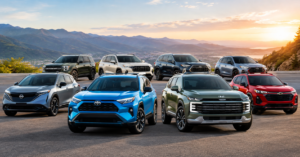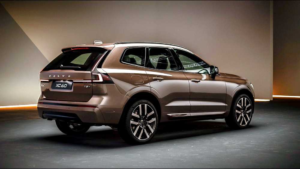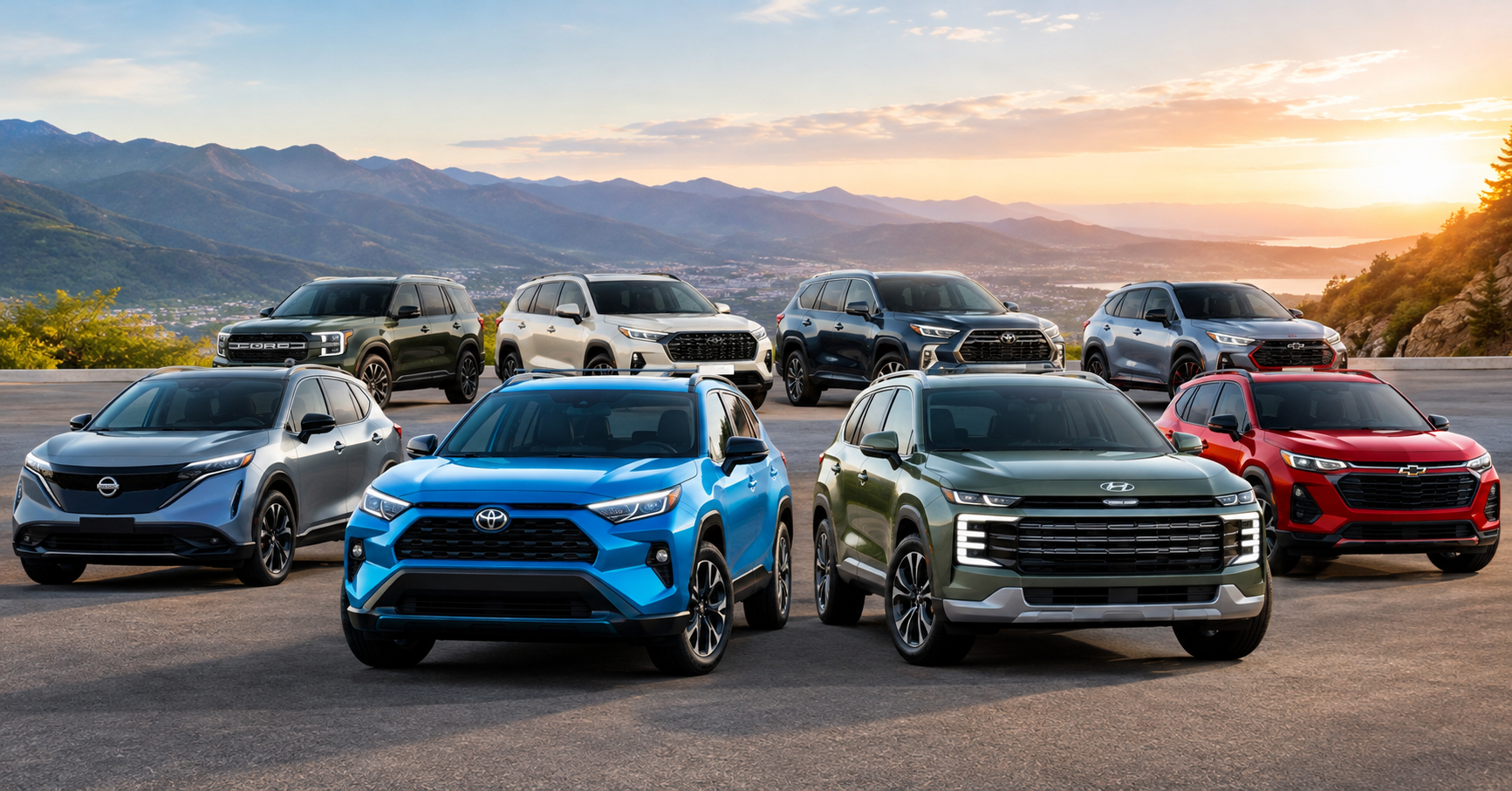
The new SUV releases 2026 lineup brings major changes to the American automotive market. Automakers are expanding hybrid options, introducing more affordable electric vehicles, redesigning popular family SUVs, and improving the capabilities of traditional gas-powered models. For shoppers, that means more choices than ever—but also more decisions to make before visiting a dealership.
The 2026 Toyota RAV4 stands out because its U.S. lineup moves entirely to hybrid and plug-in hybrid power. The redesigned Hyundai Palisade introduces a hybrid powertrain for the first time, while the Nissan Leaf adopts a crossover-style body and offers an estimated driving range of up to 303 miles. Chevrolet is also targeting mainstream buyers with the Equinox EV, which starts below $35,000.
Beyond electrification, the redesigned Honda Passport offers a more rugged approach to midsize SUVs, while the Ford Expedition and Toyota Sequoia continue to serve drivers who need full-size capability. The Kia EV9 and Hyundai IONIQ 5 N show how electric SUVs can address very different needs, from family transportation to performance driving.
Here are 10 SUVs worth knowing about in 2026, including their starting prices, key specifications, strengths, limitations, and the types of buyers most likely to appreciate them.
1. 2026 Toyota RAV4: A Hybrid-Only Compact SUV
The redesigned 2026 Toyota RAV4 is one of the most significant entries among the new SUV releases 2026 because Toyota has eliminated conventional gasoline-only powertrains from its U.S. lineup. Buyers must choose between a conventional hybrid and a plug-in hybrid, making electrification standard rather than an optional upgrade.
The change matters because the RAV4 is a mainstream compact SUV rather than a niche electric vehicle. It targets drivers who need everyday practicality, useful cargo space, and an elevated seating position but also want to reduce fuel consumption.
Price, Powertrains, and Design Choices
The 2026 RAV4 Hybrid starts at $31,900 before destination and handling charges. Toyota offers several distinct design directions grouped into Core, Rugged, and Sport families. The lineup includes the Woodland grade for buyers drawn to outdoor-oriented styling and the GR Sport variant for those who prefer a more performance-focused appearance.
The hybrid powertrain is rated at up to 43 mpg combined, although actual fuel economy depends on the configuration, driving conditions, weather, and driving habits. Drivers who regularly travel in heavy traffic may see different results from those who spend most of their time at highway speeds.
The plug-in hybrid version is worth considering for shoppers whose daily driving fits within its available electric range and who can charge at home. A conventional hybrid is generally simpler for drivers who do not want to manage charging but still want better fuel efficiency than a comparable traditional gasoline vehicle.
Why the 2026 RAV4 Matters
- Fuel efficiency: The hybrid-only lineup makes electrified power standard across the U.S. range.
- Model variety: Multiple design families help the RAV4 appeal to different lifestyles.
- Everyday practicality: Its compact-SUV format suits commuting, shopping, and family transportation.
- Powertrain flexibility: Buyers can choose between a conventional hybrid and a plug-in hybrid.
The main consideration is that buyers who specifically want a non-hybrid RAV4 can no longer choose a conventional gasoline-only version in the 2026 U.S. lineup. Shoppers should also compare trim pricing and equipment carefully because the starting MSRP does not represent the final cost of every configuration.
Best for: Drivers seeking a practical compact SUV with strong fuel economy and the choice of hybrid or plug-in hybrid power.
2. 2026 Hyundai Palisade: A Redesigned Three-Row SUV With Its First Hybrid
The 2026 Hyundai Palisade takes a major step forward with a new generation, updated styling, a more upscale cabin, and the introduction of a hybrid powertrain. That combination makes it one of the most important family-oriented models in the new SUV releases 2026 lineup.
The Palisade has traditionally appealed to households that need three rows without moving into a full-size SUV. The redesigned model continues that mission while adding an electrified option for drivers who want to reduce fuel consumption on school runs, commutes, and longer family trips.
Hybrid Performance and Range
The Palisade Hybrid combines a 2.5-liter turbocharged four-cylinder engine with two electric motors. Hyundai estimates output at 329 horsepower and 339 pound-feet of torque. The company also targets more than 30 mpg on the highway and a driving range of up to 619 miles.
These figures are manufacturer estimates, and shoppers should verify the final EPA ratings for the specific version they plan to buy. Actual range and fuel economy can change with passenger loads, road conditions, temperatures, and driving style.
The hybrid’s appeal is straightforward: families can get three-row utility while reducing their dependence on gasoline compared with a less-efficient vehicle. Unlike a plug-in hybrid or a battery-electric SUV, the conventional hybrid does not require an external charging routine.
Pricing and Interior Appeal
The 2026 Palisade starts at $39,435, while the Calligraphy trim begins at $54,560. The upper trim’s positioning puts the Palisade in competition with SUVs that emphasize premium materials, comfort, and technology.
The redesigned cabin and spacious seating are major parts of the appeal. The Palisade was recognized as a leading SUV for 2026, with particular attention given to its interior, passenger space, and near-luxury feel in higher trims.
Families should still evaluate the third row in person. A vehicle can offer three rows on paper but differ considerably in how easily adults can access the rear seats, how much luggage fits behind them, and how comfortable the cabin feels with a full passenger load.
What Buyers Should Consider
- The hybrid powertrain is new to the Palisade lineup for 2026.
- The estimated output provides substantial power for a family-oriented SUV.
- The three-row layout is suited to larger households and frequent group travel.
- Higher trims can push the purchase price considerably above the base model.
Best for: Families who want a spacious three-row SUV, an upscale interior, and the option of hybrid efficiency without switching to a fully electric vehicle.
3. 2026 Nissan Leaf: An Affordable EV With Crossover Styling
The 2026 Nissan Leaf represents a major change for a nameplate long associated with compact electric hatchbacks. The redesigned model adopts a small crossover-SUV shape, giving buyers a more SUV-like alternative while retaining the Leaf’s focus on accessible electric transportation.
Its price and range make it one of the most closely watched electric models among the new SUV releases 2026. The entry-level S+ grade starts at $29,990, and Nissan lists an EPA-estimated range of up to 303 miles.
Electric Range and Charging Access
A driving range of up to 303 miles can cover many daily commutes and routine errands without requiring frequent public charging. For drivers who can charge at home, the Leaf may make electric ownership particularly convenient because the vehicle can begin many mornings with a full battery.
The 2026 model also offers native North American Charging Standard compatibility and Plug & Charge functionality. Nissan says the vehicle can access more than 20,000 Tesla Superchargers, expanding the charging options available to owners.
Charging access is important, but the number of compatible stations alone does not guarantee that every trip will be easy. Drivers should map charging options along their usual routes, check station locations near destinations, and confirm compatibility before making a purchase.
What the Leaf Does Well—and Where It Compromises
The Leaf’s main strengths are its price, range, quiet operation, and updated interior. Its crossover body also broadens its appeal to drivers who prefer the shape and seating position of an SUV over a traditional hatchback.
However, buyers should understand its limitations. The Leaf does not offer all-wheel drive, and its acceleration and handling may not satisfy drivers looking for a particularly sporty electric vehicle. Those who regularly drive in areas with snow, steep roads, or difficult weather should compare its configuration with AWD alternatives.
Nissan described the S+ starting price as the lowest starting MSRP for any new EV then on sale in the United States. Shoppers should verify current pricing, destination charges, eligibility for incentives, and dealer inventory before comparing final purchase costs.
- Starting price: $29,990 for the S+ grade.
- Maximum estimated range: Up to 303 miles.
- Charging: NACS compatibility and Plug & Charge.
- Main compromise: No all-wheel-drive option.
Best for: Budget-conscious drivers who want an electric crossover for commuting, errands, and regular driving without moving into a more expensive EV segment.
4. 2026 Honda Passport: A More Rugged Midsize SUV
The redesigned 2026 Honda Passport takes a different direction from hybrid-focused compact SUVs. It emphasizes rugged styling, conventional V6 power, and improved all-wheel-drive capability, targeting buyers who want a midsize SUV with a more adventurous personality.
Its boxier design gives it a tougher appearance, while the updated AWD system is intended to improve its ability to handle challenging surfaces. The Passport is a relevant option for drivers who travel on gravel roads, visit outdoor destinations, or simply prefer a more substantial midsize SUV.
V6 Power and Off-Road Focus
Unlike the hybrid-powered RAV4 and Palisade Hybrid, the Passport retains a conventional V6 engine. That makes it appealing to shoppers who prioritize traditional power delivery and do not want to move to a hybrid or electric powertrain.
The 2026 Passport starts at $44,950. Listed EPA fuel-economy figures are 19 mpg in the city and 25 mpg on the highway. Those numbers are worth weighing against the vehicle’s capability and intended use, especially for drivers who cover long distances every week.
The redesigned Passport has received strong attention for its rugged styling and improved all-wheel-drive system. Its cabin quality, standard V6, and TrailSport trim are also key parts of its appeal.
Is the Passport the Right SUV for You?
The Passport makes sense for drivers who want a two-row midsize SUV with space for passengers and equipment but do not need a third row. It may also suit outdoor enthusiasts who want more off-road-oriented hardware than a typical urban crossover provides.
Its key disadvantage for efficiency-focused shoppers is the lack of a hybrid option. Buyers who spend much of their time commuting in traffic should compare the Passport’s fuel costs with those of a hybrid SUV before making a decision.
It is also important to distinguish rugged styling from actual capability. Tire selection, ground clearance, drivetrain equipment, and the type of terrain a vehicle can safely handle all matter more than appearance alone.
Best for: Drivers who want a rugged two-row SUV, V6 power, and enhanced all-wheel-drive capability rather than maximum fuel efficiency.
5. 2026 Chevrolet Equinox EV: An Electric SUV Below $35,000
The 2026 Chevrolet Equinox EV is aimed at buyers who want to move into electric transportation without paying luxury-EV prices. Its starting price of $34,995 places it below the $35,000 threshold before applicable additional charges, making it a significant mainstream option in the electric SUV market.
Chevrolet’s decision to offer both a gasoline Equinox and an electric Equinox gives shoppers an opportunity to compare two different powertrains within a familiar nameplate. The regular gasoline Equinox starts at $33,600, creating a relatively narrow gap between the published starting prices.
Why Its Price Matters
Purchase price remains one of the most important barriers for drivers considering an EV. Even when electric vehicles can reduce energy and maintenance costs in some circumstances, a high initial price can make the transition difficult for households with a fixed budget.
The Equinox EV aims to make the choice more accessible by placing a battery-electric SUV in a mainstream price category. It gives buyers an alternative to conventional compact and midsize crossovers without requiring them to begin their search among luxury brands.
However, the starting MSRP is only the first step in a proper cost comparison. Shoppers should check the price of the exact trim, destination charges, available incentives, insurance costs, home-charging equipment, and expected electricity rates.
Equinox EV vs. Gasoline Equinox
The decision between the two Equinox versions depends on how the vehicle will be used. A driver with home charging and predictable daily mileage may find an EV convenient. Someone who frequently drives long distances through areas with limited charging options may prefer the flexibility of a gasoline vehicle.
Electricity prices also vary by location, while gasoline costs fluctuate over time. The most useful comparison is based on expected annual mileage and local energy prices rather than a general assumption that one powertrain will always cost less.
- Electric version starting price: $34,995.
- Gasoline version starting price: $33,600.
- Main appeal: A mainstream-brand electric SUV at a relatively accessible entry price.
- Key consideration: Charging access and total ownership cost.
Best for: Drivers looking for an electric SUV from a mainstream automaker and willing to plan their charging routine around daily travel.
6. 2026 Kia EV9: A Three-Row Electric SUV for Families
The Kia EV9 continues to stand out among electric SUVs because it combines battery-electric power with three rows of seating. Many EVs focus on commuters or smaller households, but the EV9 is designed for families who need more passenger space and want to reduce or eliminate gasoline use.
The 2026 model starts at $54,900, with a maximum listed driving range of up to 305 miles. It also offers Tesla Supercharger access, which can expand the options available to drivers planning longer trips.
Family Space Without a Gasoline Engine
For households with children, multiple passengers, or frequent carpool duties, the EV9 provides an electric alternative to conventional three-row SUVs such as the Hyundai Palisade, Toyota Grand Highlander, and Chevrolet Traverse.
The biggest practical question is whether the vehicle’s range, charging setup, and purchase price suit the family’s routine. A household that can charge at home and usually drives predictable daily routes may find electric ownership straightforward. Families who frequently travel long distances should pay closer attention to charging stops and how much luggage they carry.
Passenger capacity is only one part of the equation. Buyers should test the third row, inspect cargo space with all seats in use, and consider how easily children or older passengers can enter and exit the vehicle.
EV9 Advantages and Trade-Offs
The EV9’s main strength is the combination of three-row utility and electric power. Its maximum listed range is competitive for an electric family SUV, but real-world range can vary with temperature, highway speed, terrain, passenger load, and climate-control use.
Its upfront price is also higher than that of many conventional family SUVs. Buyers should compare the total cost over several years, including charging, maintenance, insurance, and any available incentives, rather than looking only at the fuel or electricity bill.
Best for: Families who want three rows, an all-electric powertrain, and a vehicle suited to daily use as well as planned road trips.
7. 2026 Kia Sportage Hybrid: A Value-Focused Compact SUV
The Kia Sportage Hybrid represents a different kind of electrification from the Nissan Leaf and Chevrolet Equinox EV. It uses a hybrid powertrain to improve fuel economy while preserving the refueling convenience of a gasoline vehicle.
With a starting price of $30,490 and listed fuel-economy ratings of 41 mpg city and 44 mpg highway, the 2026 Sportage Hybrid targets drivers who want lower fuel consumption without the need to install a charger or plan trips around charging stations.
Why a Conventional Hybrid Still Makes Sense
Not every driver is ready for an electric vehicle. Some live in apartments without dedicated parking, others regularly travel through areas with limited charging infrastructure, and many simply prefer to refuel in a few minutes.
A conventional hybrid offers a middle ground. Its electric motor assists the gasoline engine, helping improve efficiency in suitable driving conditions, but the driver does not need to connect the vehicle to an external charger.
The Sportage Hybrid also competes in a particularly important category: compact SUVs. Buyers in this segment often balance price, fuel economy, cargo capacity, technology, and passenger comfort. The vehicle should therefore be compared with rivals such as the Toyota RAV4 Hybrid and Honda CR-V Hybrid based on the specific trims and equipment available.
Sportage Hybrid vs. the RAV4 Hybrid
The Kia and Toyota both target drivers who want a practical compact SUV with improved fuel economy. The Sportage Hybrid’s listed starting price is lower than the RAV4 Hybrid’s $31,900 starting MSRP, although the final comparison depends on destination charges, trim levels, incentives, and included equipment.
Fuel-economy figures should also be compared carefully. The Sportage Hybrid’s listed ratings and the RAV4’s maximum combined rating may use different driving conditions or configurations, so shoppers should compare equivalent EPA figures for the exact models under consideration.
Before buying, check cargo dimensions, rear-seat comfort, visibility, infotainment usability, and driver-assistance features. A vehicle that saves a little more fuel may not be the best choice if its seating position or controls feel uncomfortable during a long test drive.
Best for: Commuters and families who want a fuel-efficient compact SUV without moving to a fully electric vehicle.
8. 2026 Ford Expedition: Full-Size Space and Towing Capability
The Ford Expedition remains a major choice for American buyers who need the space and capability of a full-size SUV. While smaller hybrids and electric crossovers are attracting attention in 2026, large families and drivers who tow trailers still have reasons to consider a vehicle in this class.
The 2026 Expedition and longer Expedition Max offer three-row seating and substantial cargo-carrying potential. Published pricing spans approximately $65,495 to $87,155, depending on configuration and trim.
Why Some Buyers Still Need a Full-Size SUV
Compact and midsize SUVs may be easier to park and less expensive to operate, but they cannot meet every family’s needs. A full-size model can provide more room for passengers, luggage, sports equipment, and road-trip supplies.
For drivers who tow, the appropriate vehicle also needs to match the trailer’s loaded weight and the manufacturer’s towing specifications. Buyers should check the rating for the exact configuration, along with payload limits and any equipment requirements, rather than assuming that every Expedition has identical capabilities.
The Expedition’s size can be a benefit on long trips, but it can also be a drawback in crowded parking lots, narrow streets, and urban garages. Its fuel costs are another important consideration compared with smaller hybrid SUVs.
Expedition vs. Hybrid Three-Row SUVs
A buyer choosing between the Expedition and a hybrid such as the Hyundai Palisade Hybrid should start with the actual mission. If the priority is regular towing, large cargo loads, and full-size passenger space, the Expedition may better match the requirements.
If the vehicle will mostly carry a family to school, work, and weekend activities, a smaller hybrid could be more economical and easier to maneuver. Neither category is automatically better; the right choice depends on how often the buyer uses the extra capability.
Best for: Large families, frequent road-trippers, and drivers who need full-size SUV space and properly equipped towing capability.
9. 2026 Toyota Sequoia: A Hybrid-Powered Full-Size SUV
The Toyota Sequoia provides another route into the full-size SUV segment, combining three-row utility with a hybrid powertrain. Its position in the 2026 market is notable because it offers a more traditional large-SUV experience while using electrification rather than relying on a conventional V8 configuration.
The Sequoia has earned a leading position in full-size SUV evaluations, giving the model strong visibility among buyers comparing large family vehicles. Rankings reflect specific evaluation criteria, however, and should not be treated as a guarantee that the Sequoia will suit every driver.
Hybrid Power in a Large SUV
Hybrid technology can help a large SUV manage fuel consumption more effectively than it otherwise might, although actual efficiency depends on vehicle weight, driving conditions, and how the vehicle is used. Buyers who spend substantial time towing or driving at highway speeds should consider that their real-world fuel economy may differ from standard ratings.
The Sequoia’s three-row layout makes it relevant to larger households, while its full-size format can suit buyers who need space for passengers and equipment. As with any three-row SUV, the amount of cargo space available behind the third row should be checked in person.
Sequoia vs. Ford Expedition
The Sequoia and Expedition appeal to overlapping groups of buyers, but the best fit depends on priorities. The Sequoia’s hybrid powertrain may attract drivers who want electrification in a large SUV, while Expedition shoppers may focus on Ford’s particular seating, cargo, towing, and trim configurations.
Rather than relying exclusively on brand reputation or a ranking, compare the exact versions you can buy. Look at purchase price, passenger comfort, cargo measurements, towing requirements, fuel costs, warranty coverage, and service availability.
For long-term ownership, it is sensible to consider the full ownership picture, including routine maintenance, tire replacement, insurance, and the cost of fuel over the expected years of use. A higher initial price may or may not be offset by savings elsewhere.
Best for: Buyers who need a full-size three-row SUV and want hybrid power rather than a traditional V8 setup.
10. 2026 Hyundai IONIQ 5 N: An Electric SUV Built for Performance
The Hyundai IONIQ 5 N demonstrates that the new SUV releases 2026 are not focused exclusively on fuel savings and family transportation. This performance-oriented electric crossover is designed for drivers who want quick acceleration, sporty driving characteristics, and a more engaging experience than a conventional daily-use SUV typically offers.
The IONIQ 5 N has earned recognition in luxury-SUV evaluations, highlighting the growing presence of performance-focused electric vehicles in a market once dominated by gasoline-powered sport utility vehicles.
Performance as a Different Kind of EV Benefit
Electric powertrains can deliver strong, immediate acceleration, making them attractive for performance applications. But performance is not determined by acceleration alone. Steering response, braking, suspension tuning, tire choice, and how the vehicle manages repeated hard driving all affect the experience.
The IONIQ 5 N serves a different purpose from the Nissan Leaf or Chevrolet Equinox EV. Those models emphasize accessible electric transportation, while the N version focuses on a more enthusiastic driving experience.
That distinction matters when comparing prices and ownership costs. A performance-oriented EV may use specialized tires and components, and spirited driving can increase energy consumption. Buyers should research the exact vehicle’s specifications, equipment, warranty terms, and current pricing before deciding whether its performance features justify the cost.
Who Should Consider the IONIQ 5 N?
The IONIQ 5 N is best suited to drivers who enjoy performance-oriented vehicles but are interested in an electric powertrain. It may be less compelling for buyers whose main priorities are the lowest possible purchase price, maximum cargo capacity, or the longest driving range per charge.
Potential owners should also consider their charging arrangements and usual travel distances. A performance EV can be enjoyable as a daily driver, but the practical ownership experience still depends on access to charging and the ability to meet everyday transportation needs.
Best for: Enthusiasts seeking an electric crossover with a performance-first character rather than a conventional family-SUV focus.
How the 2026 SUV Lineup Is Changing the Market
The 10 models above illustrate several important changes in the American SUV market. Electrification is spreading across price ranges and vehicle sizes, while conventional powertrains remain relevant for shoppers who prioritize towing, long-distance flexibility, or specific driving characteristics.
1. Hybrids Are Becoming Mainstream
The Toyota RAV4’s hybrid-only U.S. lineup and the Hyundai Palisade Hybrid’s arrival show that automakers are bringing electrified power to high-volume vehicle categories. Buyers no longer need to choose a fully electric vehicle to reduce gasoline use.
Conventional hybrids can be particularly attractive to drivers who lack convenient home charging or frequently take long trips. Plug-in hybrids offer another option for people who can charge regularly and want to complete some daily journeys on electric power.
2. Electric SUVs Are Reaching More Buyers
The Nissan Leaf’s $29,990 starting price and the Chevrolet Equinox EV’s $34,995 starting price put electric crossovers into a more accessible price bracket than many premium EVs. These vehicles are relevant to shoppers who want to compare electric ownership with the cost of a new gasoline SUV.
Still, a low starting price does not tell the whole story. Buyers need to consider trim availability, destination charges, incentives, home-charging costs, electricity prices, insurance, and how well the vehicle’s range fits their routine.
3. Three-Row SUVs Are Going Electric or Hybrid
The Palisade Hybrid and Kia EV9 show that families have more ways to combine passenger space with electrified power. These models address different needs: the Palisade Hybrid keeps gasoline refueling, while the EV9 requires charging but eliminates routine gasoline use.
Families should compare the third-row experience, luggage space, child-seat access, and total cost rather than choosing solely on the basis of powertrain technology.
4. Traditional SUVs Still Have a Clear Role
The Honda Passport, Ford Expedition, and Toyota Sequoia demonstrate that conventional and hybrid-powered large SUVs continue to matter. Some drivers need towing capability, rugged hardware, or full-size passenger space that smaller crossovers do not provide.
The most useful purchase decision is not necessarily the most electrified vehicle or the model with the highest ranking. It is the SUV that best matches the buyer’s real requirements without creating unnecessary ownership costs.
How to Choose the Right 2026 SUV
With so many new SUV releases 2026 to consider, shoppers can narrow the field by starting with practical requirements instead of brand names. A clear assessment of budget, driving habits, passenger needs, and charging access can eliminate unsuitable options early.
Step 1: Set a Realistic Budget
Use the out-the-door price rather than the advertised starting MSRP. The final figure can include destination charges, taxes, registration, dealer-installed accessories, and other fees. If financing, compare the interest rate, loan term, monthly payment, and total amount paid.
It is also useful to leave room in the budget for insurance, maintenance, tires, and fuel or electricity. A vehicle that fits the monthly payment but strains the household budget in other areas may not be the best long-term choice.
Step 2: Decide Which Powertrain Fits Your Routine
- Gasoline: Consider it if you want conventional refueling and your driving needs favor a traditional powertrain.
- Hybrid: A strong option if you want improved fuel efficiency without plugging in.
- Plug-in hybrid: Worth considering if you can charge regularly and want the option of electric driving for shorter trips.
- Battery-electric: May suit you if charging is accessible and the vehicle’s real-world range covers your daily use and longer journeys.
Step 3: Match the SUV to Your Passenger and Cargo Needs
A two-row compact SUV may be sufficient for a couple or a small family, while a household with several children may benefit from three rows. If you regularly carry passengers and luggage together, check cargo capacity with every seat in use.
Drivers who tow should verify the exact model’s rated capacity, payload, and equipment requirements. Never assume that two versions of the same SUV have identical towing capabilities.
Step 4: Compare Safety and Technology Features
Review the standard and optional driver-assistance systems on the exact trim you are considering. Features can differ by model and equipment package, and the presence of a feature does not remove the driver’s responsibility to pay attention.
Check warranty coverage and any relevant recall information as part of the buying process. For a specific vehicle already in dealer inventory, use its vehicle identification number (VIN) to confirm whether outstanding recalls apply and whether the required remedy has been completed.
Step 5: Test-Drive Your Shortlist
Published specifications cannot fully communicate seat comfort, outward visibility, ride quality, cabin noise, control layout, or how easy it is to park. Test-driving two or three closely matched vehicles can reveal differences that matter during daily ownership.
If you are comparing an EV with a hybrid or gasoline SUV, try to reproduce your normal driving conditions as closely as possible. Consider how the vehicle feels on highways, in traffic, and on the roads you use most often.
Final Verdict: Which New SUV Releases 2026 Deserve Your Attention?
The strongest choice depends on what you expect your next vehicle to do. The Toyota RAV4 is a significant compact-SUV redesign because hybrid power is now standard across its U.S. lineup. The Hyundai Palisade Hybrid gives families a new electrified three-row option, while the Nissan Leaf and Chevrolet Equinox EV make electric transportation accessible at lower starting prices than many premium alternatives.
For drivers who prioritize rugged capability, the Honda Passport brings a more adventurous design and V6 power. Families considering an all-electric vehicle can put the Kia EV9 on their shortlist, while the Kia Sportage Hybrid offers a fuel-efficient alternative for everyday commuting.
At the larger end of the market, the Ford Expedition remains relevant for full-size space and towing needs, while the Toyota Sequoia combines three-row utility with hybrid power. The Hyundai IONIQ 5 N serves drivers who want a performance-focused electric crossover rather than a conventional family hauler.
Before making a decision, compare the final purchase price, powertrain, expected energy costs, passenger space, safety equipment, warranty, and available inventory. The best SUV is the one that meets your needs in the real world—not simply the one with the most features or the most attention-grabbing specifications.