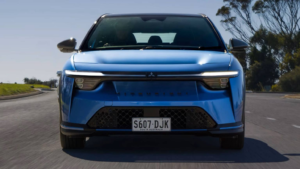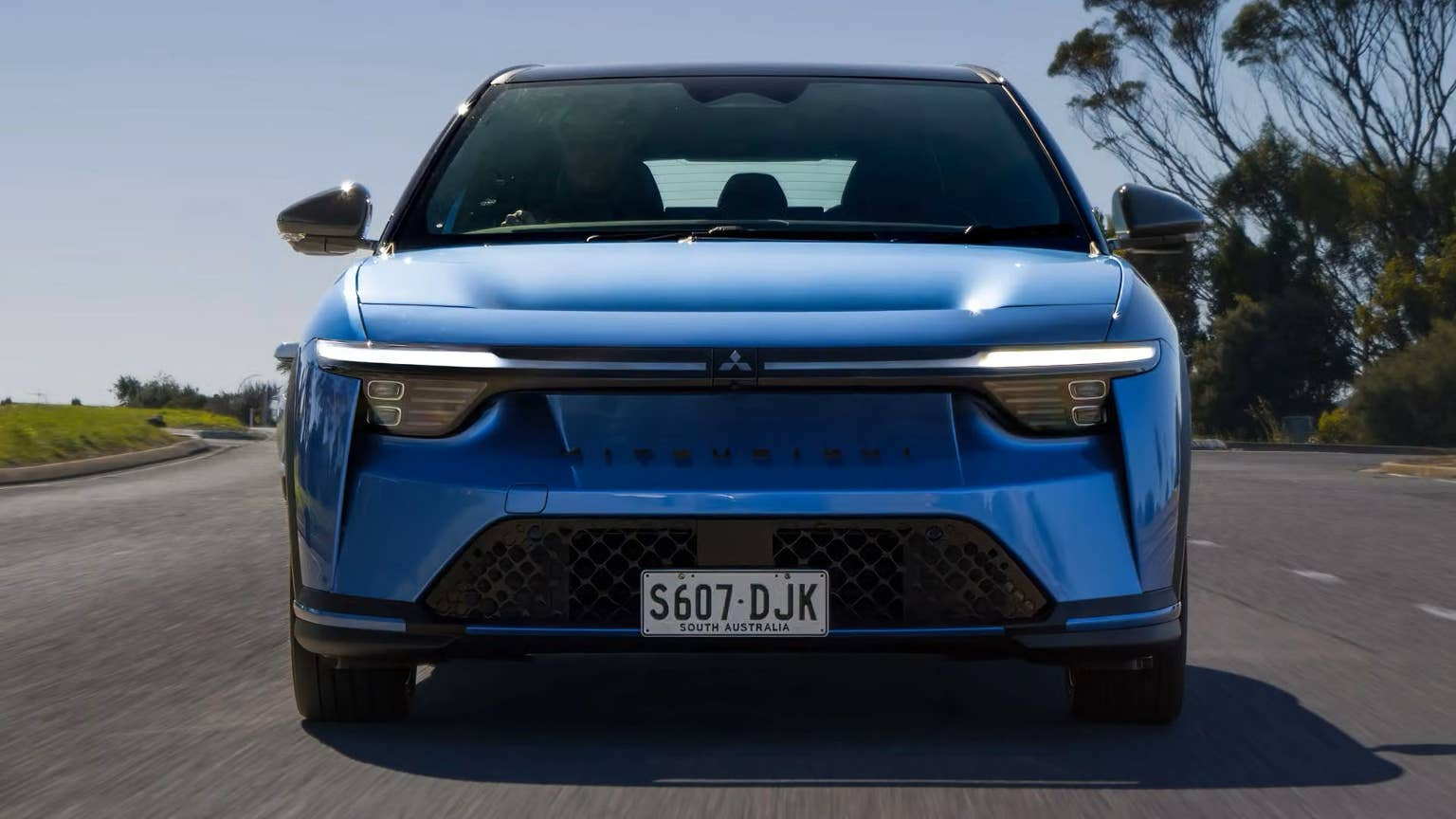
Mitsubishi is preparing to launch the ASX VR-e, an all-electric crossover that will become the quickest-accelerating vehicle in the Japanese automaker’s Australian lineup. The top-spec GSR variant will be capable of accelerating from 0 to 62 mph in just 3.9 seconds, combining electric performance with elements of Mitsubishi’s historic rally-racing heritage.
The ASX VR-e GSR will achieve that performance with two electric motors, one at the front and one at the rear, giving it all-wheel drive and a combined output of 458 horsepower and 516 ft-lbs of torque. Despite its performance credentials, the new crossover is not a successor to the Lancer Evolution.
Mitsubishi ASX VR-e Draws on Evolution Heritage
Mitsubishi intends to preserve elements of its Evolution performance heritage “in some shape or form.” The ASX VR-e represents an effort to bring parts of that legacy into a modern electric vehicle without presenting the crossover as a direct replacement for the Lancer Evolution.
The VR-e name references the Mitsubishi Galant VR-4, a rally-associated model that preceded the Lancer Evolution. The Galant established its own place in Mitsubishi’s performance history before the company moved toward a smaller body style.
The GSR designation provides another connection to the brand’s past. The high-performance ASX VR-e GSR recalls GSR variants offered across several generations of the Lancer Evolution.
Rather than reviving the Evolution name immediately, Mitsubishi is using historic names and performance references to establish the ASX VR-e as the highest-performing vehicle in its modern lineup.
ASX VR-e GSR Power and Electric Range Hardware
The range-topping ASX VR-e GSR will produce 458 horsepower and 516 ft-lbs of torque. Its dual-motor configuration provides all-wheel drive and enables acceleration from 0 to 62 mph in 3.9 seconds.
Mitsubishi will also offer more affordable ASX VR-e models. These lower-spec versions will feature a single electric motor producing 229 horsepower and 258 ft-lbs of torque.
The battery pack will have a capacity of 57.7 kWh, and the vehicle will support DC fast charging at a peak rate of 134 kW.
Sport Mode Changes the Torque Split
The ASX VR-e GSR will feature an adjustable torque distribution system designed to change the vehicle’s driving character. Under normal driving conditions, torque will be split evenly between the front and rear axles at a 50:50 ratio.
In sport mode, the distribution will shift to 30:70, sending a greater share of torque to the rear wheels. The adjustment is intended to make driving more engaging while reinforcing the crossover’s performance-focused character.
Could Mitsubishi Revive the Evolution Badge?
Mitsubishi has not ruled out bringing back the Evolution badge if the ASX VR-e proves successful and demand emerges for a dedicated performance model. For now, the company is concentrating on its core lineup and establishing its position with the new electric crossover.
The ASX VR-e represents a new type of product for Mitsubishi, making it important for the company to get the fundamentals right before considering an expansion of the range. If the model succeeds, Mitsubishi could build on that foundation and introduce additional vehicles.
The company has also acknowledged growing interest in a performance revival, including discussions among Mitsubishi enthusiasts in Japan.
Mitsubishi Leadership Keeps the Evo Legacy in Focus
In June 2026, Mitsubishi president and chief operating officer Keisuke Kishiura said the company wanted to build another great car by following the formula that made the Lancer Evolution successful. He described the Evo and Galant as “treasures.”
For now, Mitsubishi will continue focusing on SUVs while developing its current model range. Although the ASX VR-e incorporates elements of the company’s performance history, a new vehicle carrying the Evolution name has not been confirmed.
The ASX VR-e will introduce a new performance flagship for Mitsubishi in Australia, with the GSR variant delivering 458 horsepower, dual-motor all-wheel drive and acceleration from 0 to 62 mph in 3.9 seconds. The model’s success could help determine whether the company expands its performance lineup in the future.