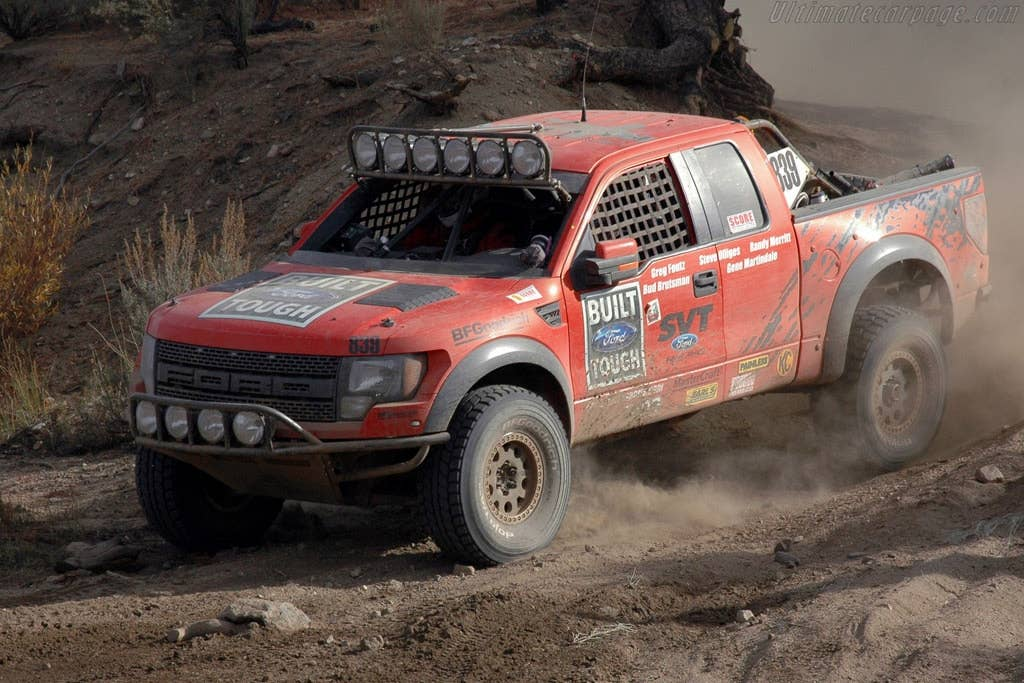
The Ford F-150 Raptor began with an ambitious engineering question: Could Ford build a desert racing-inspired truck that could tackle punishing terrain while retaining a full factory warranty? The automaker’s latest promotional campaign, “The Raptor Origin Story,” revisits the mid-2000s development effort that led to the first-generation F-150 Raptor in 2008 and helped establish a new direction for factory-built off-road trucks.
How Baja Testing Shaped the Ford F-150 Raptor
In the mid-2000s, a small group of Ford Racing engineers decided to move beyond traditional street-performance modifications. Rather than simply fitting larger tires to a standard four-wheel-drive truck, they explored whether they could develop a vehicle capable of handling desert racing conditions while maintaining a full factory warranty.
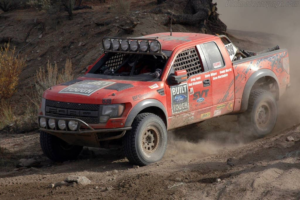
The team turned to the demanding Baja desert to test its ideas. During development, engineers deliberately pushed test vehicles to their limits, breaking components and twisting steel driveshafts to identify structural weaknesses.
That demanding process led to the first-generation F-150 Raptor in 2008. The development team also partnered with Fox to bring internal-bypass shock technology to a production vehicle, helping establish the truck’s off-road engineering approach.
Ford Revisits the Raptor’s Early Development
The “Raptor Origin Story” campaign highlights the engineers who pursued the project despite skepticism about their unconventional approach. The campaign includes a short video starring Jon Bernthal, who portrayed former Ford executive Lee Iacocca in the film Ford v Ferrari.
Ben Affleck directed the film associated with the campaign, which celebrates the early engineering team’s efforts to create a truck capable of tackling dunes directly from the showroom floor.
Ford’s Raptor Lineup Continues to Expand
Since the original Baja-inspired development program, demand for high-speed desert-capable trucks has helped expand the Raptor concept beyond its initial half-ton pickup platform. The approach has grown across Ford’s vehicle portfolio, with executives indicating that additional Raptor models remain in development.
The central engineering philosophy remains focused on building robust suspension systems and giving drivers the confidence to push their vehicles hard off-road.
Powertrain developments are also extending the concept into the midsize truck segment. Recent order guides indicate that the upcoming Ranger will receive a more powerful 3.0-liter EcoBoost V6 in place of the standard 2.7-liter engine.
At the high-performance end of the lineup, the flagship Shelby American version of the F-150 Raptor R pushes the platform further with supercharged power. The model reflects the continued influence of the performance-focused approach that shaped the original Raptor.
Raptor Owners Embrace the Off-Road Lifestyle
The appeal of the Raptor extends beyond its mechanical capabilities. Events such as the recent Raptor Rally in Arizona bring together hundreds of owners to exchange trail stories and drive their trucks across challenging terrain.
The community surrounding these vehicles is a significant part of their appeal, connecting drivers who appreciate the engineering and performance associated with a truck designed to withstand demanding desert conditions, including the challenges associated with the Baja 1000.
Ford Raptor Performance Comes With High Fuel Costs
The Raptor’s off-road capabilities come with a substantial cost at the fuel pump. Although its suspension is designed to handle deep ruts and demanding terrain, its fuel economy can make daily commuting expensive.
The contrast is particularly noticeable for drivers comparing gasoline-powered trucks with electric vehicles. One recent electric vehicle convert noted that the annual charging costs for a Ford F-150 Lightning equal just one month of fuel expenses for a gasoline-powered Raptor.
Despite those running costs, the combination of V8 engine sound and high-speed desert performance remains central to the truck’s appeal among enthusiasts. The same Baja-inspired engineering philosophy that shaped the original F-150 Raptor continues to define the lineup’s focus on factory-built off-road capability.